The Most Expensive Japanese Pokemon Cards
No-rarity grails, loyalty promos you had to earn, and the first Charizard to crack a million dollars.
By Misprint Editorial | Published Jun 26, 2026 | 7 min read
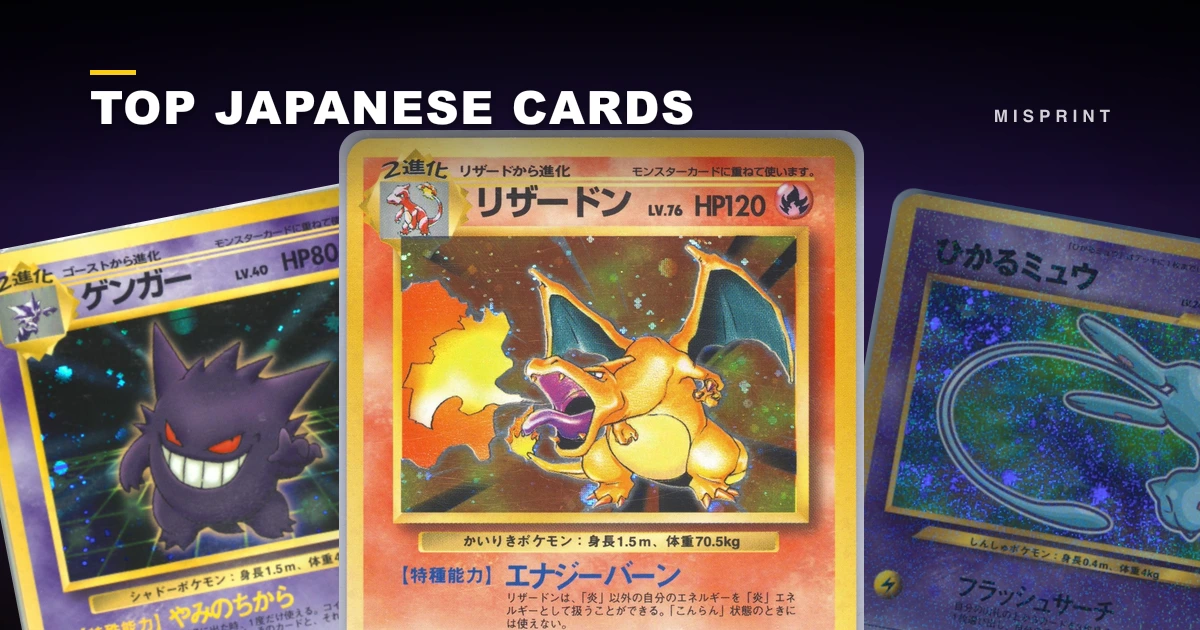
In March 2026, a Japanese Charizard became the first Charizard in history to sell for over a million dollars. It wasn't a trophy card. It came out of a booster pack in 1996, and that's exactly the point.
Japanese cards spent decades as the overlooked side of the hobby: printed first, printed better, and priced lower than their English counterparts. That era is over. The 30th-anniversary market has repriced Japanese grails violently upward, capped by a record that redefined what a "buyable" card can be worth.
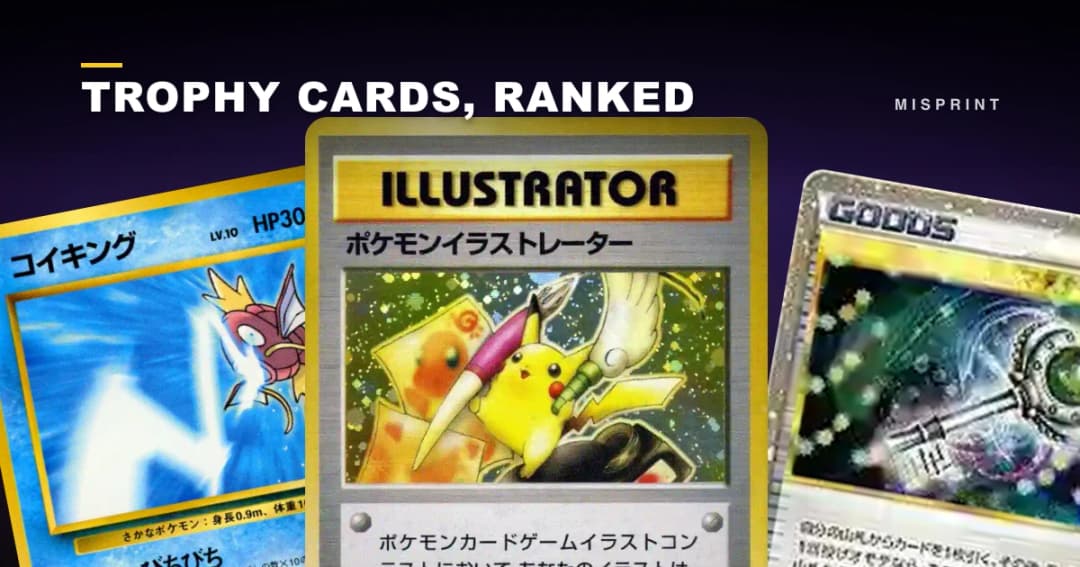
A scope note before the countdown: this list covers cards that were commercially released or earnable through public campaigns, things a collector can actually hunt. Tournament prize cards and contest one-offs (the Pikachu Illustrator, the Trophy Pikachus, the University Magikarp, the Pokemon Snap photo-contest cards) live in our trophy cards countdown instead. Also: these cards trade almost exclusively graded, so we rank by top-grade verified value rather than raw prices, and we date everything.
10. Master's Scroll, Daisuki Club Promo (2010): ~$20,300 in PSA 10
The loyalty-program deep cut. Earning the Master's Scroll required 8,600 points in Pokemon's Japanese Daisuki Club, a grind few completed, and barely 74 copies have ever been graded. PSA 10s and 9s both trade around $20,000. Its little sibling, the 5,200-point Daisuki Club Raichu, has tripled in eighteen months to about $17,000 in PSA 10, which tells you what the anniversary market thinks of earned-not-bought scarcity.
9. Venusaur, No Rarity Symbol (1996): ~$30,300 in PSA 10
The first of three entries from the legendary first print run of the Japanese Base Set (the full story sits at #1). The no-rarity Venusaur doubled this spring, riding the halo of its Charizard setmate, with PSA 10s moving from about $14,600 in May to over $30,000 by July. Raw copies still trade around $550, one of the wilder raw-to-gem ladders in vintage.
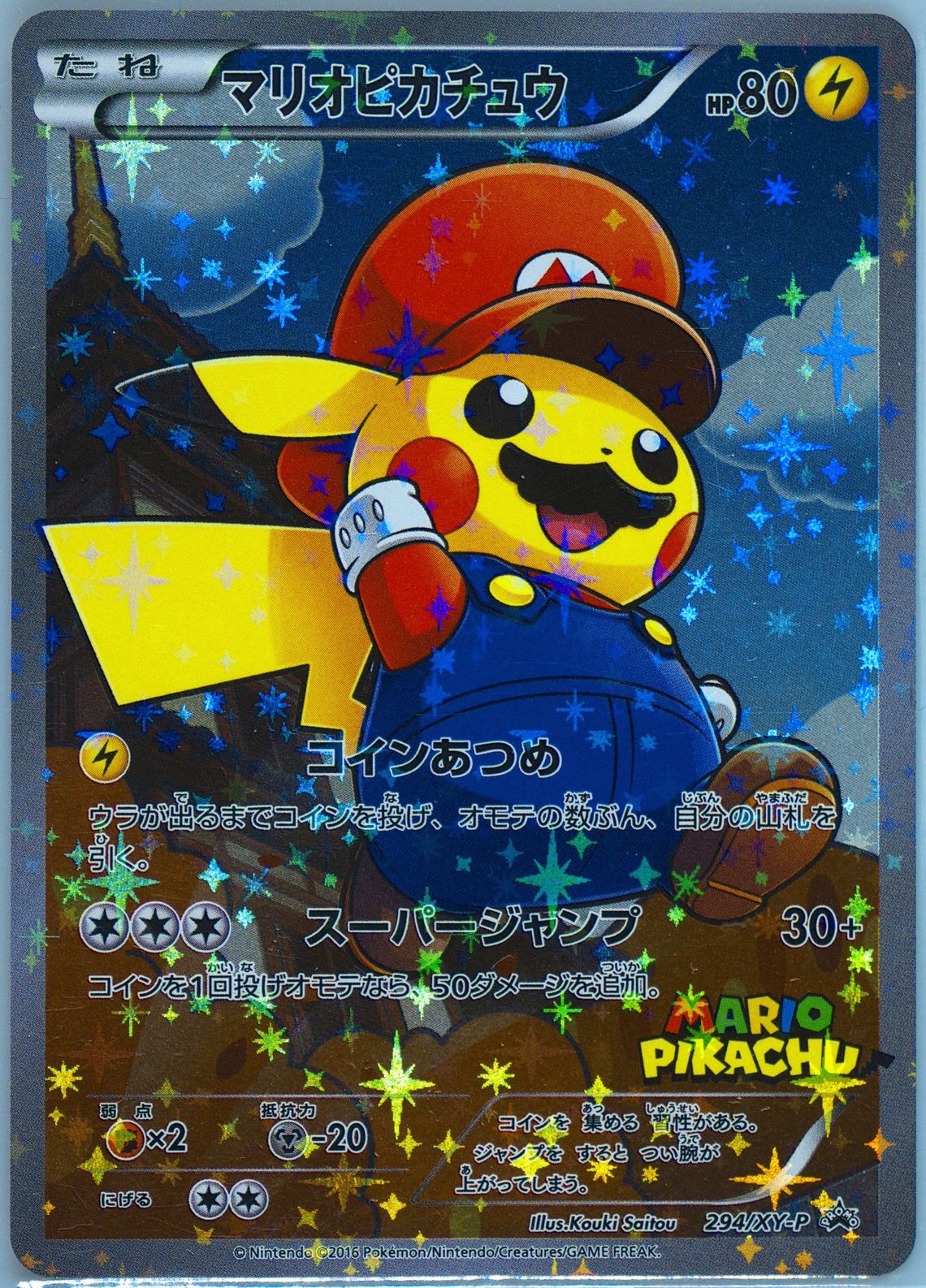
8. Mario Pikachu Full Art (2016): ~$31,000 in PSA 10
The crossover that keeps climbing. The full-art Mario Pikachu from the Pokemon Center Special Box is the modern Japanese promo, a Nintendo-on-Nintendo collaboration that was already expensive at release and now brings around $31,000 in PSA 10 with raw copies near $5,000. The holo (non-full-art) version runs about a third of that, and the Luigi version, well, see the honorable mentions.
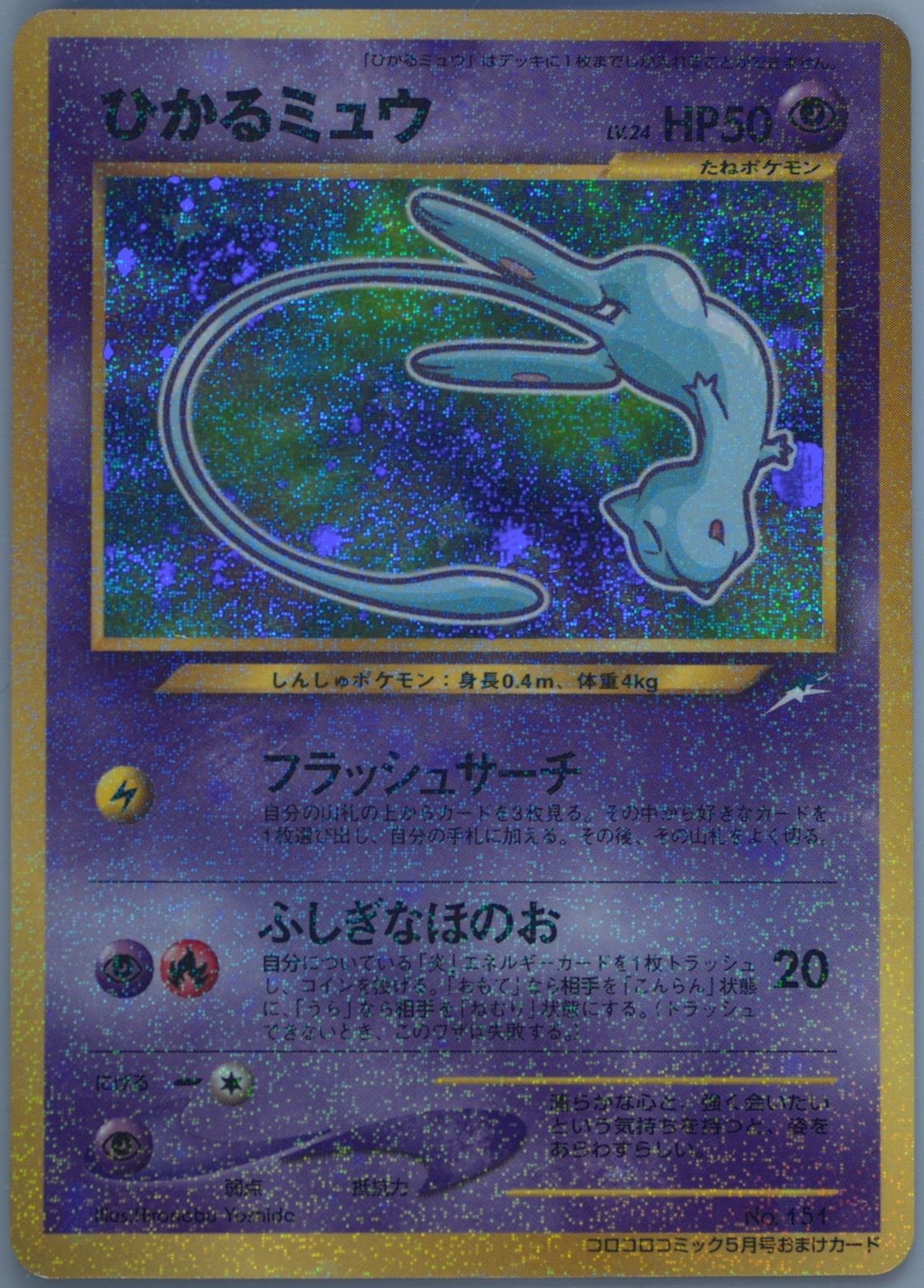
7. Shining Mew, CoroCoro Promo (2001): ~$32,200 in PSA 10
The great condition trap. Millions of these were stapled into a 2001 issue of CoroCoro Comic, so raw copies cost about $1,000 and every collector's uncle claims to have one. But magazine insertion meant print lines, edge dings, and off-center cuts, so true gems are genuinely scarce, and PSA 10s jumped from about $12,000 in April to over $32,000 by July. Ignore the $125,000-plus asks floating around marketplaces; those are wishes, not sales.
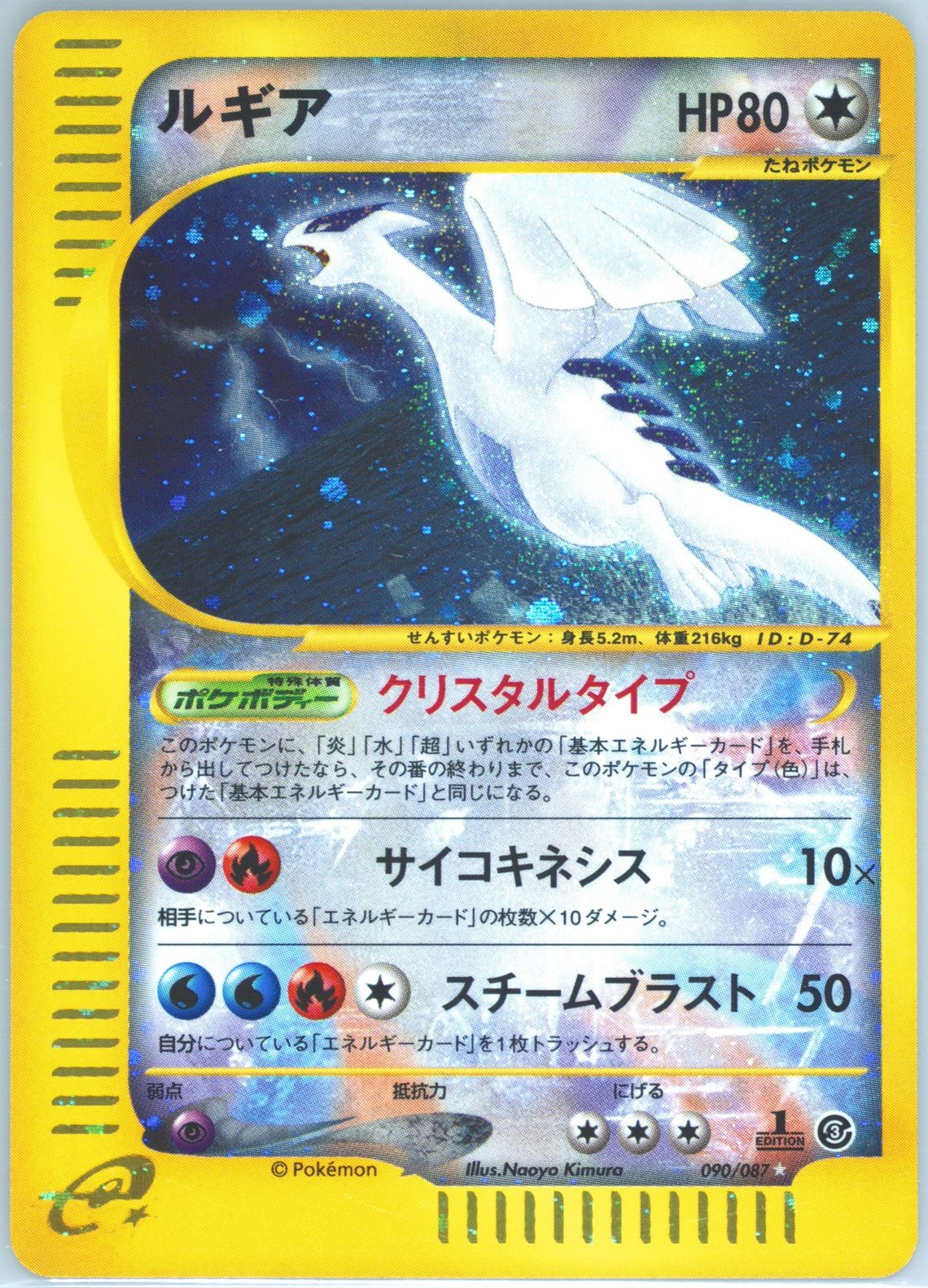
6. Crystal Lugia, 1st Edition "Wind From the Sea" (2002): ~$32,600 in PSA 10
The Japanese counterpart to the Aquapolis Crystal Lugia that tops our English Lugia countdown. The Japanese 1st Edition version spiked from about $14,000 to over $32,000 in June on a fresh sale. The e-series crystals are having the same anniversary moment in both languages, and the Japanese 1st Edition stamp adds a scarcity layer English collectors often forget exists.
5. Espeon Gold Star, Player's Club 025/PLAY (2005): $66,000 and repricing fast
Here begins the PLAY promo royalty. Japan's 2005-2006 Player's Club awarded this card for 40,000 EXP points, a full season of organized-play grinding, and essentially every authentic copy that survives is graded. The last verified PSA 10 sale was $66,000 in early 2024, but the market has moved hard since: PSA 9s are now valued above $80,000, so the next 10 to trade will set a much bigger number. One listing quirk to know: it's constantly mislabeled "50,000 Points," including by auction houses. The card says 40,000.
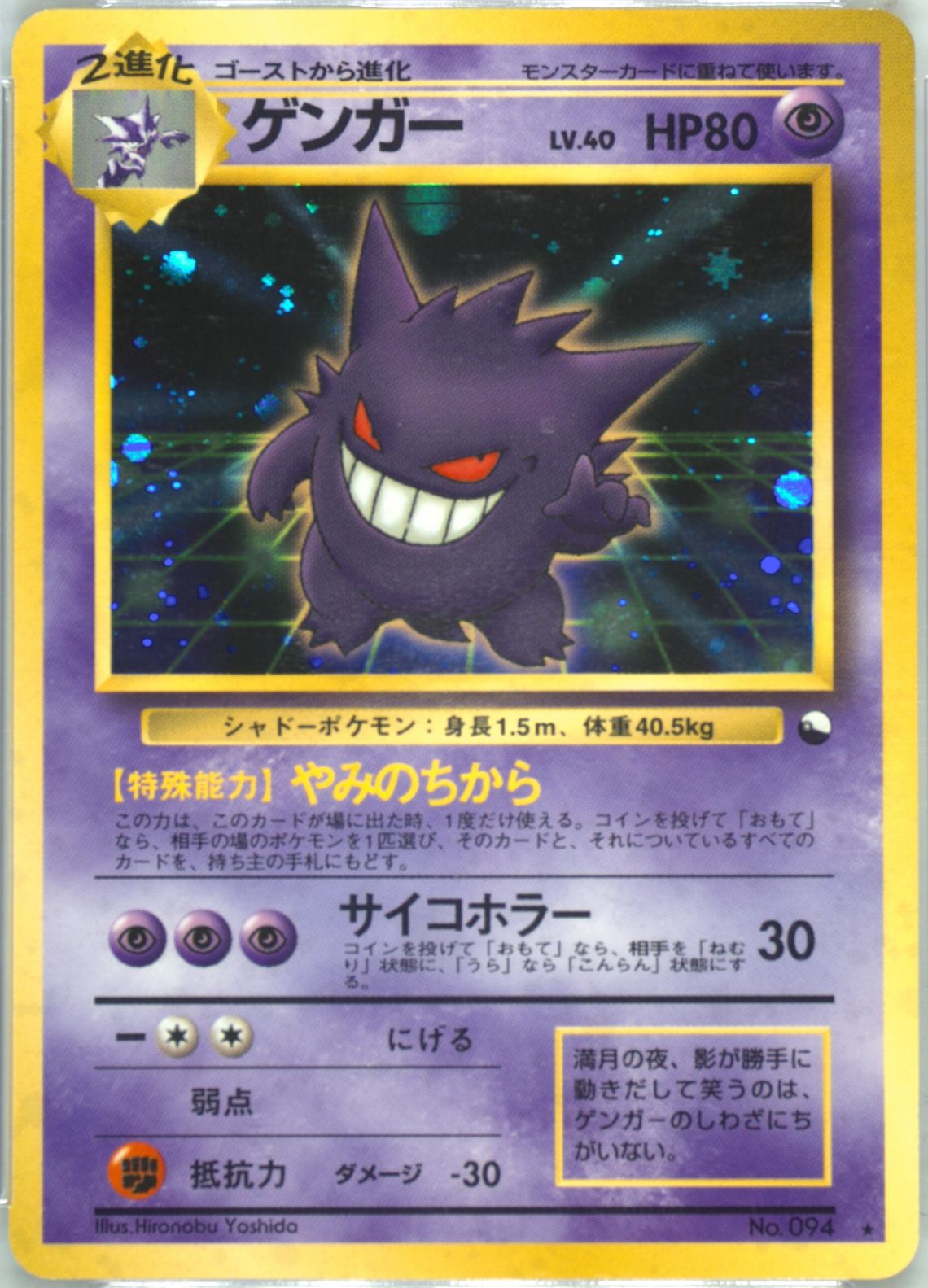
4. Gengar, Masaki Promo (1999): $101,260 record
The mail-in grail. The five Masaki promos (Alakazam, Gengar, Golem, Machamp, Omastar) were earned during 1999's "Communication Evolution" campaign by mailing in two completed vending-sheet forms, a distribution method so analog that surviving mint copies are miracles. The Gengar is the rarest and most valuable: a TAG 10 sold for $101,260 at Goldin, PSA 10s have brought $96,000, and even PSA 8s clear $9,000. The all-time Gengar record, as we note in our Gengar countdown, belongs to this card.
3. Umbreon Gold Star, Player's Club 026/PLAY (2005): $180,000, twice
The most famous Japanese promo of the modern era. The 70,000-point Umbreon (nearly double the Espeon's requirement) is the card that made "PLAY promo" a household term among collectors: a PSA 10 sold for $180,000 at PWCC in February 2024, and then, remarkably, a BGS 9.5 matched that exact figure at Fanatics in November 2025. When a 9.5 sells for the 10's record, the market is telling you it expects the next 10 to go much higher. Virtually no authentic raw copies circulate; a raw one at a tempting price is presumptively fake.
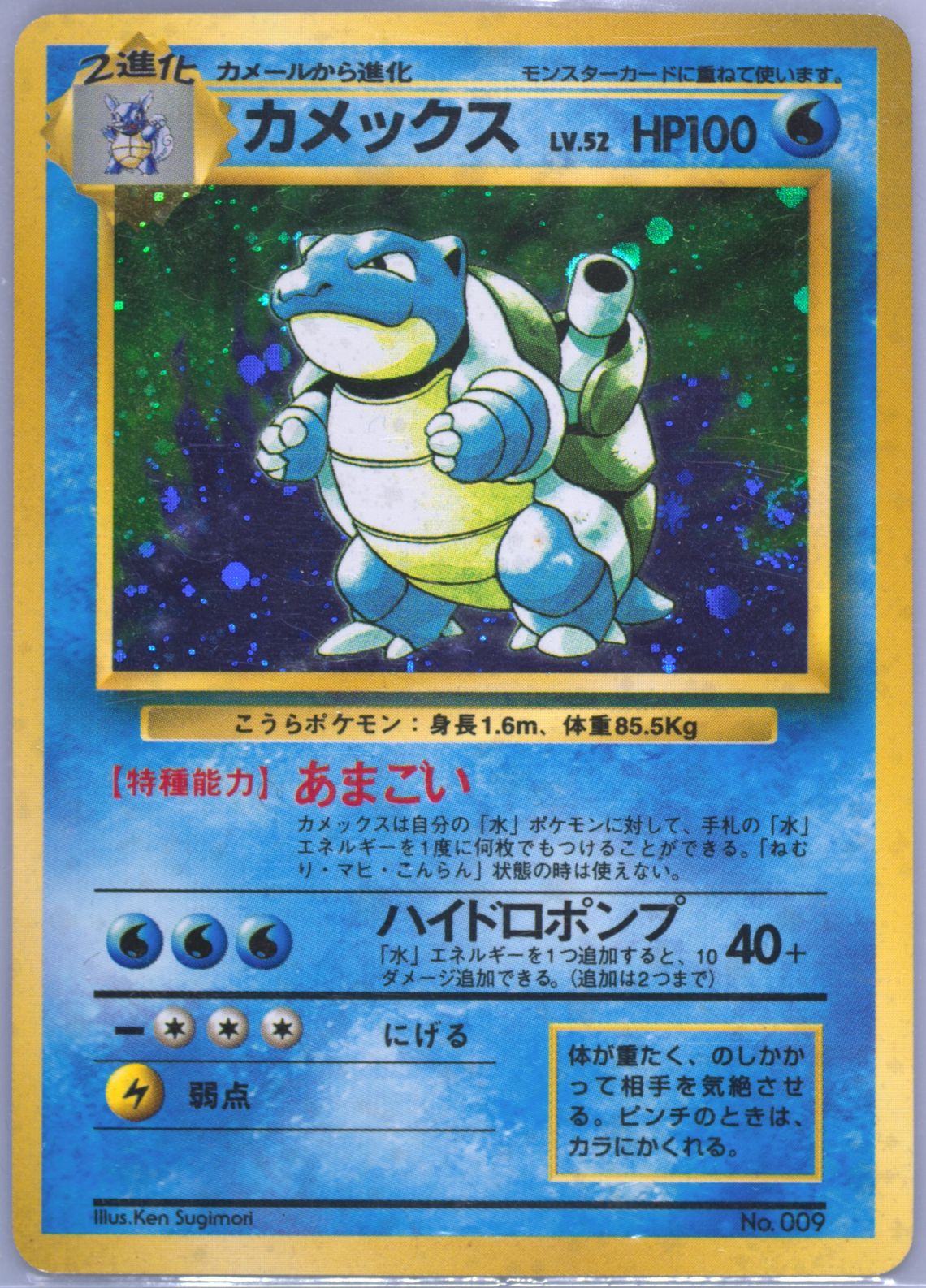
2. Blastoise, No Rarity Symbol (1996): $190,000 in PSA 10
Six PSA 10s exist. One sold at Goldin for $190,000, quietly making the no-rarity Blastoise more expensive than the famous Umbreon above it in most collectors' mental rankings. The first-print water starter has always lived in Charizard's shadow; a population of six doesn't care about shadows.
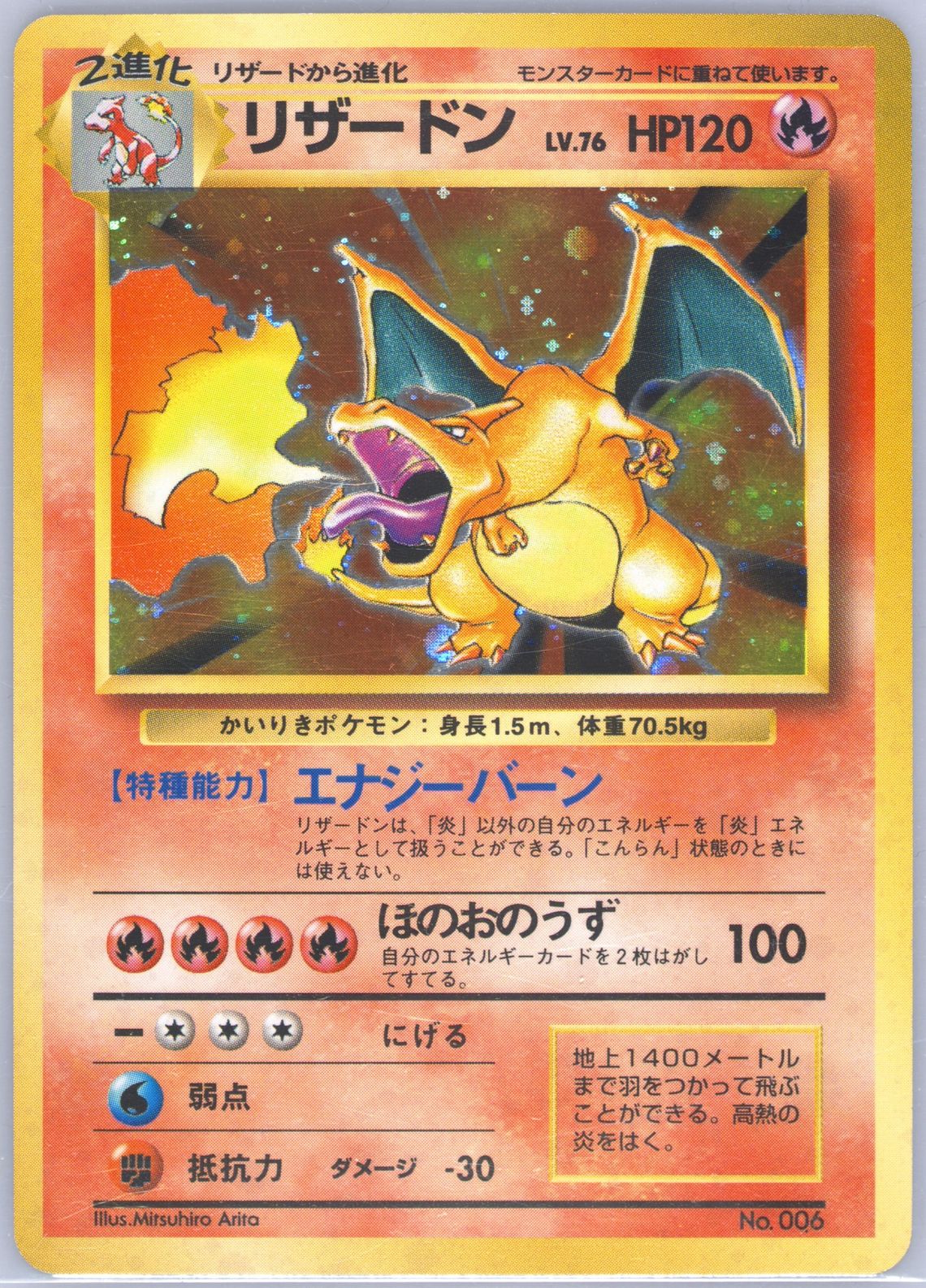
1. Charizard, No Rarity Symbol (1996): $1,700,000
The record that rewrote the category. On March 3, 2026, a PSA 10 no-rarity Charizard sold for $1.7 million, the first Charizard of any kind, any language, any era to cross a million dollars. Five days later, a second PSA 10 in a case signed by illustrator Mitsuhiro Arita brought $1,232,200. Roughly ten PSA 10s exist, and as recently as 2022 one cost $324,000.
Here's the story behind the missing symbol. The very first October 1996 print run of the Japanese Base Set shipped without the rarity mark (the circle, diamond, or star) in the corner; it was added to every printing after. No rarity symbol means first print of the first set of the entire game, and the Charizard even carries the famously wrong Pokedex data (a 1.5-kilometer-tall, 70.5-kilogram Charizard) that later printings corrected. Unlike the trophy cards above it in the all-time record books, this one came out of booster packs that anyone could buy in 1996, which makes it the most expensive card a collector could ever have simply pulled.
The Records Board, 2024-2026
- $1,700,000: No Rarity Charizard PSA 10, March 3, 2026 (first million-dollar Charizard)
- $1,232,200: No Rarity Charizard PSA 10, Arita-signed case, March 8, 2026
- $190,000: No Rarity Blastoise PSA 10, Goldin
- $180,000: Umbreon Gold Star PLAY, PSA 10 (PWCC, February 2024) and again as a BGS 9.5 (Fanatics, November 2025)
- $101,260: Masaki Gengar TAG 10, Goldin
- $66,000: Espeon Gold Star PLAY PSA 10, February 2024, with PSA 9 values now above $80,000
For the even bigger numbers, the $16.49 million Illustrator and friends, see the trophy cards countdown; those were awarded, never sold.
Honorable Mentions
The 2016 Pokemon Center crossover family runs deep: Luigi Pikachu full art (about $15,200 in PSA 10) and the Poncho-Wearing Pikachu Rayquaza cosplay promos (about $14,100). Further down sit the Ancient Mew "Nintedo" error from the 1999 movie theaters (about $6,800 in PSA 10, thanks to a typo in its own copyright line) and, at the accessible end, the Yu Nagaba Pikachu (2021), a few hundred dollars in PSA 10 and one of the most-graded cards on earth, the entry drug of Japanese promo collecting.
Buyer Traps to Avoid
- "Umbreon Gold Star" means four different cards. The 2005 Japanese PLAY promo ($180,000), the 2007 English POP Series 5 (five figures), the 2021 Japanese 25th Anniversary reprint (about $1,000), and the Celebrations Classic Collection version (cheap). The PLAY stamp and the "70,000 Pts." denomination identify the grail.
- "1st Edition" is the wrong word for 1996 Japanese Base. There was no 1st Edition stamp; the first print is identified only by the missing rarity symbol. Sellers get this wrong in both directions, and regular Japanese Base cards are worth a small fraction of no-rarity copies.
- Raw PLAY promos are presumptively fake. Authentic Espeon and Umbreon PLAY cards essentially only exist graded. The counterfeit pressure at these prices is enormous.
- The Masaki cards weren't vending pulls. PSA labels them under "Japanese Vending," but they were mail-in campaign rewards, which is why so few clean copies exist.
- Magazine asks are not values. The Shining Mew's $125,000-plus listing prices are theater; verified gems trade around $32,000. Across this whole market, dated auction results beat every other number you'll see.
The Full Rankings
| Rank | Card | Origin / Year | Top-grade value |
|---|---|---|---|
| 1 | Charizard, No Rarity | Japanese Base first print (1996) | $1,700,000 (PSA 10, Mar 2026) |
| 2 | Blastoise, No Rarity | Japanese Base first print (1996) | $190,000 (PSA 10) |
| 3 | Umbreon Gold Star | Player's Club 026/PLAY (2005) | $180,000 (PSA 10 and BGS 9.5) |
| 4 | Gengar, Masaki Promo | Mail-in campaign (1999) | $101,260 (TAG 10) |
| 5 | Espeon Gold Star | Player's Club 025/PLAY (2005) | $66,000 (PSA 10, repricing higher) |
| 6 | Crystal Lugia, 1st Ed | Wind From the Sea (2002) | ~$32,600 (PSA 10) |
| 7 | Shining Mew | CoroCoro promo (2001) | ~$32,200 (PSA 10) |
| 8 | Mario Pikachu Full Art | Pokemon Center (2016) | ~$31,000 (PSA 10) |
| 9 | Venusaur, No Rarity | Japanese Base first print (1996) | ~$30,300 (PSA 10) |
| 10 | Master's Scroll | Daisuki Club promo (2010) | ~$20,300 (PSA 10) |
The Bottom Line
The Japanese market's discount era is finished. The no-rarity first print now owns the most expensive buyable card in the hobby's history, the PLAY promos trade like fine art, and even the "affordable" tier (CoroCoro inserts, Pokemon Center crossovers, loyalty promos) has doubled or tripled inside a year. The rules for buying are stricter here than anywhere: know the exact promo campaign, trust only graded copies at the top, read the points denominations and rarity corners, and date every price you're quoted, because in this market, this spring's numbers are already history.
Values reflect verified graded sales and market data as of late June 2026 and will move. Check current listings on Misprint for live prices.