How Pokemon Card Print Errors Happen (and Which Are Valuable)
Every error starts on the factory floor. Knowing how they happen tells you which ones matter.
By Misprint Editorial | Published Apr 15, 2026 | 6 min read

A misprint is a mistake that escaped quality control. Some of those mistakes are worth pennies. A few are worth thousands. The difference comes down to how, and on what card, the mistake happened.
Pokemon cards are manufactured in enormous quantities on industrial printing and cutting equipment, and where there is industrial production, there are mistakes. Most get caught and destroyed. A small fraction slip through, reach packs, and end up in collections, where they become error cards: physical evidence of a moment when the machinery did not do exactly what it was supposed to.
Collectors prize certain errors precisely because they are accidents. They were never meant to exist, which makes them scarce in a way that no planned rarity tier can replicate. But not every error is desirable, and understanding how each type happens is the key to knowing which ones carry value. This guide walks through the manufacturing process, the main error categories, famous examples, and the factors that separate a $5 oddity from a four-figure prize.
Where Errors Come From
To understand error cards, it helps to picture how a card is actually made. Cards are printed in color layers on large sheets, with many cards laid out in a grid on each sheet, then cut apart into individual cards. Holographic foil is applied as part of the process, and text and symbols are printed from their own plates.
Errors happen when one of those steps goes wrong:
- The cutting machine is misaligned with the printed sheet.
- One of the color plates shifts out of registration with the others.
- The holographic application misfires, applying foil where it should not be or twice where it should be once.
- A layer of ink is missing entirely.
- A human error in the layout leaves information off the card.
Each of these failure modes produces a recognizable kind of error. Once you know the cause, the visual symptom makes sense.
The Main Categories of Print Error
Miscuts
A miscut happens when the cutting blade is not aligned with the printed sheet, so the card is sliced in the wrong place. The result is a card with uneven borders, often shifted so far that part of the adjacent card on the sheet is visible along one edge.
Collectors distinguish degrees of severity. A card that merely shows a sliver of a neighbor is one thing. A major miscut includes a substantial portion of at least one neighboring card, and the most dramatic examples include pieces of two neighboring cards. The more of the adjacent card you can see, the more dramatic and generally more collectible the miscut.
It is worth separating a true miscut from a simple off-center card. Off-centering, where the artwork sits unevenly within otherwise normal borders, is extremely common and usually carries little to no premium. A miscut that pulls in neighboring card material is the genuinely collectible version.
Color and Registration Errors
Because each color is printed from its own plate, those plates have to line up precisely. When one shifts, the colors no longer register correctly, and the result is a card where the colors are misaligned or fail to blend properly.
A famous example is a Starmie where the yellow ink layer is dramatically shifted to the right, leaving the yellow visibly out of place relative to the rest of the artwork. Registration errors like this are immediately visible once you know to look for them, and a strong one on a desirable card can be quite valuable.
Holographic Errors
Holo errors are some of the most visually striking. Two common types:
- Double holo, where the holographic pattern is applied twice during printing, creating an unusual layered foil effect.
- Holo bleed, where the holo pattern is printed across the entire card rather than confined to the artwork window, so the whole card shimmers.
These stand out because the foil is exactly the feature your eye is drawn to, so an error in it is hard to miss.
Missing Ink or Layers
Sometimes an entire layer of ink simply fails to print. The classic illustration is a card whose back was printed only in shades of blue, missing other ink entirely. Missing-layer errors can produce ghostly, incomplete-looking cards that are unmistakably wrong.
A related category is missing information caused by human error in the card's layout, such as text that should be present being absent entirely.
Famous Error Cards Worth Knowing
A handful of vintage errors have become well known among collectors, and they illustrate why certain misprints carry premiums.
- The "No Stage" Blastoise, a famous misprint where layout information is missing, is highly sought after.
- The "Red Dot" Blastoise, where a small red ink dot appears above the water energy symbol of the Hydro Pump attack on certain Unlimited prints.
- The "Illus." Error Blastoise, where the "Illus." credit can be missing from the bottom-left corner of certain Unlimited prints.
- A Clefairy "Red Heart" error, where extra ink forms a shape resembling a red heart, which adds value to an already collectible card.
These examples share a pattern. The error is identifiable and repeatable enough to be documented, dramatic enough to be interesting, and in several cases lands on a popular or already-collectible card.
The No-Symbol Jungle Holos: An Error You Might Own
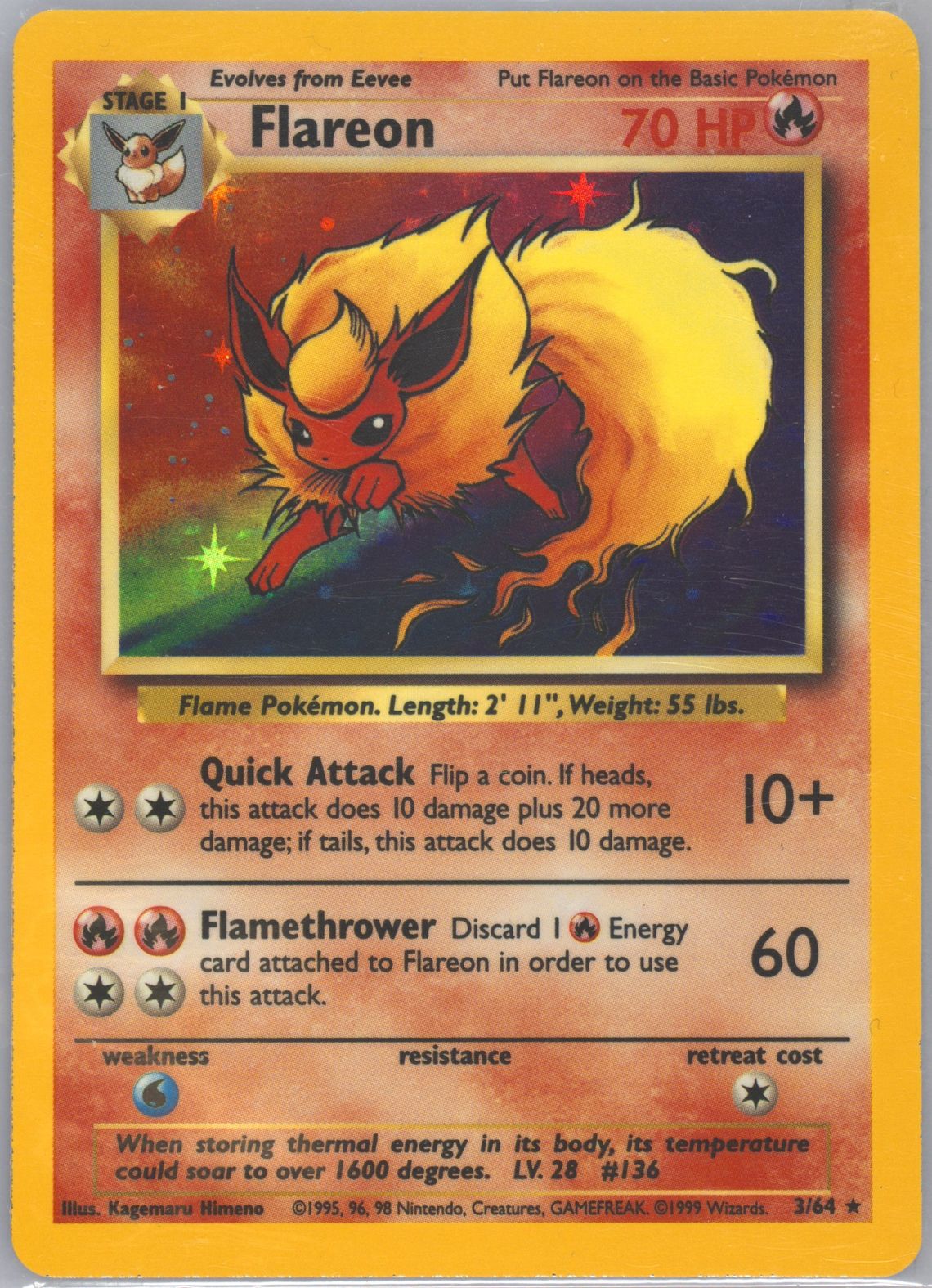
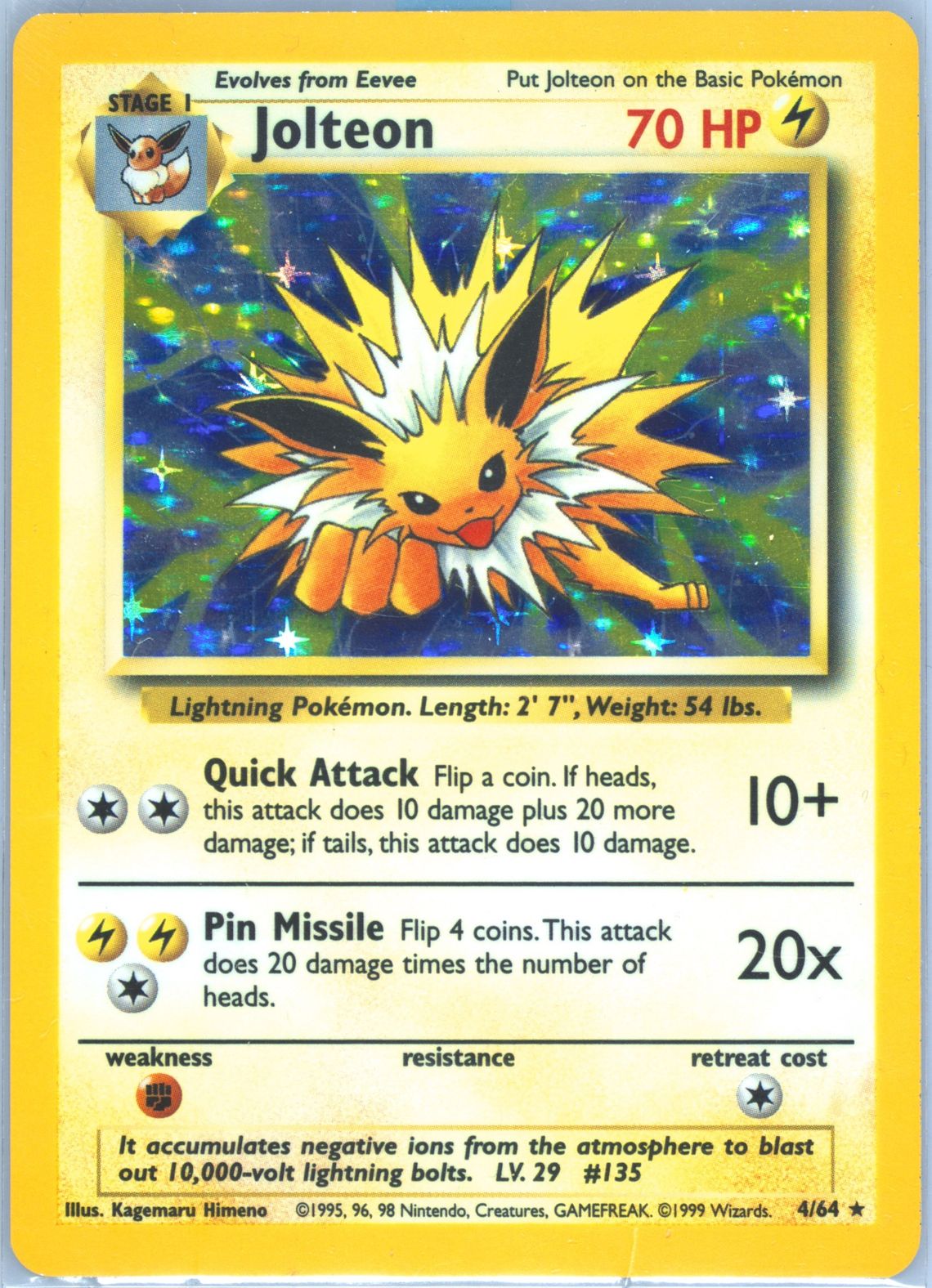
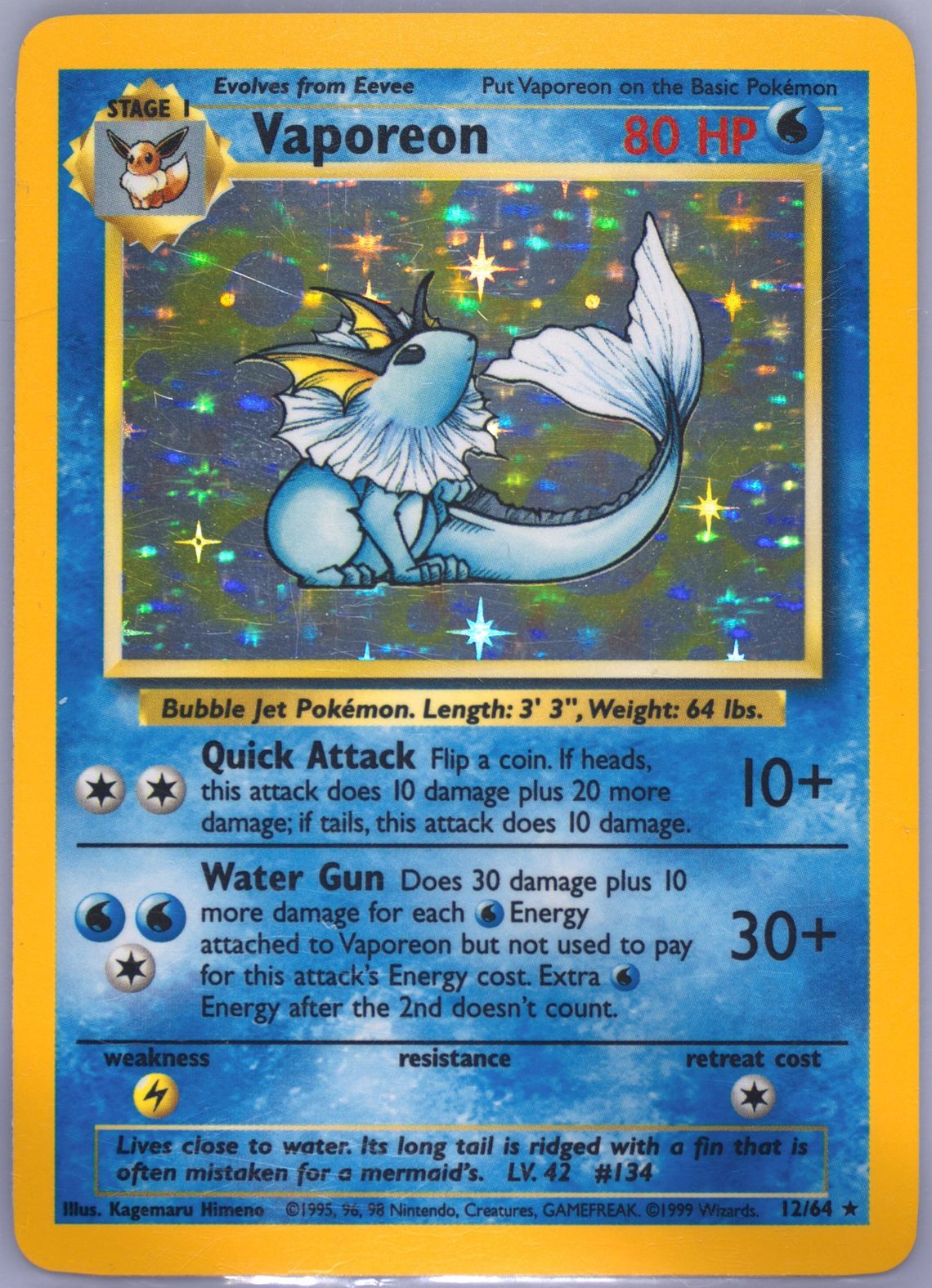
One of the most accessible famous errors is the Jungle "No Symbol" holo. When the Jungle set's Unlimited holos were first printed, a large run of the holographic rares went out without the Jungle set symbol, which was supposed to be designed into the black plate. The error was later corrected, but that early run was sizable.
This matters for ordinary collectors because Jungle was a heavily printed set, which means these no-symbol holos turn up in old collections regularly rather than being unicorns. They command a premium over their normal counterparts, and the popular Pokemon in the set, the Eeveelutions especially, are the most sought after. If you have a stack of Jungle holos from the late 1990s or early 2000s, it is genuinely worth checking each one for a missing set symbol. Our guide to set symbols shows you exactly where the Jungle symbol should sit.
What Makes an Error Valuable
Not all errors are created equal. The same mechanical mistake can produce a worthless card or a treasured one depending on a few factors.
| Factor | Effect on value |
|---|---|
| Severity | More dramatic errors are worth more |
| The Pokemon | Errors on Charizard, Mewtwo, or Pikachu command far more |
| Scarcity | Rarer errors beat common ones like off-centering |
| Condition and grade | High-grade graded errors fetch the most |
The most important takeaway is this: the more spectacular and unusual the error, and the more popular the card it lands on, the more it is worth. An error on a Charizard, Mewtwo, or Pikachu will always outsell the identical error on an unpopular Pokemon, because the error rides on top of the card's existing demand. A dramatic miscut Charizard is two desirable things at once.
Graded error cards in high grades have sold at auction for thousands of dollars, driven by the combination of scarcity, drama, and the popularity of the underlying card. Grading also matters because a third-party grader documenting the error lends it credibility and makes it tradeable with confidence.
Errors Versus Fakes Versus Damage
A word of caution. The hobby's interest in errors has created an incentive to fake them, and it is also easy to confuse a genuine error with simple post-production damage.
- A fake error is a normal card deliberately altered to look like a misprint. Our guide to spotting fakes covers the broader authentication tells that apply here too.
- Damage like a trimmed edge or ink rubbed off after the fact is not a manufacturing error and carries no premium. A real error happened at the factory; damage happened afterward.
When evaluating a potential error, the question is always whether the anomaly is consistent with a known manufacturing failure mode. A miscut that cleanly pulls in a neighboring card matches how cutting errors actually happen. A suspiciously convenient "error" that does not match any real process should be treated skeptically. For a fuller walkthrough of identifying genuine misprints, see our error cards guide.
The Bottom Line
Every Pokemon error card is a fossil of a moment when industrial machinery slipped: a cutter out of alignment, a color plate out of registration, a holo misfire, a missing layer of ink. Knowing those failure modes is what lets you read a misprint correctly and judge whether it is a worthless quirk or a genuine prize.
The errors that matter are the dramatic, scarce ones, and they are worth dramatically more when they land on a popular card. A trivial off-center common is worth nothing. A bold miscut Charizard, a strong color-shift error, or a famous documented misprint can be worth a great deal, especially graded. And some accessible errors, like the no-symbol Jungle holos, are common enough that you might already own one without knowing.
So the next time you sort through old cards, slow down on the ones that look slightly wrong. Most of those oddities are nothing. But every so often, a factory mistake from decades ago turns out to be the most interesting card in the box.