Raw vs Graded: Which Sells for More?
The slab adds value. The question is whether it adds enough.
By Misprint Editorial | Published Jun 2, 2026 | 5 min read
Yes, graded cards sell for more. That is the easy part. The hard part is whether the premium covers the cost of getting there, and right now in 2026, the cost has gone up.
Ask whether raw or graded cards sell for more and the answer is almost insultingly simple: graded, basically always, often by a lot. A pristine card in a sealed slab with a high grade commands a premium that a loose raw card cannot touch.
But that answer is also a trap, because it ignores everything that matters. Grading is not free, it is not instant, and it is not guaranteed to come back with the grade you are hoping for. The real question is not "which sells for more" but "does the extra money beat the cost of getting it." That is what this guide is actually about.
How Big Is the Graded Premium?
The premium is real and sometimes enormous. Based on 2026 market data across multiple price trackers, the rough pattern looks like this:
| Card type | Typical PSA 10 premium over raw |
|---|---|
| Modern cards | Roughly 2x to 5x the raw price |
| Vintage cards | Roughly 5x to 10x, sometimes far more |
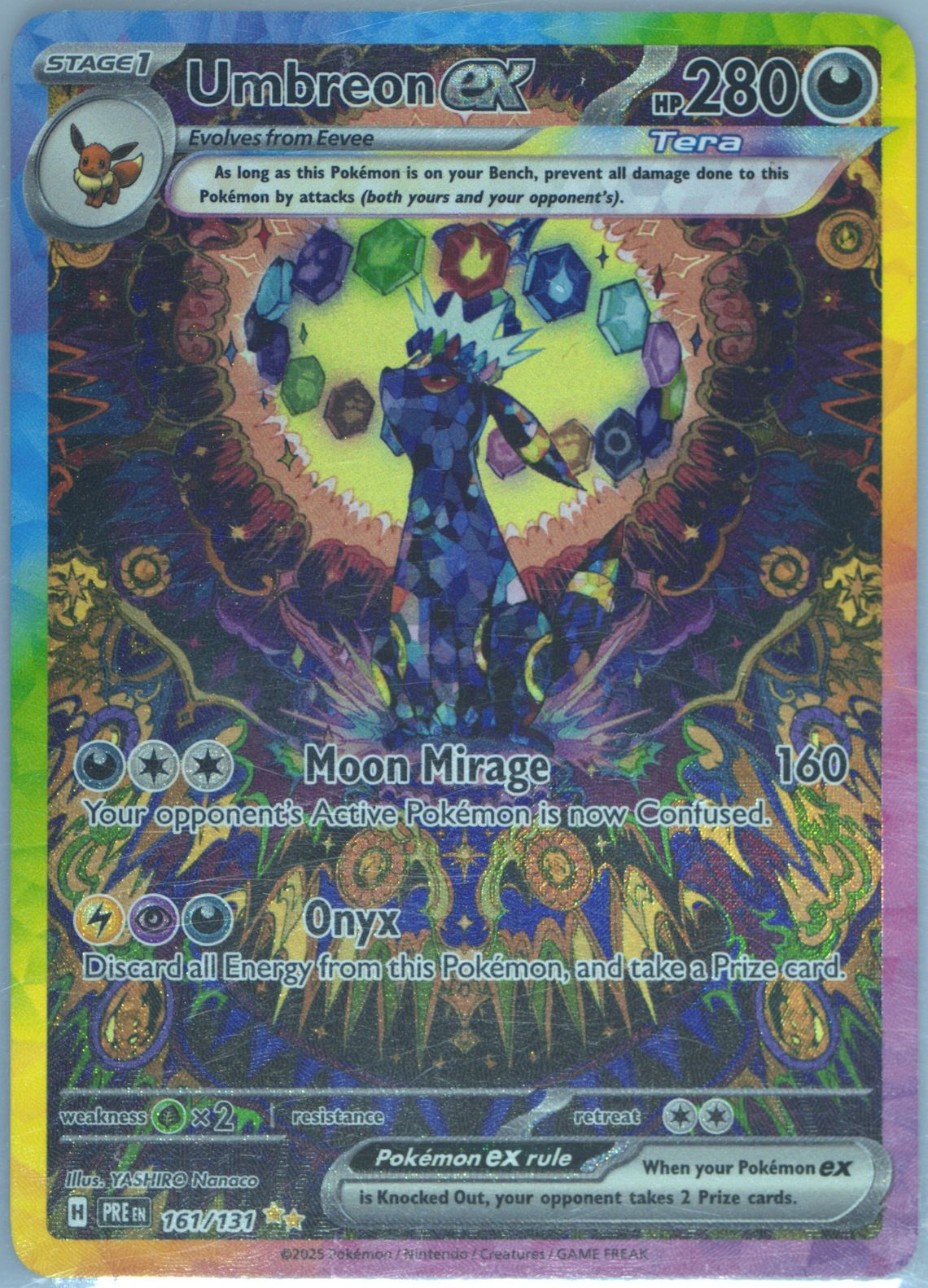
A few concrete illustrations from the current market: a 1st Edition Base Set Charizard sells for thousands of dollars raw depending on condition, and for many multiples of that in a PSA 10. On the modern side, the Prismatic Evolutions Umbreon ex SIR trades around $1,450 raw and has been bringing roughly $6,900 in PSA 10, a nearly 5x jump for the gem grade.
So the upside is enormous. But notice the words "PSA 10." That qualifier is doing almost all the work, and it is exactly where the risk lives.
The Catch: The Grade Gap
Here is the part that turns a simple question into a real decision. A graded card's value depends heavily on the grade, and the jump from one grade to the next can be brutal.
For many high-end cards in 2026, a PSA 10 sells for two to five times what the same card earns in PSA 9. Same card, same submission, one point of difference on the grading scale, and a massive difference in your payout. Drop to an 8 and the premium can largely evaporate.
And you do not control which side of that line your card lands on. Even cards that look flawless out of a fresh pack do not all earn a 10. For modern packs-fresh cards, a rough rule of thumb is something like a 35 to 55 percent PSA 10 rate, with most of the rest landing at 9. For some chase cards, the PSA 10 rate has come in below 30 percent. That means a large share of submissions return as 9s or lower, where the premium may not cover what you paid to grade them.
If you want to understand exactly how much that single grade can swing things, our breakdown of the PSA 10 versus PSA 9 price difference goes deep on it.
Grading Got More Expensive in 2026
Timing matters here, because the economics of grading shifted this year.
As of June 2026, PSA temporarily paused its cheaper Value service tiers to deal with a submission backlog that climbed into the millions of cards. With those tiers suspended, the Regular tier, around $80 per card, became the cheapest mainstream way in, with turnaround stretching to roughly 40 to 60 days. The lower-cost bulk options that once made grading inexpensive cards viable are, for now, not available.
That single change reshapes the math. When grading a card costs $80 and takes two months, the card needs to be worth meaningfully more in its graded form to justify the submission. Cheap cards that might have penciled out under the old Value pricing often no longer do.
The Break-Even Math
So when does grading actually pay? Work it as a straightforward calculation:
- Estimate your realistic graded value. Not the PSA 10 dream price, but a blended expectation that accounts for the real odds of landing a 9 versus a 10.
- Subtract the full cost. Grading fee, shipping both ways, and insurance.
- Compare to the raw price you could get today with zero waiting and zero risk.
A widely used guideline: a card should be worth at least three times your total grading cost in its expected graded form before grading makes sense. Under 2026's higher fees, that pushes the sensible threshold up. As a rough cut, cards worth under about $50 raw rarely justify grading right now, and the math gets genuinely comfortable once cards are worth a few hundred raw, where a successful high grade clearly clears the cost and the wait.
Our fuller treatment of whether grading Pokemon cards is worth it walks through more scenarios, and which cards to grade in 2026 helps you pick candidates with the best odds.
When Raw Is the Better Sell
Selling raw is not a failure mode. It is the right answer in plenty of situations:
- The card is worth under roughly $50 raw. The grading premium will not reliably cover the fee.
- The card has visible flaws. Whitening, edge wear, centering issues, or print lines cap your grade, and grading a card that will come back a 7 or 8 usually wastes the fee.
- You need the money now. Grading ties up your card for two months. Raw sells today.
- Tons of graded copies already exist. For commonly graded cards, the market can be saturated with slabs, compressing the premium.
- You are not confident in your own grading eye. If you cannot reasonably predict whether a card is a 9 or a 10, you are gambling with the fee.
Selling raw also passes the grading decision to the buyer, who may be happy to take that gamble themselves, which is part of why clean, high-end raw cards still sell briskly.
When Graded Clearly Wins
Grading tends to pay off when the conditions line up in your favor:
- The card is high-value raw, ideally a few hundred dollars or more, so the premium dwarfs the fee.
- The card looks genuinely pristine, giving it a strong shot at a top grade.
- It is a vintage or marquee card, where graded premiums run highest and buyers strongly prefer authenticated slabs.
- You are not in a hurry and can absorb the multi-week turnaround.
For high-value cards, grading also adds authentication, which matters enormously to buyers wary of fakes and reassures them enough to pay up.
Where Each One Sells Best
The venue can differ depending on which way you go. Graded slabs and raw cards do not always sell best in the same place, which is why we wrote a dedicated guide on the best place to sell graded Pokemon cards. For raw cards and the broader picture, our overview of the best place to sell Pokemon cards in 2026 covers the trade-offs across platforms.
The Bottom Line
Graded cards sell for more, full stop, sometimes many times more. But "sells for more" is not the same as "nets you more." Grading in 2026 costs around $80 per card on the cheapest open tier, takes weeks, and only pays off if your card earns a high grade you cannot guarantee in advance.
The practical rule: grade high-value, genuinely pristine cards where the expected graded price comfortably clears the fee, and sell everything else raw. For most collections, that means grading a small handful of standout cards and selling the rest as they are. Run the break-even math on each candidate honestly, and you will avoid the most common grading mistake, paying $80 to turn a $40 card into a $60 card.