How to Read Pokemon Card Rarity Symbols (2026 Update)
The little symbol in the corner has gotten complicated. Here is the full map.
By Misprint Editorial | Published May 3, 2026 | 6 min read

For twenty years a circle, a diamond, and a star told you everything. Then the Scarlet & Violet era added a whole new alphabet of stars. Here is how to read all of it.
Flip any Pokemon card over to its front and look at the bottom corner. That little symbol tells you how rare the card is, at least in theory. For most of the game's history, the system was beautifully simple: three symbols, three meanings, done. But the modern era has layered on a stack of new rarity tiers, most of them built out of stars in different colors and quantities, and it is genuinely easy to lose track.
This is the 2026 version of the map. We will start with the classic symbols that still appear on every set, then walk through the expanded Scarlet & Violet tiers that confuse most collectors, and finish with the practical caveat that the symbol does not always equal the value. If you want the deeper conceptual breakdown of how rarity drives price, our full rarity guide is the companion piece to this one.
The Classic Three (Still Used on Every Set)
These three symbols have been on Pokemon cards since the beginning, and they still appear in the bottom corner of cards today. They mark the base rarity of the "regular" cards in a set.
| Symbol | Name | Meaning |
|---|---|---|
| Black circle | Common | Lowest rarity, most cards in a set |
| Black diamond | Uncommon | A step up, still easy to pull |
| Black star | Rare | The premium "regular" rarity |
A black circle means Common. A black diamond means Uncommon. A black star means Rare. In the old Wizards of the Coast days, that was essentially the entire system, with holographic versions of the rares being the only true chase cards. Pulling a holo Charizard from a Base Set pack was a genuine event precisely because there was no hierarchy of seven rarity tiers sitting above it.
If you are working with vintage cards, those three symbols plus the holo distinction cover almost everything you need. The complexity is a modern invention.
The Scarlet & Violet Expansion
When the Scarlet & Violet era launched, the Pokemon Company added a set of new rarity symbols. The goal was to formalize tiers that collectors had already been naming informally, so that the official rarity matched what people were actually calling these cards. The new tiers are built mostly out of stars, distinguished by color and count.
Here is the modern hierarchy, from the new bottom-end premium up to the top chase cards:
| Symbol | Rarity | What it is |
|---|---|---|
| Two black stars | Double Rare | Pokemon ex cards in their standard art |
| Two silver stars | Ultra Rare | Full-art trainers and similar premium cards |
| One gold star | Illustration Rare | Alternate full-art versions of regular Pokemon |
| Two gold stars | Special Illustration Rare | Alternate full-art ex and Supporter cards |
| Three gold stars | Hyper Rare | Gold "secret rare" full-art cards |
Let us unpack what each of these actually means, because the names are not always intuitive.
Double Rare (two black stars)
Double Rare is the standard rarity for Pokemon ex cards in their normal artwork. These are the powerful cards that anchor most modern sets. They are foil and desirable, but they are the most common of the "special" cards, so they sit at the bottom of the premium ladder.
Ultra Rare (two silver stars)
Ultra Rare covers full-art versions of trainers, supporters, and similar premium cards. The silver stars set it apart from the gold-star illustration tiers above it.
Illustration Rare (one gold star)
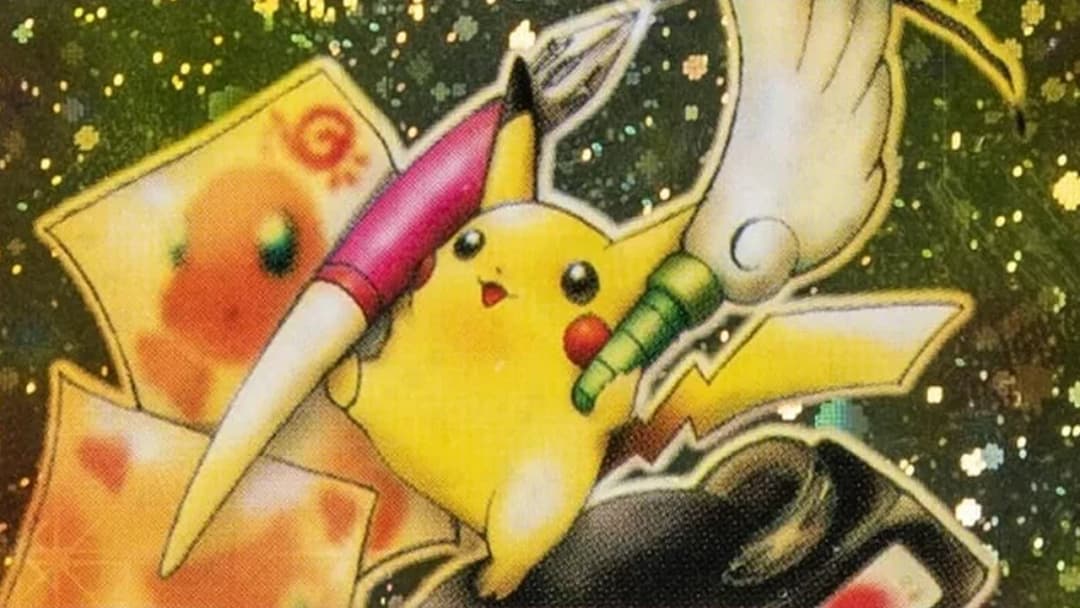
Illustration Rares, often shortened to "IR," are alternate-art versions of common, uncommon, or rare Pokemon, rendered as gorgeous full-art foil illustrations. The art usually places the Pokemon in a scene or environment that captures its personality. These have become some of the most beloved cards in the modern game precisely because the artwork is the whole point.
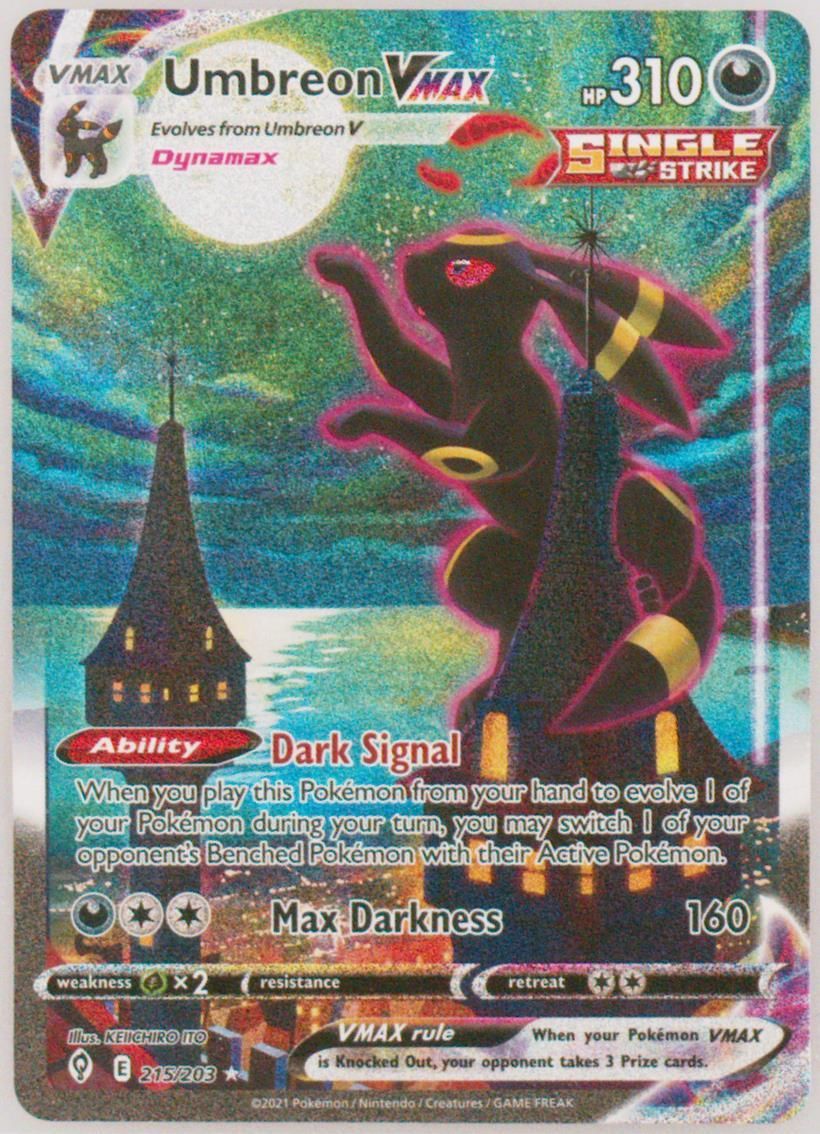
Special Illustration Rare (two gold stars)
Special Illustration Rares, or "SIRs," are the alternate-art equivalent for Pokemon ex and Supporter cards. They feature the same lavish full-art treatment as Illustration Rares but applied to the higher-power ex cards. SIRs are frequently the single most valuable pull in a modern set, and the chase SIR of a popular set can carry the entire box's value on its own.
Hyper Rare (three gold stars)
Hyper Rares are what collectors used to call "secret rares." They are full-art foil cards with gilded gold borders and accents. The three gold stars mark the top of the printed rarity ladder.
The 2026 Additions: The Mega Evolution Tiers
The Mega Evolution era (late 2025 onward) kept the Scarlet and Violet ladder and stacked two new tiers onto it. Mega Attack Rares are full-art Mega ex cards with a retro pop-art treatment and katakana attack text, pulled at roughly 1 in 29 packs where they appear. Mega Hyper Rares are the era's new ceiling: fully gold-etched Mega ex cards with brand-new artwork rather than recolored existing art, pulled somewhere between 1 in 540 and 1 in 1,800 packs depending on the set, the rarest standard pull in the modern game. If you're opening current-era packs, our Mega Evolution ex explainer covers how these cards play and what they're worth.
One translation note that trips up buyers: Japanese sets label their equivalent of the Special Illustration Rare as "SAR" (Special Art Rare). Same tier, different name, and listings mix the two constantly.
A Quick Note on Holo Patterns and Reverse Holos
Two things that are not strictly rarity symbols still affect how a card looks and what it is worth.
Reverse holos apply the holographic foil to the body of the card rather than just the artwork window. Any card can be printed as a reverse holo, and these are pulled at a set rate in packs. They carry the same rarity symbol as their non-reverse counterpart, but they often sell for a bit more, which makes them worth pulling out of any bulk lot you are sorting.
Holo patterns themselves have evolved dramatically since the old "cosmos" galaxy holo of Base Set. Modern textured cards in the Illustration Rare and higher tiers have surface texturing you can feel with your finger, which is also one of the better authenticity checks, as our guide to spotting fakes explains.
The Symbol Is Not the Whole Story
Here is the most important caveat, and the one that separates experienced collectors from beginners: the rarity symbol tells you how a card was distributed, not how much it is worth.
A Hyper Rare from an unpopular set can sell for less than an Illustration Rare of a beloved Pokemon from a hot set. A Double Rare ex of a fan-favorite can outsell an Ultra Rare trainer nobody wants. The symbol is a useful starting point, but actual market value comes from demand, the popularity of the specific Pokemon, the artwork, the set's overall heat, and condition.
This is especially true across eras. A vintage holo Rare carrying only a humble black star can be worth thousands of dollars, while a modern three-gold-star Hyper Rare from a forgettable set might sell for a few dollars. Rarity symbols are calibrated within a set, not across the entire history of the game.
So treat the symbol as the first question, not the last. Once you know the rarity tier, the real work is figuring out demand, and that is where our guide to whether a card is valuable picks up.
A Practical Reading Routine
When you pick up a modern card and want to size it up quickly, run this sequence:
- Find the symbol in the bottom corner.
- Identify the tier using the tables above (count the stars, note the color).
- Check whether it is a reverse holo or full art, which the symbol alone will not always tell you.
- Consider the Pokemon and the set, because a popular character in a hot set changes everything.
- Factor in condition, since grade can multiply or destroy a card's value regardless of rarity.
That routine works for any modern card. For vintage cards, simplify it: the symbol is just circle, diamond, or star, and the big questions become holo-or-not, edition, and condition.
The Bottom Line
Pokemon rarity symbols started simple and got complicated, but the logic is still learnable in an afternoon. The classic circle, diamond, and star still mark Common, Uncommon, and Rare on every set. The Scarlet & Violet era added a ladder built from stars: two black stars for Double Rare, two silver for Ultra Rare, one gold for Illustration Rare, two gold for Special Illustration Rare, and three gold for Hyper Rare.
Learn that hierarchy and you can read any modern card on sight. Just remember the golden caveat: the symbol tells you how the card was printed and distributed, not what it is worth. Demand, popularity, set heat, and condition do the heavy lifting on price. The symbol is where you start the conversation, not where you end it.