The Most Expensive Rayquaza Cards
The sky-high dragon has some of the most coveted cards in the hobby. Counting them down as the market runs hot.
By Misprint Editorial | Published Jul 4, 2026 | 7 min read
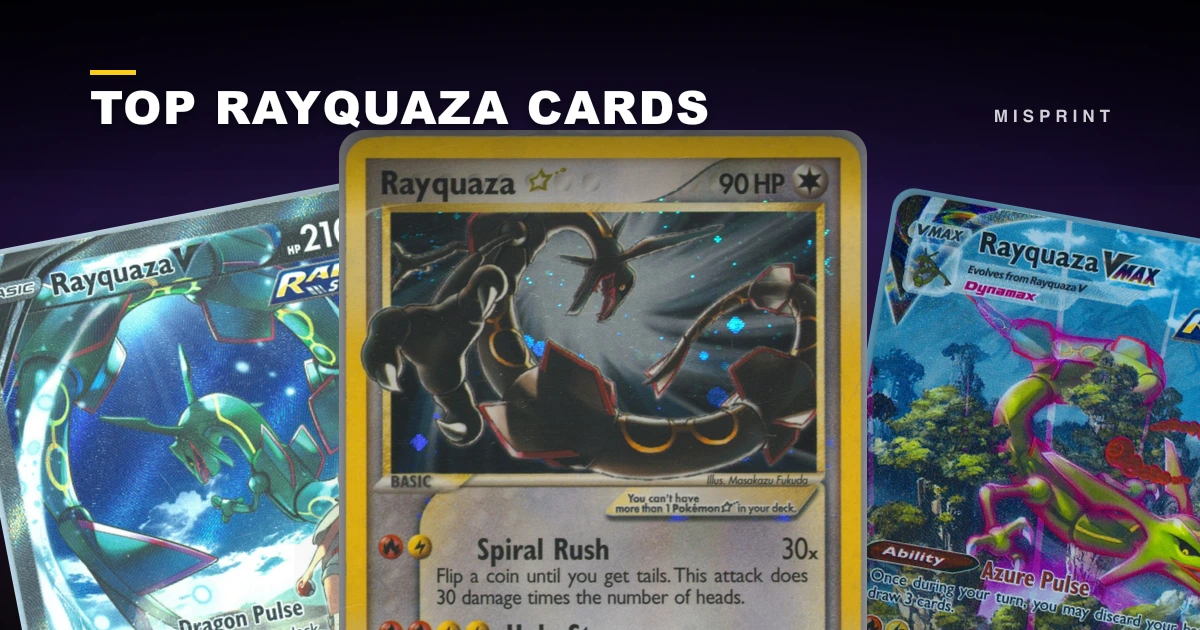
Rayquaza prices have roughly doubled this year, and the card driving the frenzy doesn't even exist in English yet.
Few Pokemon translate to a trading card as well as Rayquaza. The serpentine green dragon is built for dramatic, edge-to-edge artwork, and two decades of printings have produced a genuine vintage grail, one of the most beloved modern alternate arts ever made, and a string of low-population sleepers in between. And 2026 has poured fuel on all of it: with Mega Rayquaza ex headlining November's Delta Reign set (the Storm Emeralda preview covers it), the whole Rayquaza catalog is up over 100% year to date.
Below is our countdown of the ten most expensive English Rayquaza cards by raw near-mint value as of early July 2026. Graded prices get their own section, and this catalog has some of the wildest slab math in the hobby. Full recap table at the bottom.
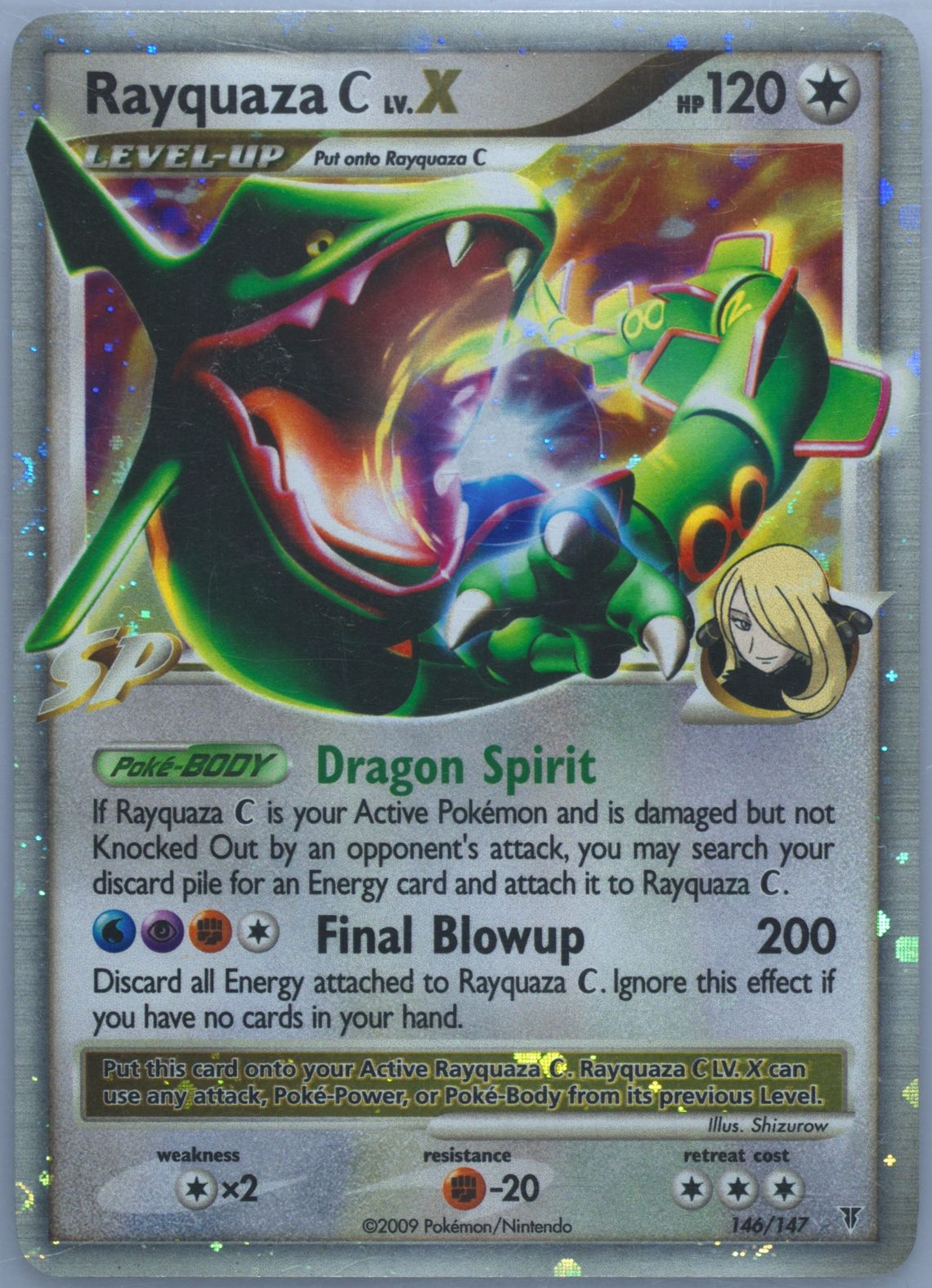
10. Rayquaza C LV.X, Supreme Victors #146/147 (2009): ~$195
The sleeper king. Raw copies cost about $195, and PSA 10s have sold for as much as $23,000 this April. That's not a typo; the card was a roughly 1-in-72-packs pull from an under-opened Platinum-era set, and gem-mint copies barely exist. One trap to know: the DP47 tin promo looks nearly identical and is worth a fraction as much (about $63). The pack-pulled #146/147 is the one that matters.
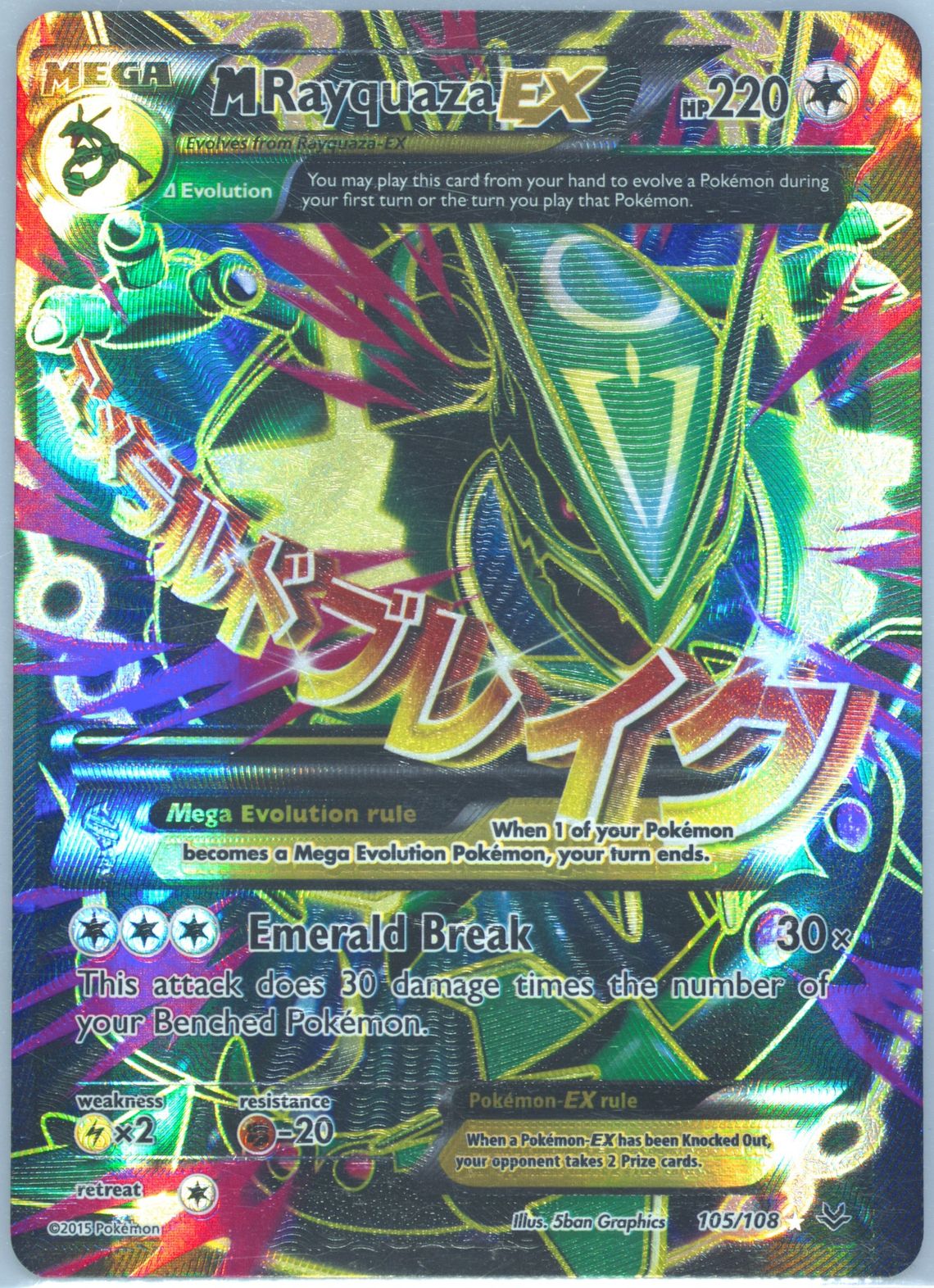
9. M Rayquaza-EX Full Art, Roaring Skies #105/108 (2015): ~$385
Same story, louder. About $385 raw, around $17,000 for a PSA 10 sale in January. The XY era's foil was notoriously condition-fragile, populations are tiny, and the anniversary-year XY revival has collectors finally paying attention.
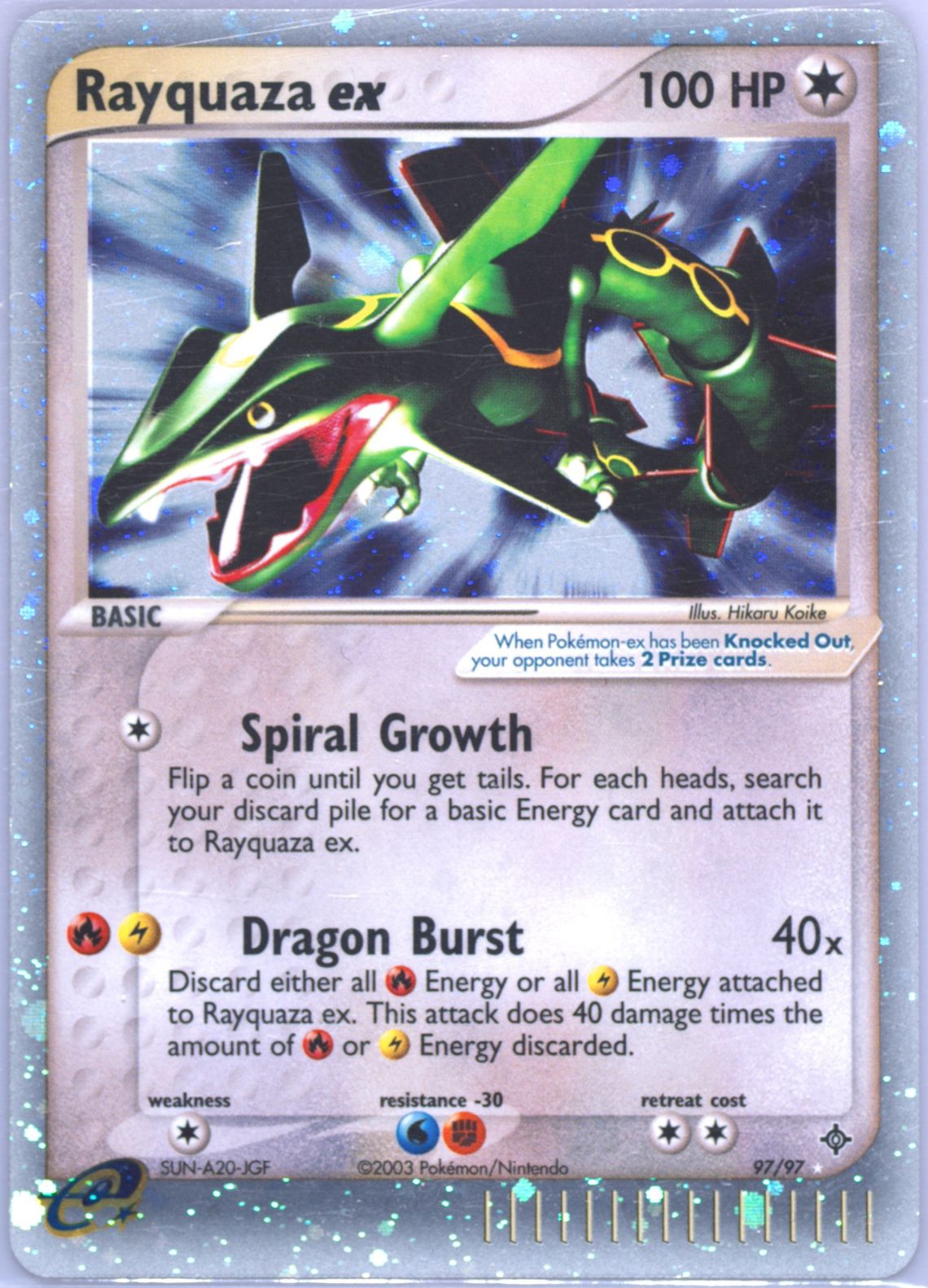
8. Rayquaza ex, EX Dragon #97/97 (2003): ~$390
Rayquaza's very first English card, the holo ex from 2003's EX Dragon. Roughly $390 raw, and $11,100 for a PSA 10 in April. First-appearance cards carry a specific kind of gravity with collectors, and the ex-era's brutal condition sensitivity does the rest.
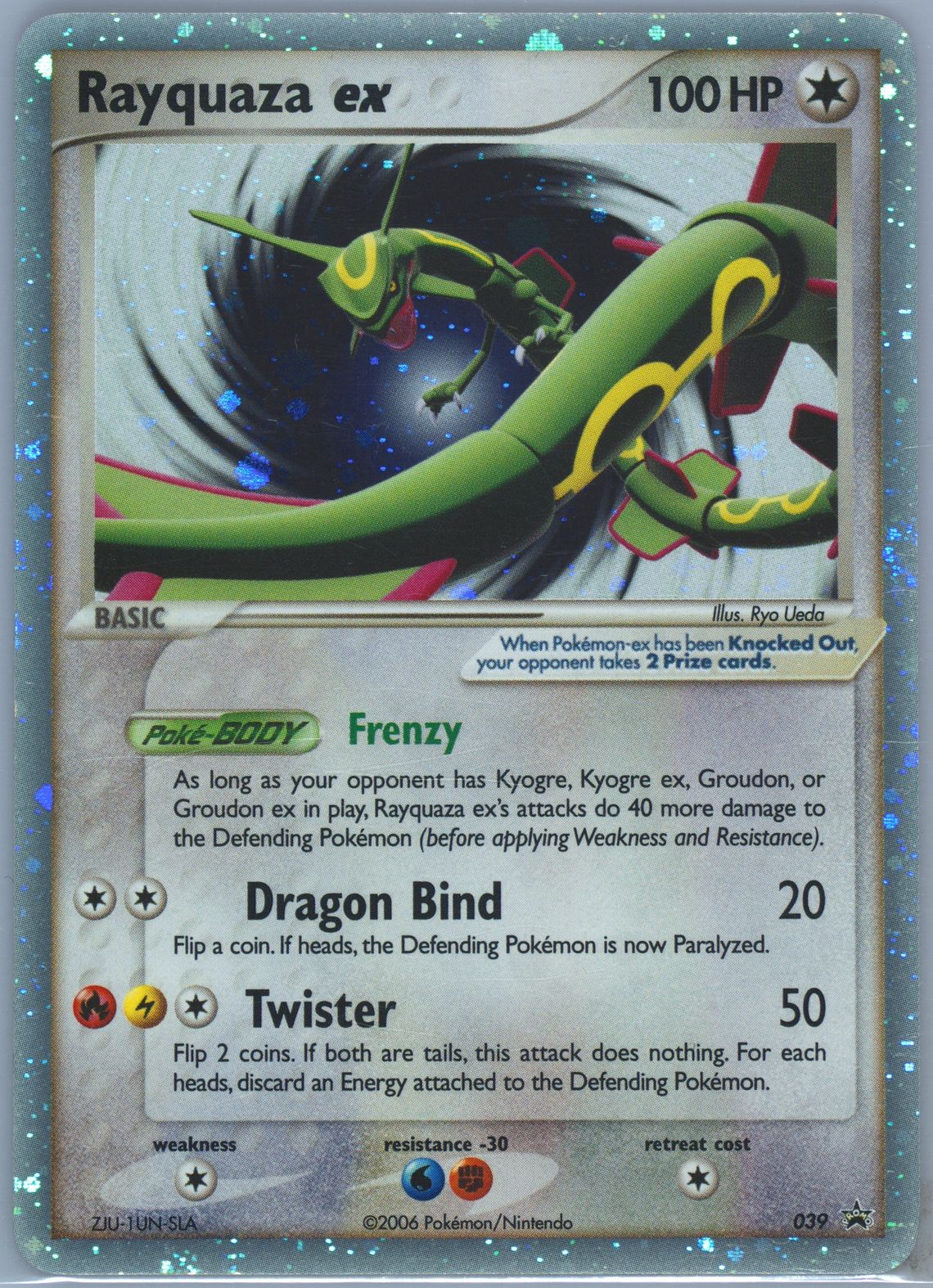
7. Rayquaza ex, Nintendo Black Star Promo #039 (2006): ~$490
The tin promo that became a trophy. Distributed in the fall 2006 EX Collector's Tins, it trades around $490 raw, and a PSA 10 sold for $27,868 in May, the second-highest graded price in the entire Rayquaza catalog. Don't confuse it with the cheap 2015 XY-era Rayquaza promos; the 2006 tin card is the one with the history.
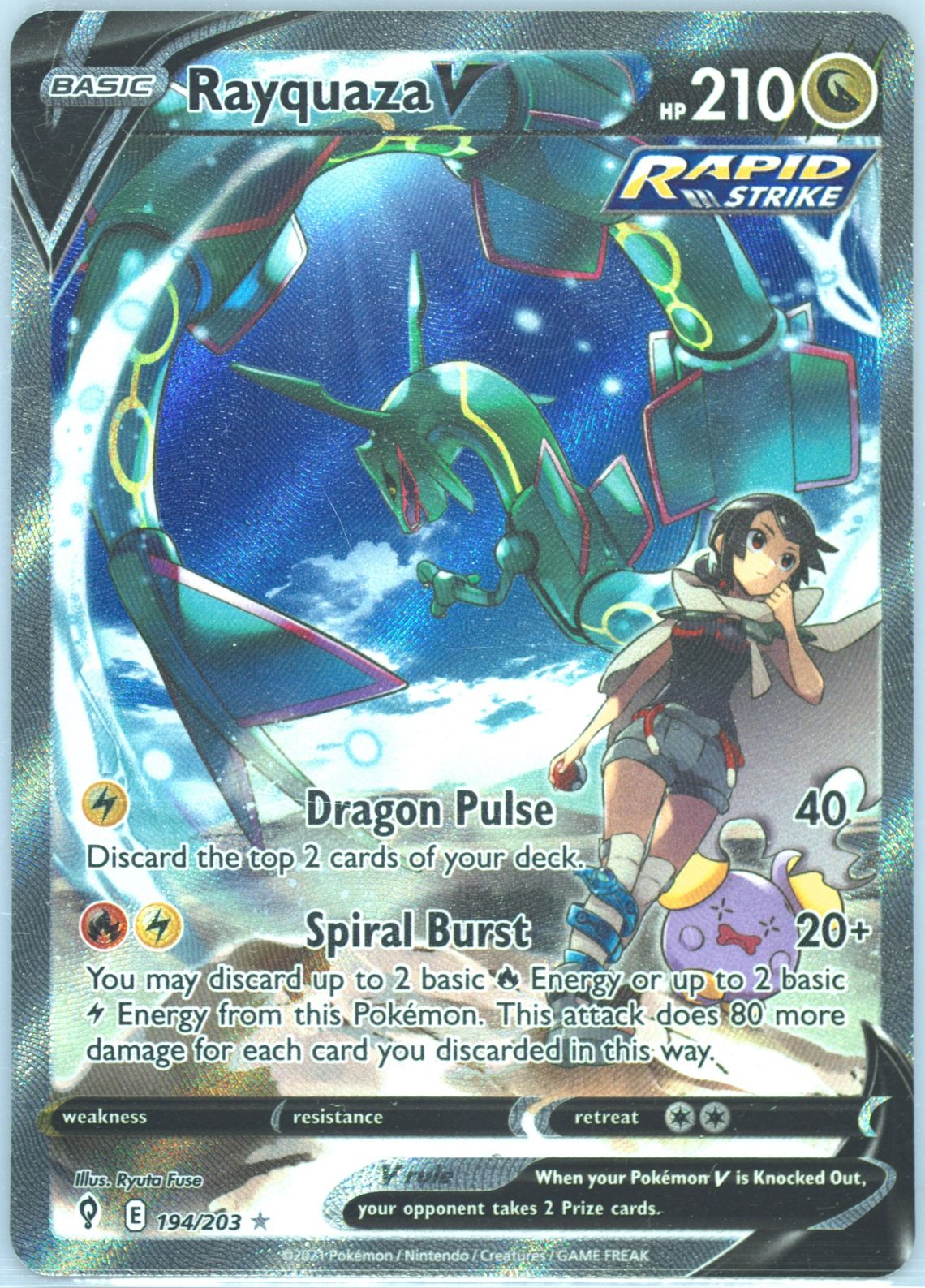
6. Rayquaza V Alternate Art, Evolving Skies #194/203 (2021): ~$505
The little sibling of the famous VMAX, and a gorgeous card in its own right. About $505 raw and $1,185 in PSA 10. Evolving Skies alt arts as a category have proven to be the blue chips of the Sword & Shield era, and this is the second of two on this countdown.
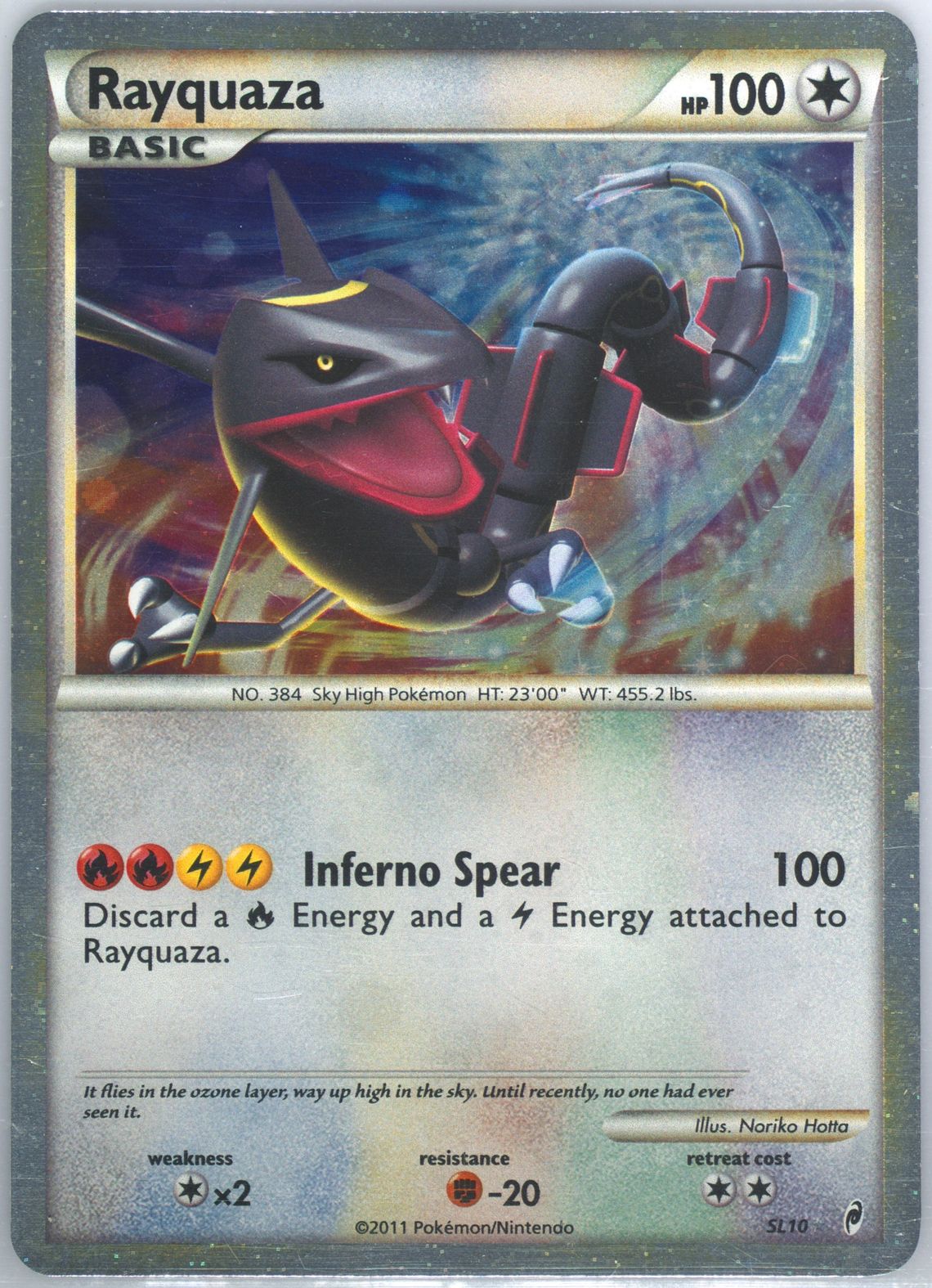
5. Rayquaza Shiny Legend #SL10, Call of Legends (2011): ~$550
The shiny black Rayquaza's first English appearance, from the short-printed Shiny Legend subset. Around $550 raw, with PSA 10s typically near $4,600 and one outlier sale far above (the pop is tiny, so sales are erratic). Call of Legends was a strange, transitional set, and its SL cards have aged into cult favorites. Check the number: the regular Call of Legends Rayquaza #20 is cheap.
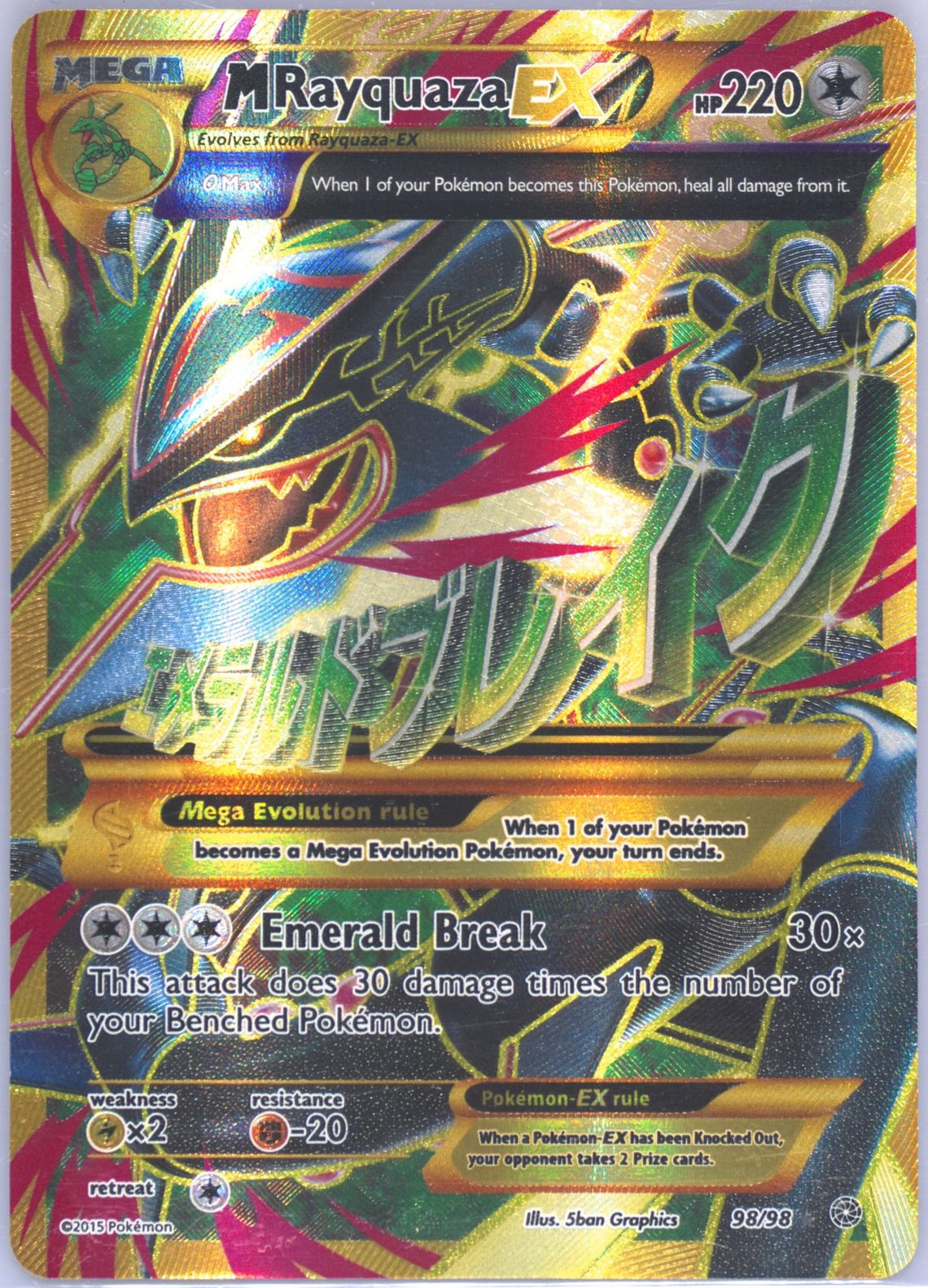
4. M Rayquaza-EX Shiny, Ancient Origins #98/98 (2015): ~$750
The volatile one. This shiny secret rare jumped almost 50% in the past month, with recent sales scattered between $640 and $970. The black-and-gold shiny Mega Rayquaza is exactly the artwork the current rally is about, and the market is still finding its level. Expect this number to be wrong (in either direction) within weeks.
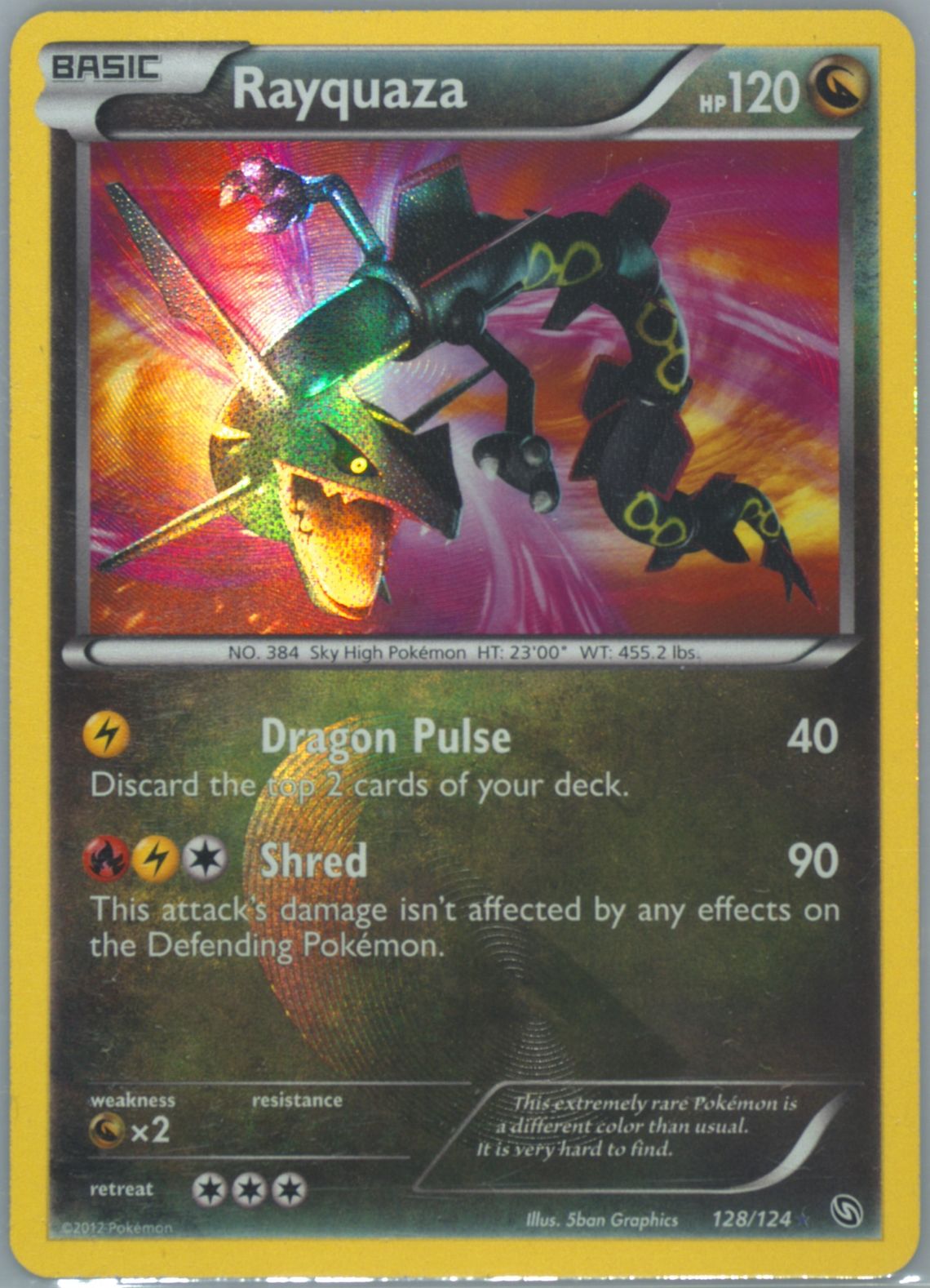
3. Rayquaza Shiny Secret Rare, Dragons Exalted #128/124 (2012): ~$950
A shiny Rayquaza secret from the Black & White era, when secret rares were genuinely secret. Around $950 raw with thin, choppy sold data above that. Reliable PSA 10 comps barely exist because gem copies barely exist. The valuable card is this shiny #128, not the set's Rayquaza EX full art #123, which runs about $180.
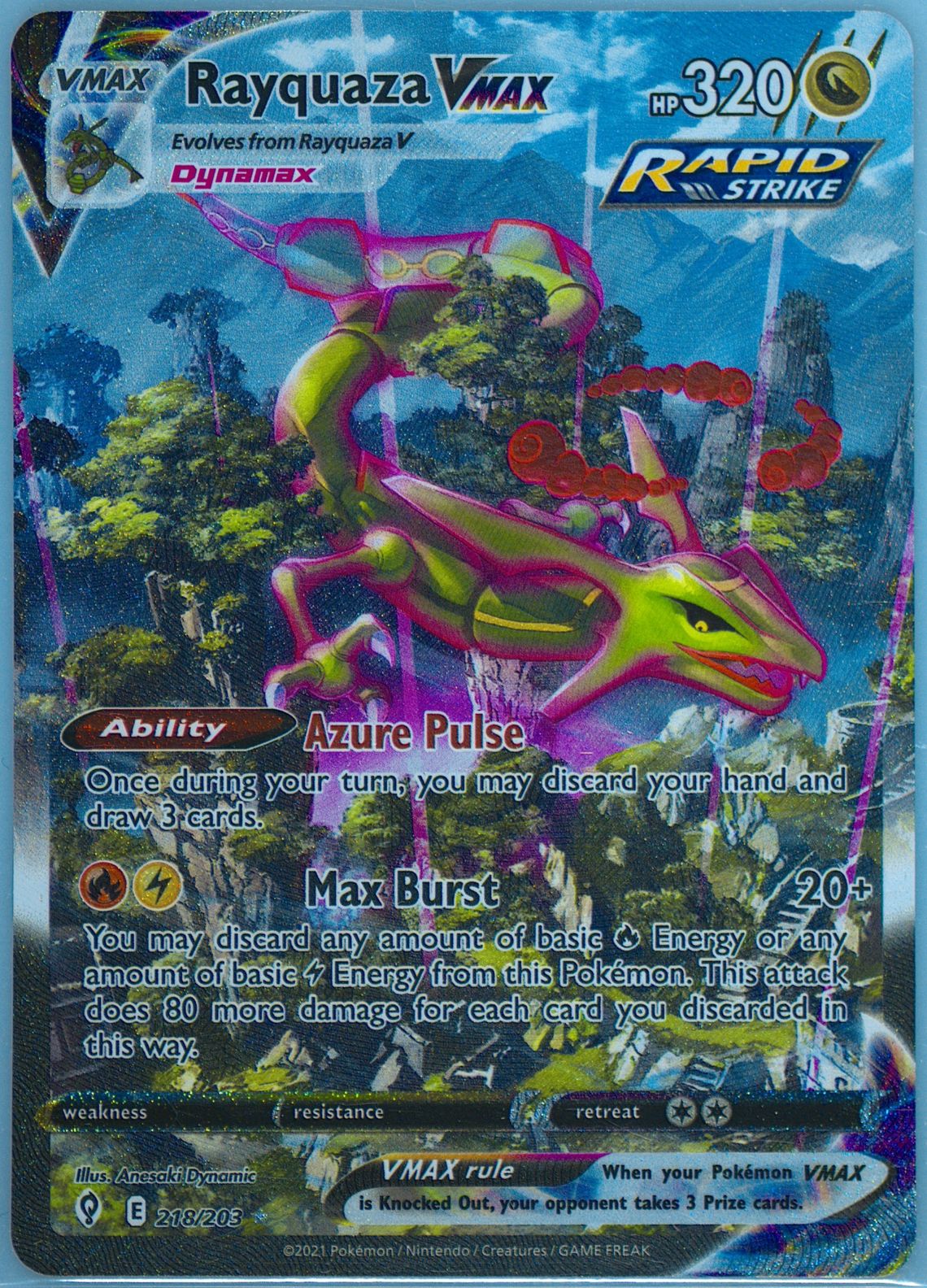
2. Rayquaza VMAX Alternate Art, Evolving Skies #218/203 (2021): ~$1,100
The modern icon: the "sky mural" alternate art that helped make Evolving Skies the defining sealed product of its era. Raw copies now trade around $1,100 to $1,170, nearly double their level a year ago, with PSA 10s selling around $2,150 and asks well above. Two traps for buyers: the rainbow secret #217/203 (about $100) gets mislabeled "alt art" constantly, and the same artwork was reprinted as Silver Tempest TG20 at a fraction of the price. The set symbol and #218 numbering are what you're paying for.
1. Rayquaza Gold Star, EX Deoxys #107/107 (2005): ~$9,000 verified
No suspense for anyone who knows the catalog, but the number keeps growing faster than the guides can track it. The shiny black-and-gold Rayquaza Gold Star is one of the defining grails of the post-Wizards era. Price guides still quote raw copies near $5,500 to $6,000, but the authenticated market says otherwise: a heavily played raw copy sold for $8,200 in mid-June, a PSA 1 brought $9,100, and a PSA 3 cleared $11,999 in early July. That gap is the counterfeit discount; unverified raw copies trade cheap because Gold Stars are among the most faked cards in the hobby, while anything authenticated commands the real price. A verified near-mint copy is realistically a five-figure card now.
Graded, it enters another dimension entirely: a PSA 10 sold for $49,000 in February, PSA 8s reached $34,101 by June, and even a PSA 7 brings about $25,000. At those rungs, the next PSA 10 to trade will likely land dramatically higher. Authentication is non-negotiable at this level, and our roundup of the most expensive Gold Star cards puts this card alongside its peers, at the very top.

The Graded Kings
Rayquaza's slab market is arguably the most dramatic of any Pokemon not named Charizard or Pikachu.
The Gold Star rules it: $49,000 for a PSA 10 this February (a number the June PSA 8 sale at $34,101 suggests is already outdated), $25,000 for a PSA 7, and $14,000-plus even at PSA 6. Below it, the 2006 tin promo hit $27,868 in May, the Supreme Victors LV.X reached $23,000 in April, the Roaring Skies M Rayquaza-EX brought about $17,000 in January, the delta-species Rayquaza ex from Dragon Frontiers sold for $15,200 in June, and the EX Dragon original hit $11,100 in April.
That's six different Rayquaza cards with five-figure graded sales this year. The common thread: mid-2000s-to-2015 printings with fragile foil and minuscule gem populations, revalued all at once by the anniversary rally and the Mega hype. If you hold clean raw copies of any of them, read our grading guide before you sell raw.
The Elephant in the Sky: Mega Rayquaza ex
One card is conspicuously absent from this list: Mega Rayquaza ex, because it does not exist in English yet. It headlines Delta Reign on November 6, 2026 (Japan's Storm Emeralda gets it July 31), and the anticipation alone has helped drive the Rayquaza index up more than 100% this year. Two things follow. First, any "English Mega Rayquaza ex" listed before November is a Japanese card, a 2015 M Rayquaza-EX (a different card entirely), or a fake. Second, if the Mega era's pattern holds, the new card's launch will pull even more attention onto the classics ranked above, which is a big part of why they've run. Our Storm Emeralda preview tracks the release.
Buyer Traps to Avoid
- #218 vs #217 vs TG20. The $1,100 Evolving Skies card is the alt-art #218/203. The rainbow #217 and the Silver Tempest TG20 reprint of the same artwork are far cheaper and constantly mislabeled.
- "Shining Rayquaza" isn't vintage. Rayquaza debuted in 2003; there is no Neo-era Shining Rayquaza. The only English shiny-branded one is Shining Legends #56/73 (2017), about $118.
- LV.X pack card vs tin promo. Supreme Victors #146/147 is the $23,000-slab card; the DP47 promo lookalike is about $63.
- Gold Star language versions. The $5,400/$49,000 figures are for the English EX Deoxys #107/107. Japanese, Italian, German, French, and Portuguese prints are separate, cheaper markets.
The Full Rankings
| Rank | Card | Set / Year | Approx. value |
|---|---|---|---|
| 1 | Rayquaza Gold Star | EX Deoxys (2005) | ~$9,000 verified (PSA 10: $49,000) |
| 2 | Rayquaza VMAX Alt Art #218 | Evolving Skies (2021) | ~$1,100 |
| 3 | Rayquaza Shiny Secret #128 | Dragons Exalted (2012) | ~$950 |
| 4 | M Rayquaza-EX Shiny #98 | Ancient Origins (2015) | ~$750 and volatile |
| 5 | Rayquaza Shiny Legend #SL10 | Call of Legends (2011) | ~$550 |
| 6 | Rayquaza V Alt Art #194 | Evolving Skies (2021) | ~$505 |
| 7 | Rayquaza ex Promo #039 | Nintendo Black Star (2006) | ~$490 (PSA 10: $27,868) |
| 8 | Rayquaza ex #97 | EX Dragon (2003) | ~$390 |
| 9 | M Rayquaza-EX Full Art #105 | Roaring Skies (2015) | ~$385 (PSA 10: $17,000) |
| 10 | Rayquaza C LV.X #146 | Supreme Victors (2009) | ~$195 (PSA 10: up to $23,000) |
The Bottom Line
Rayquaza is having the biggest year of its collecting life. A vintage grail pushing $50,000 in gem mint, a modern alt art that doubled, six five-figure slabs in six months, and a November release likely to pour more fuel on all of it. If you're buying, the traps are all about exact card numbers and language versions, so read listings twice. If you're holding, the question is whether to ride the Mega Rayquaza wave or sell into it, and that one's yours to answer. Either way, expect every number on this page to age fast; this is the most kinetic corner of the market right now.
Prices referenced are approximate market values as of early July 2026 and will fluctuate. Check current listings on Misprint for the latest prices.