Best Pokemon Cards to Invest In (2026)
The honest version, including the parts that lose money.
By Misprint Editorial | Published Jul 7, 2026 | 6 min read

Pokemon cards are a volatile, speculative asset. Read the bear cases, not just the bull cases
Let us set expectations before we name a single card. Pokemon cards are not a savings account. They are an illiquid, sentiment-driven collectible whose prices can swing 30 percent in a quarter. Some categories have genuinely outperformed traditional assets over the past decade. Others have torched the people who bought at the top. A responsible "best cards to invest in" guide has to hold both of those truths at once, so that is what this one does.
The cards below have the strongest investment case we can defend as of mid-2026, each with a bull case and a bear case, and each tied to verified pricing. If you want the broader strategic view, our piece on whether Pokemon cards are a good investment in 2026 is the companion to this list.
The 2026 Investment Climate (Read This First)
The market in mid-2026 is bifurcated and in what most observers call a correction rather than a crash, which began in late 2025.
- Modern is correcting. Modern singles are down roughly 20 to 45 percent and modern sealed 20 to 50 percent from 2025 peaks. The Prismatic Evolutions Umbreon ex SIR, for example, fell from roughly $1,600 in early 2025 toward the $800 to $1,050 range.
- Vintage and scarce authenticated cards are at records. A PSA 10 Pikachu Illustrator sold for $16.49 million at Goldin in February 2026, the most expensive trading card ever. A 1st Edition Base Charizard PSA 10 hit a record near $550,000 at Heritage in late 2025.
- Three structural risks hang over modern cards. First, supply: The Pokemon Company printed roughly 10 billion cards in a single recent year and is expanding capacity further, which we cover in why Pokemon print runs are bigger in 2026. Second, grading population growth: PSA graded around 20 million items in 2025, its biggest year ever, which compresses the premium on modern slabs. Third, friction: selling fees, authentication delays, and grading costs mean a card must appreciate materially just to break even.
The takeaway: durable investment appeal in 2026 sits overwhelmingly with low-population, authenticated vintage and a small set of proven modern grails. Mass-printed modern singles and sealed are speculative and currently falling.
Tier 1: Blue-Chip Vintage
These are the assets driving the record headlines. They are illiquid and expensive, but they are also the part of the market with genuine, fixed scarcity.
1st Edition Base Set Charizard (Shadowless) #4 - PSA 10
The genre-defining grail. A PriceCharting running average around the high $300,000s, with an individual record sale near $550,000 at Heritage in late 2025.
Bull case: True low population, record-setting demand, and unmatched cultural weight. Bear case: A six-figure entry point, deeply illiquid, and a condition lottery. Notably, the PSA 9 has been softening recently, a reminder that even vintage is not uniformly up.
Worth saying plainly: most of us cannot swing a 1st Edition or Shadowless Charizard. The unlimited Base Set print shown below is the realistic way to own this card, and it rides the same anniversary current at a small fraction of the price.

Pikachu Illustrator (1998 promo) - PSA 9 / PSA 10
The ultimate trophy card. The PSA 10 sold for $16.49 million in February 2026; PSA 9 copies trade somewhere in a wide $1.4 million to $4 million band depending on the sale.
Bull case: Roughly 39 to 41 copies in existence and headline liquidity at the very top of the market. Bear case: Out of reach for nearly everyone, and a market that thin means a handful of buyers set the entire price.
Charizard Gold Star #100 - EX Dragon Frontiers (2006) - PSA 10
One of 2026's hottest movers. The realistic auction market sits around $65,000 to $100,000-plus, with a $65,600 sale in December 2025 and a first $100,000 sale in February 2026. Note that stale aggregator "averages" near $40,000 are contaminated by altered and low-grade sales, so do not anchor to that figure for a genuine PSA 10.
Bull case: Iconic Charizard plus genuine Gold Star scarcity, with sharp 2026 momentum. Bear case: Very thin volume, a wide bid-ask spread, and the rapid run-up itself could mean-revert.
Eeveelution and Rayquaza Gold Stars - PSA 10
Rayquaza Gold Star (EX Deoxys, 2005) sits around $48,000 and has held firm. Espeon Gold Star (POP Series 5, 2007) saw a roughly $56,000 sale in April 2026, and Umbreon Gold Star is steadier around $18,000.
Bull case: Eeveelution demand is the single strongest sub-niche in Pokemon, paired with real scarcity. Bear case: These cards sell roughly once a year, so price discovery is poor and you may wait a long time to exit.
Tier 2: Proven Modern Grails
A small number of modern cards have demonstrated durable demand. These are the exceptions to the "modern is risky" rule, but the print-run and population caveats still apply.
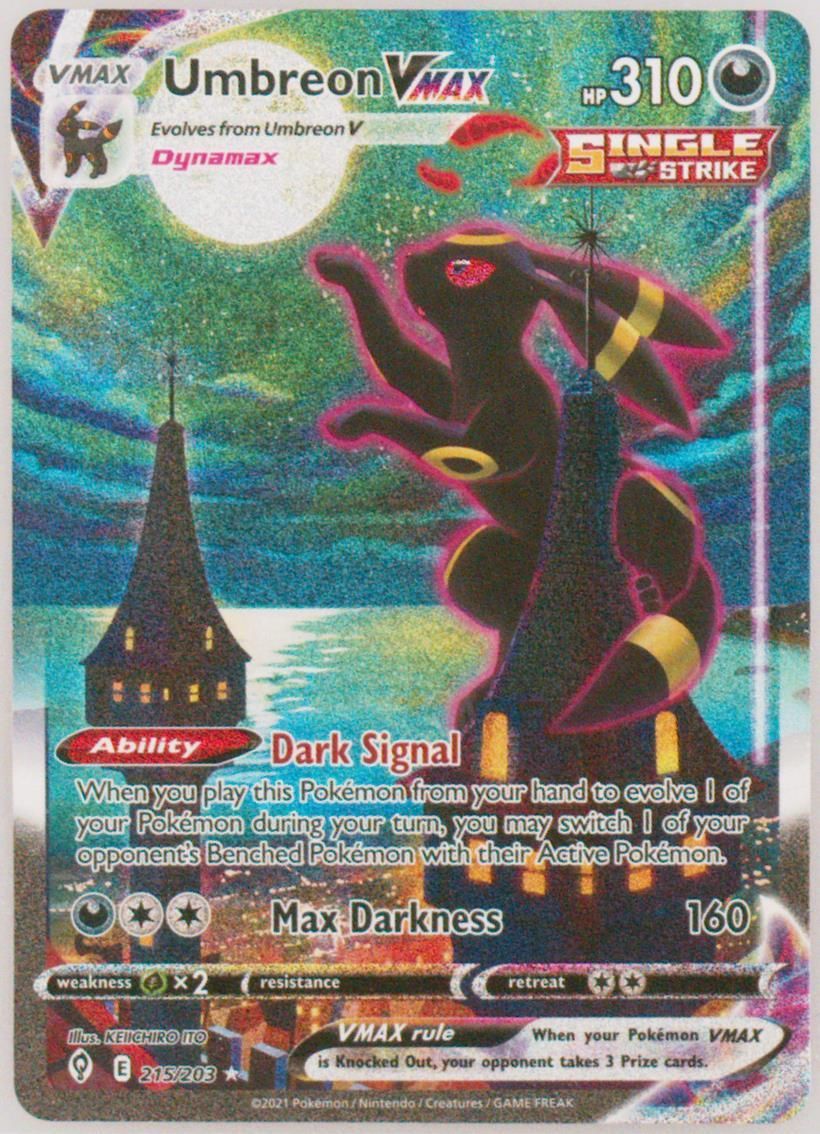
"Moonbreon" - Umbreon VMAX Alt Art, Evolving Skies #215 - PSA 10
The undisputed modern grail. The PSA 10 trades around $3,500, with raw near-mint copies around $1,400. It has held value better than almost any other modern card.
Bull case: Eeveelution plus alt-art demand at Charizard-tier intensity. Bear case: The PSA 10 population keeps growing because Evolving Skies sealed still circulates, which caps further upside, and the large raw-to-graded spread means real risk if you grade a raw copy yourself.
Hidden Fates Shiny Charizard GX - Shiny Vault (2019) - PSA 10
Trades around $1,400 to $1,700. Raw copies are near $635.
Bull case: Charizard plus a beloved out-of-print set, with strong daily liquidity. Bear case: A high PSA 10 population means a modest graded premium over raw.
Giratina V and Rayquaza VMAX Alt Arts - Evolving Skies / Lost Origin
Giratina V Alt Art (Lost Origin) runs around $850 raw and roughly $2,000 to $2,400 in PSA 10. Rayquaza VMAX Alt Art (Evolving Skies) is the number two Evolving Skies grail behind Moonbreon, at around $1,160 raw with PSA 10s selling near $2,150.
Bull case: Two of the most beloved Sword and Shield alt arts, with unusually high raw floors that signal real demand. Bear case: Pricing leans on asks more than confirmed sales, so treat the figures as approximate, and the same population-growth caveat applies.
Tier 3: Sealed Product as a Vehicle
Sealed can work as an investment, but the rule is simple: out-of-print and scarce beats hyped and reprinted, every time.
Out-of-print modern sealed such as the Evolving Skies booster box (around $2,650 as of July, the runaway leader of the anniversary rally), Hidden Fates ETB (around $135 to $150), and Crown Zenith ETB (around $313) have rewarded early buyers because supply only shrinks and there is no grading or condition lottery. The risk is reprints, which are the single biggest killer of modern sealed value.
The cautionary tale is Prismatic Evolutions sealed. Its ETB has fallen from roughly $210 at peak toward $167, with retail restocks at $49.99, a clear example of reprints crushing a hyped set. Include it on your watch list as a warning, not a buy. Our deeper analysis lives in best Pokemon booster boxes for investment.
The Risks Nobody Puts in the Headline
- Supply. Print runs of roughly 10 billion cards a year structurally undermine modern scarcity. This is the central reason modern is correcting.
- Grading population. Around 20 million items graded in 2025 means more PSA 10s every month, compressing the premium that makes grading worthwhile.
- Liquidity and fees. High-end cards can take weeks to sell, selling fees run into double-digit percentages, and grading adds cost and delay. A card must appreciate just to break even.
- Trust. Industry reporting in 2025 and 2026 flagged sharp rises in counterfeit and altered cards, plus questions around grading-company concentration and practices. We do not state the specifics as settled fact, but "trust in grading" is a real factor to monitor.
- Macro. Cards are discretionary spending. A softer consumer in 2026 narrows the pool of mid-tier buyers.
How to Approach This If You Still Want In
If you are determined to treat cards as an investment, the defensible playbook in 2026 is: favor authenticated, low-population vintage over mass-printed modern, buy proven grails rather than chasing the next hyped release, size positions small relative to your overall portfolio, and assume your real exit will involve fees and time. Buy cards you would be content to keep if the market never cooperates.
The Bottom Line
The 2026 market rewards scarcity and authentication and punishes overproduction. The record-setting headlines all came from genuinely rare vintage, while the cards bleeding value were mostly heavily printed modern releases. If you invest at all, the most defensible bets are blue-chip vintage in high grades and a handful of proven modern grails like Moonbreon, bought with eyes open to the bear cases.
And the honest caveat worth repeating: most people would do better collecting what they love and treating any appreciation as a bonus. If you want the strategic framing rather than a shopping list, start with are Pokemon cards a good investment in 2026. When you are ready to transact, Misprint shows real-time market data so you can buy and sell on real numbers rather than hype.