Best Vintage Pokemon Cards to Collect
The corner of the hobby that is holding its value.
By Misprint Editorial | Published May 6, 2026 | 6 min read
While modern cools off, the 1999 cardboard keeps climbing
There is something clarifying about vintage Pokemon. The print runs are fixed, the supply only shrinks, and the cards carry a history that no modern release can manufacture. While the modern market went through a noticeable correction in late 2025 and into 2026, vintage WOTC cards have done the opposite, holding strong and in many cases climbing, driven by genuine collectors rather than speculators.
This guide curates the best vintage cards to collect right now, from holos you can own for the price of a modern booster box to the six- and seven-figure grails that make headlines. We define vintage as the WOTC era, roughly 1999 to 2003, from Base Set through Skyridge, plus a few iconic Japanese and EX-era pieces that collectors universally treat as grails. Every card and price was verified against multiple sources, but vintage fluctuates weekly and is acutely condition-sensitive, so treat each figure as a directional range as of mid-2026.
For the budget end of this same conversation, our best Pokemon cards under $100 guide overlaps usefully with the entry tier below.
At a Glance: A Vintage Collection by Tier
| Tier | Example card | Set | Approx. price (mid-2026) |
|---|---|---|---|
| Entry | Aerodactyl holo | Fossil (1999) | $12 raw |
| Entry | Mewtwo holo | Base Set (1999, Unlimited) | $23 raw |
| Mid | Dragonite holo | Fossil (1999, Unlimited) | $83 raw |
| Mid | Karen's Umbreon | Japanese VS (2001) | $400 raw |
| Grail | Charizard holo | Base Set (1999, Unlimited) | $357 raw / $30,100 PSA 10 |
| Grail | Lugia holo | Neo Genesis (2000, 1st Ed) | $1,349 raw / $28,000-45,000 PSA 10 (recent sales) |
| Apex | Pikachu Illustrator | 1998 promo | $16.49M (PSA 10) |
Tier 1: Budget and Entry (Raw $10-90)
These are authentic 1999 to 2002 holos you can own for the price of a modern booster box. They are the best value-per-dollar in the entire hobby.
Aerodactyl - Fossil Holo (1999)
Typical price: $12 raw, $561 PSA 10
The single cheapest genuine 1999 holo. Its high PSA population keeps graded prices accessible, which makes it the ideal first vintage holo.
Mewtwo - Base Set Holo (1999, Unlimited)
Typical price: $23 raw, $3,620 PSA 10
An iconic character and one of the cheapest Base Set holos raw. The steep PSA 10 premium reflects foil-scratch scarcity rather than rarity of the card itself, which is a recurring theme in vintage.
The Jungle Eeveelution Trio (1999, Unlimited)
Typical price: $20-27 each
Vaporeon, Jolteon, and Flareon together make the best themed budget pickup in the WOTC era. Three classic Eeveelution holos for under $80 raw total, from the strongest sub-niche in Pokemon collecting.
Snorlax - Jungle Holo (1999, Unlimited)
Typical price: $36 raw, $2,592 PSA 10
The most desirable single Jungle holo, with a beloved character driving the gem-mint premium. A solid budget-to-mid target.
Tier 2: Mid (Raw $60-400)
Stronger demand, iconic art, and recognizable "first-of" historical hooks.
Dragonite - Fossil Holo (1999, Unlimited)
Typical price: $83 raw, $12,000 PSA 10
The chase card of Fossil. The raw copy is attainable, but the PSA 10 is a genuine grail because centering and print lines make gem-mint examples genuinely rare. It is the perfect illustration of the WOTC dynamic where the raw is cheap and the gem is enormously expensive.
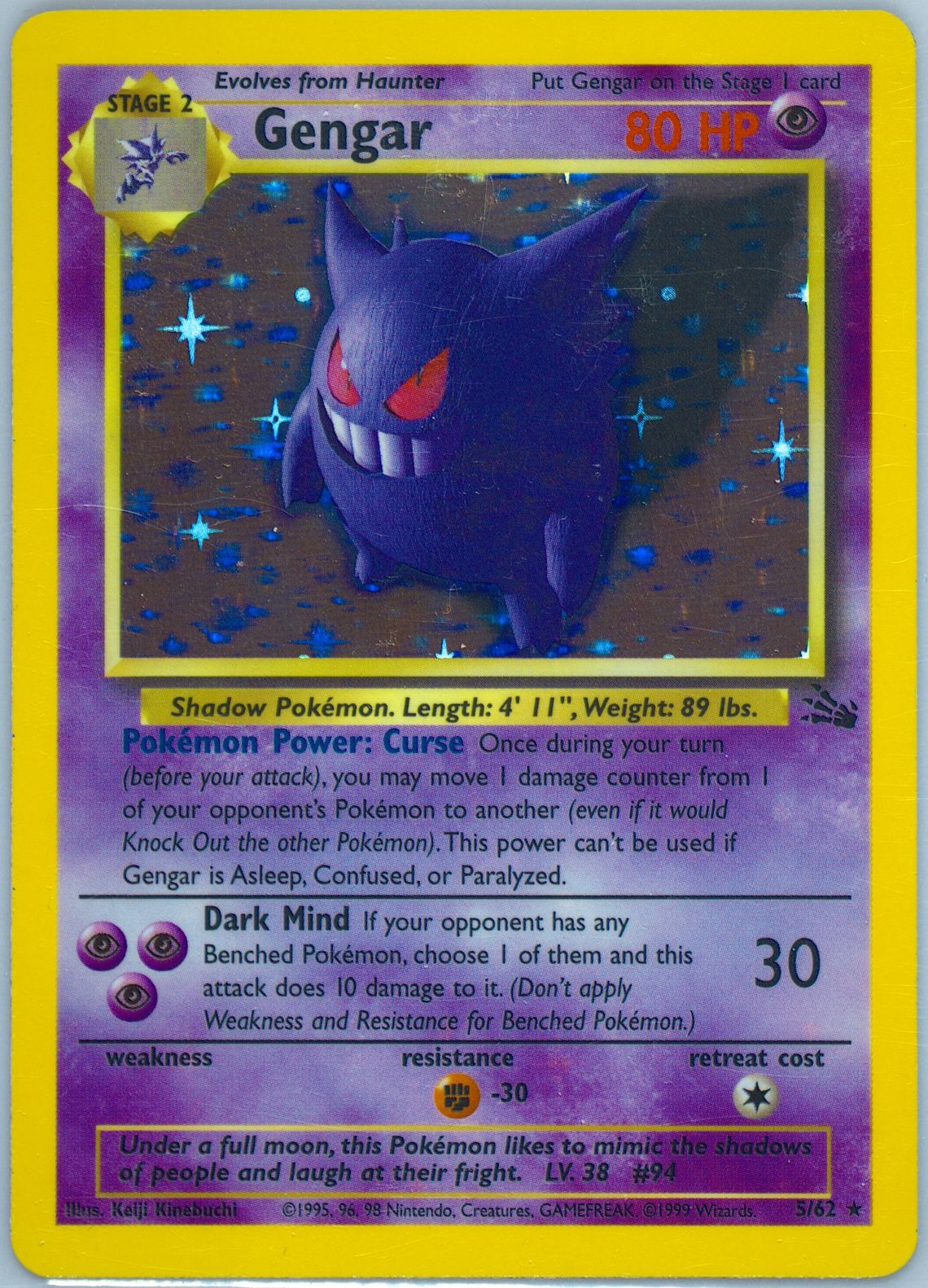
Gengar - Fossil Holo (1999, Unlimited)
Typical price: $68 raw, $4,559 PSA 10
The most desirable Fossil holo after Dragonite, with an iconic character and steady demand. Our most expensive Fossil cards guide covers the rest of the set's standouts.
Dark Raichu - Team Rocket Secret Rare (2000)
Typical price: $80-150 raw (Unlimited)
Illustrated by Mitsuhiro Arita, this is the first secret rare in Pokemon TCG history, a genuine milestone and the real reason to own it. The Unlimited version is the affordable way in.
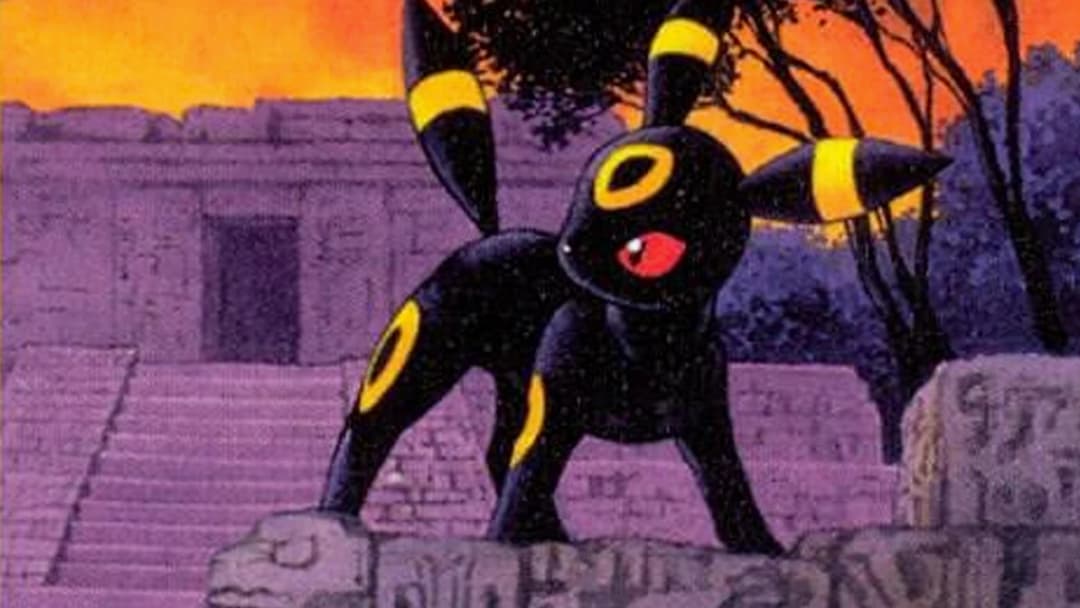
Karen's Umbreon - Japanese VS Series (2001)
Typical price: $400 raw, $2,350-plus PSA 10
A Japanese exclusive with no English equivalent, the chase card of the VS set and a favorite among Umbreon collectors. A great way to add iconic Japanese vintage at mid-tier money.
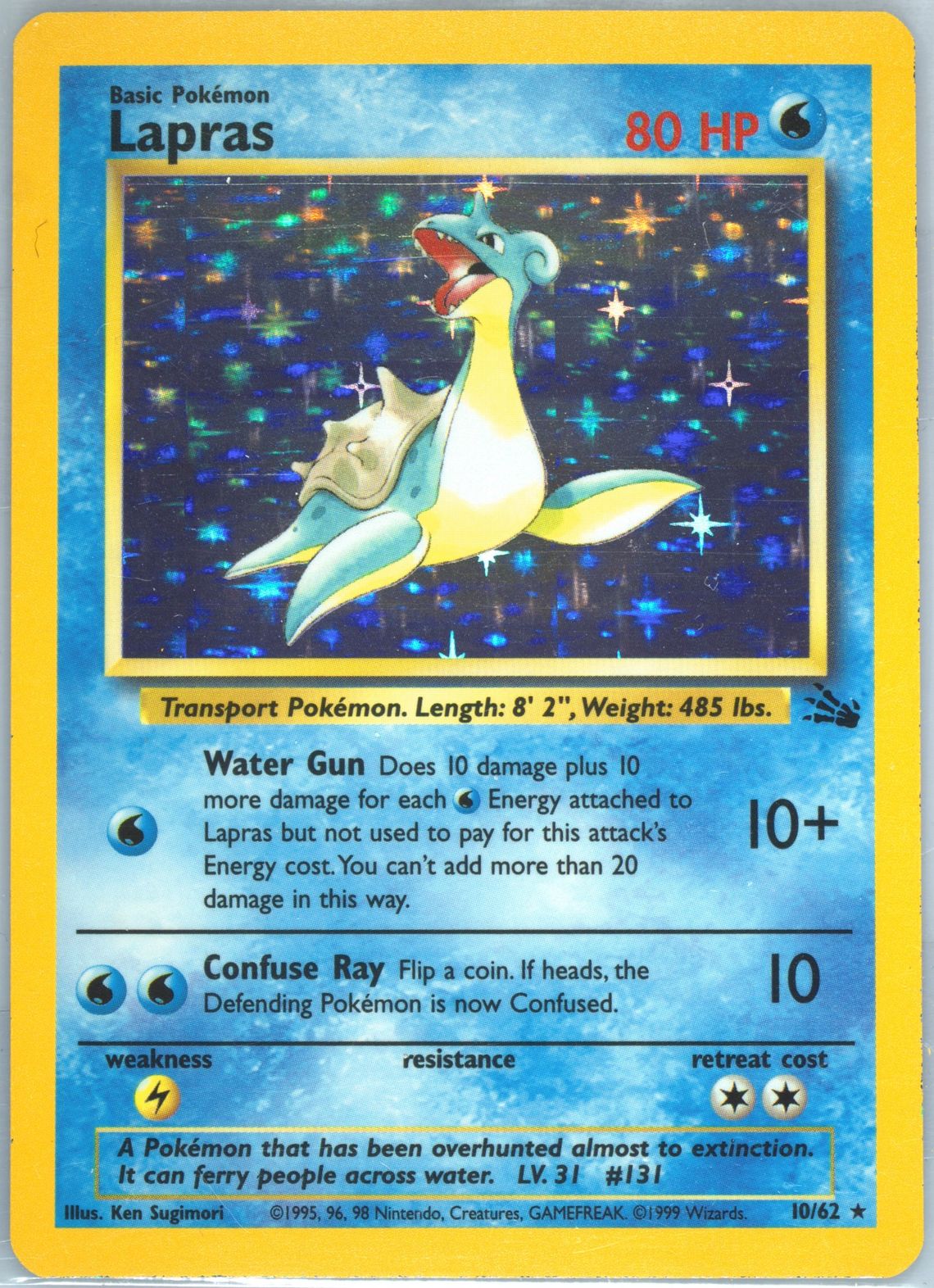
Tier 3: High and Grail
The trophy room. These are meaningful mostly as graded copies, since clean raw examples are scarce.
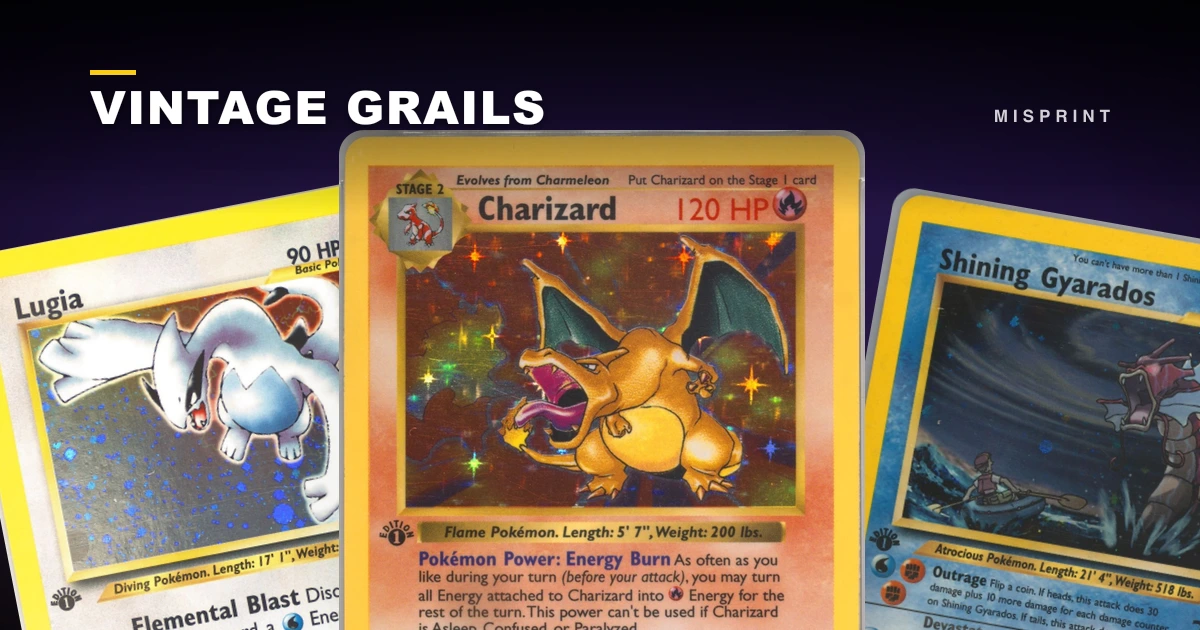
Charizard - Base Set Holo (1999)
Unlimited: $357 raw, $30,100 PSA 10. 1st Edition: $420,000-550,000-plus PSA 10
The most important card in the hobby, illustrated by Mitsuhiro Arita. A PSA 10 1st Edition sold for $550,000 at Heritage in December 2025, a public-auction record, and of roughly 5,325 graded 1st Edition copies only about 124 are PSA 10. The Unlimited holo is the realistic "I own a Base Charizard" pick; the 1st Edition is the apex. For more on the full Charizard pantheon, see our most expensive Charizard cards guide.
Lugia - Neo Genesis Holo (2000, 1st Edition)
Typical price: $1,349 raw; PSA 10s have sold between $28,000 and $45,000 in recent years (model estimates run higher, but trust the hammer prices)
The most infamous condition trap in vintage. Only about 0.7 percent of graded 1st Edition copies hit PSA 10 because the dark border whitens and chips and the cuts run chronically off-center. The roughly six-to-seven-times jump from PSA 9 to PSA 10 is the entire story of this card.
Shining Charizard - Neo Destiny Secret Rare (2002)
Unlimited: $18,000-20,000 PSA 10. 1st Edition: $55,000-60,000 PSA 10
The first card to depict a shiny Charizard and the crown jewel of the Neo era. The Unlimited PSA 10 is the attainable version of this grail.
Crystal Charizard - Skyridge Secret Rare (2003)
Typical price: $25,000-30,000 PSA 9, $78,000-plus PSA 10
From Skyridge, the final WOTC-era English main set, with a low print run and built-in scarcity. PSA 10s are extremely scarce.
Charizard - 1996 Japanese Base Set "No Rarity" Holo
Typical price: $38,000 PSA 9, $640,000 PSA 10
The original Charizard, illustrated by Mitsuhiro Arita, predating the English Base Set. The "No Rarity" first-print run is among the scarcest vintage holos in existence, and a copy set the all-time Charizard record above $640,000 in 2025.
Pikachu Illustrator - 1998 CoroCoro Promo
The most expensive trading card ever: $16,492,000 (PSA 10, Goldin, February 2026)
Illustrated by Atsuko Nishida, Pikachu's own designer. Roughly 39 to 41 copies are believed to exist, and only one is a PSA 10. Included for context and completeness rather than as a realistic buy.
Set Facts Worth Knowing
- Base Set (102 cards, US release January 1999): Charizard, Venusaur, and Blastoise illustrated by Mitsuhiro Arita.
- Jungle (64 cards, June 1999): The famous "No Symbol" card is an Unlimited-edition error, not a 1st-edition variant, a common point of confusion.
- Fossil (62 cards, October 1999).
- Team Rocket (83 cards, April 2000): The first set with a secret rare, Dark Raichu.
- Gym Heroes and Gym Challenge (132 cards each, 2000): Blaine's Charizard and Rocket's Mewtwo are in Gym Challenge, not Gym Heroes.
- Neo series (2000-2002): Neo Genesis introduced Gen II; Neo Revelation brought the first Shining cards; Neo Destiny featured the Shining showcase.
- Aquapolis and Skyridge (2002-2003): The e-Card era and home of the Crystal secret rares. Skyridge was the last WOTC-era English main set.
Vintage Market Context (Mid-2026)
Vintage is rising and stable while modern corrects. Multiple market trackers report WOTC vintage up roughly 30 to 50 percent heading into 2026, driven by collectors rather than speculators, a maturation back to fundamentals after the 2020 and 2021 frenzy. Fixed supply, natural attrition, and the February 2026 30th-anniversary attention all underpin the appreciation.
Modern, by contrast, is in a supply-driven correction, with singles down roughly 20 to 45 percent and sealed down 20 to 50 percent from 2025 peaks after The Pokemon Company printed roughly 10 billion cards in a single recent year. That divergence is the central reason vintage looks comparatively safe right now.
Condition is everything in WOTC. Centering thresholds, near-universal holo scratching, and edge whitening make raw "near-mint" claims unreliable and the PSA 9-to-10 jump enormous, from modest on modern cards up to roughly 20x on some vintage holos. This is why nearly every grail above is meaningfully valuable only as a high-grade slab, and why budget collectors often get the best deal buying raw or in PSA 7 to 8.
One reprint note: Base Set 2 and Legendary Collection reprinted many Base, Jungle, Fossil, and Team Rocket cards. They did not cannibalize the 1999 originals, which collectors prize, but they offer a cheaper lane for image-focused set builders.
The Bottom Line
Vintage Pokemon is the corner of the hobby behaving the way collectors wish the whole market would: scarce, historically grounded, and steadily appreciating on real demand. You can start with a $12 Fossil Aerodactyl holo and build toward a Base Set Charizard, and every step of that ladder is occupied by a card people genuinely want to own.
If we had to send a new vintage collector somewhere first, it would be a Base Set or Jungle holo raw, then a Fossil chase card like Gengar or Dragonite as the budget grows. The grails are there when you are ready, but the entry tier is where the best value lives. And because condition drives everything in this era, buy the best copy you can afford and lean on authenticated graded examples for the expensive cards.
Browse vintage listings on Misprint to see real-time market data across grades and find the right copy at the right price.