How to Spot Fake Pokemon Cards (2026 Guide)
Fakes are getting better. Here is how to stay ahead of them.
By Misprint Editorial | Published Jan 4, 2026 | 16 min read

If it seems too good to be true, it probably is. But here is how to know for sure.
The counterfeit Pokemon card market has exploded in recent years, and the quality of fakes has improved dramatically. Five years ago, most fakes were obvious: wrong colors, bad fonts, flimsy cardstock that felt nothing like a real card. Today, some counterfeits are good enough to fool casual collectors at a glance. We've even seen fakes that were submitted (unsuccessfully) to grading companies.
This isn't meant to scare you, it's meant to prepare you. The vast majority of fakes are still identifiable with a few simple tests, and once you know what to look for, spotting them becomes second nature. We deal with card authentication every day at Misprint, and we're going to share every technique we use.
This guide covers fakes from every era, WOTC vintage fakes through modern Scarlet & Violet counterfeits. The tells are different depending on the era, so we'll break it down by time period after covering the universal tests.
The Universal Tests
These tests work on Pokemon cards from any era. They're the first things to check whenever you're suspicious about a card's authenticity.
1. The Light Test
The light test is the single most reliable quick test for identifying fake Pokemon cards. Here's how it works:
How to do it:
- Get a bright light source (a phone flashlight works perfectly)
- Hold the card between you and the light
- Shine the light directly through the card from behind
- Observe how the light passes through
What a real card looks like: Real Pokemon cards have a thin black layer sandwiched between the front and back printing layers. When you shine a light through a real card, you'll see a dark, muted glow. Some light passes through, but it's filtered heavily by that black core layer. The light appears dim and has a slightly blue or purple tint.
What a fake card looks like: Most fake cards lack the black core layer. When you shine a light through them, the light passes through much more brightly. You can often see the artwork from the other side of the card clearly. The card appears almost translucent compared to a real one.
Reliability: Very high. This test catches the vast majority of fakes because reproducing the multi-layer card construction (front print layer, black core, back print layer) is significantly more expensive than what most counterfeiters bother with. Even high-quality fakes that nail the visual appearance often fail the light test.
Limitation: This test doesn't work well on holographic cards because the foil layer blocks light regardless of whether the card is real or fake. For holos, you'll need to rely on the other tests.
2. The Feel Test
Pick up the card and pay attention to how it feels in your hands. This is subjective but becomes reliable with practice.
What a real card feels like: Real Pokemon cards have a specific stiffness and texture. The cardstock is firm but slightly flexible, with a smooth (but not glossy-smooth) matte finish on non-holographic areas. If you bend a real card slightly (don't crease it), it has a specific resistance and springback.
Modern cards (Scarlet & Violet era) have a slightly different feel than vintage cards (WOTC era). Modern cards tend to be slightly thinner and smoother. But within their respective eras, all authentic cards have a consistent feel.
What a fake card feels like: Fakes are frequently either:
- Too thin and flimsy: Like regular printer paper or thin cardstock. They bend too easily and don't spring back.
- Too thick and stiff: Some counterfeiters overcompensate by using thicker cardstock, resulting in cards that feel like cardboard rather than a trading card.
- Too smooth or too rough: The surface texture is wrong. Real cards have a very specific micro-texture that's hard to replicate.
- Waxy or plasticky: Some fakes have a coating that feels slick or waxy, unlike the natural feel of genuine card stock.
Reliability: Medium to high (improves significantly with experience). If you handle real Pokemon cards regularly, a fake will feel "off" immediately. The challenge is if you don't have much experience with real cards.
Our recommendation: Keep a few cards you know are authentic nearby as a reference. When checking a suspicious card, hold it next to a known real card and compare the feel directly.
3. The Color Saturation Test
What to look for: Compare the card's colors to a reference image (official product shots from the Pokemon Company website or a trusted card database).
What a real card looks like: Real Pokemon cards have specific, consistent color profiles. The yellow border (on vintage cards) is a particular shade. The blue back is a particular shade. The energy symbols, HP numbers, and attack text are all printed in specific colors.
What a fake card looks like: Fakes almost always have color issues:
- Oversaturated colors: Everything looks too bright, too vivid. The blues are too blue, the yellows are too yellow. This is the most common color tell.
- Undersaturated/washed out: Less common, but some fakes look faded or dull compared to real cards.
- Wrong color entirely: The card back is the wrong shade of blue, or the border is the wrong shade of yellow. Side-by-side with a real card, this is immediately obvious.
- Inconsistent color between areas: The color of the energy symbols doesn't match the color of the type icon, or similar inconsistencies that wouldn't exist on a card printed on a single professional press.
Reliability: Medium. Color comparison is excellent when you have a real card to compare against but difficult to judge in isolation, especially under different lighting conditions. Phone screens and monitors display colors differently too, so comparing against a photo can be misleading.
4. The Font Test
Pokemon cards use specific fonts that counterfeiters frequently get wrong, either because they don't have access to the exact font files or because the resolution of their printing process can't reproduce fine font details.
What to check:
- Attack names and descriptions: The fonts should be crisp with consistent spacing
- HP numbers: Check the specific font and sizing
- Pokemon name: Should be in the correct font with proper weight
- "ex", "EX", "V", "VMAX" labels: These have specific styling that fakes often get slightly wrong
- The word "Pokemon" with the accent: The accent mark over the "e" (Pokemon) should be consistent with authentic cards
Common font issues on fakes:
- Blurry or fuzzy text: The letters look slightly soft, as if printed at a lower resolution
- Wrong font weight: Text is too bold or too thin
- Spacing issues: Letters are too close together or too far apart (kerning problems)
- Wrong font entirely: Some fakes use a font that's close but not exact. This is most noticeable on the Pokemon name and HP.
Reliability: Medium to high for experienced collectors, but requires practice and a keen eye. Having a known authentic card nearby for comparison makes this much easier.
5. The Back of the Card
The card back is one of the most common places where fakes fail, because every Pokemon card ever printed (with very few exceptions) has the exact same back design. This means you can compare any suspicious card's back against literally any other real Pokemon card you own.
What to check:
- The shade of blue: Should match other real cards exactly. Too dark, too light, or too purple are red flags.
- The Poke Ball image: Should be crisp and well-defined. On fakes, it's often blurry or has color bleeding.
- The "POKEMON" text: Should be in the correct font, at the correct size, with the correct color.
- Overall print quality: The back should look professional and clean. Fakes often show printing artifacts, slight misalignment, or an overall "soft" appearance.
- Edge-to-edge alignment: When you flip the card from front to back, the edges should align perfectly. Misalignment (the front and back are offset from each other) is a sign of a fake or, at best, a manufacturing error.
Reliability: High. The back of the card is one of the best places to check because you can compare it against any real card. Even subtle differences become apparent when cards are side by side.
6. The Weight Test
This is a more advanced test that requires a precision scale (a jewelry scale that measures to 0.01g works well).
What a real card weighs: A standard Pokemon card weighs approximately 1.7 to 1.8 grams. Holographic and textured cards may be slightly heavier (up to about 2.0g) due to the foil or texture layer.
What a fake card weighs: Fakes are often noticeably lighter (1.2-1.5g) or heavier (2.0-2.5g) than authentic cards. The wrong weight indicates wrong cardstock, which is one of the hardest things for counterfeiters to replicate.
Reliability: High when the measurement is available, but most people don't have a precision scale handy. More of a confirmation test than a first-line check.
7. The Rip Test (Last Resort)
We include this for completeness, but we do not recommend this test unless the card is worthless and you just want to confirm your suspicion.
How it works: Tear the card in half (yes, really). A real Pokemon card will reveal a black layer between the front white layer and the back blue layer. This is the same black core that the light test detects. A fake card will typically show only white cardstock when torn, with no black layer.
Why we don't recommend it: Because you're destroying the card. If you're wrong and the card is real, you've just ripped a real Pokemon card in half. Only do this if you have a stack of cards you're certain are fake and you want to confirm for your own education.
Era-Specific Fake Tells
WOTC Era Fakes (Base Set through Skyridge, 1999-2003)
Vintage cards are the most commonly faked because they carry the highest values. A fake 1st Edition Base Set Charizard could potentially fool someone into paying thousands of dollars. Here's what to watch for specifically with vintage cards:

1st Edition Stamp:
- The stamp should be crisp and well-defined, not blurry or smudged
- The "1" inside the circle should be clean with no ink bleeding
- The stamp should be in the correct position (left side of the card, below the artwork)
- Some fakes use stamps that are too dark, too light, or slightly wrong in size
- Beware of added stamps: Some fakes take real Unlimited cards and add a 1st Edition stamp. Check for ink inconsistencies where the stamp appears to sit "on top of" the card rather than being part of the original print.
Shadowless vs. Unlimited:
- Shadowless cards are valuable and therefore faked. Make sure the lack of shadow is consistent with other known Shadowless cards, not just a printing error
- The copyright date on Shadowless Base Set should read "1999 Wizards" without additional dates
WOTC-specific tells:
- The card stock: WOTC cards have a distinctive feel that's slightly different from modern cards. They're generally a touch thicker.
- The holo pattern: WOTC holographic patterns are distinctive. The "galaxy" or "cosmos" holo pattern of Base Set through Team Rocket is different from the "star" pattern of later WOTC sets. Fakes often use the wrong holo pattern for the era.
- "Wizards" logo: Should appear on cards from this era. Missing or incorrectly formatted Wizards branding is a red flag.
- Star symbol and energy symbols: The specific shapes used by WOTC are slightly different from those used in later eras. A card claiming to be from Base Set but using modern energy symbols is fake.
Modern Fakes (Sword & Shield through Scarlet & Violet, 2020-Present)
Modern fakes are more common and more varied because modern chase cards (SIRs, Alt Arts) can be worth hundreds of dollars and are in high demand.
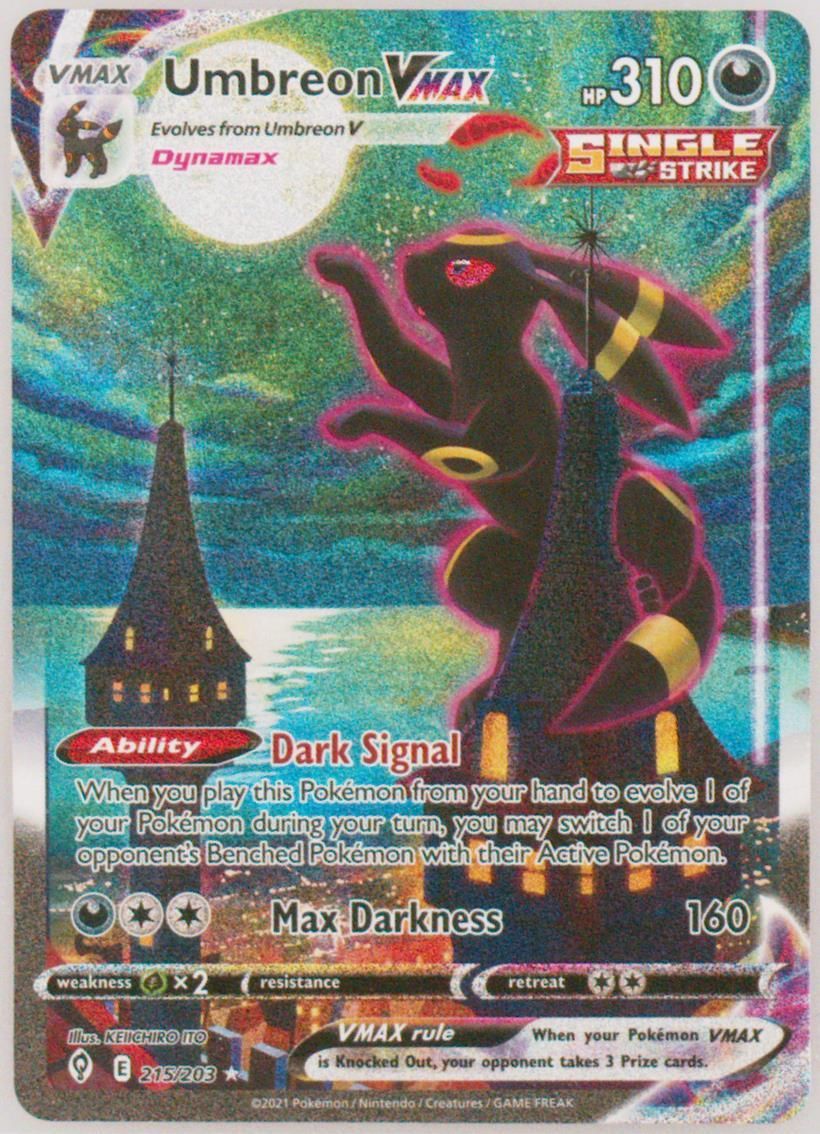
Texture check (most important for modern cards):
- Modern high-rarity cards (SIR, Full Art, Hyper Rare) have textured surfaces that you can feel with your fingers
- Fakes almost never replicate texture correctly. Either the texture is missing entirely (the card is smooth), or it's a generic repeating pattern rather than the unique texture that matches the artwork
- Run your finger over the card. On a real SIR, you can feel the texture lines follow the artwork (the fur of a Pokemon, the leaves of a tree, etc.). On a fake, the texture is either absent or feels like a uniform grid.
Holographic patterns:
- Modern holographic cards have specific patterns (cosmos, rainbow, etc.) that are difficult to replicate
- Fake holos often look "too perfect" or "too uniform" compared to real ones
- The sparkle effect on real cards shifts naturally with the angle of viewing. Fake sparkle effects often look static or don't shift the same way.
The "V" / "VMAX" / "ex" styling:
- These labels have specific fonts, sizes, and positions
- Fakes frequently get the sizing or font weight wrong
- Compare against confirmed real cards of the same type
Pokemon ex cards (Scarlet & Violet):
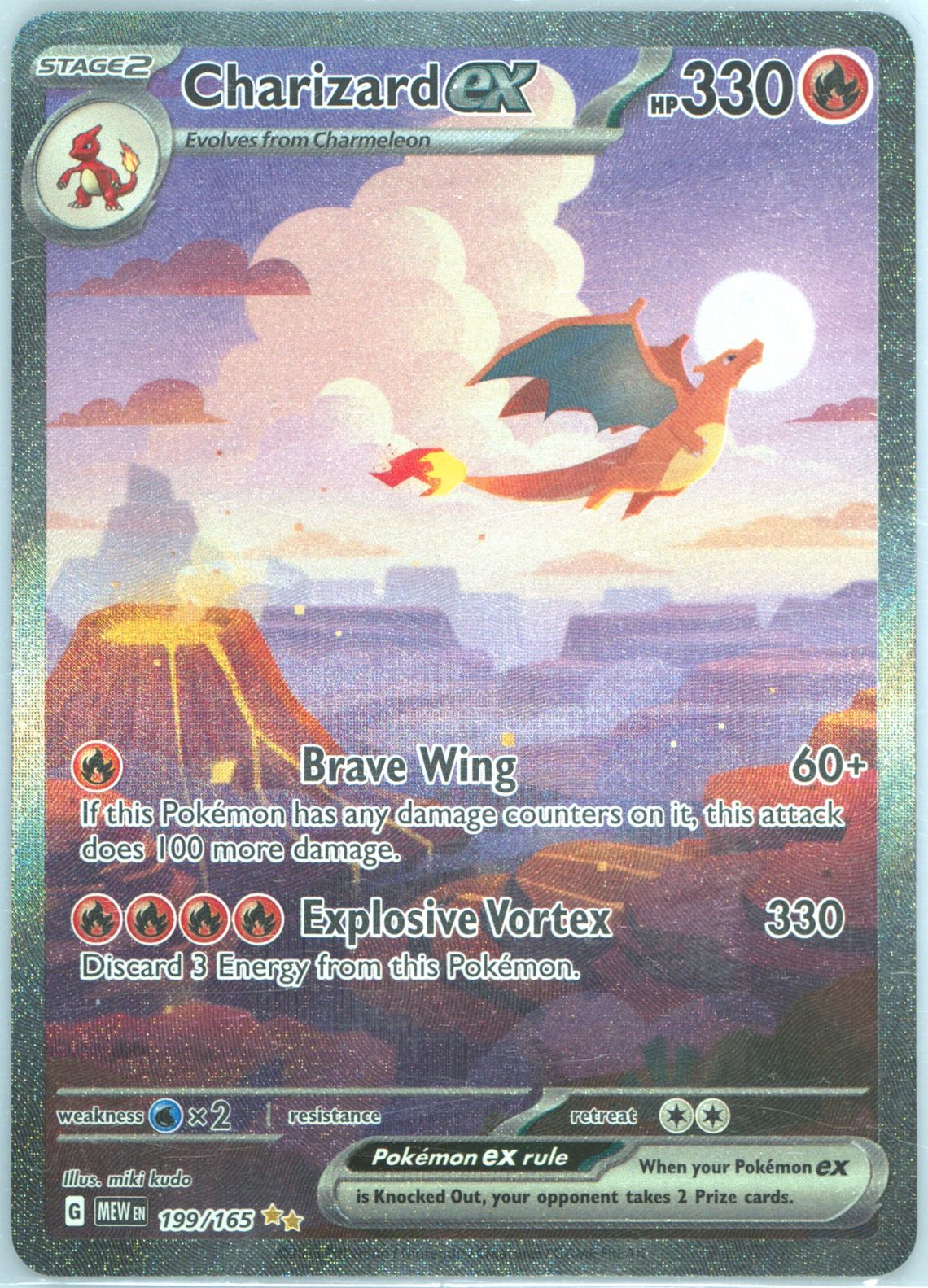
- The Terastal crystal effect on ex cards has specific visual properties
- The border treatment around "ex" text should be crisp
- The card should have appropriate holographic elements consistent with its rarity
Where Fakes Are Most Commonly Found
Knowing where fakes tend to appear can help you calibrate your suspicion level:
High Risk Sources
- Flea markets and swap meets: High volume of fakes. Always inspect carefully.
- Unknown sellers on social media (Facebook Marketplace, Instagram, TikTok): No authentication infrastructure. Buyer beware.
- Extremely cheap online listings: If a card is listed at 30% of market price, ask why. Fakes are priced to move.
- Foreign marketplace sites: Some overseas sites are notorious for counterfeit products.
- "Mystery packs" or "repack" sellers: Some unscrupulous sellers include fakes in repacked products.
Medium Risk Sources
- eBay: eBay has some protections, but fakes still slip through. Check seller ratings and return policies.
- Local card shops: Most are reputable, but it's worth building a relationship and knowing your shop.
- Card shows and conventions: Generally good, but the volume makes it hard to inspect everything.
Low Risk Sources
- Sealed product from authorized retailers (Target, Walmart, Pokemon Center, GameStop): Cards inside sealed product from authorized retailers are real. The risk here is resealed product (someone opens packs, replaces cards, and reseals the product), but this is relatively uncommon.
- Graded cards from major companies (PSA, CGC, BGS): Grading companies authenticate cards as part of the grading process. Fakes occasionally slip through, but it's very rare with the major companies.
- Reputable online marketplaces: Misprint and other reputable marketplaces have authentication processes.
What to Do If You Suspect You've Received a Fake
- Don't panic. Run through the tests in this guide systematically.
- Compare against a known authentic card. Side-by-side comparison is the most reliable method.
- Document everything. Take clear photos of both sides of the card, close-ups of any suspicious areas, and photos of the light test results.
- Contact the seller. Most platforms (eBay, TCGplayer, etc.) have buyer protection policies for counterfeit goods.
- File a claim if necessary. If the seller is unresponsive, escalate through the platform's dispute resolution process.
- Report the seller. This helps protect other buyers.
Advanced Authentication Techniques
These are more technical approaches used by experienced authenticators and grading companies.
Loupe / Magnification Inspection
A jeweler's loupe (10x or higher magnification) reveals details invisible to the naked eye:
What to look for under magnification:
- Rosette printing pattern: Real Pokemon cards use a specific halftone dot pattern (rosette pattern) visible under magnification. The dots should be clean, round, and consistent. Fakes often show different dot patterns, irregular dots, or no discernible pattern at all.
- Color registration: Under magnification, you can see whether the different color layers (cyan, magenta, yellow, black) are properly aligned. Misregistration (colored dots that don't overlap correctly) can indicate either a fake or a quality control issue.
- Text clarity: Fonts that look fine to the naked eye may appear fuzzy or jagged under magnification. Real cards maintain crisp text even at high zoom.
- Border quality: The edge where the printed area meets the card border should be clean and sharp. Fakes often have rough or bleeding edges under magnification.
Recommended loupes:
- 10x jeweler's loupe: The minimum for useful inspection. Available for $10-20.
- 30x-60x LED loupe: Better detail for serious authentication. Available for $15-30.
- USB digital microscope: Connects to a computer for on-screen viewing. Best for documentation and comparison. Available for $20-50.
UV (Blacklight) Inspection
Under ultraviolet light, real and fake Pokemon cards can look different:
- Real cards: Typically have a consistent fluorescent response under UV. The cardstock glows a specific way.
- Fake cards: Different paper or coating may fluoresce differently. The glow might be brighter, dimmer, or a different color than authentic cards.
This test is less standardized than others (the UV response can vary between print runs and sets), but it can be useful as a supplementary check.
The Bend Test
Not to be confused with the rip test, the bend test checks how the card responds to gentle bending:
- Real cards: Have a specific flexibility. They resist gentle bending but will flex smoothly without creasing (within reason).
- Fake cards: Often bend too easily (too thin/flimsy) or resist too much (too thick/stiff). The bending "feel" is wrong.
Important: Don't over-bend cards. The goal is a gentle flex to test resistance, not to fold the card. Even real cards will crease if bent too far.
Fake Sealed Product
Counterfeit Pokemon cards don't just come as individual cards. Fake sealed product (booster packs, ETBs, booster boxes) is also a growing problem.
Signs of Fake Sealed Product
Booster packs:
- Wrapper quality: Real packs have crisp, tight seals. Fakes often have loose, bubbly, or wrinkled wrapping.
- Print quality on the wrapper: Blurry logos, wrong colors, or typos on the packaging.
- Pack weight/feel: Real packs have a specific feel. Fakes may feel lighter or different.
- Crimp pattern: The crimps at the top and bottom of booster packs have specific patterns. Fakes often use generic heat sealing.
Booster boxes:
- Shrink wrap quality: Real boxes have tight, professional-quality shrink wrap with a specific type of seal. Fakes use generic shrink wrap that looks different.
- The Pokemon Company International seal: Authentic booster boxes have a specific seal/logo. Check that it matches known authentic examples.
- Box print quality: Compare the box art, text, and logos against confirmed authentic examples. Color differences and font issues are common in fake boxes.
Elite Trainer Boxes and Collection Boxes:
- Seal quality: Real ETBs have specific seal patterns and placements.
- Interior contents: Real products have specific insert layouts, code cards, and energy card styles.
- Overall production quality: Fakes often have slightly different cardboard quality, printing, or assembly.
The Resealing Problem
More sophisticated than outright fakes is resealed product: someone buys real sealed product, opens it, removes the valuable cards, replaces them with bulk or fakes, and reseals the product to sell as "sealed."
Signs of resealed product:
- Loose or inconsistent shrink wrap: The wrap doesn't look factory-perfect
- Tampered seals: Seals that look re-applied or have adhesive residue around them
- Packs that feel "off": Already-opened packs that were re-crimped have a different feel
- Missing or wrong code cards: Real packs have code cards that correspond to the set. Missing or wrong code cards can indicate tampering
- Unusual seller behavior: Selling sealed product below market price with no good explanation
Building Your Authentication Skills
Like any skill, spotting fakes gets easier with practice. Here's how to build your expertise:
-
Handle as many real cards as possible. Buy a few cheap real cards from a trusted source and familiarize yourself with how they look, feel, and respond to the light test.
-
Study known fakes. There are YouTube channels and Reddit communities dedicated to identifying fake Pokemon cards. Watching comparison videos is extremely educational.
-
Invest in basic tools. A jeweler's loupe ($10-20) and a bright flashlight (your phone) are all you really need for most situations.
-
Buy from trusted sources. The best defense against fakes is buying from reputable sellers and platforms that authenticate their inventory. Misprint authenticates cards as part of our process, and graded cards from PSA, CGC, and BGS have been professionally verified.
-
When in doubt, ask. Pokemon card communities on Reddit (r/pokemontcg, r/PokemonCardValue), Discord, and other platforms are generally happy to help identify potential fakes if you post clear photos.
-
Trust your gut. If something feels off about a card or a deal, investigate further before committing money. The "too good to be true" instinct exists for a reason.
Quick Reference: Fake Detection Checklist
Here's a condensed checklist you can use when evaluating any Pokemon card:
| Test | What to Check | Red Flags |
|---|---|---|
| Light test | Shine flashlight through card | Light passes through too easily, no dark core |
| Feel test | Card weight, flexibility, texture | Too thin, too thick, waxy, plasticky |
| Color check | Compare colors to reference | Oversaturated, undersaturated, wrong shades |
| Font check | Text clarity and font accuracy | Blurry text, wrong fonts, spacing issues |
| Back check | Compare card back to known real | Wrong blue shade, blurry Poke Ball, misalignment |
| Texture check (modern) | Feel for texture on high-rarity | Missing texture, generic pattern, wrong texture |
| Holo check | Holographic pattern and behavior | Wrong pattern, static sparkle, too uniform |
| Edition check (vintage) | 1st Edition stamp quality | Blurry stamp, wrong position, added-on appearance |
| Weight check | Weigh on precision scale | Under 1.6g or over 2.1g for standard cards |
If a card passes all of these tests, it's almost certainly authentic. If it fails even one test, investigate further before spending money on it.
Final Thoughts
Fake Pokemon cards exist because real Pokemon cards are worth real money, and as long as that's the case, counterfeits will keep being produced. The quality will keep improving too. But the fundamental challenge that counterfeiters face hasn't changed: reproducing the exact cardstock, the exact printing process, the exact holographic elements, and the exact texturing that the Pokemon Company uses is extraordinarily expensive and difficult. Most fakes cut corners somewhere, and those corners are what we look for.
The best protection is knowledge. Now that you know what to look for, you can shop with confidence, whether you're picking through cards at a flea market, buying singles online, or evaluating a childhood collection someone wants to sell you.
And if you want to skip the authentication headaches entirely, buying graded cards from reputable companies through trusted platforms like Misprint means someone has already done the work of verifying the card's authenticity for you. That peace of mind is worth something, especially as the fakes keep getting better.