What's the Best Platform to Sell Rare Pokemon Cards?
When a card is worth real money, where you sell it matters.
By Misprint Editorial | Published Jan 22, 2026 | 11 min read

That card in your top loader isn't just cardboard anymore. It's a mortgage payment, a vacation, or a really nice dinner for twelve. Don't blow the sale.
Selling a Pokemon card worth $500 or more is a fundamentally different experience than selling a $15 single. The stakes are higher, the risks are different, and the platform you choose can mean the difference between a smooth four-figure transaction and a nightmare involving chargebacks, lost packages, and weeks of stress.
We've personally sold cards in the $500-$5,000 range across most major platforms, and we've watched hundreds of high-value transactions happen on Misprint. The patterns are clear: the platform that's best for selling bulk raw singles is often the worst choice for your PSA 10 Charizard. Let's break down why and help you figure out where to list that expensive card.
Why High-Value Sales Are Different
When a card is worth $20, the worst-case scenario is losing $20. Annoying, but survivable. When a card is worth $2,000, the worst-case scenario is losing $2,000 and possibly dealing with a fraudulent chargeback, an insurance claim, or a dispute that takes months to resolve. The calculus changes completely.
Here's what matters most when selling expensive cards:
1. Buyer Trust and Authentication
Buyers spending $500+ on a single card are nervous. They should be. Fake Pokemon cards are more convincing than ever (read our guide on how to spot fakes), and nobody wants to spend $2,000 on a counterfeit. The platform you sell on needs to give your buyer confidence that what they're getting is real.
This is why graded cards dominate the high-value market. A PSA, BGS, or CGC slab provides third-party authentication that takes the question off the table. If you're selling a high-value raw card, seriously consider getting it graded first. The cost of grading ($20-50 depending on speed) is trivial relative to the additional trust and price premium a slab provides on a $500+ card.
2. Payment Security
On a $2,000 sale, you need to know the payment is legitimate and that you're protected if something goes wrong. PayPal Friends & Family on a Discord trade? Absolutely not. You need a platform with real payment infrastructure, buyer/seller protection, and a track record of handling disputes fairly.
3. Chargeback Protection
This is the nightmare scenario. A buyer pays with a credit card, receives the card, and then files a chargeback with their bank claiming the transaction was unauthorized or the item wasn't as described. On some platforms, you have very little recourse when this happens.
4. Shipping Insurance and Tracking
A high-value card needs to be shipped with full tracking, signature confirmation, and insurance. Any platform you sell on should make this easy or required. If you're unsure how to handle high-value shipping, our shipping guide covers this in detail.
5. Audience Quality
You need buyers who actually have $500+ to spend on a single card. A platform with millions of users but mostly casual buyers won't help you sell a Paldean Fates Charizard SIR for what it's worth. You want to be where serious collectors and investors browse.
Platform Comparison for High-Value Cards
Let's walk through each option, specifically through the lens of selling a card worth $500 or more.
Misprint
Fee on a $600 sale: 10% all-in (7% commission + 3% processing + $0.30) = $60.30. You keep $539.70 minus shipping ($5 with tracking/insurance). Net: ~$535.
Authentication support: Misprint shows grading company, grade, and certification number for graded cards. Buyers can verify the slab details before purchasing. Pop report data is displayed alongside listings, which serious buyers care about because it tells them how rare that specific grade is.
Payment security: Payments are processed through Stripe. Funds are held until the transaction is complete. Misprint handles the payment flow end-to-end, which means you're not exchanging payment details directly with a stranger.
Chargeback protection: Misprint covers seller protection for transactions completed through the platform as long as you ship with tracking and meet the shipping requirements. If a buyer attempts a chargeback, Misprint handles the dispute with the payment processor.
Buyer pool: Smaller than eBay, larger than you might expect. Every single person on Misprint is there specifically to buy or sell Pokemon cards. The concentration of serious collectors is high. For popular graded cards, the bid system means you'll often receive competitive offers even if nobody is ready to pay full asking price immediately.
Our honest take: Misprint is strong for graded cards in the $200-$5,000 range where the buyer pool is active. For cards above $5,000 or very niche vintage items, the audience might be too small right now. We're growing, but eBay's raw volume still wins for truly rare items.
eBay
Fee on a $600 sale: 13.25% + $0.40 = $79.90. You keep $520.10 minus shipping. Net: ~$515.
That's about $20 more in fees than Misprint on the same sale. On a $5,000 card, eBay's fee premium over Misprint is about $163. Real money.
Authentication support: eBay has its own authentication service for cards over $250, which provides third-party verification. This is a genuine advantage for high-value sales, especially for raw cards where authenticity is harder to establish without a slab.
Payment security: Managed payments through eBay's system. Generally reliable. Funds are held and released according to eBay's payment schedule (which can be slow for newer sellers, sometimes 21+ days).
Chargeback protection: This is where eBay gets dicey. eBay's Money Back Guarantee heavily favors buyers. If a buyer claims an item wasn't as described, eBay will often side with them almost automatically. For high-value cards, this is genuinely scary. There are documented cases of buyers receiving expensive cards, swapping them with fakes, and returning the fake for a full refund. It's not common, but when it happens, it's devastating.
Mitigations: Always video record yourself packaging and shipping. Ship with signature confirmation. Keep all communications on-platform. These don't guarantee protection, but they help.
Buyer pool: The biggest in the world. Period. If your card is rare enough that only 50 people on the planet want it, some of them are on eBay. This is eBay's killer advantage for high-value sales.
Our honest take: eBay is the best platform for truly rare, high-value cards ($5,000+) and obscure vintage items, purely because of audience size. But the fee premium and buyer-friendly dispute system make it less attractive for the $500-$3,000 range where multiple platforms have sufficient buyer demand.
Facebook Groups
Fee on a $600 sale: PayPal G&S = 2.89% + $0.49 = $17.83. You keep $582.17 minus shipping. Net: ~$577.
On paper, this is the best payout by far. In practice, it's the most risky.
Authentication support: None. You're relying on photos, your reputation in the group, and the buyer's ability to assess authenticity from images. For graded cards, the buyer can at least look up the cert number. For raw cards, it's trust-based.
Payment security: PayPal Goods & Services provides some protection, but PayPal disputes on high-value trading cards are notoriously unpredictable. PayPal doesn't have specialized knowledge of the Pokemon card market, so disputes often come down to who makes a more convincing argument rather than who's actually right.
Chargeback protection: Minimal. If a buyer pays with a credit card through PayPal and then files a chargeback with their bank, PayPal will debit your account. You can contest it, but the success rate is not great.
Buyer pool: Depends on the group. The biggest Pokemon card trading groups on Facebook have 100K+ members, many of whom are serious collectors. You'll find buyers for expensive cards, but you need reputation (trade references, group history) to close high-value deals.
Our honest take: We would not sell a $2,000+ card through Facebook unless the buyer was someone we personally knew or who had an extremely long, verified trading history in a reputable group. The fee savings don't justify the risk for us. For $200-$500 cards with established trading partners? Different story.
TCGPlayer
Fee on a $600 sale: 10.75% + 2.5% + $0.30 = $79.80 (standard) or 9.25% + 2.5% + $0.30 = $70.80 (Pro). You keep $520.20-$529.20 minus shipping. (On cards above ~$1,000, TCGPlayer's $75 commission cap makes it cheaper than this.)
Authentication support: TCGPlayer's catalog system works well for graded cards in theory, but the search and display experience for slabs is not its strength. Buyers looking specifically for a PSA 10 of a specific card have a harder time finding it on TCGPlayer than on a platform designed for graded cards.
Payment security: Solid. TCGPlayer handles payments and has a well-established system.
Chargeback protection: Decent. TCGPlayer's seller protection is better than eBay's in our experience, though the bar for "item not as described" claims can still be uncomfortably low.
Buyer pool: Huge for raw singles. Smaller for expensive graded cards. TCGPlayer's strength is volume sales of raw cards, and the buyer demographic reflects that. Someone spending $2,000 on a single slab is more likely to be browsing eBay or a dedicated slab marketplace than scrolling through TCGPlayer.
Our honest take: TCGPlayer is not where we'd list a $2,000 graded card. It's fantastic for raw singles, but the graded card buying experience doesn't match what eBay or Misprint offers. If you're selling an expensive raw card, it's a reasonable option, but you should probably get that card graded first anyway.
Consignment Services (PWCC, Goldin, etc.)
Fee on a $600 sale: Typically 10-15% for high-value items. So $60-$90. You keep $510-$540 minus shipping to the consignment house.
Authentication support: Excellent. Reputable consignment houses verify authenticity before listing. Some have their own authentication processes on top of the grading company's verification.
Payment security: Handled entirely by the consignment house. You don't deal with the buyer at all.
Chargeback protection: The consignment house absorbs this risk. This is actually a significant advantage for very high-value items.
Buyer pool: Premium. Consignment houses attract serious buyers, investors, and collectors who are specifically looking for high-value items. Auction dynamics can sometimes push prices above market value, especially for rare or trending cards.
Our honest take: For cards worth $5,000+, consignment is worth serious consideration. The fees are meaningful, but you're paying for expertise, authentication, a premium buyer pool, and complete insulation from chargeback risk. For cards in the $500-$2,000 range, the fees plus the time delay (4-8 weeks from consignment to payout) make less sense. You can handle a $1,000 sale yourself on Misprint or eBay for less money and faster payment.
Reddit / Discord
Fee on a $600 sale: PayPal G&S = $17.83. Same as Facebook.
We'll be direct: we don't recommend selling $2,000+ cards on Reddit or Discord unless you have extensive trading history and the buyer does too. The fee savings are real, but the infrastructure for dispute resolution is essentially nonexistent. r/pkmntcgtrades has moderators and a reference system, but if a transaction goes bad on a $2,000 card, a subreddit moderator can ban someone from posting. They can't get your money back.
For $100-$500 cards with verified traders? Reddit and Discord are great. For anything above that, the risk/reward equation doesn't favor peer-to-peer transactions.
The Real-World Example: Selling a PSA 10 Paldean Fates Charizard SIR
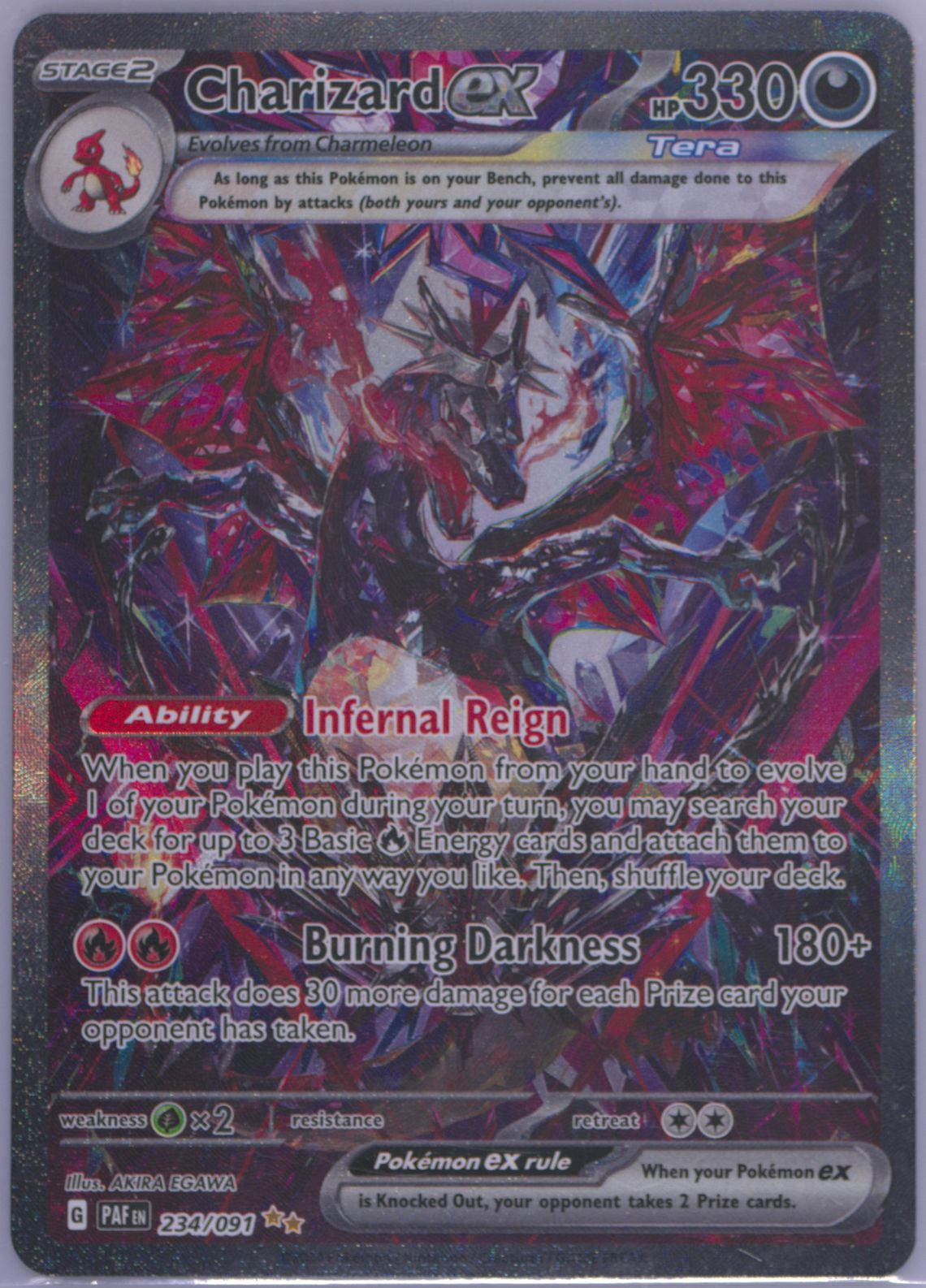
Let's make this concrete. Say you have a PSA 10 Paldean Fates Charizard SIR worth approximately $600 at current market prices. Here's your approximate net on each platform:
| Platform | Fees | Shipping | Net Payout | Timeline |
|---|---|---|---|---|
| Misprint | $60.30 (~10% all-in) | ~$5 | ~$535 | 1-4 weeks |
| eBay | $79.90 (13.25% + $0.40) | ~$5 | ~$515 | 1-4 weeks |
| TCGPlayer | $79.80 (~13.3% all-in) | ~$5 | ~$515 | 2-6 weeks |
| Facebook/Reddit | $17.83 (PayPal G&S) | ~$5 | ~$577 | 1-2 weeks |
| Consignment | $75 (12.5% avg) | ~$8 | ~$517 | 4-8 weeks |
The difference between the highest and lowest safe-platform net payout here is about $20. On a single transaction, and it grows with card value. Platform choice matters. (Note that on much more expensive cards — think a $5,000 Base Set Charizard — TCGPlayer's $75 commission cap flips the math and makes it the cheapest of the marketplaces; the fee edge below only holds up to about $1,000.)
But pure payout isn't everything. The $577 Facebook number looks best until you factor in the risk of a PayPal dispute with no platform backing you up. For most people, the safer options (Misprint, eBay, consignment) are worth the extra fees as insurance.
Our Recommendations by Price Tier
$500 - $2,000
Best overall: Misprint or eBay. The fee difference between the two is significant (roughly $50-$100 on a $1,000 card), and both have sufficient buyer pools for cards in this range. Misprint's bid system is particularly useful here because it creates liquidity even if no one is ready to pay your full asking price immediately.
If the card is graded, we'd lean Misprint. If it's raw or extremely niche, eBay's larger audience helps.
$2,000 - $5,000
Best overall: eBay or Misprint, depending on the card's liquidity. A 151 Charizard SIR at $2,500? Plenty of buyers on either platform. A PSA 10 first edition Japanese Vending Series card? You probably need eBay's global audience.
Consider listing on both platforms simultaneously (just make sure you delist from one when it sells on the other).
$5,000+
Best overall: eBay or a consignment house. At this level, audience size and authentication infrastructure matter most. eBay's reach is unmatched, and consignment houses provide the most hands-off, protected selling experience for truly valuable cards.
Misprint can handle cards at this level, and we'd love the listing. But we'd be dishonest if we said our buyer pool at the $5,000+ tier matches eBay's today. Check our platform to see if similar cards have sold recently at comparable prices. If they have, we're a great option with significantly lower fees. If not, eBay or consignment is the safer bet.
Protecting Yourself on Any Platform
Regardless of where you sell, these precautions apply to every high-value transaction:
Before listing:
- Photograph the card from multiple angles, including the back, edges, and any flaws
- For graded cards, photograph the cert number clearly
- Record a video of yourself packaging the card (seriously, this has saved people in disputes)
When shipping:
- Use tracked shipping with signature confirmation for anything over $250
- Insure the package for the full value
- Ship in a rigid box with proper padding, never a bubble mailer for slabs
- Our shipping guide covers the specifics
After the sale:
- Keep all receipts, tracking information, and communication records for at least 90 days
- Don't spend the money until the return/dispute window has closed (varies by platform)
The Authentication Premium
We touched on this earlier, but it's worth emphasizing: for cards worth $500+, professional grading is almost always worth the investment. Here's why:
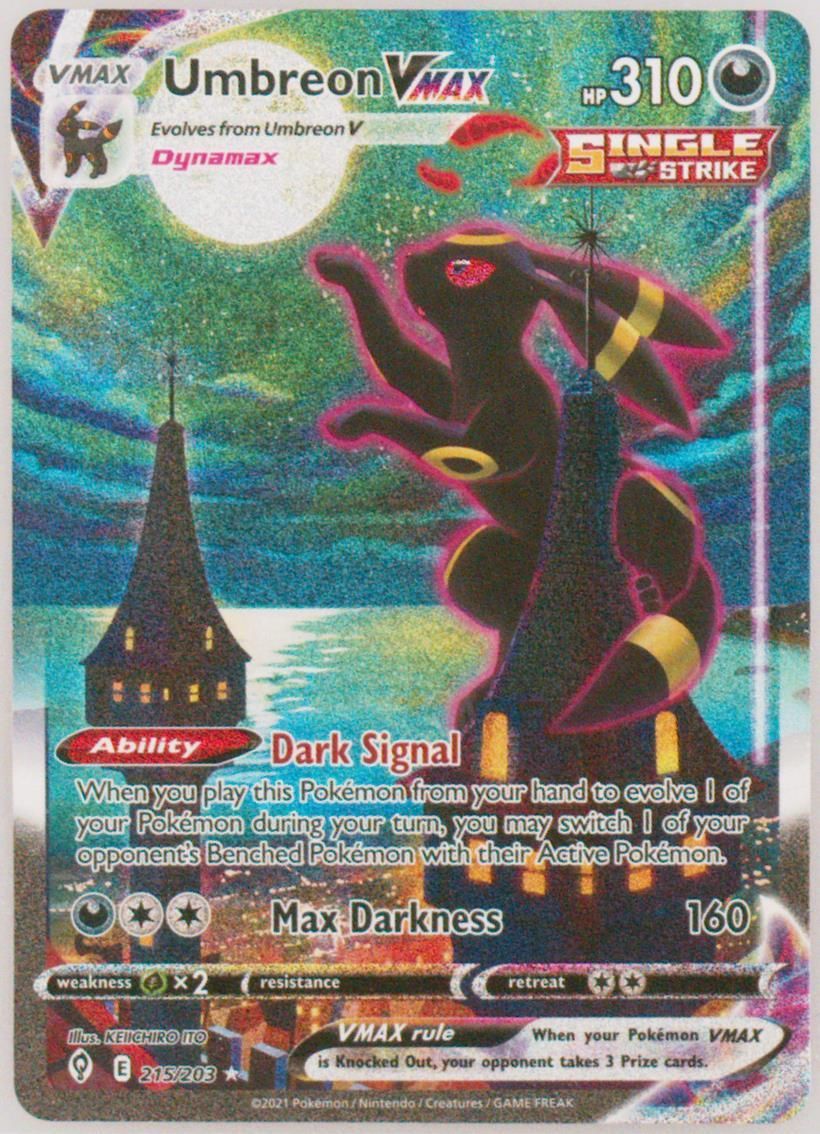
A raw Near Mint Umbreon VMAX Alt Art might sell for $350-$400. That same card in a PSA 10 slab sells for $700+. Even a PSA 9 commands a meaningful premium over raw. The $20-$50 grading fee pays for itself many times over at this value level.
Beyond the price premium, grading eliminates the "is it real?" and "is it really near mint?" questions that plague raw card sales. For the buyer, it removes risk. For you as the seller, it removes the possibility of an "item not as described" dispute based on subjective condition disagreements.
The Time Value of Money
One thing sellers often overlook: the time a card sits unsold has a cost. Pokemon card prices fluctuate constantly. A card worth $1,000 today might be worth $850 in two months if a new set drops and shifts collector attention.
This means a platform that sells your card in one week at $950 might actually net you more than a platform that eventually sells it at $1,000 after six weeks, because you avoided five weeks of price risk and had your money five weeks sooner.
Factor this into your platform choice. eBay auctions move cards fast. Misprint's bid system creates early offers. Consignment can take months. If you think a card's price is stable or rising, you can afford to wait. If you think it might be peaking, speed matters.
Final Thoughts
Selling a rare Pokemon card is not the same as selling a stack of bulk rares. The platforms that work best for $5 cards are often the wrong choice for $500+ cards. Take the time to match your card to the right platform, protect yourself with proper documentation and shipping, and don't leave hundreds of dollars on the table by defaulting to whatever platform you used last time.
If you're still figuring out what your card is worth, start with our guide on how to find your collection's value and our breakdown of how Pokemon card pricing actually works. Knowing the real value is step one. Choosing the right platform to capture that value is step two.