How to Read Pokemon Card Set Symbols and Numbers
Every symbol, number, and marking on a Pokemon card explained.
By Misprint Editorial | Published Dec 5, 2025 | 14 min read

Your card is covered in tiny symbols and numbers. Here is what all of them mean.
Pick up any Pokemon card and really look at it. Not just the artwork or the Pokemon's name, but every tiny piece of text, every symbol, every marking. There's a surprising amount of information packed onto a single card, and most people only ever read about 20% of it.
Knowing how to decode all of that information is genuinely useful. It tells you exactly which set the card is from, how rare it is, when it was printed, who illustrated it, whether it's legal in tournament play, and even whether the card might be a secret rare worth checking the price on. Once you learn to read all the markings, you can identify any Pokemon card in seconds without pulling out your phone.
We handle thousands of cards at Misprint and reading these markings is part of our daily workflow. This guide will break down every single element on a Pokemon card so you can do the same.
The Set Symbol
Where to Find It
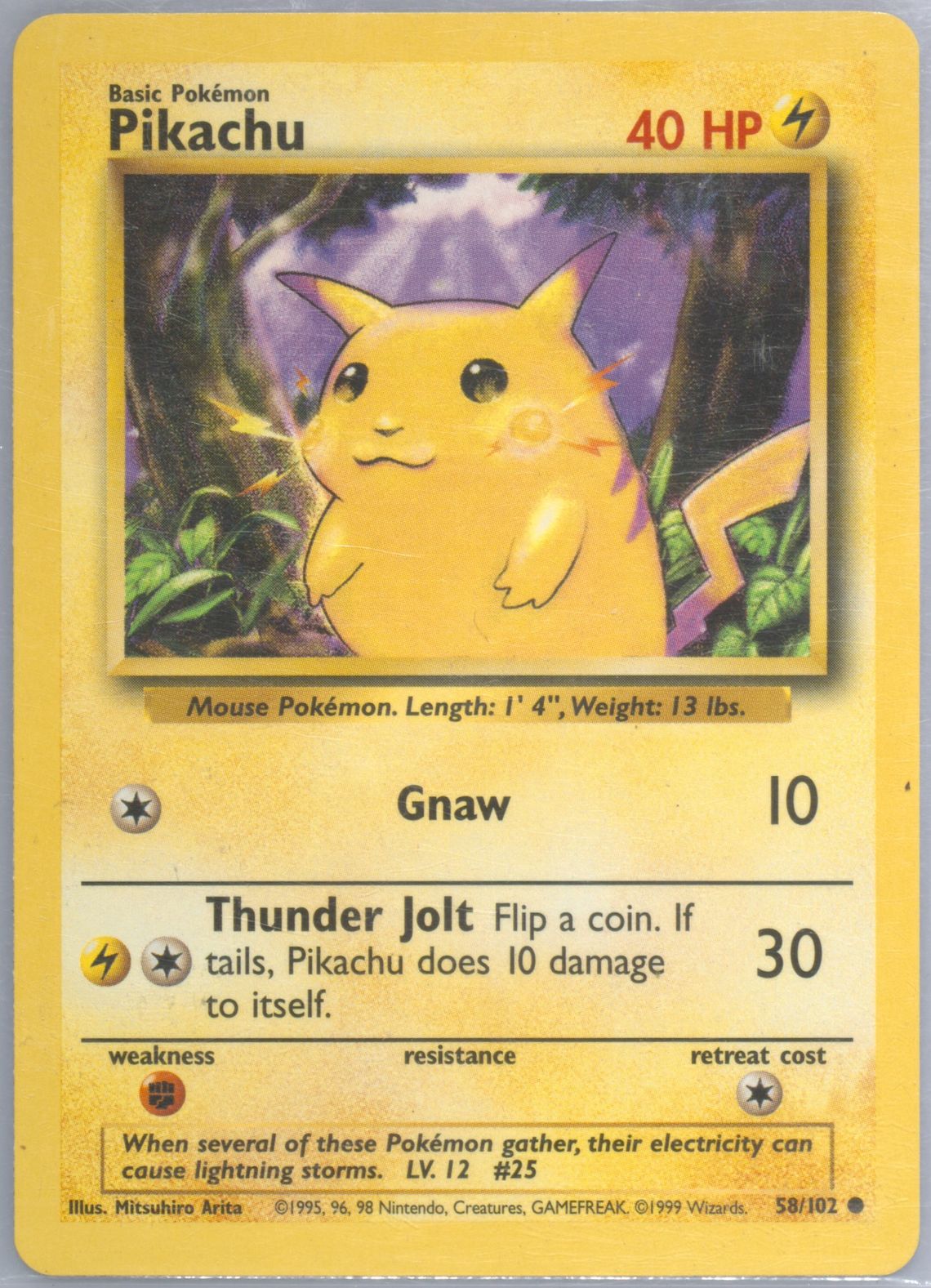
The set symbol is a small icon located on the bottom right side of the card, right next to the rarity symbol and the collector number. In older WOTC-era cards (Base Set through Skyridge), the set symbol appears on the right side of the card, between the artwork and the card description text.
What It Tells You
The set symbol identifies exactly which expansion set the card belongs to. Every Pokemon TCG expansion has a unique symbol. For example:
- Base Set: A Poke Ball icon (the original)
- Jungle: A flower/jungle leaf
- Fossil: A claw/fossil shape
- Team Rocket: A dark "R"
- Neo Genesis: A small star-like shape
- Evolving Skies: A stylized cloud/sky design
- Prismatic Evolutions: A prism/crystal icon
- 151: A Mew silhouette
- Surging Sparks: A lightning/spark design
There are hundreds of set symbols at this point (the Pokemon TCG has released over 100 English expansion sets), so nobody memorizes them all. But once you know where to look, you can cross-reference the symbol with an online set list to identify any card's set in seconds.

Promotional Cards
Promo cards typically have a black star with "PROMO" written across it instead of a regular set symbol. Promo cards are released outside of standard booster packs, through things like:
- Elite Trainer Boxes (ETBs)
- Special collection boxes
- Event distributions
- Movie tie-ins
- Pokemon Center exclusives
Promo cards have their own numbering system (usually with a prefix like "SWSH" for Sword & Shield promos or "SVP" for Scarlet & Violet promos).
The Collector Number
Format: "XXX/YYY"
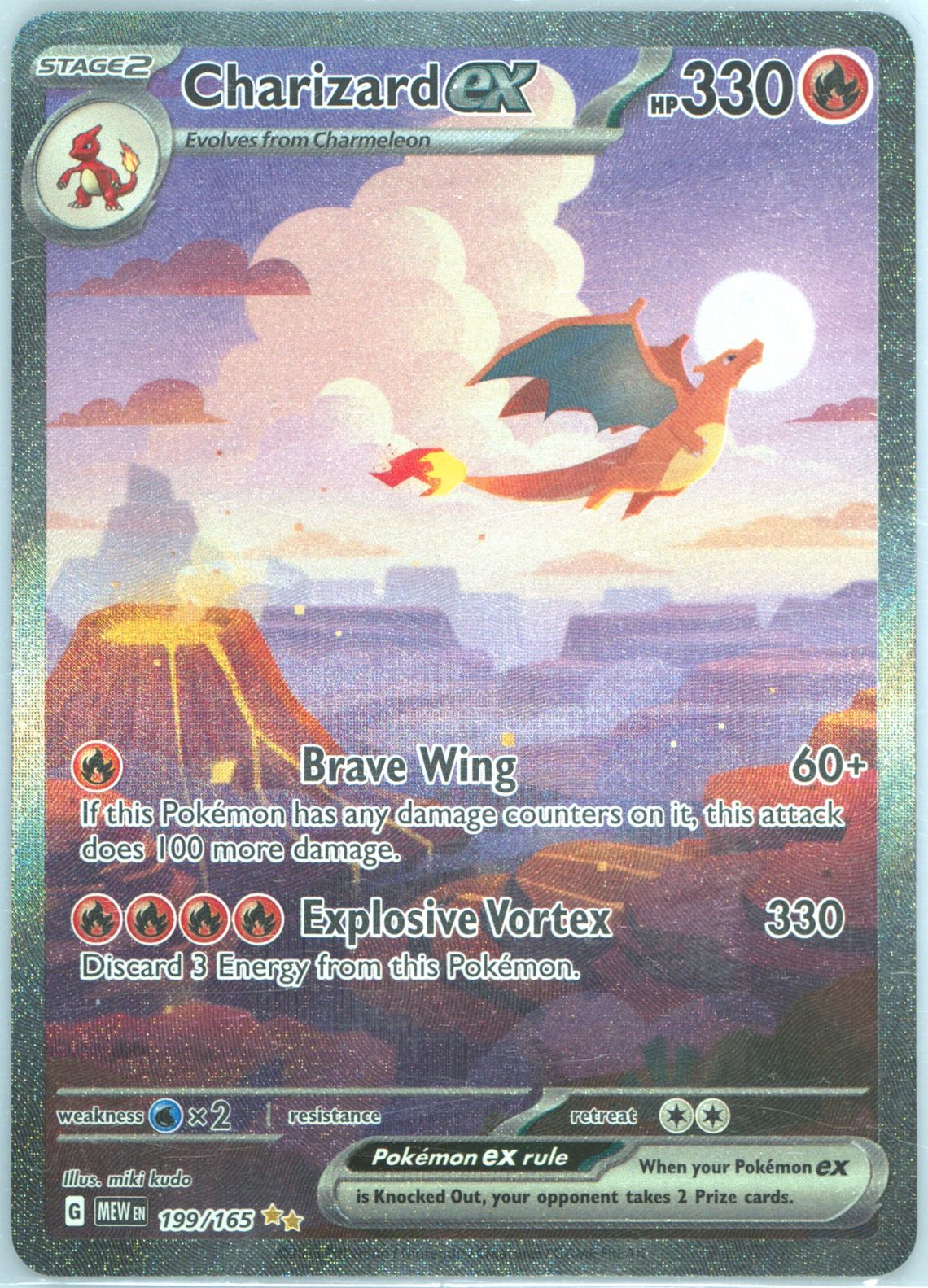
Every modern Pokemon card has a collector number in the format of two numbers separated by a slash. For example: 025/198.
- The first number (025): This card's position in the set. It's card number 25.
- The second number (198): The total number of "standard" cards in the set.
Cards are typically numbered in a specific order within a set:
- Grass-type Pokemon
- Fire-type Pokemon
- Water-type Pokemon
- Lightning-type Pokemon
- Psychic-type Pokemon
- Fighting-type Pokemon
- Darkness-type Pokemon
- Metal-type Pokemon
- Dragon-type Pokemon
- Colorless-type Pokemon
- Trainer cards (Items, Tools, Supporters, Stadiums)
- Energy cards
Secret Rares: Numbers Above the Set Count
This is one of the most useful things the collector number tells you. If the first number is higher than the second number, you have a Secret Rare card.
For example, if a set has 198 cards and your card is numbered 205/198, that's a secret rare. It's "beyond" the official set count, which means it's one of the premium chase cards.
Secret rares include:
- Full Art Pokemon
- Full Art Trainers/Supporters
- Illustration Rares
- Special Illustration Rares
- Hyper Rares (rainbow and gold cards)
- Gold Energy cards
- Other premium variants
Pro tip: If you're quickly sorting through cards and you see that the first number is larger than the second number, stop and look that card up. It's almost certainly worth something.
Older Numbering Systems
Cards from the earliest sets had slightly different numbering:
- Base Set through Neo Destiny: Used the "XX/YY" format but with no secret rares initially. Team Rocket introduced "Dark Raichu" as the first English secret rare (83/82).
- e-Card era (Expedition through Skyridge): Used a three-digit format with a different organizational structure.
- EX era onward: Standardized to the modern "XXX/YYY" format that we still use today.
The Rarity Symbol
Located right next to the set symbol and collector number at the bottom of the card, the rarity symbol tells you the card's rarity tier:
| Symbol | Rarity |
|---|---|
| ● (Circle) | Common |
| ◆ (Diamond) | Uncommon |
| ★ (Star) | Rare |
| ★★ (Double Star) | Double Rare (SV era) |
| ★★★ (Triple Star) | Ultra Rare, Illustration Rare (SV era) |
| Crown symbol | Special Illustration Rare, Hyper Rare (SV era) |
For a complete breakdown of what each rarity tier means for value, check out our Pokemon Card Rarity Guide.
Regulation Marks
What Are They?
Starting with the Sun & Moon era, every Pokemon card has a small regulation mark printed on the bottom left corner of the card. It's a single letter inside a small shape (usually a square or the letter itself).
The Letters and What They Mean
| Regulation Mark | Era | First Appearance | Tournament Legality |
|---|---|---|---|
| A | Sun & Moon early | 2017 | Rotated out |
| B | Sun & Moon mid | 2017 | Rotated out |
| C | Sun & Moon late | 2018 | Rotated out |
| D | Sword & Shield early | 2020 | Rotated out |
| E | Sword & Shield mid | 2021 | Rotated out |
| F | Sword & Shield late | 2022 | Check current rotation |
| G | Scarlet & Violet early | 2023 | Standard legal |
| H | Scarlet & Violet mid | 2024 | Standard legal |
| I | Scarlet & Violet late | 2025 | Standard legal |
Why Regulation Marks Matter
Regulation marks determine whether a card is legal in the Standard format for competitive play. The Pokemon Company uses these marks to manage set rotation. When they rotate sets out of Standard, they do it by regulation mark. For example, "All cards with regulation mark D and earlier are now rotated out of Standard."
If you play the TCG competitively, regulation marks are essential for deck building. If you only collect, they're still useful for dating when a card was printed and identifying which "generation" of the TCG it belongs to.
Cards Without Regulation Marks
Cards printed before the Sun & Moon era don't have regulation marks. All WOTC-era, EX-era, Diamond & Pearl, and Black & White era cards lack them. These cards are not legal in Standard format (they haven't been for years) but may be legal in Expanded format or unlimited formats.
Energy Type Symbols
On the Card
Pokemon cards display energy type symbols in several places:
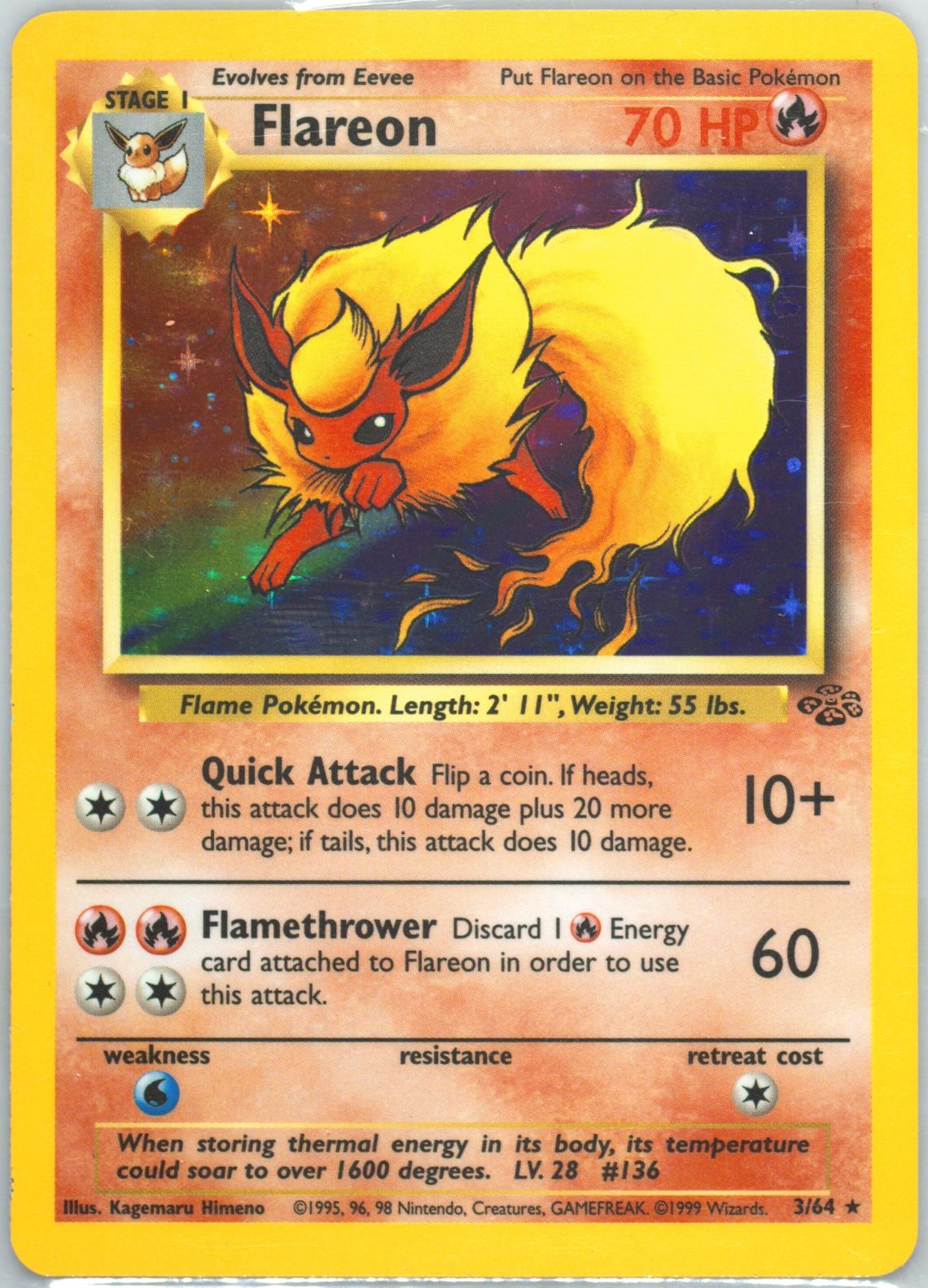
- Attack costs: The colored circles next to each attack show what energy types are required
- Weakness: Shows what type the Pokemon is weak to
- Resistance: Shows what type the Pokemon resists
- Retreat cost: Colorless energy symbols showing how much it costs to retreat
The Energy Types
| Symbol | Type | Color |
|---|---|---|
| Green leaf | Grass | Green |
| Flame | Fire | Red |
| Water drop | Water | Blue |
| Lightning bolt | Lightning | Yellow |
| Eye/psychic symbol | Psychic | Purple |
| Fist/fighting symbol | Fighting | Brown/Orange |
| Crescent/darkness | Darkness | Black |
| Gear/metal | Metal | Silver/Gray |
| Dragon symbol | Dragon | Gold |
| Fairy symbol | Fairy | Pink (retired in SV era) |
| White star | Colorless | White/Gray |
Note on Fairy type: The Fairy energy type was removed from the TCG starting with Sword & Shield. Former Fairy-type Pokemon were reclassified as Psychic-type. Fairy energy cards and Fairy-type Pokemon from older sets still exist, but no new Fairy cards are being printed.
Why Energy Symbols Matter for Identification
Energy symbols can help you date a card or identify its era. For example:
- If a card has a Fairy-type weakness or energy requirement, it's from the XY or Sun & Moon era
- The specific design of energy symbols has changed slightly over the years, which can help with era identification
- Darkness and Metal energy were introduced in the Neo era; cards from before that don't have them
The Illustrator Credit
Where to Find It
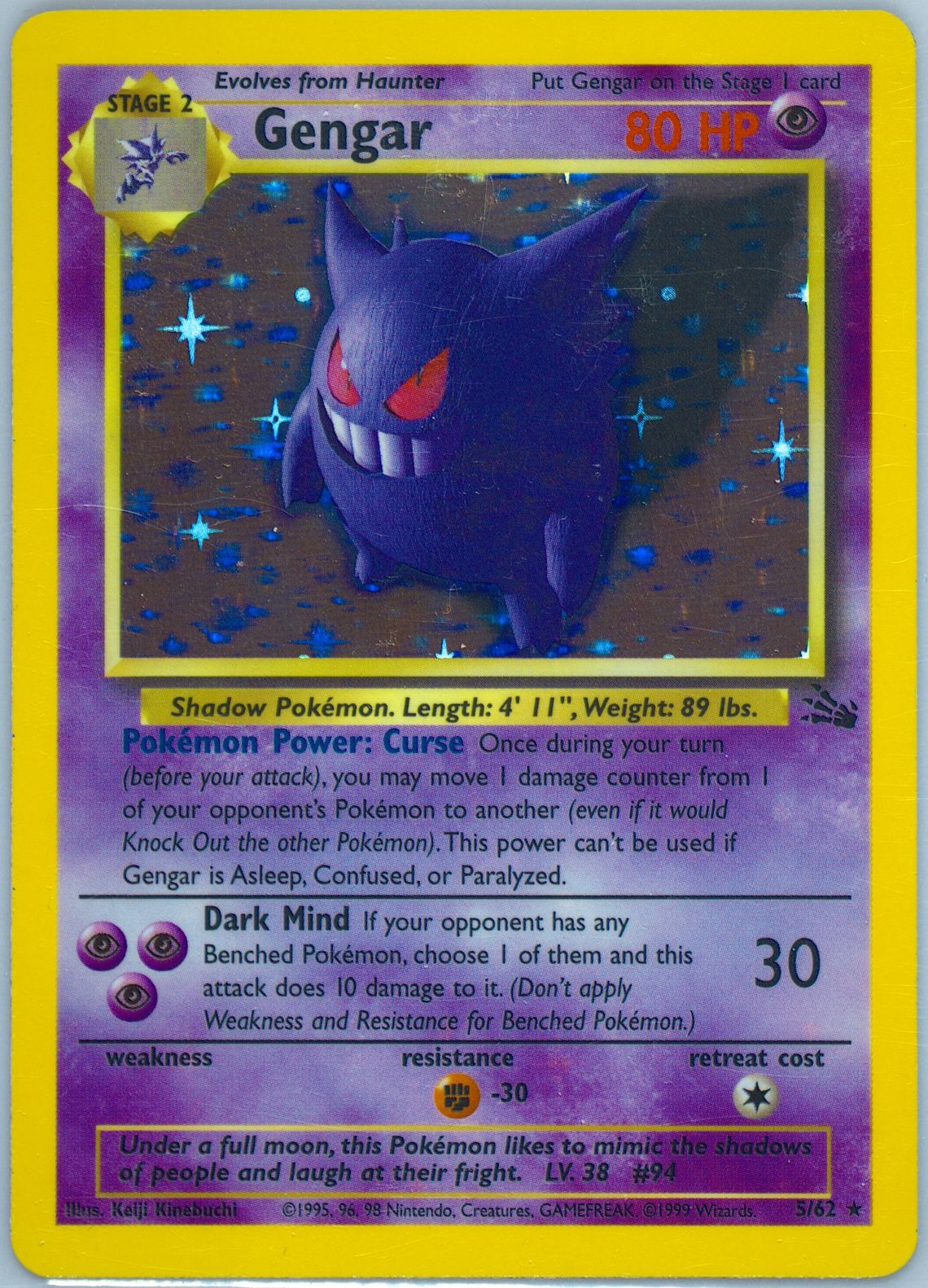
At the bottom of the card, usually below the Pokedex flavor text or card effect text, you'll find the illustrator credit in small text. It typically reads "Illus. [Artist Name]" or just the artist's name.
Why It Matters
Some illustrators are more popular and collectible than others:
- Mitsuhiro Arita: Illustrated the original Base Set Charizard and many other iconic cards. His name on a card adds collector interest.
- Yusuke Kozaki: Known for dynamic, high-energy illustrations
- Sowsow: Created many beloved Special Illustration Rares in the Scarlet & Violet era, including the famous Umbreon ex SIR from Prismatic Evolutions
- HYOGONOSUKE: Known for vibrant, detailed backgrounds in alternate art/SIR cards
- Sanosuke Sakuma: Created the iconic Moonbreon (Umbreon VMAX Alt Art) from Evolving Skies
- 5ban Graphics: A studio responsible for many of the 3D-rendered Pokemon images on standard cards
If you see a popular illustrator's name on a card, it can be a subtle indicator of collectibility beyond just the rarity tier.
Illustrator Promos
There's one ultra-rare category worth mentioning: Illustrator promos. The most famous is the Pokemon Illustrator card (sometimes called the "Pikachu Illustrator"), which was given as a prize in Japanese illustration contests in the late 1990s. Only a handful exist, and the sole PSA 10 sold for $16.49 million at auction in February 2026, the most expensive trading card of any kind ever sold. These are extreme outliers, but they show how illustrator connections can matter in the hobby.
The Copyright Line
What's Down There
At the very bottom of every Pokemon card is a copyright line with several pieces of information:
Example: ©2024 Pokémon/Nintendo/Creatures/GAME FREAK
Key Information in the Copyright Line
-
Copyright year: This tells you when the card was printed, or more precisely, the copyright year for that specific print run. This is useful for:
- Distinguishing between original prints and reprints
- Identifying which print run a card is from
- Verifying that a card is from the era it claims to be from
-
Copyright holders: The standard holders are Pokemon (The Pokemon Company), Nintendo, Creatures Inc., and GAME FREAK. If any of these are missing or different, that can be a red flag for fakes.
-
Regional identifiers: Some cards have additional text indicating the region or language of the print run.
How the Copyright Year Helps with Identification
The copyright year doesn't always match the year the set was released. It reflects the copyright of that particular version/printing. This means:
- A Base Set card originally from 1999 might have a 1999 or 2000 copyright depending on the print run
- Reprints of classic sets will have updated copyright years
- Unlimited vs. 1st Edition: Both can have the same copyright year but different print runs
1st Edition Stamps and Shadowless Cards
The 1st Edition Stamp
One of the most valuable markings a Pokemon card can have is the 1st Edition stamp, a small graphic that says "Edition 1" with a "1" inside a circle, located on the left side of the card below the artwork.
Important facts about 1st Edition:
- 1st Edition stamps only appeared on English cards from Base Set through Neo Destiny (1999-2002)
- After Neo Destiny, 1st Edition stamps were discontinued for English sets
- 1st Edition cards were the first print run of a set; Unlimited editions followed
- Japanese cards continued to have 1st Edition stamps for longer than English cards
- 1st Edition cards are almost always worth significantly more than their Unlimited counterparts
Shadowless Cards
Shadowless refers specifically to a subset of Base Set cards that were printed without a shadow on the right side of the artwork window. Here's the printing timeline for Base Set:
- 1st Edition: First print run. Has the 1st Edition stamp. No shadow. Rarest and most valuable.
- Shadowless: Second print run. No 1st Edition stamp. No shadow. Still quite valuable.
- Unlimited: All subsequent print runs. No 1st Edition stamp. Has a shadow on the right side of the artwork box. Most common version.
The difference between Shadowless and Unlimited is subtle but important for value. A Shadowless Base Set Charizard is worth significantly more than an Unlimited one, even though neither has a 1st Edition stamp.
How to Spot the Shadow
Hold a Base Set card and look at the artwork window. On the right side and bottom:
- Shadowless: The border of the artwork window is a clean, flat edge with no drop shadow effect
- Unlimited: There's a visible dark shadow/gradient on the right side and bottom of the artwork window, giving it a 3D effect
Once you see the difference, you can never unsee it.
Set Codes and Prefixes
Modern Set Codes
In the Scarlet & Violet era, cards have set codes that appear alongside the collector number. These are alphanumeric codes that identify the specific set:
| Set Code | Set Name |
|---|---|
| SV1 | Scarlet & Violet Base |
| SV2 | Paldea Evolved |
| SV3 | Obsidian Flames |
| SV3pt5 | 151 |
| SV4 | Paradox Rift |
| SV4pt5 | Paldean Fates |
| SV5 | Temporal Forces |
| SV6 | Twilight Masquerade |
| SV6pt5 | Shrouded Fable |
| SV7 | Stellar Crown |
| SV7pt5 | Prismatic Evolutions |
| SV8 | Surging Sparks |
| SV9 | Journey Together |
The "pt5" designations indicate special/mini sets released between main expansions.
Promo Card Prefixes
Promo cards use specific prefixes to identify their era:
- SVP: Scarlet & Violet promos
- SWSH: Sword & Shield promos
- SM: Sun & Moon promos
- XY: XY promos
- BW: Black & White promos
The promo number follows the prefix (e.g., SVP 076 is the 76th Scarlet & Violet promo card).
The Pokemon's HP (Hit Points)
Located in the top right corner of the card, the HP number tells you the Pokemon's health in the game. But it also tells collectors something useful:
- Higher HP generally correlates with higher rarity in modern sets. A Pokemon ex with 340 HP is likely a Stage 2 evolution or a powerful basic, which tends to be a higher-profile card.
- Absurdly high HP (250+) usually indicates a Pokemon ex, V, VMAX, or VSTAR card, all of which are above standard rare in rarity.
- HP can help identify fakes: If a card has an HP value that doesn't match any known printing of that card, it might be counterfeit. Some fakes have incorrect HP values.
The Pokemon's Type
The type icon appears in the top right corner next to the HP, and the card border color corresponds to the type. This is primarily gameplay information, but for collectors:
- Type affects collectibility: Some types are more popular. Dragon types often carry premiums due to their perceived coolness factor. Darkness types benefit from Umbreon's popularity.
- Dual-type cards: Some cards display two type icons, indicating a dual-type Pokemon. These are relatively uncommon and can be interesting collector's items.
The Card Stage
In the top left corner of Pokemon cards, you'll see one of the following:
- Basic: A basic Pokemon (doesn't evolve from anything)
- Stage 1: Evolves from a Basic Pokemon
- Stage 2: Evolves from a Stage 1 Pokemon
- BREAK: A BREAK evolution (XY era only)
- MEGA / M: A Mega Evolution (XY era only)
- V, VMAX, VSTAR: Sword & Shield era mechanics
- ex: Scarlet & Violet era mechanic
For older cards:
- Baby Pokemon: Cards from the Neo era that had a "Baby Evolution" mechanic
- LV.X: Diamond & Pearl era mechanic
The evolution stage can help you identify the era and type of card at a glance.
Weakness, Resistance, and Retreat Cost
Located at the bottom of the card's main body (above the flavor text area):
Weakness
Shows a type symbol followed by a modifier. In modern sets, this is typically a type symbol in a colored circle. Weakness has been displayed differently across eras:
- Older cards: "x2" next to a type symbol
- Modern cards: A type symbol in a circle with a specific multiplier or damage addition
Resistance
Shows a type symbol followed by a damage reduction value (usually -30). Not all Pokemon have resistance, so this field is sometimes blank.
Retreat Cost
Displayed as a row of colorless energy symbols. The number of symbols indicates how many energy cards you need to discard to retreat this Pokemon. Some cards have zero retreat cost (no symbols shown).
Fun fact for collectors: Retreat cost has been the subject of niche collecting. Some collectors seek out cards with specific retreat costs, and there are a handful of cards with unusually high retreat costs (4 energy) that are conversation pieces.
Pokedex Entry / Flavor Text
Below the attack information, many Pokemon cards include a short Pokedex entry or flavor text in italics. This is a brief description of the Pokemon, often pulled from the games' Pokedex entries.
While this doesn't affect value, it adds personality to the card and can help with identifying which specific printing of a card you have, as different printings sometimes use different Pokedex entries.
Putting It All Together: Reading a Card from Top to Bottom
Let's walk through every piece of information on a modern Scarlet & Violet era card:
Top of card (left to right):
- Evolution stage (Basic, Stage 1, Stage 2, or ex)
- Pokemon name
- HP value
- Type icon
Middle of card: 5. Artwork (holographic, full art, textured, or standard depending on rarity) 6. Illustrator credit (just below artwork on some layouts)
Below artwork: 7. Ability text (if the Pokemon has an ability) 8. Attack(s) with energy costs, names, damage, and effect text 9. Weakness, Resistance, Retreat Cost (row at bottom of info box)
Bottom of card (left to right): 10. Regulation mark (single letter: F, G, H, etc.) 11. Pokedex entry / flavor text 12. Illustrator credit (if not above) 13. Set symbol 14. Rarity symbol 15. Collector number (XXX/YYY) 16. Set code 17. Copyright line
That's seventeen distinct pieces of information on a single card. Once you know where to look for each one, you can identify virtually anything about a card without looking it up online.
Quick Reference: What to Check First
If you just want to quickly identify and evaluate a card, here's our recommended order of operations:
- Collector number: Is the first number larger than the second? If yes, it's a secret rare. Check the price.
- Rarity symbol: Star or above? Worth a closer look. Circle or diamond? Almost certainly bulk.
- Set symbol: Identify which set it's from. Some sets are inherently more valuable than others.
- Visual design: Does the art extend to the edges? Can you feel texture? These indicate higher rarity.
- 1st Edition stamp (if applicable): Check the left side below the artwork for vintage cards.
- Copyright year: Helps date the card and identify the print run.
- Regulation mark: Tells you the era and tournament legality.
With practice, this whole process takes about three seconds per card. We've seen experienced collectors sort through a stack of hundreds in minutes using these visual shortcuts.
Final Thoughts
Every Pokemon card is a small encyclopedia of information if you know how to read it. The set symbol tells you where it's from. The collector number tells you its position and whether it's a secret rare. The rarity symbol tells you its tier. The regulation mark tells you its era. The copyright line tells you its print run. The illustrator credit tells you who made the art. And all of these pieces together help you understand what you're holding and what it might be worth.
The next time you pick up a Pokemon card, take a moment to read all the fine print. You might be surprised by how much you can learn without ever opening a browser tab.
And when you're ready to buy or sell cards, Misprint makes it easy to find exactly the card you're looking for with all of this information at your fingertips.