5 Error Pokemon Cards You Might Already Own (and What They Are Worth)
That weird-looking card in your binder might actually be worth something.
By Misprint Editorial | Published Mar 10, 2026 | 21 min read

That card you always thought looked a little off? It might be the most valuable thing in your binder.
Error cards are one of the most fascinating corners of the Pokemon card collecting hobby. While most collectors focus on chasing rare holos, full arts, and graded 10s, there is an entire parallel market built around cards that went wrong during production. Misprints, miscuts, missing symbols, factory crimps — these manufacturing defects turn ordinary cards into genuine collectibles, and some of them are worth serious money.
Here is the thing most people don't realize: not all error cards are ultra-rare, one-of-a-kind anomalies. Some errors happened on entire print runs. Thousands, sometimes tens of thousands, of affected cards made it into booster packs and ended up in the hands of collectors who may not have even noticed anything was off. That means there are error cards sitting in shoeboxes and old binders right now, waiting to be discovered by someone who knows what to look for.
That is what this article is about. We are going to walk through five types of Pokemon card errors that were produced in large enough quantities that you have a realistic shot at owning one. These are not the kind of errors where a single card sold at auction for six figures and you will never see another one. These are errors that actually ended up in circulation, that real people pulled from real packs, and that are actively bought and sold on the secondary market today.
For each one, we will explain what the error is, why it happened, how to spot it in your collection, and what it is actually worth. No hype, no inflated numbers — just honest market data from what we see every day at Misprint.
Let's get into it.
1. No-Symbol Jungle and Fossil Holos
This is the most famous mass-produced error in the history of the Pokemon TCG, and it is the one most likely to make you real money if you find one.
What happened
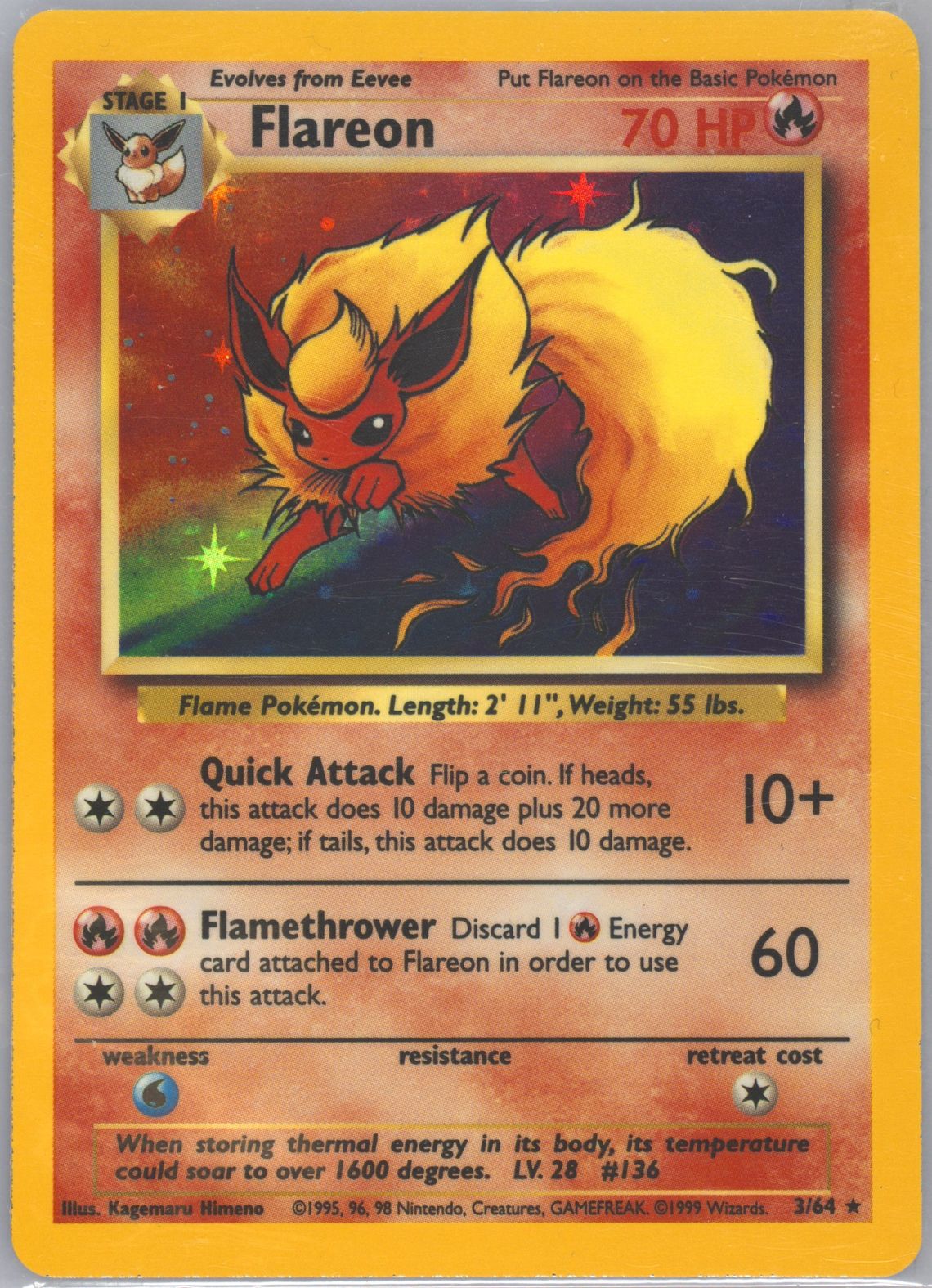
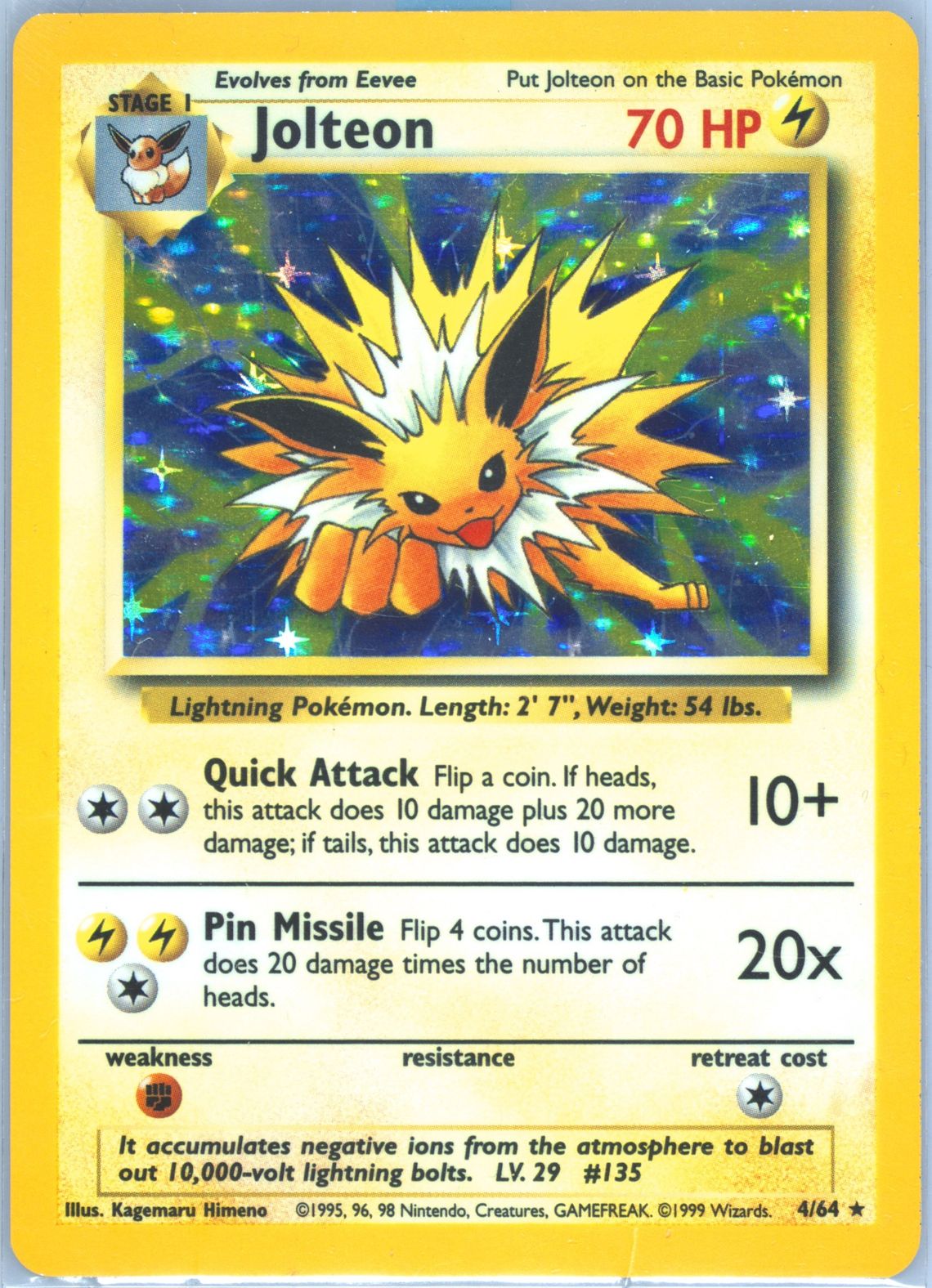
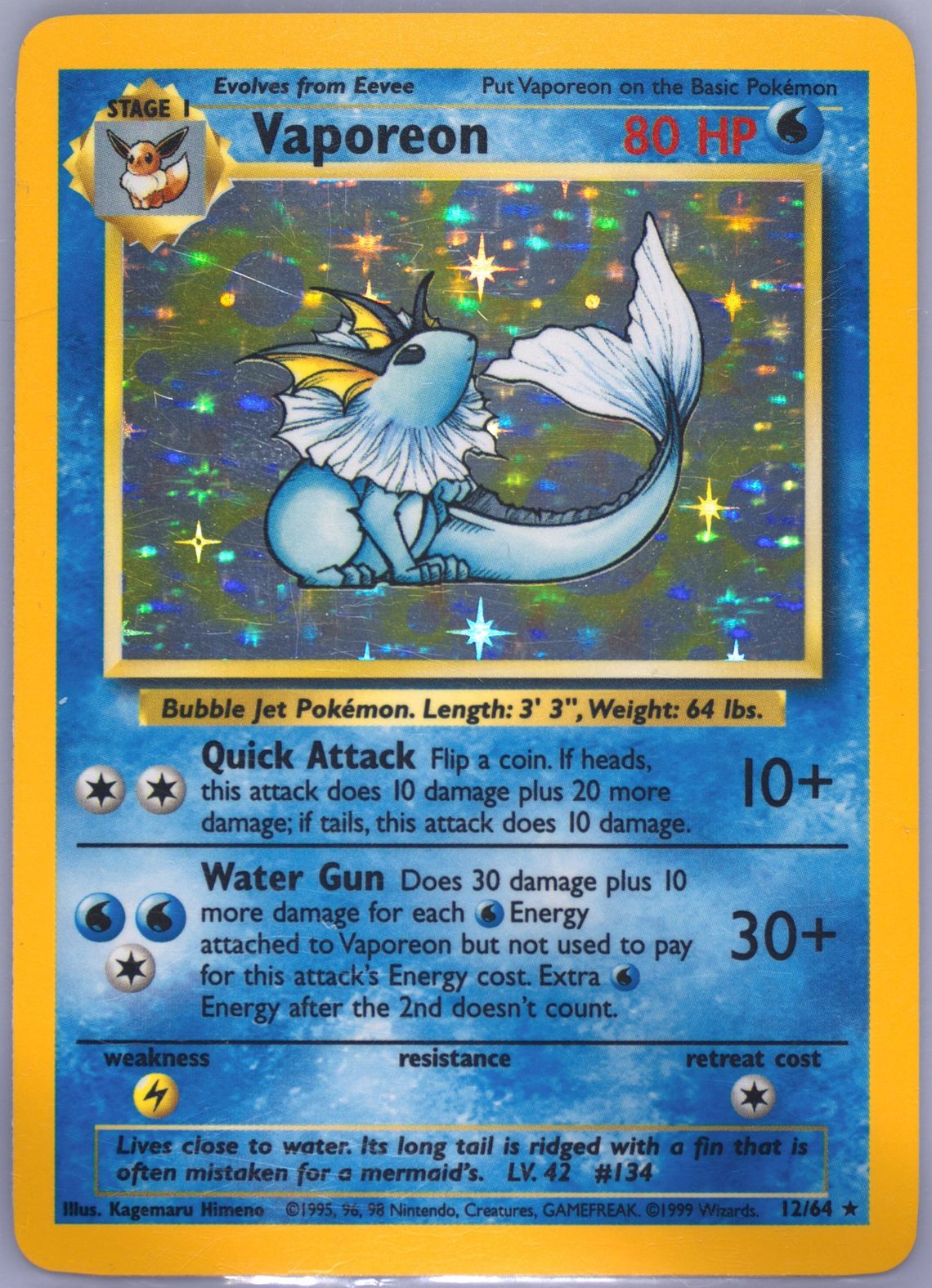
When Wizards of the Coast printed the Jungle expansion in 1999, someone at the printing facility made a mistake on the initial run of holographic cards. The set symbol — a small flower icon that appears in the bottom-right corner of the card's artwork window — was missing from an entire batch of holos. The same thing happened with Fossil holos, which were supposed to have a small skeletal fist as their set symbol.
The result was holographic cards from Jungle and Fossil that looked, at first glance, like they belonged to Base Set. Base Set cards have no set symbol at all (because there was no previous set to distinguish them from), so a Jungle holo missing its flower symbol could easily be mistaken for a card from the original print run.
This was not a subtle error affecting a handful of cards. It affected a significant portion of the initial print run of Jungle holos, and the error has been well-documented by collectors and grading companies for over two decades. PSA, CGC, and BGS all recognize these as legitimate error cards and will note the missing symbol on the label when grading.
How to identify it
The identification process is straightforward:
- Find your Jungle or Fossil holos. These are holographic cards featuring Pokemon like Flareon, Jolteon, Vaporeon, Scyther, Pinsir, Snorlax, Clefable, Kangaskhan, Wigglytuff, Mr. Mime, Nidoqueen, and others from the first two expansion sets.
- Look at the bottom-right corner of the card art window. On a normal Jungle card, you will see a small flower icon. On a normal Fossil card, you will see a small skeletal fist icon.
- If there is no symbol there at all, you have a no-symbol error.
That is it. No magnifying glass required, no UV light needed. Just look for the missing set symbol. If the card is a holo from Jungle or Fossil and there is no set symbol, it is an error card.
One important note: this error only affected holographic cards. If you have a non-holo Jungle or Fossil card with no set symbol, that is not the same error and is not particularly valuable. The premium applies specifically to the holographic versions.
What they are worth
This is where things get exciting. No-symbol Jungle and Fossil holos carry a significant premium over their normal counterparts. The exact value depends on the specific Pokemon and the card's condition, but here are realistic ranges based on current market data:
- Common no-symbol holos (Pinsir, Kangaskhan, Clefable, etc.) in lightly played condition: $200 - $500
- Popular no-symbol holos (Flareon, Jolteon, Vaporeon, Scyther) in lightly played condition: $500 - $1,500
- High-grade no-symbol holos (PSA 9 or 10) of popular Pokemon: $1,500 - $5,000+
To put that in perspective, a normal Jungle Flareon holo in played condition might sell for $20-40. The no-symbol version of the exact same card can sell for twenty to thirty times that amount. The error status completely transforms the card's value.
The Eeveelution trio (Flareon, Jolteon, Vaporeon) are the most sought-after no-symbol errors because of the enduring popularity of those Pokemon. Scyther is another strong performer. Even the less popular Pokemon from the set command prices that would make most vintage collectors take notice.
How common is it really?
Common enough that you absolutely could own one without knowing it. Uncommon enough that finding one is still a genuine thrill. The no-symbol holos were printed during the earliest part of the Jungle print run, which means they primarily show up in first-edition and early unlimited copies. If you were buying Jungle packs in 1999 or early 2000, there is a real chance some of those holos are no-symbol errors.
The error was corrected once it was noticed, so later print runs all have the correct symbol. But that initial run was large enough that these cards are not unicorns — they show up in collections regularly, and they trade hands on the secondary market every week.
2. Holo Bleed Cards (Various Sets)
Holo bleed is one of the most common errors in the Pokemon TCG, and it has been happening since the very first sets were printed. It is also one of the most visually striking errors when it is dramatic, turning an ordinary holographic card into something that looks almost like a custom piece of art.
What happened
To understand holo bleed, you need to understand how holographic Pokemon cards are made. The holographic pattern — that shimmery, rainbow-reflective surface — is supposed to be confined to the artwork window of the card. On a normal holo card, the border, the text box, the attack descriptions, and the rest of the card should not display any holographic effect. Only the art shimmers.
Holo bleed occurs when the holographic foil layer extends beyond the artwork window and bleeds into the surrounding areas of the card. This can manifest as a subtle shimmer visible on the card's border when you tilt it under light, or it can be a dramatic, unmistakable holographic effect covering the entire card surface, text and all.
The cause is a misalignment or inconsistency in the layering process during printing. The holographic foil sheet is not positioned precisely enough relative to the card face printing, and the result is foil showing through where it should not. This is a production variance that has occurred across virtually every era of Pokemon cards, from the WOTC Base Set era through modern Scarlet and Violet releases.
How to identify it
Holo bleed is best detected by tilting the card under a direct light source. Here is the process:
- Start with a holographic card. Holo bleed only occurs on cards that are supposed to have some holographic element.
- Hold the card at an angle under a bright light. A desk lamp or direct sunlight works well.
- Look at the non-artwork areas of the card. Specifically, examine the yellow (or colored) border, the text box below the artwork, and the areas around the Pokemon's name and HP.
- If you see holographic shimmer in those areas, you have holo bleed.
The intensity varies enormously. Some holo bleed is so subtle that you have to look hard to see it — just a faint sparkle at the edges of the border when you catch the light at the perfect angle. Other holo bleed is impossible to miss, with the entire card surface displaying a full holographic effect that makes the card look like it was printed on a sheet of holographic foil.
The dramatic cases are the valuable ones. If you really have to squint and tilt and convince yourself you are seeing something, that is probably not going to command much of a premium.
What they are worth
Let's be honest up front: most holo bleed cards are worth modest premiums at best. This is a very common manufacturing variance, and the market reflects that reality.
- Subtle holo bleed (visible only at certain angles, confined to border edges): $5 - $20 over the normal card's value. Sometimes no premium at all.
- Moderate holo bleed (clearly visible across the border and text areas): $15 - $50 over normal value.
- Dramatic, full-card holo bleed (holographic effect covering the entire card surface): $50 - $200+ over normal value, depending on the base card and era.
- Dramatic holo bleed on high-value cards (Base Set Charizard, popular WOTC holos): $200 - $500+ over normal value.
The key factors that determine value are: how dramatic the bleed is, what the base card is worth, and what era the card is from. A dramatic holo bleed on a WOTC-era card is worth more than the same level of bleed on a modern card, because vintage errors have a deeper collector market. And a holo bleed on a Charizard is worth more than a holo bleed on a Poliwrath, because the base card matters.
How common is it really?
Extremely common. If you have any meaningful collection of holographic Pokemon cards from any era, you almost certainly own at least one card with some degree of holo bleed. The WOTC era (Base Set through Neo series) is particularly famous for it, but it happens in modern sets too.
The rarity is not in holo bleed existing — it is in dramatic holo bleed existing. Full-card holographic bleed is genuinely uncommon. Most holo bleed is subtle enough that you would never notice it without specifically looking for it. So while you probably own a holo bleed card, you may or may not own one worth a significant premium. Check your holos anyway. You might be surprised.
3. Crimped Cards
Crimped cards are one of the most distinctive-looking errors in the hobby. There is no mistaking a crimp when you see one — the card has a visible, physical deformation from the factory packaging process, and it looks immediately different from every other card in your collection.
What happened
During the pack-making process, individual booster packs are sealed by a machine that crimps the packaging shut at the top and bottom of each pack. If a card is slightly mispositioned in the pack — sitting a little too high or too low — it can get caught in the sealing mechanism. The result is a card with a distinctive crimped, wavy, or ridged edge where the packaging machine pressed into it.
This is purely a mechanical error. The card itself was printed normally; it just got physically damaged by the packaging equipment before it ever left the factory. The key distinction is that the crimp is a factory defect, not something that happened after the card was opened. This matters for valuation, and experienced collectors can tell the difference between a factory crimp and post-production damage.
Crimps most commonly appear along the top or bottom edge of the card, because that is where the pack seals are located. Occasionally you will see side crimps from the vertical seals of the pack wrapper, but top and bottom crimps are far more typical.
How to identify it
Crimped cards are easy to identify:
- Look at the edges of the card. A crimped card will have a visible wavy, ridged, or indented pattern along one edge, usually the top or bottom.
- The crimp pattern should look mechanical and consistent. Factory crimps have a specific repeating pattern from the packaging machinery. They look like the card was pressed by a serrated or ridged surface.
- The crimp should be on one edge only. A card with damage on multiple edges, random creasing, or bends in odd places is more likely to be post-production damage.
- Bonus: pack wrapper remnants. Some crimped cards still have a small piece of the booster pack wrapper attached where the seal caught the card. This is the gold standard for authenticity — it proves beyond any doubt that the crimp happened during factory packaging.
The biggest identification challenge is distinguishing factory crimps from other edge damage. A card that got bent in a binder, creased during shuffling, or damaged in shipping is not a crimped card. The telltale sign of a factory crimp is the consistent, mechanical pattern of the deformation. If it looks like it was pressed by a machine (because it was), it is a crimp. If it looks like random physical damage, it probably is.
What they are worth
Crimp values depend almost entirely on what card got crimped. The crimp itself adds a flat-ish premium, but that premium matters a lot more on a cheap card than on an expensive one. Here are realistic numbers:
- Common/uncommon cards with crimps: $10 - $30. The crimp makes a bulk card into a curiosity, but nobody is paying big money for a crimped Pidgey.
- Regular rare holos with crimps: $30 - $75. Enough of a premium to be interesting, but not life-changing.
- Chase cards with crimps (popular holos, secret rares, alt arts): $100 - $500+. This is where things get real. A crimped Charizard or crimped alt art is a genuinely desirable error card.
- First edition or vintage crimps on desirable cards: $500 - $2,000+. Rare and highly sought after by the error collecting community.
- Crimps with pack wrapper still attached: Add a significant premium on top of the base crimp value. This is the most collectible version of a crimped card because the provenance is undeniable.
The error card community has a genuine appreciation for crimps because they are undeniably factory errors. There is no debate about whether a crimp is an error or just normal variance (unlike some other error types we will discuss). The card was physically caught in a machine. That is about as clear-cut as it gets.
How common is it really?
Crimps are uncommon but not rare. They can happen in any set, from any era, because the packaging process has remained fundamentally similar throughout the history of the Pokemon TCG. If you have opened a lot of packs over the years, there is a reasonable chance you have pulled a crimped card at some point.
The question is whether you kept it. A lot of people who pull a crimped card as a kid see it as damaged and throw it in the back of the binder, trade it away, or discard it. If you are the type of person who kept every card you ever pulled regardless of condition, go check those binders. There might be a crimp in there that you wrote off as a damaged card years ago.
Modern sets produce crimps at about the same rate as older sets. If you are actively opening packs today, keep an eye on the edges of every card you pull. Most packs are fine, but every once in a while, you will find one where a card got caught in the seal.
4. Off-Center and Miscut Cards
Miscuts are arguably the most visually dramatic error type on this list. While most errors require explanation or close inspection to appreciate, a badly miscut card is immediately, obviously wrong. You look at it and your brain says, "Something happened here."
What happened
After Pokemon cards are printed, the large printed sheets need to be cut into individual cards. This cutting process is done by industrial cutting machines that are supposed to slice along precise lines separating each card. When the sheet is misaligned in the cutter — even slightly — the resulting cards come out with uneven borders.
Think of it like cutting a sheet of cookies with a cookie cutter that is slightly off-position. Each cookie comes out with a little too much dough on one side and not enough on the other. With cards, this means one border is wider than the opposite border.
The severity of the miscut depends on how far off the alignment was. A slight misalignment produces cards that are subtly off-center — maybe the left border is noticeably wider than the right. A more significant misalignment produces cards where the border on one side is nearly nonexistent while the opposite side has a massive border. And in the most extreme cases, you get cards that actually show part of an adjacent card on the sheet — you can see the edge of whatever card was printed next to it.
How to identify it
Identification is simple and requires no special tools:
- Hold the card in front of you and look at the borders on all four sides. On a normally cut card, the borders should be roughly equal width all the way around. They do not need to be pixel-perfect — slight variation is normal — but they should be close.
- Compare the left border to the right border, and the top border to the bottom border. If one side is significantly wider than the other, you have an off-center card.
- The bigger the difference, the more significant the error.
The collecting community uses ratios to describe the severity of off-center cards:
- 60/40: One border is about 50% wider than the opposite border. Very common. This is the "is this even an error?" level.
- 70/30: One border is more than double the width of the other. Noticeable and considered a genuine miscut.
- 80/20: Dramatic miscut. The narrow side has almost no border. Clearly a significant error.
- 90/10 or worse: Extreme miscut. May show part of an adjacent card. The holy grail for miscut collectors.
There is also a special category called square cuts. These come from cards on the outer edges of the uncut printing sheet, where one or more sides of the card were cut along the sheet's edge rather than between cards. Square-cut cards have one or more perfectly straight, clean edges (from the sheet edge) instead of the normal rounded corners. They are rare and highly collectible.
What they are worth
Off-center and miscut values are directly tied to severity. The market is very clear about this: mild off-center cards are barely worth a premium, while dramatic miscuts can be worth a fortune.
- 60/40 off-center: $0 - $5 premium. Frankly, this is within the range of normal manufacturing tolerance. Most collectors do not consider a 60/40 card to be an error at all. You would have a hard time selling it for any premium.
- 70/30 off-center: $5 - $20 premium on most cards. Enough to be noted, not enough to get excited about. On high-value base cards, the premium can be slightly higher.
- 80/20 off-center: $20 - $100 premium. Now we are talking. This is clearly a miscut, and collectors will pay for it.
- 90/10 or more severe, showing adjacent card: $100 - $1,000+. These are the miscuts that error collectors actively chase. A card showing part of the adjacent card on the sheet is proof of a significant manufacturing error, and the visual impact is undeniable.
- Square cuts: $200 - $2,000+ depending on the card and era. Square cuts from vintage sets are particularly desirable because uncut sheets from that era are themselves collectible, and a square cut is evidence that the sheet was cut rather than preserved.
For miscuts, the underlying card matters, but it matters less than you might think. Even a miscut common card can be worth $50-100+ if the miscut is severe enough to show part of an adjacent card. The error itself is the attraction, not just the Pokemon on the card.
How common is it really?
Minor off-center cards are everywhere. If you flip through any collection of meaningful size, you will find cards where the borders are not perfectly even. That is normal. Printing and cutting thousands of sheets per day does not produce perfect results every time.
Significant miscuts (80/20 or worse) are genuinely uncommon. Showing an adjacent card is rare. Square cuts are very rare.
Modern quality control has actually improved significantly compared to the WOTC era, so dramatic miscuts are less common in recent sets. That said, they still happen. Modern Pokemon cards are printed in enormous quantities, and even a tiny error rate produces plenty of miscuts in absolute numbers.
If you want to check your collection, spend a few minutes looking at the borders of your vintage cards especially. WOTC-era cards have a higher rate of significant miscuts than modern cards, and if you have cards from the late 1990s or early 2000s, there is a decent chance at least one is noticeably off-center.
5. Print Line Cards (The Controversial One)
We saved the most controversial error type for last, because this one generates more arguments in the Pokemon collecting community than almost any other topic. Print lines are common, they are easy to spot, and the debate over whether they even count as errors — and whether they affect value — has been going on for years.
We are going to be straight with you: this is the least valuable error type on this list, and most print line cards are not worth any premium at all. But we are including it because you will almost certainly find print lines in your collection, and you deserve an honest explanation of what they are and what they are actually worth.
What happened
Print lines are visible lines that run across the surface of a card, usually in a straight horizontal or vertical pattern. They are caused by imperfections on the printing rollers used during the card manufacturing process. When a roller develops a scratch, a buildup of ink, or a slight deformation, it can leave a corresponding line on every card that passes through it.
The key word there is "every." When a printing roller has an imperfection, it does not just affect one card. It affects potentially thousands of cards printed in that run. That is why print lines are so common — they are a systemic issue with the printing equipment, not a one-off accident.
Print lines have been a feature (or a defect, depending on who you ask) of Pokemon cards for as long as the game has existed. They are particularly prevalent in modern sets, where the sheer volume of cards being printed means equipment is running constantly and minor roller imperfections are almost inevitable.
How to identify it
Print lines are easiest to see on holographic card surfaces, but they can appear on any part of any card:
- Hold the card under a light and tilt it slowly. Print lines are most visible when light catches them at an angle.
- Look for thin, straight lines running across the card surface. They usually run horizontally or vertically, and they tend to be consistent in direction (all the lines on a given card will run the same way, because they come from the same roller).
- On holo cards, look at the holographic surface especially. Print lines show up most dramatically on holo surfaces because the disruption in the foil pattern makes them more visible.
- On non-holo cards, look at solid-color areas. Print lines are harder to see on busy artwork but easier to spot on the plain yellow border or solid-colored text box.
Here is the honest reality: if you go through your collection with a critical eye and good lighting, you will find print lines on a significant percentage of your cards. That is not an exaggeration. They are that common.
What they are worth
This is where we need to be blunt, because there is a lot of misinformation and wishful thinking around print line values.
Most print line cards are worth the same as their non-print-line equivalents. That is the baseline reality. A Pikachu V with a subtle print line is worth exactly what a Pikachu V without a print line is worth. The market does not differentiate at that level.
Here is why: print lines are so common that they are essentially within the range of normal manufacturing variance. A card with a faint print line is not an error card in any meaningful sense — it is just a card that came from a print run where the rollers were not perfectly maintained, which is most print runs.
That said, there are exceptions at the extreme end of the spectrum:
- Subtle print lines on any card: $0 premium. Not an error. Normal manufacturing variance.
- Moderate print lines: $0 premium in most cases. Some very particular buyers might pay $1-3 less for the card (it is actually a negative premium), treating it as a condition issue rather than an error.
- Severe, dramatic print lines on high-value cards: $5 - $25 premium in niche cases. This only applies when the print lines are so extreme that they are visually striking — deep grooves or heavy lines covering a significant portion of the card — and the base card is already worth enough for someone to care.
- Extreme cases on chase cards: Occasionally, a dramatically print-lined copy of a very high-value card (think a modern chase card like a Charizard alt art) will sell for a modest premium to an error collector, but we are talking maybe $20-50 over normal value in the most extreme cases.
The controversy
The debate around print lines comes down to a fundamental question: at what point does normal manufacturing variance become an error?
One camp of collectors says print lines are always a defect — any visible line on a card surface is a flaw, full stop. This camp tends to view print lines negatively, as a condition issue that should lower a card's value, not raise it.
The other camp says print lines are just part of how printed cards work. Printing rollers are imperfect, cards are mass-produced, and expecting a perfectly smooth surface on every card is unrealistic. This camp views most print lines as irrelevant to value.
The truth, as it usually does, falls somewhere in the middle. Most print lines are normal and do not affect value in either direction. Extreme print lines on the right cards can be of interest to the error-collecting community. But if someone is telling you that every print line card is a valuable error, they are either misinformed or trying to sell you something.
Our honest take: if you find dramatic print lines in your collection, it is worth noting them and possibly listing them as error cards if you decide to sell. But do not expect to retire on print line premiums. Of all five error types in this article, this is by far the least likely to make you money.
How common is it really?
Incredibly common. Print lines are arguably the most common manufacturing variance in the Pokemon TCG. If you have more than a few dozen cards, you almost certainly own multiple cards with some degree of print lines. Modern sets from Scarlet and Violet, Sword and Shield, and Sun and Moon eras are particularly prone to visible print lines, and even vintage WOTC cards show them regularly.
The rarity is in severity, not in existence. Finding a card with print lines is trivially easy. Finding a card with print lines so dramatic that an error collector would be interested is much harder.
Go Check Your Binders
If you made it this far, you are probably itching to go dig through your collection. Good. That is exactly the point of this article.
Here is what we would suggest:
Start with your vintage cards. If you have anything from the WOTC era — Base Set, Jungle, Fossil, Team Rocket, Gym series, Neo series — those are the most likely to contain valuable errors. The no-symbol Jungle and Fossil holos alone could be a significant find, and WOTC-era cards in general had higher rates of miscuts, holo bleed, and other production variances.
Check your holos first. Holographic cards are the most likely to display visible errors (holo bleed, print lines) and the most likely to be valuable when they do have errors. Go through every holo you own and look at it carefully under good lighting. Tilt it, examine the borders, check for set symbols, look at the edges.
Do not overlook modern cards. Crimps and miscuts happen in modern sets too, and a crimped or dramatically miscut modern chase card can be worth real money. If you have been opening packs recently, take a second look at everything you pulled.
Be realistic about value. Not every imperfection is a valuable error. Subtle holo bleed, minor off-centering, and faint print lines are normal manufacturing variance, and the market treats them that way. Focus on the dramatic, obvious errors — those are the ones that command real premiums.
Document what you find. If you do discover an error card, take clear photos under good lighting. Photograph the error from multiple angles. This documentation is essential whether you are getting the card graded, listing it for sale, or just sharing it with the collecting community for identification help.
And if you find something interesting, we would love to see it. Misprint was built for exactly this kind of thing. We are a marketplace where error cards, misprints, and factory defects are not just tolerated — they are celebrated. If you have error cards to sell, we are the place to list them. If you want to buy error cards, we have a growing inventory of documented, authenticated errors across every era of the Pokemon TCG.
The error card market is still relatively young compared to the broader Pokemon card collecting hobby, and that means there are still discoveries being made every day. Cards that have been sitting in collections for 25 years are being re-examined with fresh eyes and turning out to be valuable errors. The collectors who find them are the ones who know what to look for.
Now you know what to look for. Go find something good.