What Are Mega Evolution ex Cards? The 2026 Era Explained
The biggest mechanic shake-up since ex cards returned. Here is what actually changed.
By Misprint Editorial | Published Apr 9, 2026 | 6 min read
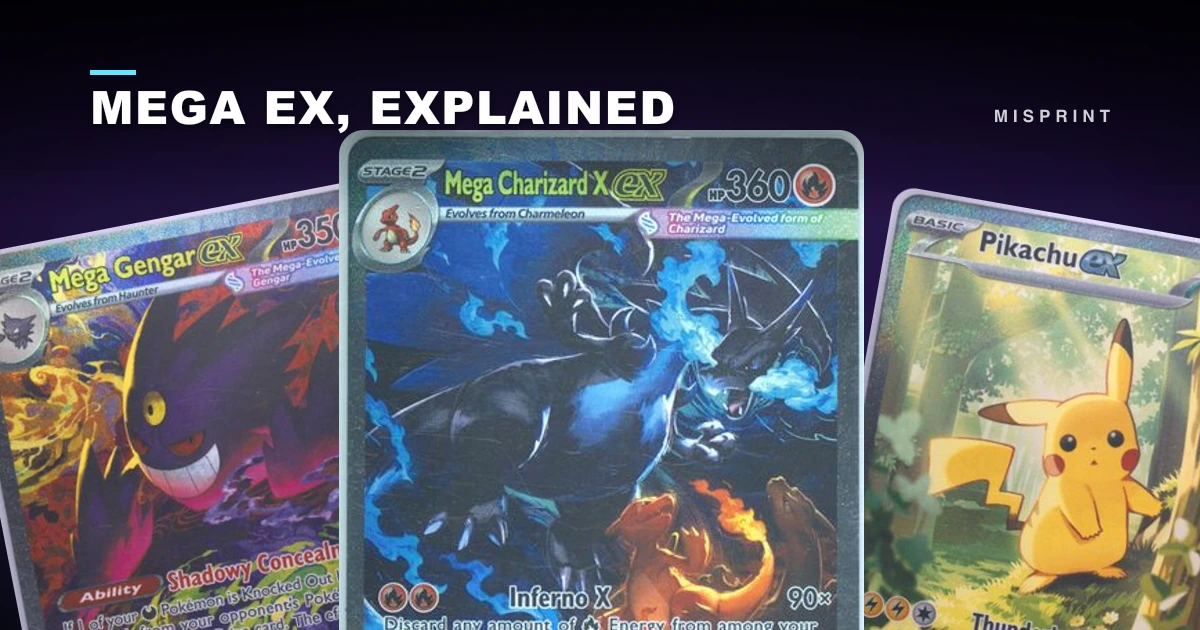
If you opened a pack in 2025 and pulled a card that took three Prize cards when it fainted, you weren't scammed. You met the new face of the game.
The Scarlet & Violet era is over. As of late 2025, the Pokemon TCG moved into the Mega Evolution era. It brought a full reset of the chase-card landscape, a new card type, and a fresh batch of rarities that most collectors are still learning to read. If you've been away from the hobby for a year and came back confused, this guide is for you.
We're going to explain what Mega Evolution ex cards actually are, how they differ from the ex cards you already know, and what the new rarity tiers mean. And because this is Misprint, we'll also cover which ones are holding real money in 2026. No hype, no gatekeeping.
First, a Quick History Lesson
Mega Evolution isn't new to Pokemon. It debuted in the video games back in the XY era (2013) and got its own TCG cards then too. But those original Mega cards had a clunky rule: when you played a Mega Evolution, your turn ended immediately. They were powerful but awkward, and they never became the backbone of the game.
The 2025-2026 Mega Evolution era fixes that. The new Mega Pokemon ex follow standard evolution rules, so you evolve them and keep playing. That single change is why this era feels different. Mega cards are now playable centerpieces rather than situational gimmicks, and the chase versions have become some of the most valuable modern cards on the market.
How Mega ex Cards Work (The Short Version)
Here's what separates a Mega ex from a regular ex, in plain terms.
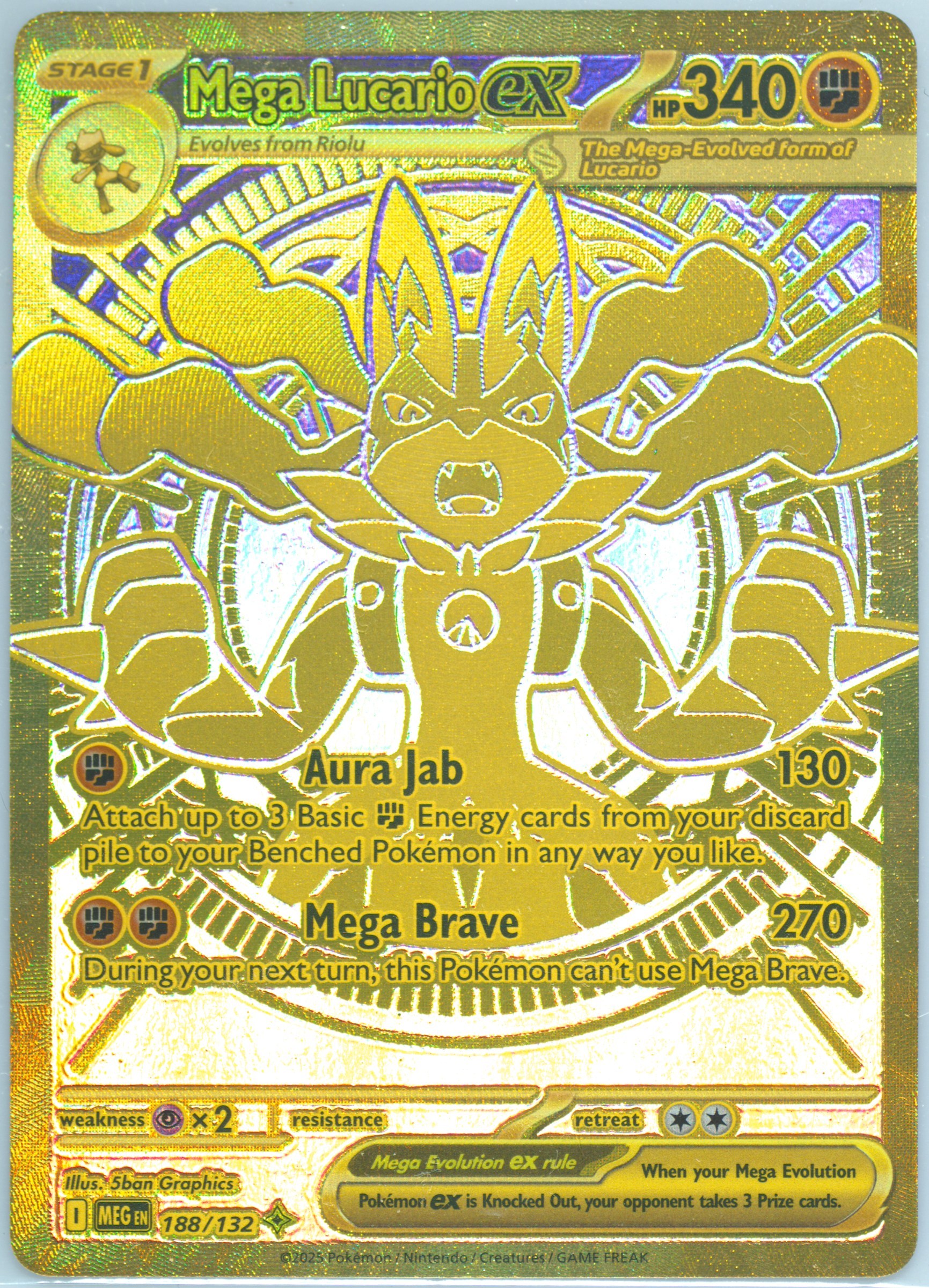
They evolve from the regular pre-evolution. Mega Lucario ex evolves from Riolu. Mega Gardevoir ex evolves from Kirlia. You don't need a special "Mega Stone" item card the way the old games implied. They slot right into the normal evolution line.
They hit harder and have more HP. Mega Venusaur ex debuted with 380 HP, the highest ever printed on a Pokemon card at the time (a couple of later Megas have since tied it). Their attacks are tuned to match.
They give up three Prizes. This is the balancing cost. A normal Pokemon ex gives your opponent two Prize cards when it's knocked out. A Mega ex gives up three. That's a real downside that competitive players have to play around, and it's the main reason the format hasn't become a free-for-all of giant attackers.
That's the whole mechanic. If you understand "evolves normally, stronger, worth three Prizes," you understand Mega ex cards.
The New Rarity Tiers (This Is Where Collectors Get Lost)
The Mega era didn't just add a card type. It added new rarities, and that's what makes pack-opening and price-checking confusing right now. Here's the cheat sheet.
| Rarity | What it looks like | Roughly how rare |
|---|---|---|
| Mega Pokemon ex (standard) | Normal-bordered ex card | Multiple per box |
| Mega ex (Full Art / Ultra Rare) | Full-art textured version | About 1 per box |
| Special Illustration Rare (SIR) | Full-bleed art, character + Pokemon scene | 1 in 70 to 101 packs, varies by set |
| Mega Attack Rare | Full-art with retro katakana attack text | About 1 in 29 packs |
| Mega Hyper Rare | Full gold-foil treatment, three gold stars | 1 in 540 to 1,800 packs, varies by set |
One naming note if you also follow the Japanese market: what English sets call a Special Illustration Rare, Japanese sets label "SAR" (Special Art Rare). Same tier, different name.
The two names that matter most for value are Special Illustration Rare (SIR) and Hyper Rare. Those are the cards pulling hundreds of dollars. The standard and full-art Megas are great for playing and collecting, but they are not where the big money sits.
If the whole concept of rarity symbols and tiers is fuzzy for you, our Pokemon card rarity guide breaks down the entire modern system from common to Hyper Rare.
Which Mega ex Cards Are Worth Money in 2026?
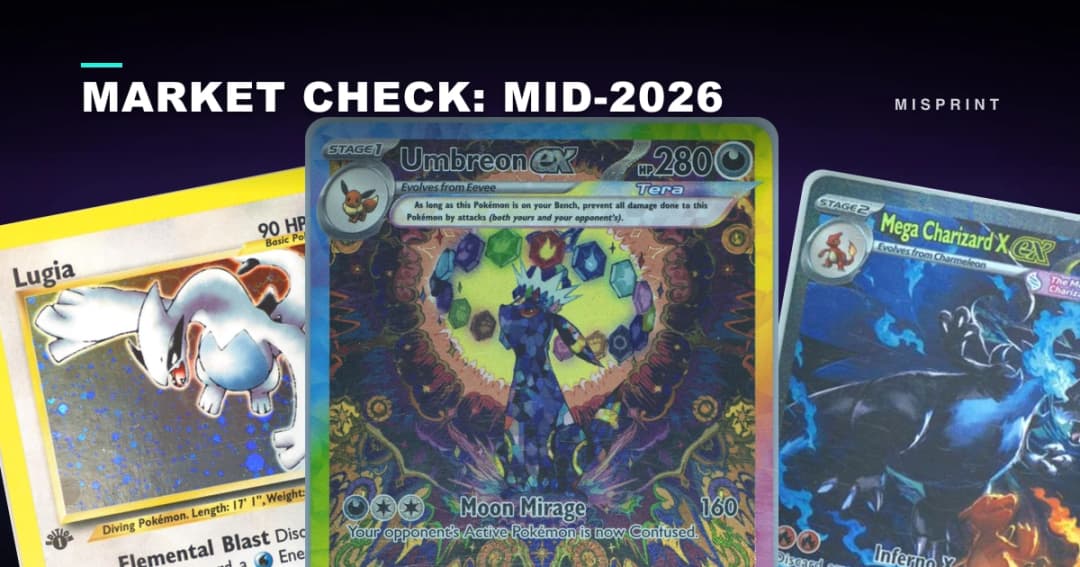
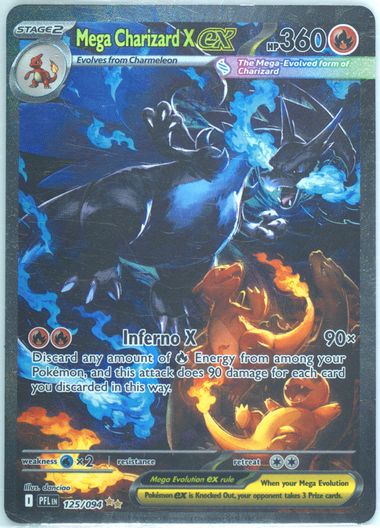
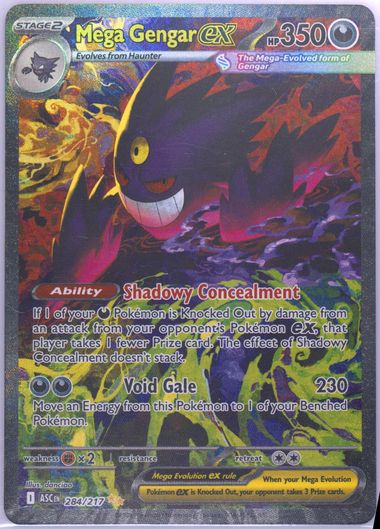
This is the part you actually came for. The Mega era has already produced several genuine chase cards. The most valuable is the Mega Gengar ex Special Illustration Rare from Ascended Heroes, a four-figure card raw, with the Ascended Heroes Pikachu ex SIR close behind it. The most recognizable is the Mega Charizard X ex SIR from Phantasmal Flames, which has commanded four-figure prices in graded condition. Our most expensive Mega Evolution cards ranking tracks the full list with current values.
A few patterns are already clear early in the era.
Fan-favorite Pokemon print money. Gengar, Pikachu, and Charizard hold the top of the era's rankings, and nothing about the new mechanics changed their gravitational pull on collector wallets.
Popular Pokemon plus an SIR equals demand. The cards holding value are the ones where a beloved Pokemon meets the best art treatment. That's the same dynamic that drove Evolving Skies and Prismatic Evolutions. See our breakdown of how much Prismatic Evolutions is really worth for the prior-era version of this story.
Most Megas are not investments. For every chase SIR there are dozens of standard and full-art Megas that sit at bulk-to-modest prices. That's normal, and it's the same lesson from every set: the set's value is concentrated in a handful of cards.
A Visual: Why "Three Prizes" Matters
The three-Prize cost is the single most important number for understanding the era. Here's the difference at a glance.
In a game where you win by taking six Prizes, letting your opponent take three for one knockout is a big deal. It's why Mega decks are powerful but not unbeatable. It's also worth understanding even if you only collect, because it explains why TPC felt comfortable making these cards so strong.
Should You Open Mega Era Product or Buy Singles?
The eternal question, and the answer hasn't changed with the new era. If you want a specific chase card, buying the single is almost always cheaper than chasing it through packs. The SIR pull rates (roughly 1 in 70 to 101 packs depending on the set) mean you can spend a fortune in boxes and never hit the card you want. If you enjoy the gamble and the experience of opening, that's a legitimate reason to buy sealed, but treat it as entertainment spending rather than investing.
For the longer version of this math, our guide on whether sealed product is a good investment in 2026 lays out the full case, and our best booster boxes to buy in 2026 guide covers which products are worth it.
The Bottom Line
The Mega Evolution era is the most significant change to the Pokemon TCG in years, but the core ideas are simple. Mega ex cards evolve normally, hit harder, and cost three Prizes. The new rarities sound complicated but reduce to a familiar truth: SIRs and Hyper Rares carry the value, and everything else is for playing and enjoying.
For collectors, the era has so far rewarded exactly what previous eras rewarded: iconic Pokemon in the best art treatments, with Charizard leading the pack. For players, it's introduced some of the strongest attackers the game has seen, balanced by a real downside.
If you're just getting back into the hobby, don't let the new vocabulary intimidate you. Learn the three-Prize rule, learn to spot an SIR, and you're already ahead of most of the people posting confused threads on Reddit.