Perfect Order Market Guide: Buy Singles or Sealed in 2026?
Not every Mega-era set is a hype set. Perfect Order is where the math gets more interesting.
By Misprint Editorial | Published Jun 14, 2026 | 7 min read
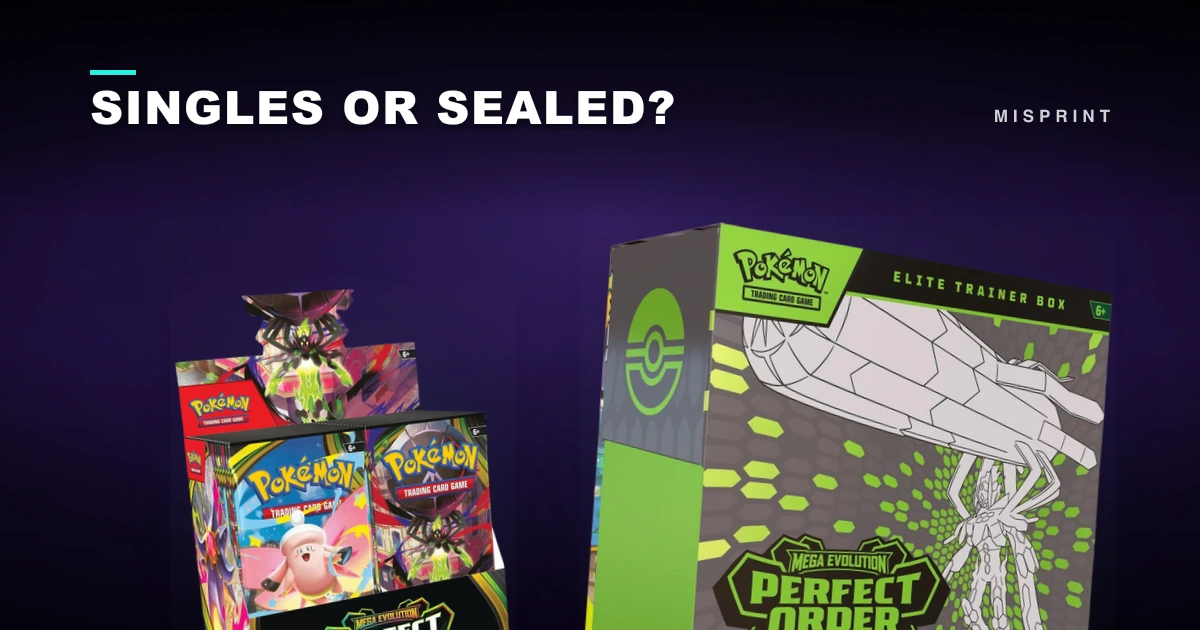
Perfect Order is not the loudest Mega Evolution set. That may be exactly why it is worth studying.
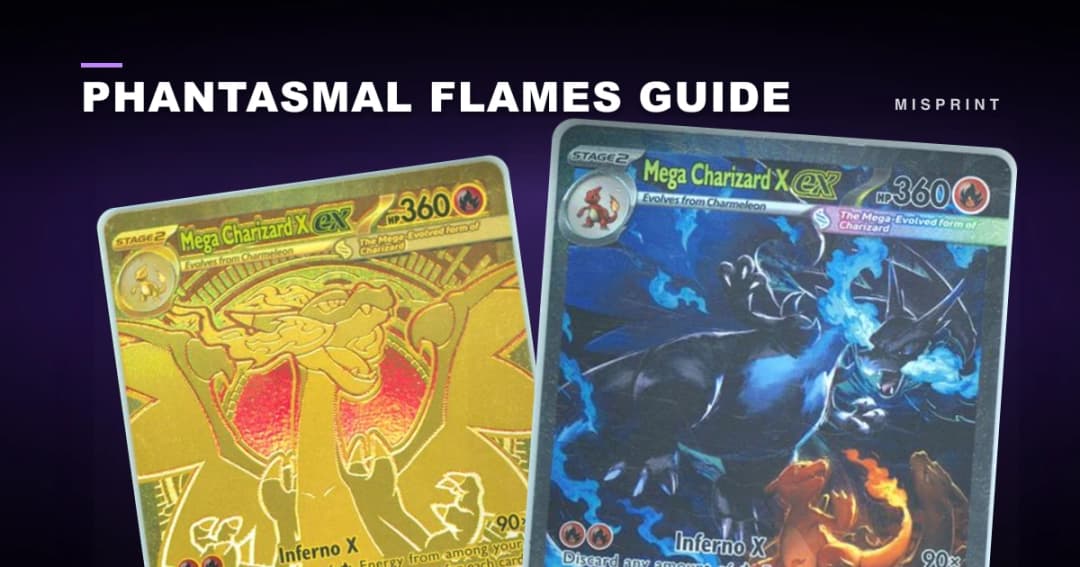
Most modern Pokemon market coverage starts with the biggest chase card and works backward. That makes sense for sets like Phantasmal Flames, where Mega Charizard X ex dominates the conversation, or Chaos Rising, where Mega Greninja ex does most of the heavy lifting. Perfect Order is different. It has collector appeal, playable interest, and a few high-end targets, but the thesis is less obvious.
That makes it a better test of whether you are buying a set because the numbers work or because the internet is excited for a week.
As of mid-June 2026, Perfect Order sits in a middle lane: not ignored, not euphoric, and not easy to reduce to one chart-topping card. For collectors, that can be frustrating. For disciplined buyers, it can create opportunity.
The Current Market Snapshot
Here is the current Misprint internal raw-price snapshot for the cataloged Perfect Order singles as of mid-June 2026. Treat these as a point-in-time read, not a promise. Modern set prices can change sharply as sealed supply opens and graded populations build.
| Rank | Card | Rarity | Raw value |
|---|---|---|---|
| 1 | Meowth ex | Special Illustration Rare | ~$160 |
| 2 | Mega Zygarde ex | Mega Hyper Rare (gold) | ~$145 |
| 3 | Mega Zygarde ex | Special Illustration Rare | ~$70 |
| 4 | Rosa's Encouragement | Special Illustration Rare | ~$65 |
| 5 | Mega Clefable ex | Special Illustration Rare | ~$60 |
| 6 | Mega Starmie ex | Special Illustration Rare | ~$65 |
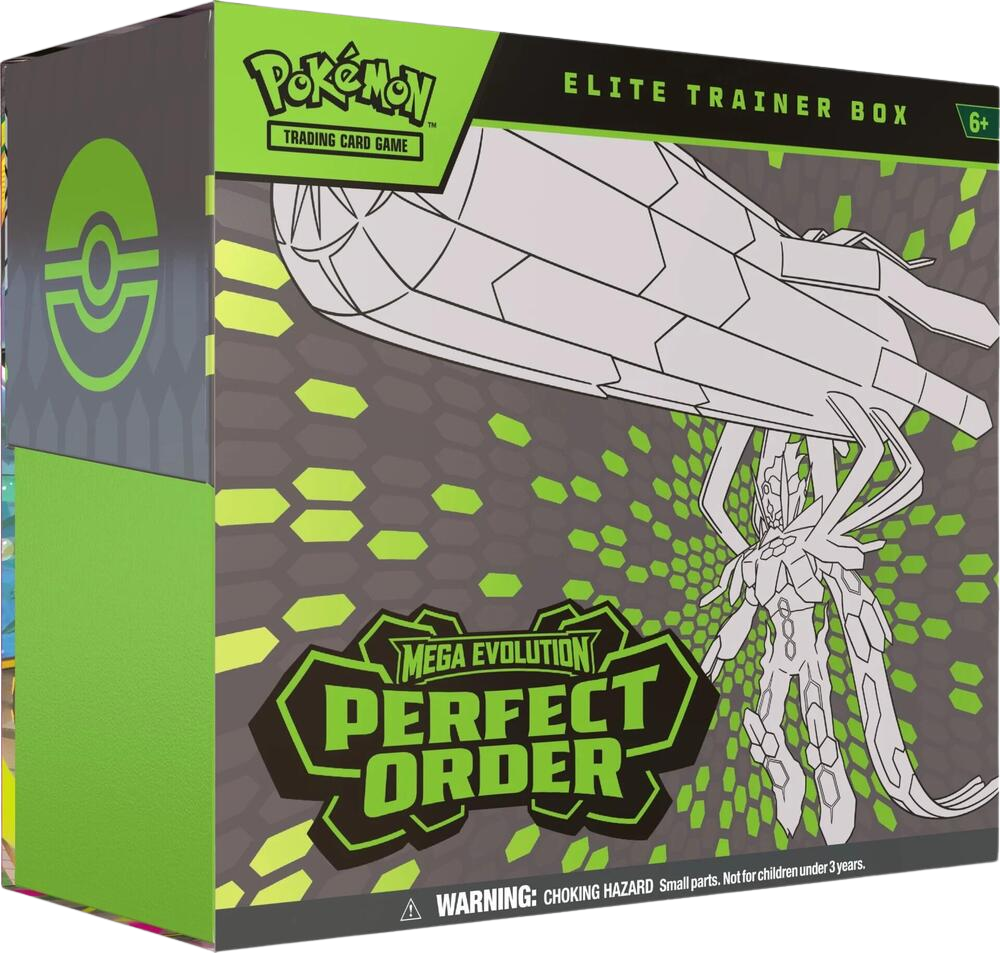
Perfect Order is not currently behaving like a pure grail set. Its most valuable single is the Meowth ex SIR at about $160, which is a very different market from the roughly $780 Mega Charizard X ex SIR in Phantasmal Flames. That lower ceiling does not make the set bad. It means the sealed and singles math has to be more honest.
Why Perfect Order Is Harder to Price
Sets with one obvious mascot are simple. Charizard sets get Charizard math. Eeveelution sets get Eeveelution math. Perfect Order asks a more awkward question: what is the set worth when the demand comes from several smaller engines instead of one giant engine?
That kind of set can be healthier than it looks. If one card cools, the entire product does not collapse. The downside is that it may never get the social-media premium that pushes sealed prices up quickly. A box with a $780 chase card is easy to sell. A box with several interesting $60 to $160 targets requires more explanation.
The other wrinkle is the Mega Evolution era itself. Mega cards give up three Prize cards when knocked out, which changes how competitive players build around them. The cards are splashy and collectible, but playability is not automatic. A Mega card that looks powerful on release still has to survive real tournament testing.
Our Mega Evolution ex explainer covers the three-Prize mechanic in more detail. For Perfect Order, the short version is this: competitive relevance can support prices, but it should not be the only reason you buy.
Singles vs. Sealed: The Math
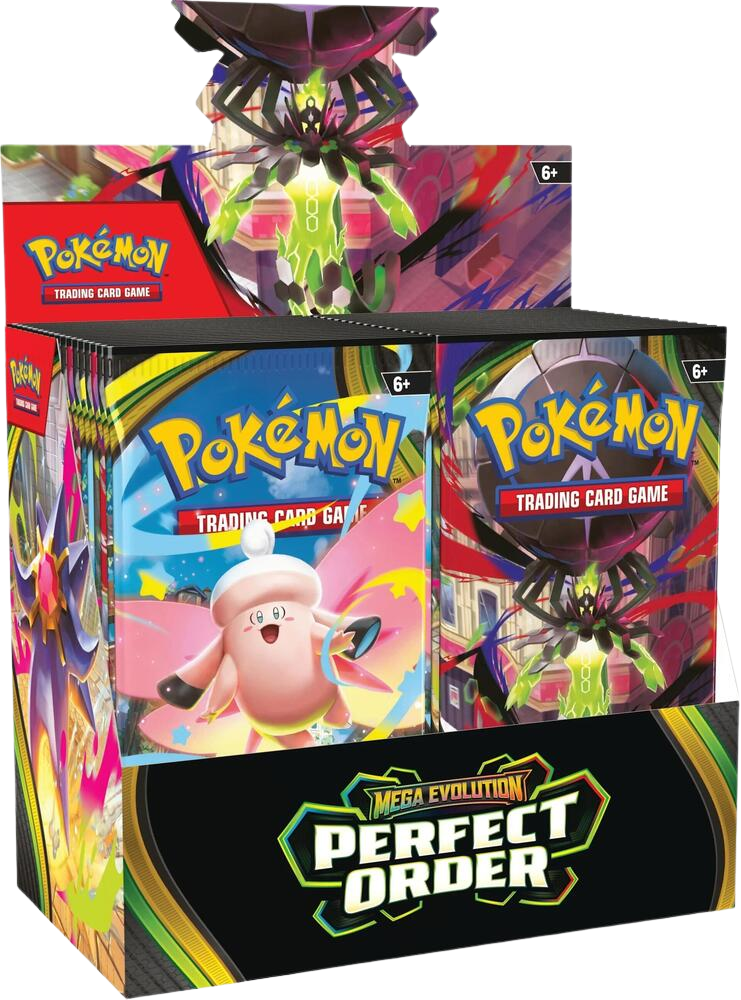
If you want specific Perfect Order cards, singles are still the cleaner play. That is true for almost every modern set, and Perfect Order does not escape the rule.
Assume an SIR-style pull rate around 1 in 50 to 75 packs. A booster box gives you 36 packs. That means one box can feel close, but the exact card you want is still a long shot. If your target card costs $80, the math gets especially uncomfortable. It does not take many missed boxes before the single would have been cheaper.
| Goal | Better route | Why |
|---|---|---|
| One specific SIR | Buy the single | Pack odds are too wide |
| Building a binder set | Mix singles and limited sealed | Opening helps with commons, singles finish the chase cards |
| Grading a top card | Buy raw carefully or buy PSA 10 | Condition risk matters more than pack freshness |
| Long-term sealed hold | Buy sealed only at a strong entry | The set needs time and scarcity |
| Opening for fun | Buy sealed | Entertainment value is the point |
Strong conviction: If your goal is financial, buying sealed Perfect Order at a weak price is worse than buying the best singles at fair prices. Sealed has storage costs, slower liquidity, and reprint risk. Singles have condition risk, but at least you know what you own.
The Bull Case for Perfect Order
The bull case starts with balance. Perfect Order does not need one card to do everything. If the set has a handful of desirable SIRs, some playable Mega pieces, and collector-friendly art cards, the product can age better than the launch-week hype suggests.
That is especially true if the rest of 2026 keeps pushing attention toward bigger, louder Mega sets. Quiet sets sometimes become attractive later because collectors skipped them at release. We saw versions of this pattern across older eras, where dismissed sets became harder to find once sealed supply dried up.
The second bull point is affordability. A market with $500 to $1,000 chase cards can exhaust buyers. Perfect Order's mid-tier singles are more approachable, which can keep collector demand broad. Not every buyer wants to turn a Pokemon card purchase into a rent-payment decision.
The third bull point is grading selectivity. If raw top cards remain in the $60 to $160 zone, clean copies can still make grading sense only when the PSA 10 spread is healthy. That is a much narrower lane than a Charizard chase card. Our guide to what Pokemon cards you should grade in 2026 is the framework to use before submitting.
The Bear Case
The bear case is that Perfect Order lacks a simple cultural anchor. That does not mean the cards are bad. It means the market may not assign the same premium it assigns to Charizard, Umbreon, Pikachu, Gengar, or Greninja.
Modern Pokemon is brutally selective. Cards that are attractive but not iconic can open high, drift lower, and then sit for months while attention moves to the next set. If Perfect Order's best cards land in that category, patient buyers will get better entries later.
The second risk is playable-card decay. If a meaningful share of the set's value comes from cards used in decks, those prices can move down quickly after rotation, bans, or metagame shifts. Collectors tend to support SIRs longer than players support yesterday's tech card.
The third risk is sealed product supply. If boxes remain easy to buy, scarcity does not do any work. A good set can still be a mediocre sealed investment if the entry price is too high and the print run is too large. This is the same warning we gave in our sealed product price trends piece: modern sealed product needs both demand and time.
What Price Would Make Sealed Interesting?
We would not treat Perfect Order sealed product as an automatic buy. The entry price matters too much.
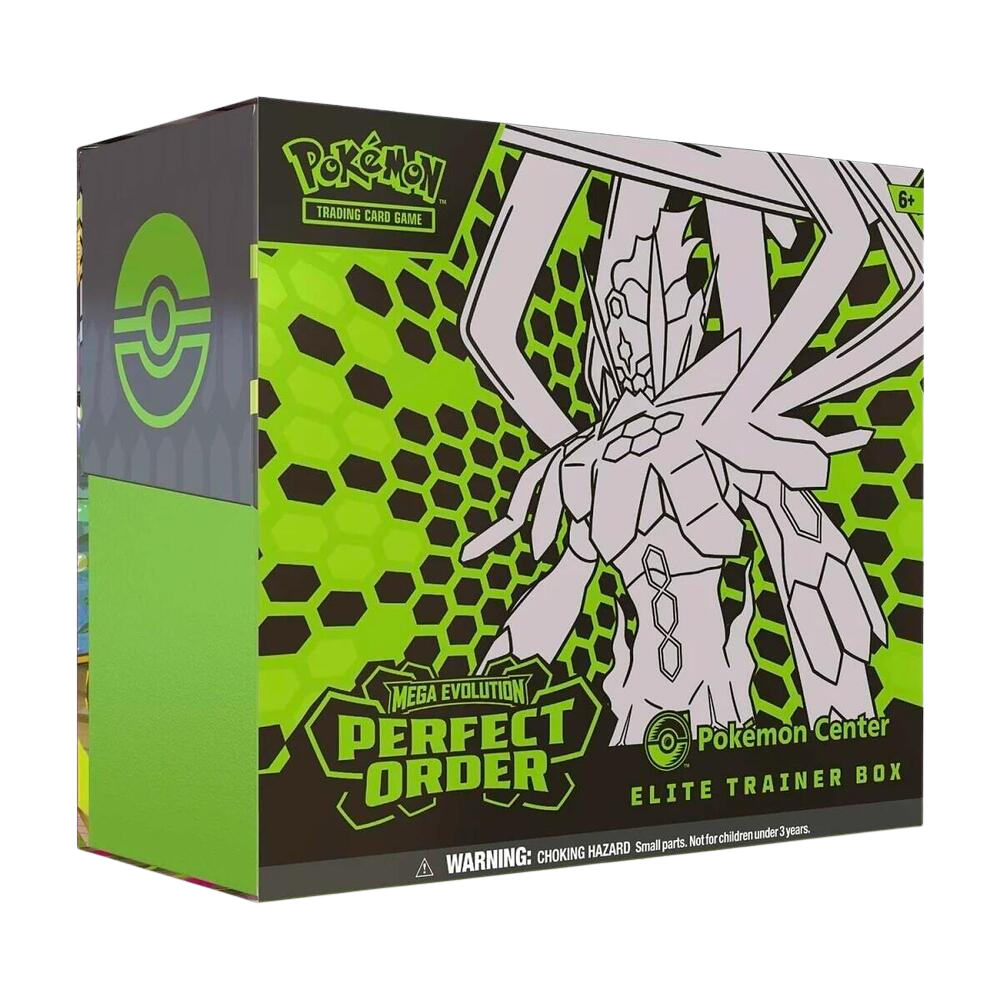
At or near normal retail pricing, the risk-reward can be reasonable if you like the set and can hold for several years. At a meaningful premium, the burden of proof rises. You need to believe the set will be opened in the future, not merely remembered.
Here is the practical framework:
| Entry type | Market posture |
|---|---|
| MSRP or below | Interesting for collectors and patient sealed buyers |
| Small premium | Fine if you love the set, but not a slam dunk |
| Large premium | Singles usually look better |
| Damaged box discount | Only if the discount is real and you plan to open |
The condition of sealed product matters too. A crushed box or torn wrap can erase a lot of future appreciation. If you are buying sealed to hold, buy clean boxes, store them properly, and assume selling later will involve fees, shipping, and time. Our how to store and protect Pokemon cards guide applies to sealed product as much as singles.
Which Singles Are Worth Watching?
For Perfect Order, we would separate watchlist cards into three buckets.
First are the collector SIRs and SARs. These are the cards with the best chance of holding value after release hype cools. They need strong art, a recognizable Pokemon, and clean copies that can grade well.
Second are the playable Mega cards. These can run quickly if a deck performs, but they require more active monitoring. If you are buying these for resale, you need to follow tournament results and be willing to sell into spikes.
Third are the affordable art cards. These are not usually the highest-return buys, but they can be the best collector purchases. A $6 to $15 art rare that you love is a much easier hold than a $200 chase card you only bought because someone called it underpriced.
Perfect Order's best opportunity may end up being selective singles rather than sealed boxes. That is less exciting than "buy every booster box you can find," but it is also how most people avoid turning a hobby budget into a tuition payment.
The Bottom Line
Perfect Order is a market discipline test. It has enough Mega-era interest to matter, enough collector appeal to watch, and enough uncertainty to punish lazy buying. That is not a bad thing. It just means the set rewards homework more than hype.
If you want specific cards, buy singles and be picky about condition. If you want to open packs, treat the money as entertainment. If you want sealed product, only buy at an entry price that gives you room for fees, time, and the possibility that the set stays quiet longer than expected.
The cleanest take is this: Perfect Order is not the set to chase blindly. It is the set to price carefully. In a 2026 market where attention keeps rotating to the next Mega headline, that restraint may be the edge.