Pokemon Sealed Product Price Trends 2026 (Booster Boxes, ETBs, Tins)
The sealed market tells a very different story than singles.
By Misprint Editorial | Published Jan 31, 2026 | 11 min read

Singles prices get all the attention. Sealed product prices quietly tell you where the real money is going.
If you've been watching the Pokemon card market primarily through the lens of singles — individual cards bought and sold — you've been seeing about half the picture. The sealed product market (booster boxes, ETBs, tins, collection boxes, and anything else that hasn't been opened) operates on a completely different set of forces, with different price dynamics, different buyer psychology, and in many cases, dramatically different return profiles.
We've been tracking sealed product prices at Misprint for a while now, and the trends in 2026 are telling a nuanced story. Some products are climbing. Some are flat. A few have actually declined. Understanding why requires looking at the specific forces that drive sealed product markets, and how those forces have shifted over the past year.
The Big Picture: Where Sealed Product Prices Stand in 2026
Let's set the stage with a broad overview before we drill into specifics.
The Sword & Shield era (2020–2023) is the current sweet spot for sealed product appreciation. These sets are old enough to be out of print but recent enough to be affordable. Products from this era are where most of the price action is happening.
The Scarlet & Violet era (2023–present) is mostly flat to slightly below MSRP on the secondary market. With a few notable exceptions, current-print sealed product is readily available and doesn't command a premium. This is normal and expected — appreciation typically doesn't start until a set goes out of print.
Vintage and retro sealed product (pre-2020) continues its slow, steady climb. Sun & Moon era boxes are entering their nostalgia window. XY era product is becoming genuinely scarce. And anything from the WOTC era (1999–2003) is essentially a luxury collectible at this point, with prices that track more like art or wine than trading cards.
Products That Are Climbing
Evolving Skies — Everything
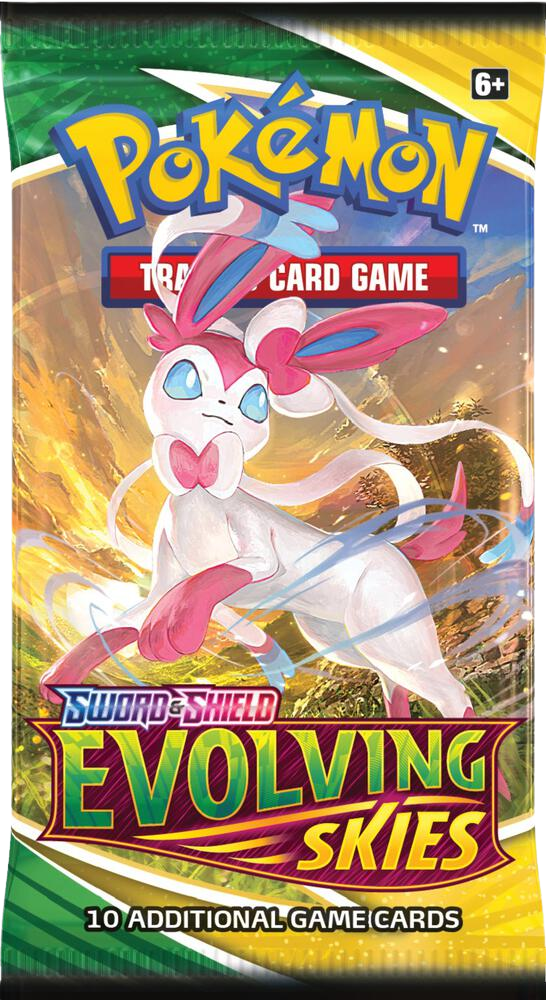
Evolving Skies is the headline act of the 2026 sealed market, and every product type from this set is appreciating. We wrote an entire article on Evolving Skies booster box pricing, but the trend applies across the product line:
- Booster boxes: $260–$310 (up from ~$220 a year ago)
- Standard ETBs: $110–$140 (up from ~$85)
- Pokemon Center ETBs: $160–$200 (up from ~$120)
- Individual booster packs: $12–$18 (up from ~$8)
- Build & Battle boxes: $45–$65 (up from ~$30)

![Evolving Skies Pokemon Center Elite Trainer Box [Glaceon/Vaporeon/Sylveon/Espeon] (Exclusive)](https://dlnxybxfzkpeatkjcztb.supabase.co/storage/v1/object/public/website-images/bg-removed/164_245352_in_1000x1000_1758561020102.png)
The driver here is straightforward: Evolving Skies has been confirmed out of print with no reprint planned, the Eeveelution alt art chase cards (especially the Umbreon VMAX Alt Art) maintain sky-high demand, and the collector base that considers Evolving Skies the defining set of its era continues to grow. Supply only goes down. Demand only goes up. Prices follow.
What's notable about the 2025–2026 trajectory is the steadiness. The speculative frenzy of 2024 — when boxes briefly touched $350+ — has cooled into a stable upward trend. This feels like real, sustainable appreciation rather than hype-driven spikes. The people buying Evolving Skies sealed product now are collectors and long-term holders, not flippers.
Crown Zenith — The Quiet Climber
Crown Zenith doesn't generate the same breathless Reddit threads as Evolving Skies, but the price data tells a compelling story. Booster boxes have moved from the $110–$120 range in early 2025 to $160–$190 in March 2026. ETBs have gone from $45–$55 to $70–$90. The Crown Zenith Special Collection boxes have nearly doubled.
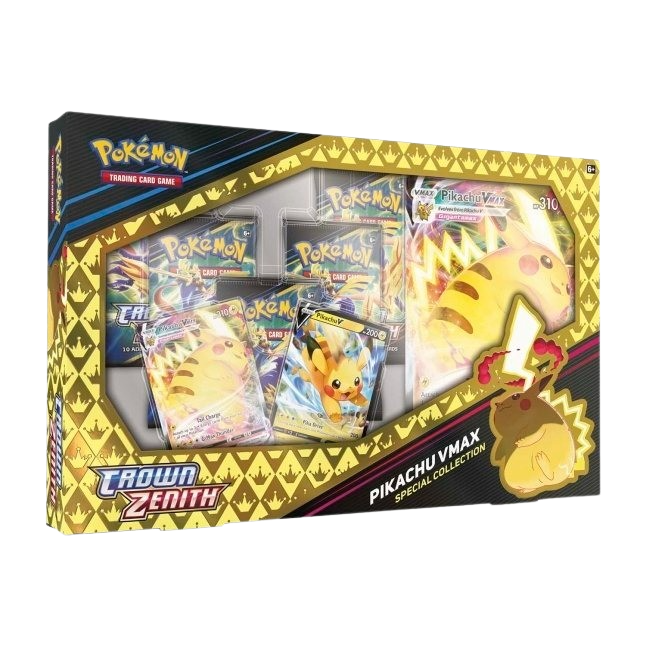
Why the appreciation? Crown Zenith was a special set — not a mainline expansion — which means the print run was inherently smaller. It went out of print in mid-2024, and the Galarian Gallery subset provides chase card depth that keeps people interested in opening sealed product. The combination of limited supply and sustained opening demand is textbook sealed product appreciation.
We think Crown Zenith is still in the early innings of its appreciation curve. The product is relatively cheap compared to Evolving Skies, making it accessible to a wider range of buyers. As more boxes get opened and sealed supply shrinks, expect prices to continue climbing through 2026 and 2027.
Sun & Moon Era — Nostalgia Kicking In
Here's a trend that might surprise people who haven't checked prices in a while: Sun & Moon era sealed product has started moving. Team Up booster boxes went from $150 to $220+ over the last year. Cosmic Eclipse boxes have pushed past $250. Even less popular sets like Unbroken Bonds and Unified Minds are seeing 20–40% appreciation.
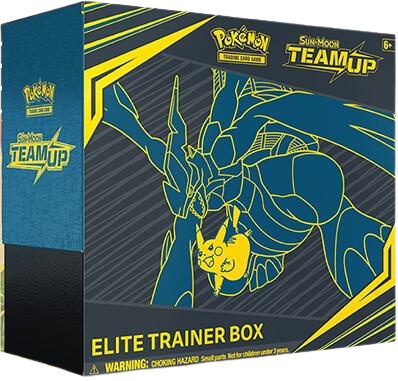
The timing makes sense. Sun & Moon ran from 2017–2019. Collectors who were teenagers during that era are now in their early-to-mid twenties, have disposable income, and are starting to feel nostalgic for the sets they grew up with. This is the same nostalgia cycle that powered Base Set and vintage prices — it just takes about 7–10 years to kick in.
If you're looking for sealed product with appreciation potential, Sun & Moon era boxes in the $120–$200 range might be the best risk-adjusted opportunity in the market right now. They're past the risk of reprints, they're entering their nostalgia window, and prices haven't yet hit the levels where returns become compressed.
Products That Are Flat
Most Current-Print Scarlet & Violet Product
This shouldn't surprise anyone. Sealed product from sets that are still in print — Destined Rivals, Surging Sparks, Journey Together — is trading at or slightly below MSRP on the secondary market. That's completely normal and expected. When you can walk into Target and buy a booster box at retail, there's no reason for secondary market prices to be elevated.
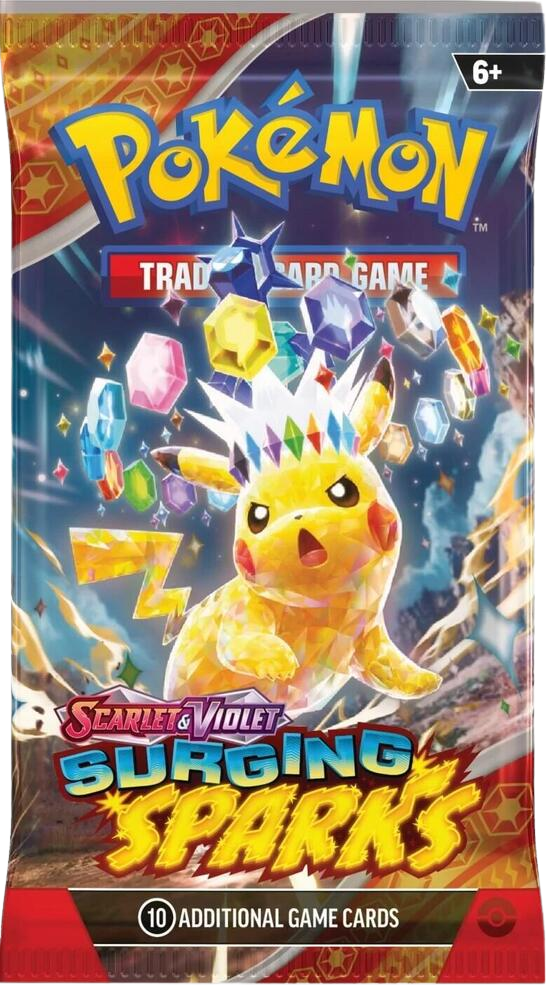
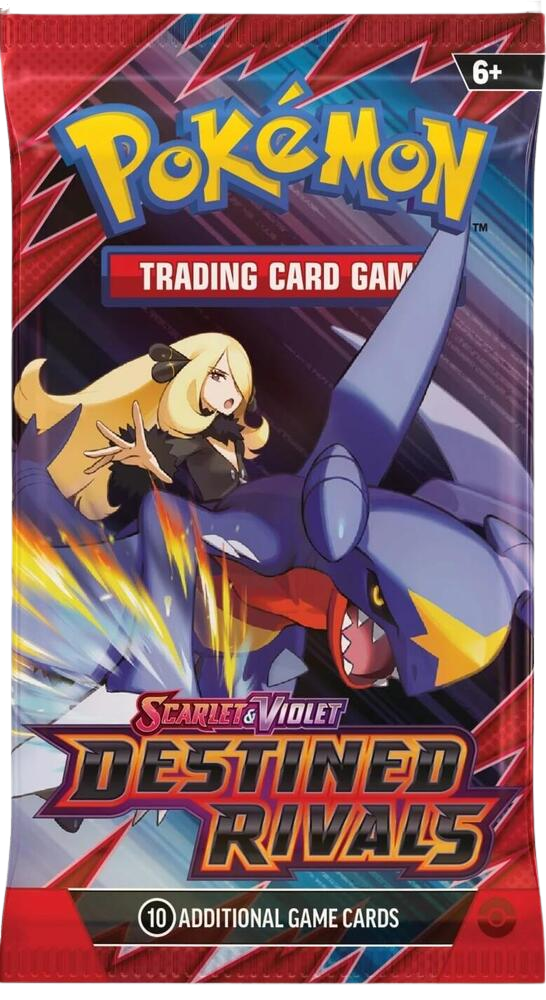
The one current-print exception is Prismatic Evolutions, which has maintained a modest secondary market premium ($155–$175 for a box that MSRPs around $140) due to consistently high demand outpacing retail availability. But even that premium is modest compared to what we've seen with previous in-demand sets.
The flat pricing on current-print product is actually healthy. It means the market isn't in a speculative frenzy, and it means you can buy boxes at fair prices to either open or hold for the long term. When prices are flat at MSRP, you're getting in at the ground floor.
Mid-Tier Sword & Shield Sets
Not every Sword & Shield era set is Evolving Skies. Sets like Chilling Reign, Battle Styles, and Fusion Strike have been out of print for over a year and their sealed product prices have barely moved. Booster boxes for these sets are in the $110–$140 range — up slightly from their MSRP lows, but not appreciating with any meaningful momentum.
The problem is chase card quality. These sets just don't have the elite chase cards that drive people to buy and open sealed product. Chilling Reign has decent alt arts, but nothing approaching Moonbreon status. Battle Styles and Fusion Strike are widely considered the weakest sets of the Sword & Shield era. Without compelling reasons for collectors to seek out these products, prices stagnate.
This is a critical lesson for sealed product: not everything appreciates. The sets that climb are the ones with exceptional chase cards and cultural significance. Average sets with average chase cards sit at average prices. That's not going to change.
Products That Have Declined
Overprinted Modern Special Products
Here's a painful reality for anyone who stocked up on certain products expecting easy appreciation: some modern sealed product has actually lost value. Certain Scarlet & Violet era tins, collection boxes, and promo boxes that were produced in massive quantities have dipped below their original retail prices.
This tends to happen with products that were printed specifically to meet demand surges. The Pokemon Company got much better at demand forecasting after the 2020–2021 supply crises, and the result has been larger print runs that saturate the market. Products that were everywhere — in every Target, every Walmart, every GameStop, for months on end — are now sitting at or below retail.
The lesson: print run size is the single most important variable in sealed product appreciation. A product that's printed to infinity takes much, much longer to appreciate, if it ever does.
Certain Vintage Products After Speculative Peaks
Some vintage sealed product that spiked during the 2020–2021 Pokemon boom has quietly come down from those peaks and stabilized at lower levels. Early Sun & Moon ETBs that briefly hit $200+ have settled back to $100–$130. Certain XY era tins that spiked to $80+ are back in the $40–$60 range.
This isn't a decline in the traditional sense — most of these products are still well above their original retail prices. But if you bought at the 2021 speculative peak, you're sitting on paper losses. The boom attracted speculators who drove prices above sustainable levels, and the correction was inevitable.
What Drives Sealed Product Prices
Understanding price trends requires understanding the forces behind them. Here's the framework we use at Misprint to analyze sealed product markets.
The Supply Side: Printing, Opening, and Attrition
Sealed product supply follows a one-way trajectory: down. Once a set goes out of print, every box that gets opened, damaged, or lost is permanently removed from the sealed supply. This is fundamentally different from singles, where graded copies can persist in the market indefinitely.
The rate of supply reduction depends on:
- How desirable the set is for opening. Sets with amazing chase cards get opened aggressively, shrinking sealed supply faster. This is actually bullish for sealed product prices — it means both the cards inside AND the sealed product itself become more valuable.
- How many were printed. Massive print runs take longer to draw down. This is the single biggest headwind for modern sealed product.
- Attrition and damage. Some percentage of sealed product gets damaged in storage, lost in moves, or otherwise removed from the market without being opened. This accelerates over time.
The Demand Side: Nostalgia, New Collectors, and FOMO
Demand for sealed product comes from several sources:
- Nostalgia buyers want sealed product from sets they remember. This creates predictable demand waves as cohorts of collectors age into their nostalgia windows (roughly 7–15 years after a set's release).
- New collectors entering the hobby want iconic sealed product from eras they missed. As the Pokemon collector base grows — and it has grown substantially since 2020 — more people are competing for finite sealed supply.
- Investment/speculation drives a portion of demand, though this has cooled significantly since the 2021 frenzy. Current sealed product buying feels much more collector-driven than speculator-driven.
- Content creators continue to drive demand by opening sealed product on stream. A popular YouTuber ripping vintage packs can spike demand overnight.
The Catalyst: Going Out of Print
The single most important event in a sealed product's price trajectory is going out of print. Before that point, the threat of additional printing caps prices. After that point, the supply-reduction thesis becomes certain, and prices typically inflect upward.
The timeline varies, but here's a rough pattern we've observed:
- In print: Prices flat at or near MSRP
- End of print run announced/suspected: Modest price increase as people stock up
- Confirmed out of print: Sharp price jump (often 20–40% within months)
- 1–2 years out of print: Steady appreciation as supply shrinks
- 3–5 years out of print: Acceleration as nostalgia kicks in and supply becomes genuinely scarce
- 5+ years out of print: Prices stabilize at elevated levels, with continued slow appreciation
Evolving Skies is in phase 4–5 right now. Crown Zenith is in phase 3–4. Current Scarlet & Violet sets are in phase 1. Understanding where a product sits in this lifecycle tells you a lot about where its price is headed.
Sealed vs. Singles: Different Markets Entirely
One thing we want to emphasize: sealed product and singles markets can move in completely different directions. We've written about why Pokemon card prices drop for singles, and many of those factors don't apply to sealed product.
Singles prices can drop when:
- A card gets reprinted in a new set
- Pull rates are higher than expected
- Competitive relevance changes
- Market sentiment shifts
None of these affect sealed product in the same way. A card being reprinted in a new set doesn't reduce the value of opening the original set — if anything, it can increase awareness of the original version. Pull rate information is priced in almost immediately for singles but takes years to fully impact sealed product. And competitive relevance is mostly irrelevant for sealed product buyers, who are collector-focused.
The clearest example of this divergence is Evolving Skies. Several individual cards from the set have declined in price over the past year as supply increased from people opening sealed product. But the sealed product itself has appreciated. The act of opening — which puts downward pressure on singles — puts upward pressure on sealed supply scarcity.
For more on how card pricing works in general, our article on how Pokemon card pricing works covers the fundamentals.
Product Type Trends: Boxes vs. ETBs vs. Everything Else
Not all sealed product types appreciate equally.
Booster Boxes
Booster boxes are the institutional-grade sealed product. They contain the most packs (36), command the highest absolute prices, and receive the most attention from serious collectors and investors. They typically see the largest absolute dollar increases, though not always the best percentage returns.
In 2026, booster boxes remain the most liquid and actively traded sealed product type. Evolving Skies boxes trade frequently, with consistent demand. For a look at the best booster boxes to buy right now, see our 2026 booster box guide.
Elite Trainer Boxes
ETBs are the consumer-grade sealed product. Lower price points make them accessible to more buyers, but they also have lower absolute appreciation potential. The exception is Pokemon Center exclusive ETBs, which carry a scarcity premium that often produces excellent returns. We covered ETBs in depth in our 2026 ETB guide.
Tins, Collection Boxes, and Special Products
These are the wild cards. Print runs vary enormously, and some special products have hidden scarcity that the market doesn't price in until years later. The Pokemon 151 Japanese booster box, for example, has appreciated strongly despite not being a traditional English product, because the set quality is exceptional and the Japanese market has different supply dynamics.
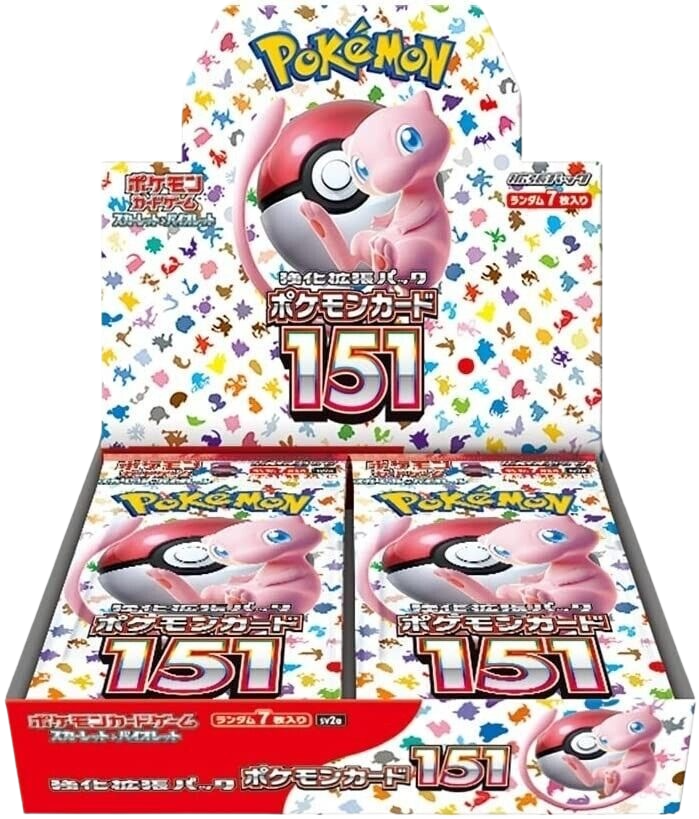
The general rule: special products with limited distribution channels (Pokemon Center exclusives, regional exclusives, promotional products) tend to appreciate better than mass-market products available at every big-box retailer.
Price Predictions for the Rest of 2026
Predictions are dangerous, but here's where we think the major products are headed through the rest of 2026.
Evolving Skies booster boxes: $300–$350 by year end. The appreciation is steady and driven by fundamentals, not speculation. We see no reason for it to slow down.
Crown Zenith booster boxes: $200–$230 by year end. Still in the early appreciation phase with plenty of room to run.
Prismatic Evolutions booster boxes: Depends entirely on print run decisions. If TPC stops printing by mid-2026, expect boxes to hit $180–$200 by year end. If they keep printing, prices stay flat at MSRP.
Sun & Moon era booster boxes: Broad appreciation of 15–25% across the era as nostalgia demand accelerates. Team Up and Cosmic Eclipse leading the way.
Current Scarlet & Violet sets (Destined Rivals, Surging Sparks, Journey Together): Flat at MSRP while in print. No meaningful appreciation until they go out of print.
How to Track Sealed Product Prices
Tracking sealed product prices is harder than tracking singles because there's less transaction data. Singles have TCGPlayer market prices updated daily. Sealed product relies more on eBay sold listings, local game store pricing, and marketplace averages.
At Misprint, we track both singles and sealed product pricing so you can see current trends across the market. Having good data is the difference between buying a product that's about to appreciate and buying one that's already peaked.
The Takeaway
The sealed product market in 2026 is rewarding patience and punishing speculation. The products that are appreciating are doing so on genuine collector demand and fundamental supply scarcity, not hype cycles. The products that are flat or declining are the ones that were overprinted or overspeculated.
If you're buying sealed product today — whether to open, hold, or gift — the smart money is on products with proven chase card quality, confirmed out-of-print status, and prices that haven't already run up beyond what the fundamentals support. Evolving Skies is the blue chip. Crown Zenith is the value play. Sun & Moon era boxes are the contrarian bet. And current-print sets at MSRP are the ground-floor opportunity, if you're willing to wait.
The sealed market tells its own story. Listening to it is worth your time.