What Is a Misprint Pokemon Card? The Complete Guide to Error Cards
Not every mistake is worthless. Some are worth a fortune.
By Misprint Editorial | Published Mar 23, 2026 | 24 min read

Somewhere in a factory, a machine hiccupped, a sheet shifted, a roller jammed — and a card that was supposed to be ordinary became something collectors would fight over for decades.
Pokemon cards roll off printing presses by the millions. The process is fast, industrial, and designed for consistency. But consistency at that scale is never perfect. Every now and then, something goes wrong. The cutting blade drifts a few millimeters. An ink cartridge runs low. A holo sheet gets loaded upside down. The result is a card that looks... off. Different. Wrong.
And for a very specific, very passionate subset of Pokemon collectors, "wrong" is exactly what they want.
Welcome to the world of misprint and error Pokemon cards — one of the most fascinating, confusing, and potentially lucrative corners of the hobby. We're Misprint, and yes, we literally named our marketplace after this phenomenon. We've handled thousands of error cards, talked to hundreds of misprint collectors, and spent more time than is probably healthy staring at off-center cuts and ink smudges. This guide is everything we know, distilled into one place.
Whether you just pulled something weird from a pack and want to know if it's worth anything, or you're a seasoned collector looking to understand the misprint market better, this guide covers it all: what counts as a misprint, every major type of error, which ones are valuable, how grading companies handle them, and how to actually sell them.
Let's get into it.
What Counts as a Misprint?
Before we dive into the specific types, we need to establish what actually qualifies as a misprint Pokemon card. Not every imperfection on a card is a misprint, and this is where a lot of confusion lives.
A misprint (also called an error card) is a card that has a manufacturing defect — something that went wrong during the printing, cutting, or packaging process at the factory. The key word is factory. The error happened before the card ever left the production facility.
This distinction separates misprints from two other categories:
Normal manufacturing variation is not a misprint. Pokemon cards are printed on massive sheets, and there's always some degree of natural variation. Slight centering differences, minor color variations between print runs, tiny differences in holo pattern placement — these are all within the normal tolerance range. There's a threshold where variation becomes error, and we'll talk about where that line is for each type.
Post-production damage is not a misprint. If a card gets bent, scratched, water-damaged, or otherwise messed up after it left the factory, that's damage, not an error. None of that adds value.
The rule of thumb: if the error could have happened after the card was opened, it's probably not a misprint. A miscut could only have happened at the factory — that's clearly a misprint. An ink smudge requires more careful evaluation, because sometimes what looks like a printing error is actually just dirt or a scuff from handling. When in doubt, the misprint collecting community (which we'll discuss later) is remarkably helpful at authenticating questionable errors.
Types of Misprint Pokemon Cards
Now for the part you're probably here for. Let's walk through every major type of misprint you'll encounter in the Pokemon TCG. We'll cover what each one looks like, how it happens, and how collectors value it.
Miscuts and Off-Center Cuts
This is the most common type of misprint, and it exists on a wide spectrum from "barely noticeable" to "jaw-dropping."
Pokemon cards are printed on large sheets — dozens of cards per sheet — and then cut apart by industrial cutting machinery. When the sheet is slightly misaligned during the cutting process, the result is a card where the printed image isn't centered within the card borders. One edge will have a wider border than the opposite edge.
Minor off-center (60/40 to 70/30): The centering is noticeably off, but you can still see all four borders. This is extremely common. Walk into any card shop and start checking cards, and you'll find tons of them with centering that isn't perfect. At this level, it's really just a quality control issue and grading companies will dock points for it rather than label it as an error. These have essentially no premium as misprints. In fact, they're worth less than well-centered copies because they'll receive lower grades.
Moderate off-center (75/25 to 85/15): Now we're getting into territory that starts to turn heads. At this level, one border is very thin or nearly absent while the opposite border is unusually wide. These cards are noticeably "wrong" at a glance. Some collectors will pay a small premium for these, especially on desirable cards.
Dramatic miscuts (90/10 or worse): This is where things get exciting. When a card shows part of an adjacent card on one edge — meaning you can see artwork or border from the card that was next to it on the uncut sheet — that's a significant miscut. These are genuinely rare and highly collectible. The more dramatic the miscut, the more valuable it is.
Multi-card miscuts: The holy grail of miscuts is a card where you can see substantial portions of two or even three cards on a single piece of cardstock. These are sometimes called "multi-strike" cuts. They're rare enough that they generate real excitement in the collecting community, and prices reflect that.
Value range: Minor off-center cards have no misprint premium. Dramatic miscuts showing adjacent cards can sell for 2x to 10x the normal card's value, depending on what the card is and how extreme the miscut is. A dramatic miscut on a common Pidgey is still relatively cheap because nobody particularly wants a Pidgey. A dramatic miscut on a Charizard from a popular set? That's a different conversation entirely.

Holo Bleeds
Holo bleeds are one of the most visually striking types of misprints, and they're popular with collectors because they just look cool.
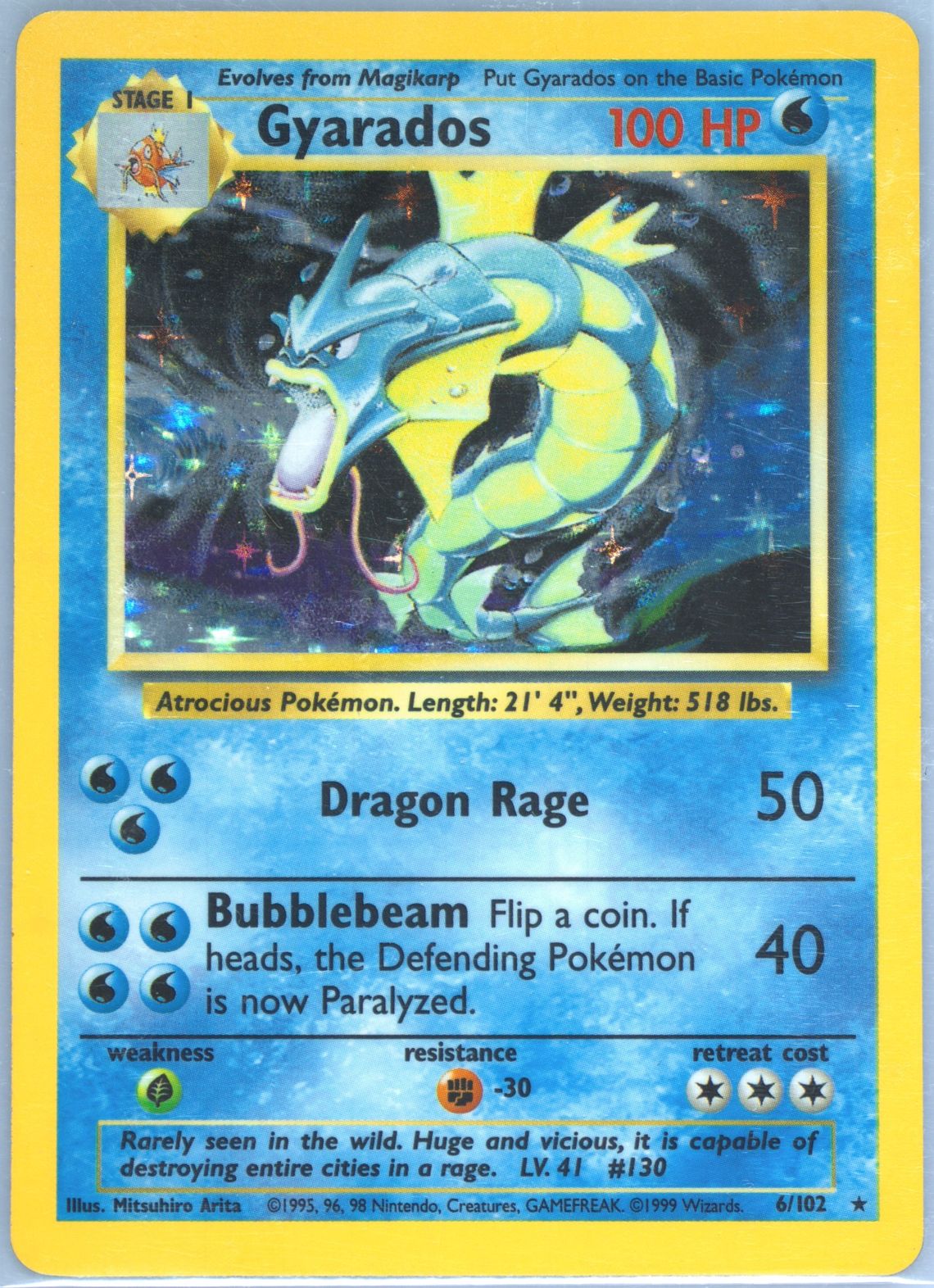
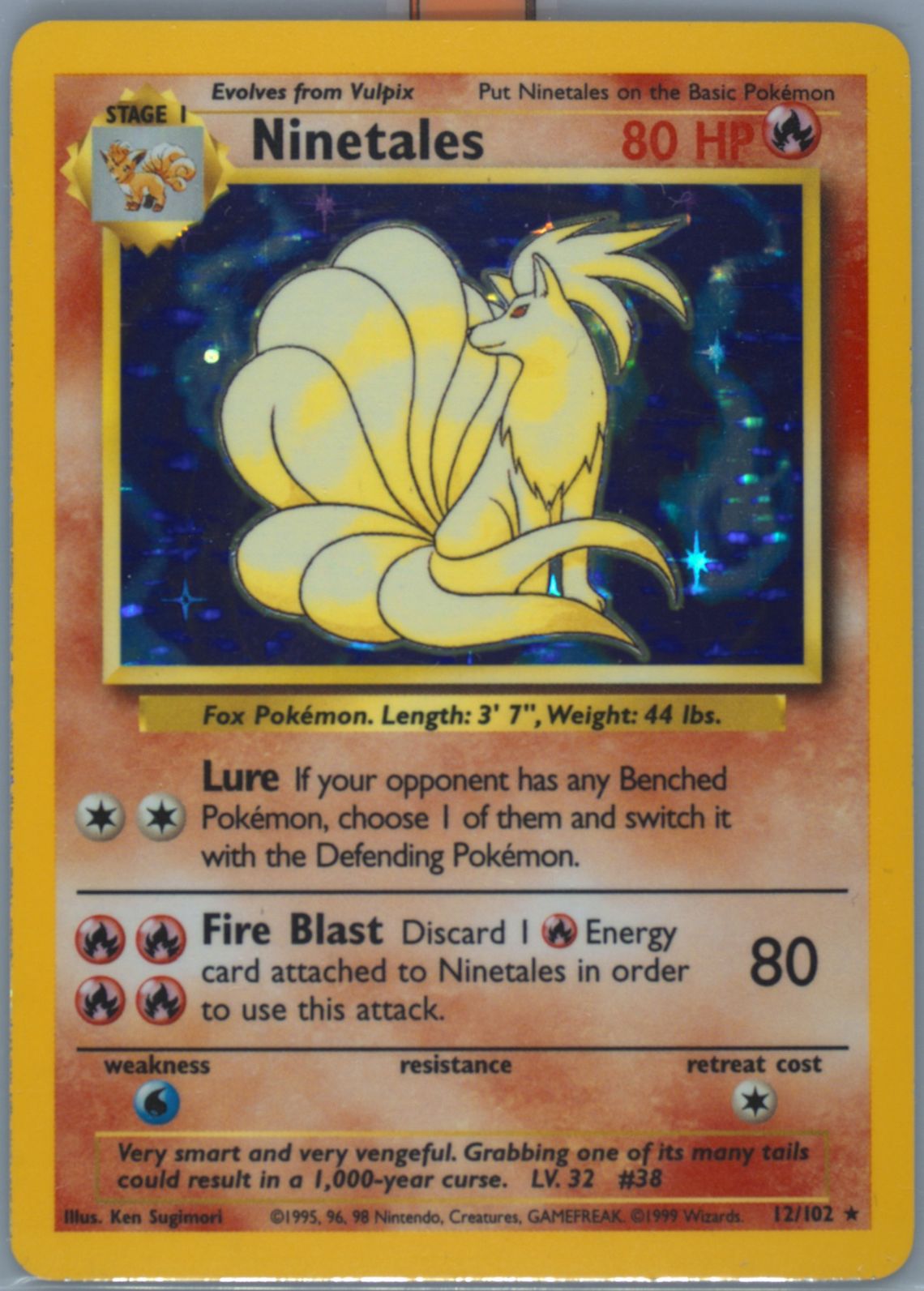
On a standard holographic Pokemon card, the holo pattern is only supposed to be visible within the artwork window. The border, text box, and other elements of the card are printed on top of the holo layer, covering it up. A holo bleed occurs when the non-holographic layers don't fully cover the underlying holo sheet, allowing the holographic pattern to "bleed" through into areas where it shouldn't be visible.
The most common place to spot a holo bleed is along the edges of the card border, especially on the card back. If you tilt a card under light and see holographic shimmer on the yellow border or even on the blue back of the card, that's a holo bleed. Sometimes the bleed is subtle — just a faint rainbow shimmer at certain angles. Other times, it's dramatic, with large portions of the border or back showing obvious holographic patterns.
Holo bleeds happen because the masking layer (the layer that blocks the holo from showing through) was either too thin, improperly aligned, or missing in certain areas during the printing process. This can affect individual cards or entire print runs.
Value: Holo bleeds are popular and consistently command premiums. A card with a noticeable holo bleed on the back typically sells for 1.5x to 5x the normal price, depending on how dramatic the bleed is and how desirable the base card is. Full-back holo bleeds — where the entire back of the card shows holographic pattern — are substantially rarer and more valuable. Holo bleeds on the front border are also prized.
One thing to know: holo bleeds were more common in certain eras of Pokemon cards, particularly the WOTC era (1999-2003). Some sets and print runs had higher rates of holo bleed than others, which means not all holo bleeds are equally rare.
Ink Errors
Ink errors are a broad category that covers any mistake related to the ink application during the printing process. They come in several flavors.
Missing ink: Part of the card is printed lighter than it should be, or sections are entirely absent. A card missing its black ink layer will look washed out with no dark outlines or text. A card missing a color layer might appear in strange, incorrect colors because the remaining ink layers combine differently.
Wrong color ink: Rarer and more dramatic. Occasionally, a card is printed with the wrong color in a section — green where there should be blue, for instance. This can happen when ink cartridges are mixed up or when one color runs out and isn't replaced immediately.
Extra ink / ink smudges: Blobs, streaks, or smudges of ink in places where they shouldn't be. True ink errors are part of the printed image — they're under the surface coating, not on top of it. If you can feel the smudge as a raised mark on the surface, it's probably post-production damage. If it appears to be within the print layers, it's likely a factory error.
Ink roller marks: Long, thin lines of ink that run across the card, usually from edge to edge. They come from ink accumulating on the rollers of the printing press and are distinctive because they're usually perfectly straight and run at a consistent angle.
Value: Ink errors vary wildly in value. A card missing an entire color layer is dramatic and rare — those can command significant premiums. A minor ink smudge is less exciting. The general rule is that the more visually dramatic and obviously "wrong" the error is, the more collectors will pay for it. Missing color layers and wrong-color prints are at the top of the value scale. Small smudges and minor ink variations are at the bottom.
Crimped Cards
Crimped cards are one of the easier misprints to identify because the error is both visual and tactile — you can see it and feel it.
Crimping happens during the packaging process, not the printing process. When booster packs are sealed by the packaging machinery, the sealing mechanism occasionally catches the edge of a card, pressing a pattern of ridges or indentations into it. The result is a card with a crimped, wavy, or ridged edge — usually along the top or bottom — that corresponds to the seal pattern of the booster pack.
The key identifier of a legitimate crimp is that the pattern matches the booster pack seal. If you look at where a booster pack is sealed (the serrated top and bottom edges), you'll see a distinctive pattern. A crimped card will have that exact same pattern impressed into it. This is important for authentication because random bends or folds from post-production handling won't match the pack seal pattern.
Crimps can be minor (just barely touching the card's edge) or dramatic (cutting deeply into the card, sometimes bending it significantly). Some crimped cards are crimped so severely that the card is almost folded in half.
Value: Crimped cards are a niche within the misprint community. They're generally worth a modest premium over the normal card, maybe 1.5x to 3x, because they're not particularly rare — crimping is one of the more common packaging errors. However, a heavily crimped high-value card (like a modern chase card or a vintage holo) will draw more attention and command more. The fact that crimps are one of the easiest errors to authenticate — that pack seal pattern is very hard to fake — also helps their market.
No-Symbol Errors
No-symbol errors are some of the most historically significant misprints in the Pokemon TCG because one of the most famous examples comes from the very early days of the game.
Every Pokemon card has a set symbol printed on it — a small icon that identifies which expansion set the card belongs to. Base Set cards originally had no symbol at all (that was their identifier — the absence of a symbol meant Base Set). When the Jungle expansion was released in 1999, it introduced the set symbol system. Jungle cards were supposed to have a small palm tree icon. But during the first print run, an error occurred where some Jungle cards were printed without the set symbol, making them look like Base Set cards.
These "no-symbol Jungle" cards are the most well-known example of this error type, and they're a staple of vintage Pokemon collecting. They exist for most (but not all) cards in the Jungle set, and the rarity varies by individual card.
The same type of error has occurred in other sets throughout Pokemon's history. Any card that's missing its set symbol — or has the wrong set symbol — falls into this category. "Wrong-symbol" errors, where a card has the symbol from a different set entirely, are rarer than no-symbol errors and correspondingly more valuable.
Value: No-symbol Jungle cards range from a few dollars for commons to hundreds for holos in good condition. They're common enough in the vintage market that they're not extraordinarily expensive, but they carry consistent premiums over their normal Jungle counterparts. Other no-symbol or wrong-symbol errors from different sets can be much rarer and more valuable, depending on how limited the error print run was.
Wrong Backs and Dual-Front Cards
These are among the rarest and most dramatic error types, and they generate enormous excitement when they surface.
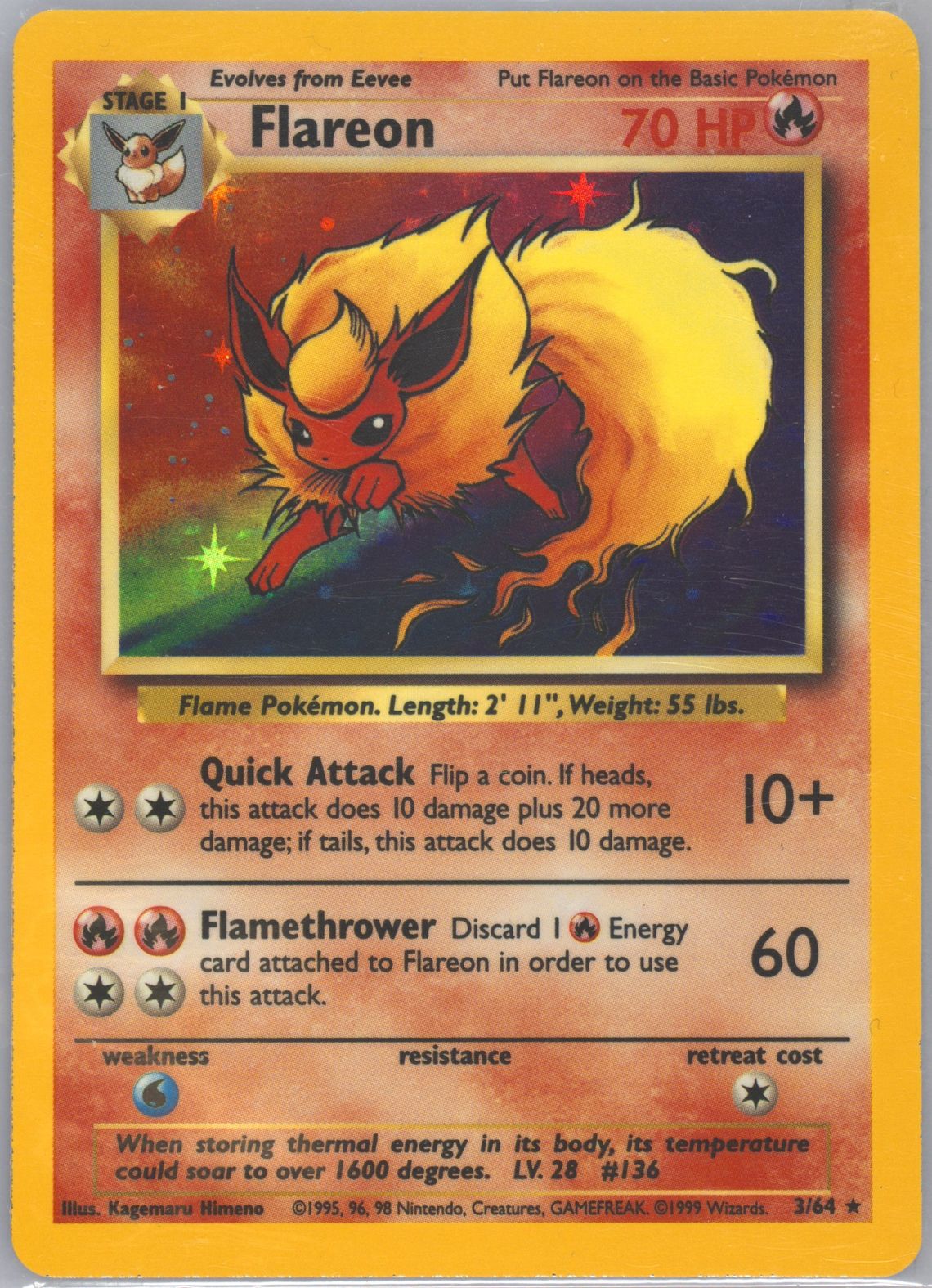
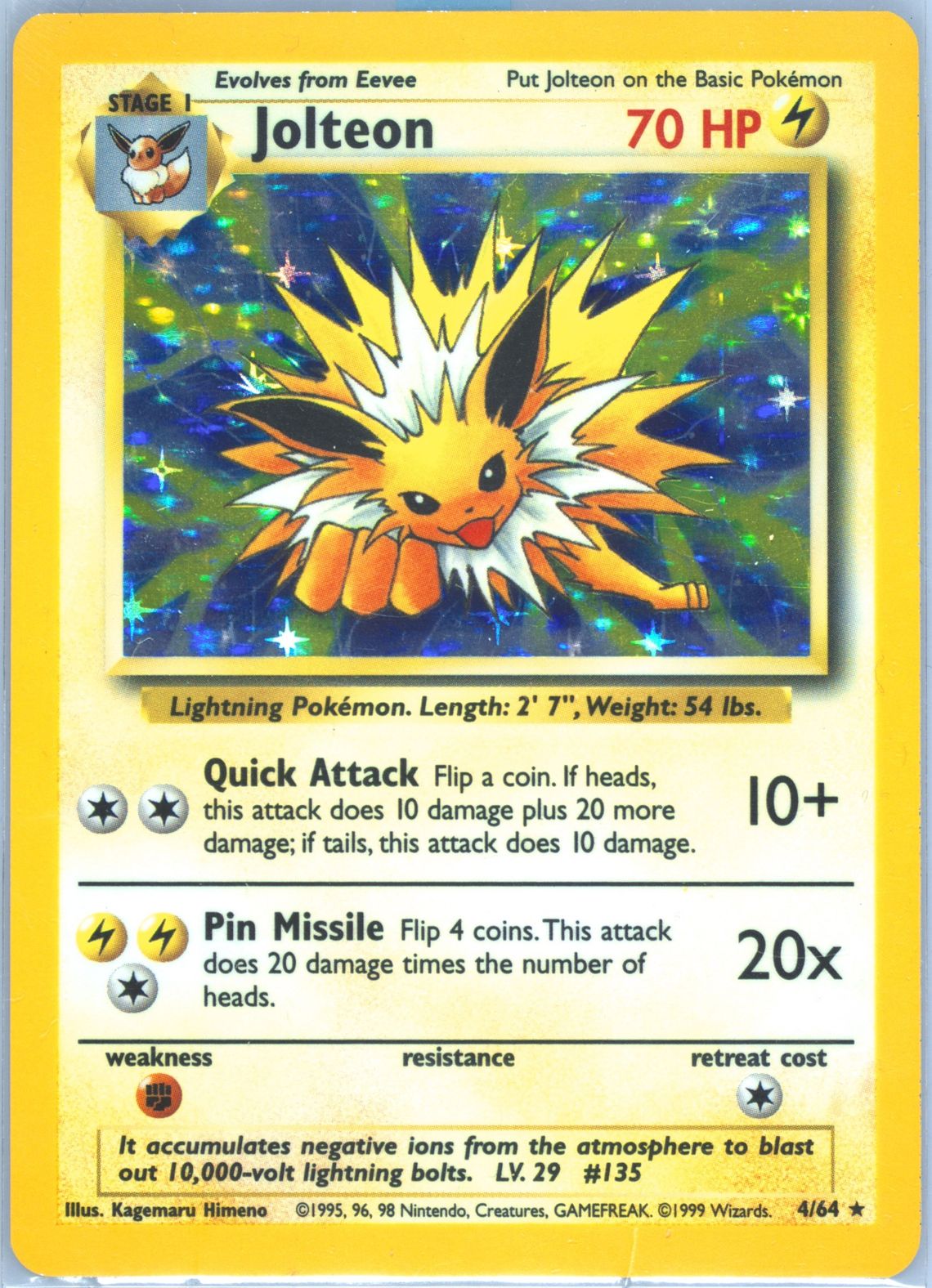
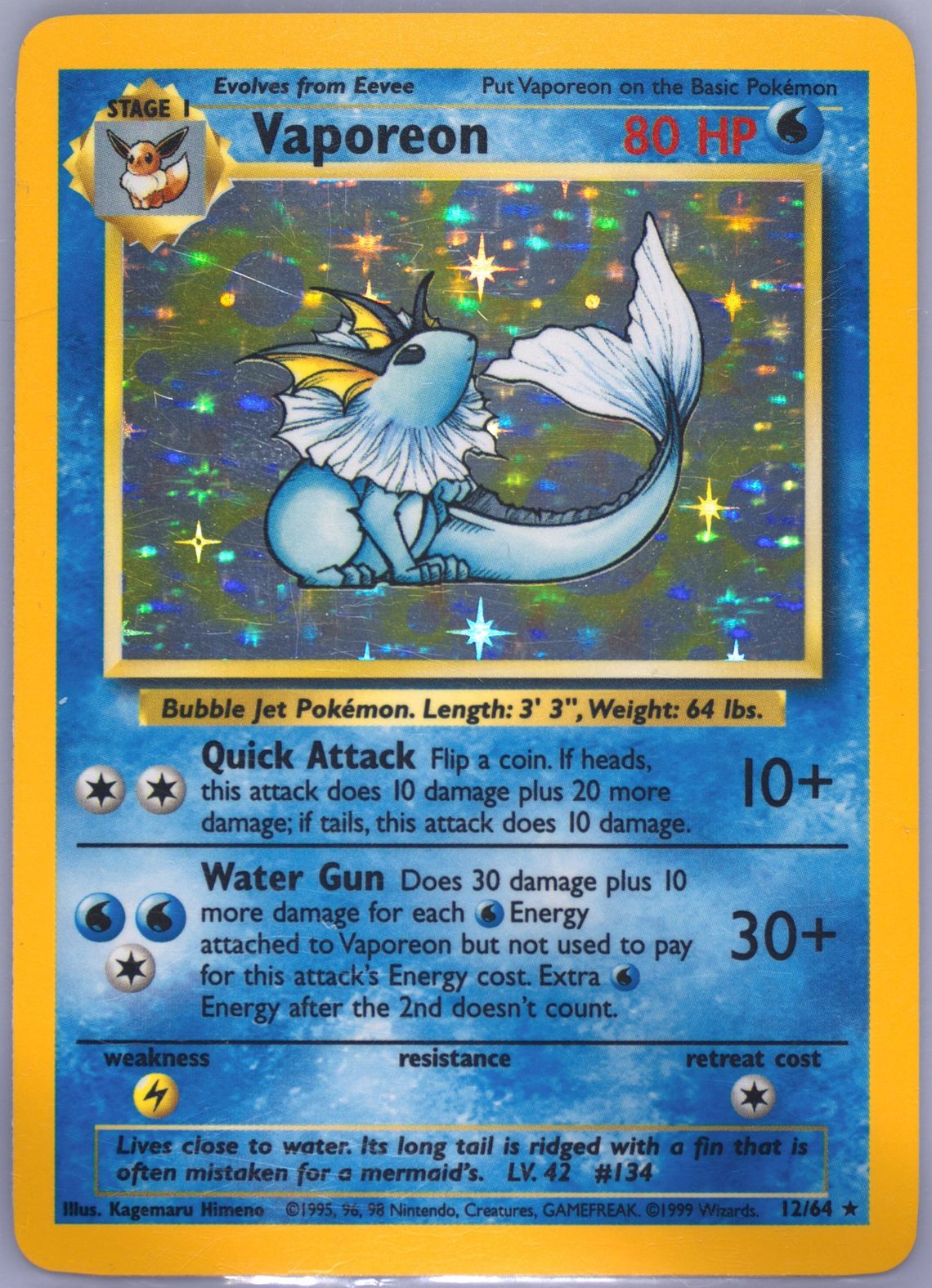
A wrong-back card is exactly what it sounds like: a Pokemon card that has the correct front but the wrong back. Instead of the standard Pokemon card back (the blue Poke Ball design), the back might show the front of a completely different card, a Magic: The Gathering card back, a blank back, or some other incorrect printing.
The most famous examples are Pokemon/Magic: The Gathering hybrid errors, where a card has a Pokemon front and a Magic: The Gathering back (or vice versa). These happened because both games used some of the same printing facilities in the late 1990s and early 2000s. These are exceedingly rare and can sell for thousands of dollars.
Dual-front cards (also called "no-back" cards) have printing on both sides that would normally appear on the front — one Pokemon's art on each side, with no standard card back at all. These happen when a sheet goes through the front-printing process twice without ever being printed with the back design.
Value: Wrong-back cards and dual-front cards are among the most valuable misprints in the hobby. Simple wrong-backs (like a card back printed upside down or rotated) might sell for 3x to 10x normal value. Pokemon/Magic hybrids and dual-front cards can sell for hundreds to thousands of dollars, depending on the specific cards involved and their condition. These are the kinds of errors that make headlines in the collecting world.
Misaligned Holo Patterns
This error is specific to holographic cards and occurs when the holographic foil sheet is misaligned during the printing process.
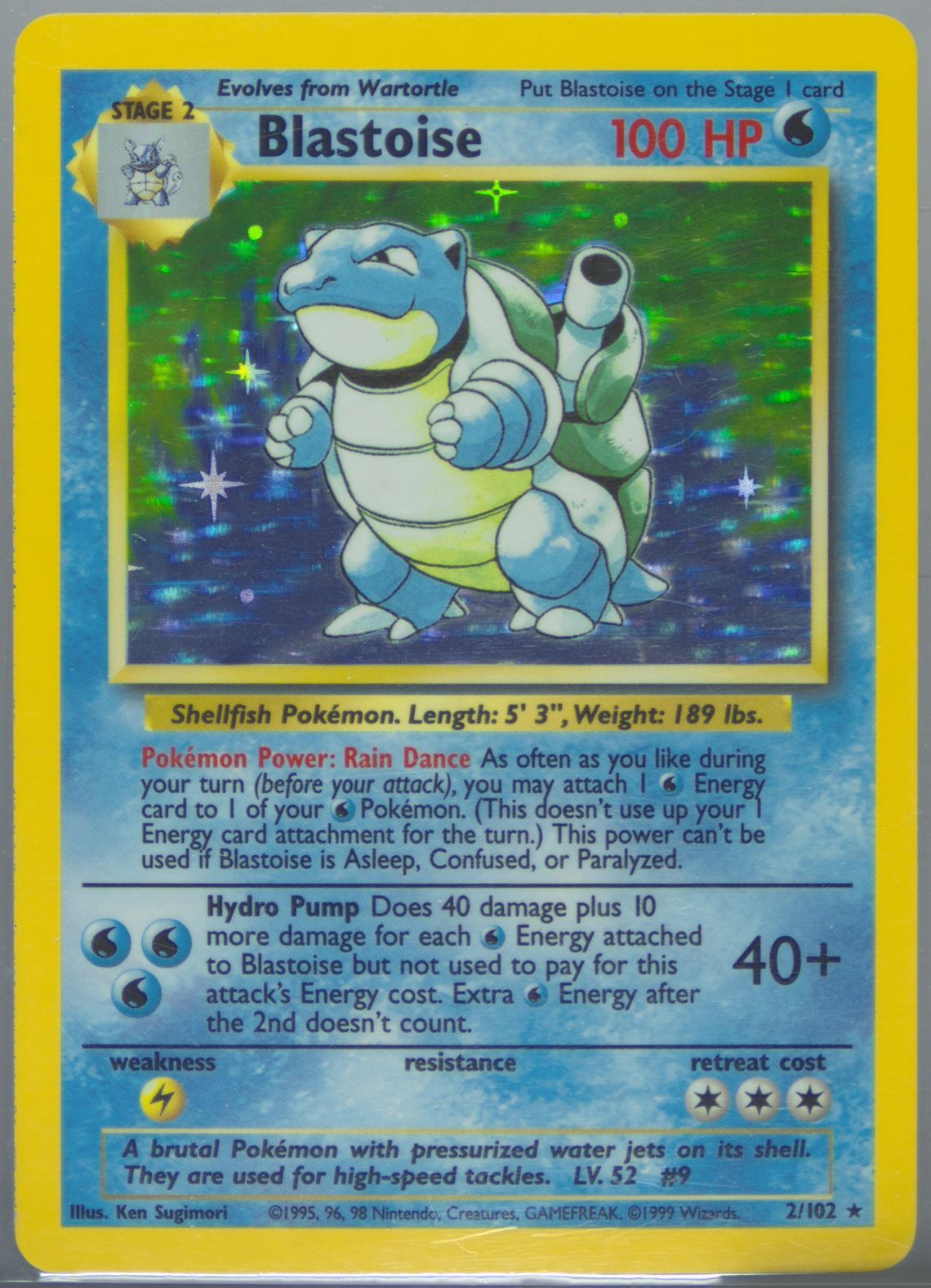
On a standard holo card, the holographic pattern is positioned so that the holo effect appears within the artwork window, complementing the card's illustration. When the holo sheet is misaligned, the holographic pattern appears shifted — sometimes dramatically — from where it should be. You might see the holo pattern sitting mostly over the text box instead of the artwork, or shifted to one side so that only half the artwork window shows the holo effect.
In extreme cases, the holo pattern might be from a completely different card. Because holographic sheets are printed with patterns designed for specific cards and then aligned with the card fronts during production, a sheet that's loaded incorrectly can result in cards where the holo pattern doesn't match the card at all — a Charizard holo pattern on a Blastoise card, for example.
Value: Mildly misaligned holo patterns are relatively common and don't command huge premiums — maybe 1.5x to 2x the normal card value. Dramatically misaligned patterns, especially ones where the holo design is from a different card entirely, are much rarer and can be worth significantly more. As with most misprints, the base card matters too. A misaligned holo on a popular Pokemon from a sought-after set will always be worth more than the same error on a forgettable card from a lesser set.
Square Cuts
Square-cut cards are a distinctive error type that's immediately recognizable: instead of having the standard rounded corners that all Pokemon cards have, one or more corners are cut perfectly square (at 90-degree angles).
This happens because of how the cutting process works. Cards are printed on large sheets and then cut apart. The standard cutting process includes a corner-rounding step. Square-cut cards result from sheets that were cut with a straight guillotine cutter but didn't go through the corner-rounding process, or from test cuts and sheet edges where the corner-rounding dies didn't engage properly.
Square cuts are sometimes associated with uncut sheet remnants. Pokemon cards are occasionally released as uncut sheets (complete printed sheets of cards that were never cut apart), either officially as promotional items or through factory leaks. When someone cuts cards from an uncut sheet, the result is square-cornered cards. This means that not all square-cut cards are factory errors — some were cut from sheets after the fact. Authentication matters here, and experienced collectors can often tell the difference based on the cut quality and other characteristics of the card.
True factory square cuts — cards that came out of the pack with square corners — are genuine misprints and carry premiums accordingly. They're distinctive, instantly identifiable, and popular with error collectors.
Value: Genuine square-cut cards typically sell for 2x to 5x the normal card value. The premium is higher for vintage cards and for popular Pokemon. Cards that are square-cut on all four corners are rarer and worth more than cards with only one or two square corners.
Missing Stamps and Extra Stamps
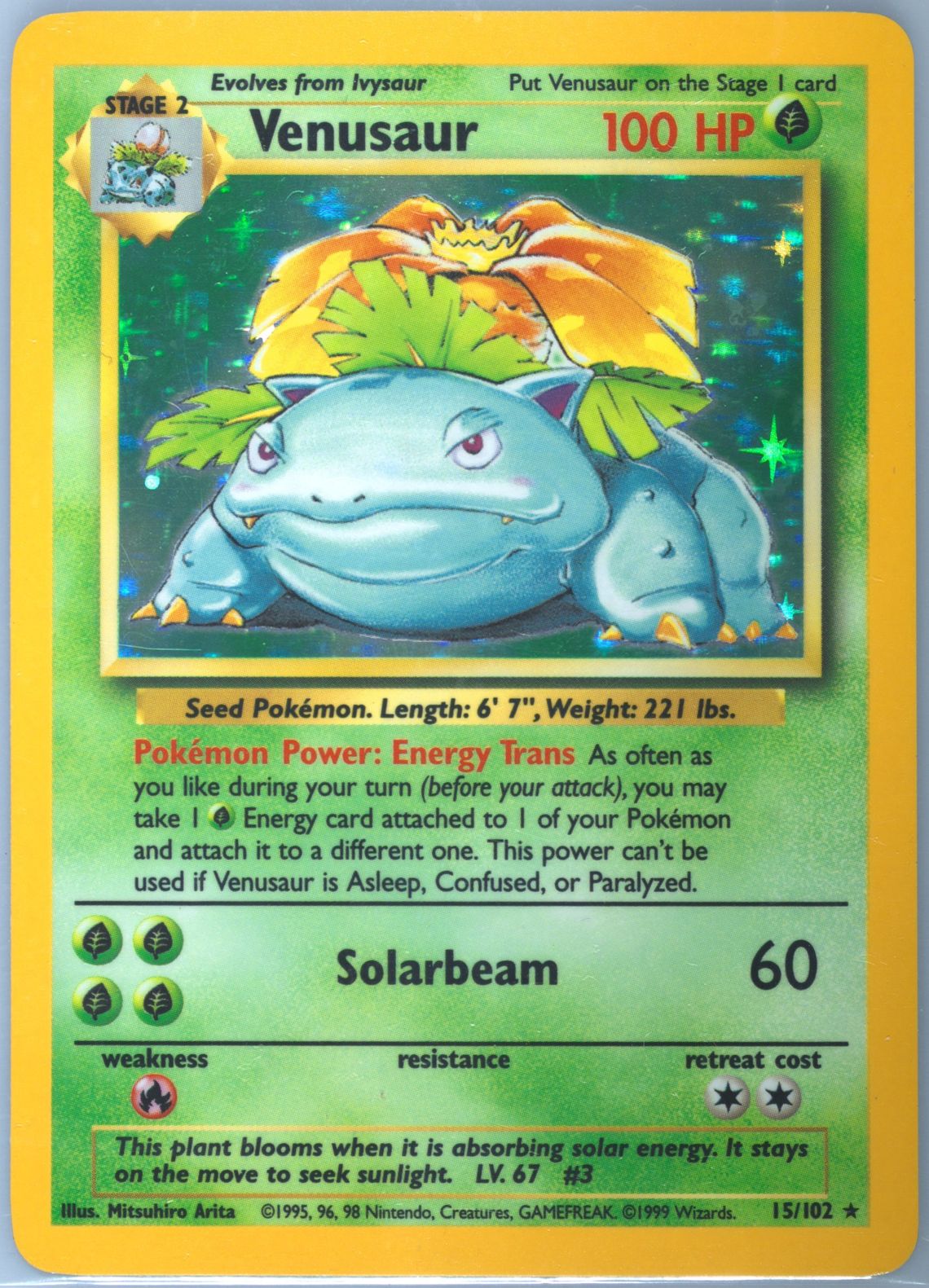
Modern Pokemon cards have several small stamps and marks that are part of the standard design: the rarity symbol, the collector number, the set symbol, and in some cases additional markings like first edition stamps or prerelease stamps. When any of these are missing, misplaced, or incorrectly applied, it creates a misprint.
Missing stamps can include:
- No rarity symbol (the circle, diamond, or star at the bottom of the card)
- No collector number
- No set symbol (overlaps with the no-symbol errors discussed above)
- Missing first edition stamp on cards from first edition print runs
- Missing any other standard marking
Extra stamps are the opposite — a card has a stamp or marking that it shouldn't have:
- A first edition stamp on a card from an unlimited print run
- Double-stamped rarity symbols
- Prerelease stamps on non-prerelease cards
- Stamps from a different product appearing on the wrong card
Misplaced stamps are the third variant — the stamp exists but it's in the wrong location. A rarity symbol printed in the middle of the artwork instead of the bottom corner, for example.
Value: Missing and extra stamp errors vary significantly in value. A missing rarity symbol is relatively common and may only command a small premium. A first edition stamp on an unlimited card (or vice versa) is much rarer and correspondingly more valuable. Double stamps and dramatically misplaced stamps tend to be popular with collectors because they're visually obvious and easy to authenticate. The most valuable stamp errors are the ones that make a card appear to be something it shouldn't be — like a non-first-edition card with a first edition stamp, which creates a fascinating ambiguity.
Print Lines
We're including print lines in this guide because people ask about them all the time, but we need to be upfront: print lines are the most common "error" in Pokemon cards, and they're almost never valuable as misprints.
Print lines are thin, visible lines that run across the holographic surface of holo cards. They appear as straight lines, usually running vertically or at a slight angle, that are visible when the card catches light. They're caused by imperfections in the holographic foil or the rollers used during the holo application process.
The reason print lines aren't valuable is simple: they're incredibly common. In many sets and print runs, the majority of holo cards have at least some print lines. They're so common that they're considered a quality defect rather than a genuine error. Grading companies will dock points for print lines (they primarily affect the surface sub-grade), but they won't label a card as an "error" because of them.
There's an ongoing debate in the collecting community about whether severe print lines should be considered differently than mild ones. A holo card absolutely covered in deep, prominent print lines is certainly more defective than one with a single faint line. But even at the extreme end, print lines don't command misprint premiums. Instead, they just reduce the card's grade and value.
Value: No misprint premium. Print lines reduce a card's value by lowering its grade. If you have a holo card with print lines, it's worth whatever a lower-grade version of that card is worth, not more.
How Misprints Happen: The Manufacturing Process
Understanding how Pokemon cards are made helps explain why these errors occur and why some are rarer than others.
Pokemon cards are produced by large-scale commercial printing operations. The basic process involves several stages, and errors can be introduced at each one.
Sheet Printing: Cards are printed on large sheets using offset lithography, applying multiple ink layers in sequence (CMYK plus specialty inks). Errors here include wrong colors, missing color layers, ink smudges, misaligned printing, and missing text or symbols.
Holo Application: For holographic cards, a separate foil layer is applied and must be precisely aligned with the card fronts. Errors include holo bleeds, misaligned holo patterns, and holo foil applied to sheets that should have been non-holographic.
Cutting: Sheets are cut into individual cards and corners are rounded. Errors include miscuts, off-center cards, square cuts (missed corner-rounding), and multi-card cuts from severe misalignment.
Quality Control: Cards with obvious defects are supposed to be pulled and destroyed, but QC can't catch everything at high volume. The strictness of QC varies by facility and era — some periods of Pokemon cards are noticeably more error-prone than others.
Packaging: Cards are collated into packs and sealed. Errors include crimped cards, wrong card distributions, and cards from the wrong set mixed in.
Front-Back Pairing: Fronts and backs are printed on separate sheets and then combined. If sheets from different products are accidentally paired — Pokemon fronts with Magic: The Gathering backs — the result is one of the rarest error types.
The key takeaway: errors at earlier stages tend to affect more cards (because many cards are on each sheet), while errors at later stages tend to affect fewer cards. This is part of why certain error types are rarer than others.
Which Misprints Are Actually Valuable?
This is the question everyone really wants answered. You found a card that looks weird. Is it worth money?
The honest answer is: it depends. But we can give you some general principles.
Factors That Increase Misprint Value
1. Severity and drama. The more obviously "wrong" a card looks, the more it's worth as a misprint. A card that's slightly off-center is boring. A card where you can see half of an adjacent card's artwork is incredible. A card with a faint ink smudge is unremarkable. A card printed entirely in the wrong color is stunning. Collectors want errors that make them say "whoa" when they see them.
2. Rarity of the error type. Some errors are inherently rarer than others. Wrong-back cards are far rarer than miscuts. No-symbol errors from specific sets are rarer than print lines. Rarer error types command higher premiums, all else being equal.
3. The base card matters. A dramatic misprint on a Charizard will always be worth more than the same error on a random common. The base card's popularity and value set the floor for the misprint's value. This isn't always fair — a stunning misprint on a worthless common can be genuinely impressive — but the market is what it is.
4. Condition. Just like regular cards, misprints in better condition are worth more. A mint misprint commands a higher premium than a played one. This creates an interesting dynamic with errors like crimps, which by their nature involve damage to the card.
5. Provenance and authentication. Misprints that have been authenticated (either by grading companies or by the misprint collecting community) are worth more than unverified ones. For rarer error types, provenance matters — knowing the card came directly from a sealed pack and wasn't manufactured after the fact.
Errors That Are (Usually) Not Valuable
Print lines — too common to be considered a real error. They reduce value rather than adding it.
Minor off-center cards — anything less than roughly 80/20 is just a quality control issue, not a desirable misprint. Grading companies dock for it.
Minor holo pattern shift — if you have to stare at the card for 30 seconds to notice the holo is slightly off, it's not a meaningful error.
Dirty rollers / minor ink specs — tiny dots or specks of ink that are barely visible aren't exciting enough to command premiums.
Anything that might be post-production damage — if there's any doubt about whether an imperfection is a factory error or post-production damage, the misprint market tends to be skeptical. This protects buyers but means that sellers of ambiguous errors have a hard time getting top dollar.
The Value Spectrum (Rough Guide)
To give you a sense of scale, here's a very rough value hierarchy from most to least valuable, assuming comparable base cards:
- Wrong backs / dual fronts — the most valuable, can be worth thousands
- Dramatic miscuts showing adjacent cards — hundreds to thousands depending on the base card
- Missing color layers / wrong color prints — hundreds to thousands
- Square cuts (genuine factory) — 2x to 5x normal value
- Holo bleeds (dramatic) — 2x to 5x normal value
- No-symbol / wrong-symbol errors — varies by set, often 2x to 10x for vintage
- Missing / extra stamps — 1.5x to 5x depending on the stamp
- Crimped cards — 1.5x to 3x normal value
- Misaligned holo patterns — 1.5x to 3x unless dramatic
- Moderate off-center cards — small premium if any
- Print lines — no premium, reduces value
These are generalizations. Individual cards can deviate significantly based on the specific characteristics of the error, the desirability of the base card, and current market demand.
The Misprint Collecting Community
One of the most interesting things about misprint collecting is that it has its own dedicated subculture within the broader Pokemon card community. And it's a thriving one.
The largest hub for misprint collectors is the Pokemon Misprints and Oddities Facebook group, which has tens of thousands of members. This group functions as a marketplace, authentication service, and discussion forum rolled into one. Members regularly post their finds for identification ("is this a misprint?"), authentication ("is this real?"), and sale. The group has its own moderators and experts who are deeply knowledgeable about error types, print run histories, and values.
Reddit's r/PokemonMisprints community is another active space, along with misprint-focused Discord servers and dedicated misprint accounts on Instagram and Twitter.
What makes the misprint community distinctive is its culture. In the broader Pokemon card market, value is primarily driven by rarity within the standard product line — the chase cards, the high-grade vintage singles, the sealed product. In the misprint community, value is driven by uniqueness and drama. The most prized misprints aren't necessarily on the most expensive cards; they're the ones that tell the most interesting manufacturing story or look the most visually bizarre. A common-card miscut that shows parts of three different cards might generate more excitement than a moderately off-center Charizard.
This community is also your best resource for authentication. If you find something you think might be a misprint, posting it in these communities (with clear, well-lit photos from multiple angles) will get you fast, knowledgeable feedback. The regulars can identify error types, estimate rarity, and help you understand what you're looking at.
At Misprint, we've always felt a kinship with this community — it's literally where our name comes from. The idea that imperfections can be valuable, that something "wrong" can be more interesting than something "right," resonated with us when we were building a marketplace for the card community. Whether you're buying or selling error cards, understanding this community and its values is essential.
How PSA and CGC Handle Error Cards
If you have a misprint and you're considering getting it graded, here's what you need to know about how the major grading companies handle errors.
PSA (Professional Sports Authenticator)
PSA will grade error cards and has a specific error label designation. The label can note things like "OC" (off-center), "Miscut," or describe the specific error. However, PSA's approach is somewhat inconsistent — whether they flag an error depends on the grader's discretion. If you're submitting specifically because it's an error, note that on your submission form.
PSA error labels increase value by providing third-party authentication that the error is genuine. But there's a tension: errors that affect the card's appearance (like severe miscuts) result in lower numerical grades. The error adds collectible value, but the grade itself is lower than a non-error card's would be.
CGC (Certified Guaranty Company)
CGC has become increasingly popular for grading Pokemon cards, and they tend to be more systematic about error labels than PSA. CGC offers specific error designations and will note the type of error on the label when appropriate.
CGC's sub-grades can also help document errors. For example, a miscut card will have a low centering sub-grade but potentially high sub-grades for surface, corners, and edges — which tells a potential buyer that the card is in great condition apart from the centering error.
Should You Grade Your Misprint?
Grade if the error is on a valuable base card and the label adds authentication value. Don't grade if the error is on a low-value card (grading costs more than it's worth) or you're selling to dedicated misprint collectors.
Here's an interesting twist: many serious misprint collectors actually prefer raw (ungraded) cards because they want to examine the error firsthand. Grading slabs make it harder to inspect errors from certain angles. This is the opposite of the regular Pokemon card market, where graded cards almost always command premiums.
Tips for Selling Misprint Cards
If you've got misprint cards and want to sell them, here are practical tips based on what we've seen work in the market.
1. Document the Error Thoroughly
Take clear, well-lit photos from every angle. For errors that are angle-dependent (like holo bleeds), take multiple photos under different lighting conditions. Video can also be helpful for showing holographic effects that don't photograph well in stills. Include close-ups of the error itself and full shots of the entire card front and back.
2. Know What You Have
Before listing, get the error identified and authenticated. Post in misprint communities, do your research, and make sure you understand exactly what type of error it is. This helps you price it accurately and describe it correctly in your listing.
3. Choose the Right Marketplace
Different marketplaces work better for different types of misprints:
- Misprint-specific communities (Facebook groups, Discord servers): Best for rare and dramatic errors where knowledgeable collectors will recognize and appreciate the card. Prices tend to be highest here because the audience understands the value.
- eBay: Good for well-known error types (like no-symbol Jungle cards) where general collectors know to search for them. Use specific keywords in your title: "misprint," "error," "miscut," "holo bleed," etc.
- Misprint: We built our marketplace to handle all kinds of Pokemon cards, and yes, we have a soft spot for error cards. If you're looking to sell misprints alongside your regular cards, we can help.
- Instagram/Twitter: Some misprint collectors and dealers operate primarily through social media. Building connections in these spaces can lead to direct sales.
4. Price Based on Comparable Sales
The misprint market is niche enough that pricing can be tricky. Look for comparable sales of similar error types on similar cards. eBay sold listings are helpful here — search for the specific error type and see what similar cards have actually sold for (not just what they're listed at). Community price checks in Facebook groups can also help you calibrate.
5. Be Honest and Specific
Describe the error accurately. Don't oversell a minor centering issue as a "dramatic miscut." Don't describe a print line as a "rare print error." The misprint collecting community is small and knowledgeable — misrepresenting your cards will damage your reputation quickly. Honest, specific descriptions build trust and lead to faster sales at fair prices.
6. Consider Whether Grading Adds Value
For high-value misprints, a PSA or CGC error label can add value by authenticating the error. For lower-value misprints, grading costs may not be worth it. See the grading section above for more detail on this decision.
Common Questions About Misprint Pokemon Cards
"I found a card that looks different from pictures online. Is it a misprint?"
Maybe, but probably not. Screen colors vary between devices, and online images don't perfectly represent physical cards. If the difference is subtle, it's probably normal variation. If it's dramatic — wrong color entirely, missing elements, part of another card visible — it might be a genuine error.
"Are newer misprints worth less than vintage ones?"
Not necessarily, but vintage misprints tend to carry higher premiums because the base cards are more valuable and fewer vintage misprints survived — many were thrown away by kids who thought they were just defective. Modern misprints are more likely to be recognized and preserved.
"Can misprints be faked?"
Some types can. Square cuts can be produced by cutting a normal card's corners. Crimps can potentially be created with the right tools. This is why the misprint community is cautious about errors that could theoretically be produced after the fact. Errors that are clearly part of the printing process (ink errors, holo bleeds, miscuts showing adjacent cards) are harder to fake and therefore more trusted.
"I found multiple copies of the same misprint. Is that normal?"
Yes, and it actually helps authenticate the error. Because Pokemon cards are printed on sheets, errors at the printing stage affect multiple cards — sometimes an entire print run. Finding multiple copies of the same error is expected and doesn't reduce the value of individual copies, as long as the error isn't so widespread that it becomes common.
Final Thoughts
Misprint Pokemon cards occupy a strange and wonderful space in the collecting world. They're cards that went wrong — factory mistakes, production errors, quality control failures — that somehow became more interesting and more valuable because of their imperfections.
Not every imperfection is worth something. Print lines, minor centering issues, and faint ink specks are just manufacturing noise. But a card showing half of its neighbor from the uncut sheet? A card with a Magic: The Gathering back? A card printed in entirely wrong colors? Those are genuine pieces of manufacturing history, one-of-a-kind artifacts from the moment when something went delightfully sideways on a factory floor.
If you're getting into misprint collecting, our best advice is to spend time in the communities. Join the Facebook groups, browse the Reddit posts, look at what people are buying and selling. You'll develop an eye for what's genuinely interesting versus what's just damage. You'll learn which error types excite collectors and which ones get shrugs. And you'll connect with a community of people who find beauty in imperfection — which, when you think about it, is a pretty great way to collect.
And if you're looking to buy or sell Pokemon cards — misprinted or otherwise — we're right here at Misprint. It's literally in our name.