Pokemon Card Market Trends 2026 (Live Data + Analysis)
The data tells a different story than the Reddit doom posts.
By Misprint Editorial | Published Jan 6, 2026 | 11 min read

Everyone has an opinion about the Pokemon card market. We have the data.
Open any Pokemon card forum right now and you'll find two camps screaming at each other. Camp A says the market is dead and anyone buying cards is lighting money on fire. Camp B says everything is fine and the dip is a buying opportunity. Both camps are wrong, or at least incomplete, because they're both cherry-picking data to support their narrative.
We've spent the past several months tracking price movements across every major segment of the Pokemon card market on Misprint, and the reality is far more nuanced. Some segments are legitimately struggling. Others are quietly ripping. And a few are doing something really interesting: consolidating in ways that create clear winners and losers within the same set.
This is our comprehensive market overview for 2026 — not just what's going up (we covered that in our price trends piece) or why things dropped (we broke that down in our market decline analysis). This is everything, all at once, with real numbers.
The Market at 30,000 Feet
If we had to summarize the entire Pokemon card market in March 2026 in one sentence, it would be this: the flight to quality is complete, and the gap between tiers has never been wider.
Here's what we mean. The total market capitalization of tracked Pokemon cards (graded singles across major grading services) has stabilized after roughly 18 months of decline from COVID-era highs. But that stability is deceptive. It's being held up by the top ~5% of cards appreciating while the bottom ~60% continues to bleed value. The middle tier — roughly 35% of the market — is trading sideways within tight ranges.
Some hard numbers from our tracking:
- Top-tier cards (iconic chase cards, high-grade vintage, key sealed): Up 8-15% year-over-year
- Mid-tier cards (solid collectibles, popular but not iconic): Flat to down 5%
- Low-tier cards (bulk modern, overprinted sets, mid-grade common holos): Down 15-30%
That spread between the top and bottom is approximately 40 percentage points. A year ago, it was closer to 25. The market is bifurcating aggressively, and understanding which side of the divide a card falls on matters more than any macro call about "the market" as a whole.
Segment Breakdown: Vintage (WOTC Era)
High-Grade (PSA 9-10)
This is the strongest segment in the market right now, full stop. PSA 10 copies of Base Set holos have not only held through the correction — several have quietly set new all-time highs in Q1 2026.


Specific movements we're tracking:
- Base Set Charizard (1st Edition) PSA 10: The last verified sale crossed $420,000 in February. That's up from roughly $375,000 in mid-2025. The pop count has been flat at 122 copies for over a year — no new 10s are being minted, and the existing ones rarely trade.
- Base Set Charizard (Unlimited) PSA 10: Trading in the $5,800-$7,200 range. This has been remarkably stable, oscillating within that band for six months. Not exciting, but resilience in a down market is its own story.
- Neo Genesis Lugia (1st Edition) PSA 10: This card has been a quiet monster. Up roughly 20% year-over-year, now consistently selling above $18,000. The pop count is under 100, and Lugia has become a consensus top-tier collectible Pokemon.
- Neo Destiny Shining Charizard PSA 10: Jumped from approximately $12,000 to $15,500 in the last eight months. Low pop, incredible artwork, Charizard tax. It all adds up.
Mid-Grade (PSA 5-8)
Different story entirely. Mid-grade vintage has been the most confusing segment because it went up the most during COVID (percentage-wise) and has given back most of those gains.
A PSA 7 Base Set Charizard (Unlimited) is trading around $1,600-$2,000 right now. During the peak? $4,500+. That's a 55-60% haircut. Is it done falling? Probably close to the floor. Pre-COVID, these were $800-$1,200, so current prices are still meaningfully above historical norms. But anyone who bought at the peak is sitting on a painful loss.
The mid-grade vintage buyer who does well in this market is the one picking up PSA 7-8 holos from underappreciated sets — Gym Challenge, Neo Revelation, Neo Destiny — where the PSA 10 is out of reach but the card is still gorgeous and historically significant.
Raw Vintage
Raw vintage is actually one of the more interesting corners of the market right now. The spread between raw and graded has compressed for mid-grade cards (because graded mid-grade has dropped) but expanded for potential high-grade cards (because graded high-grade has gone up).
Translation: if you can identify a raw vintage holo that looks like it could grade a 9 or 10, the arbitrage opportunity is wider than it's been in years. A raw Base Set Blastoise in apparently mint condition might sell for $200-350. A PSA 10 of the same card is $5,000+. That's a massive spread, and it rewards people with a good eye for condition.
Segment Breakdown: Modern Singles
The Iconic Tier (Evolving Skies, 151, Prismatic Evolutions)
There's a clear separation forming within modern cards, and it maps almost perfectly onto set identity. The sets that collectors consider "landmark" — the ones that defined their era — have cards that are holding value or appreciating. Everything else is sliding.
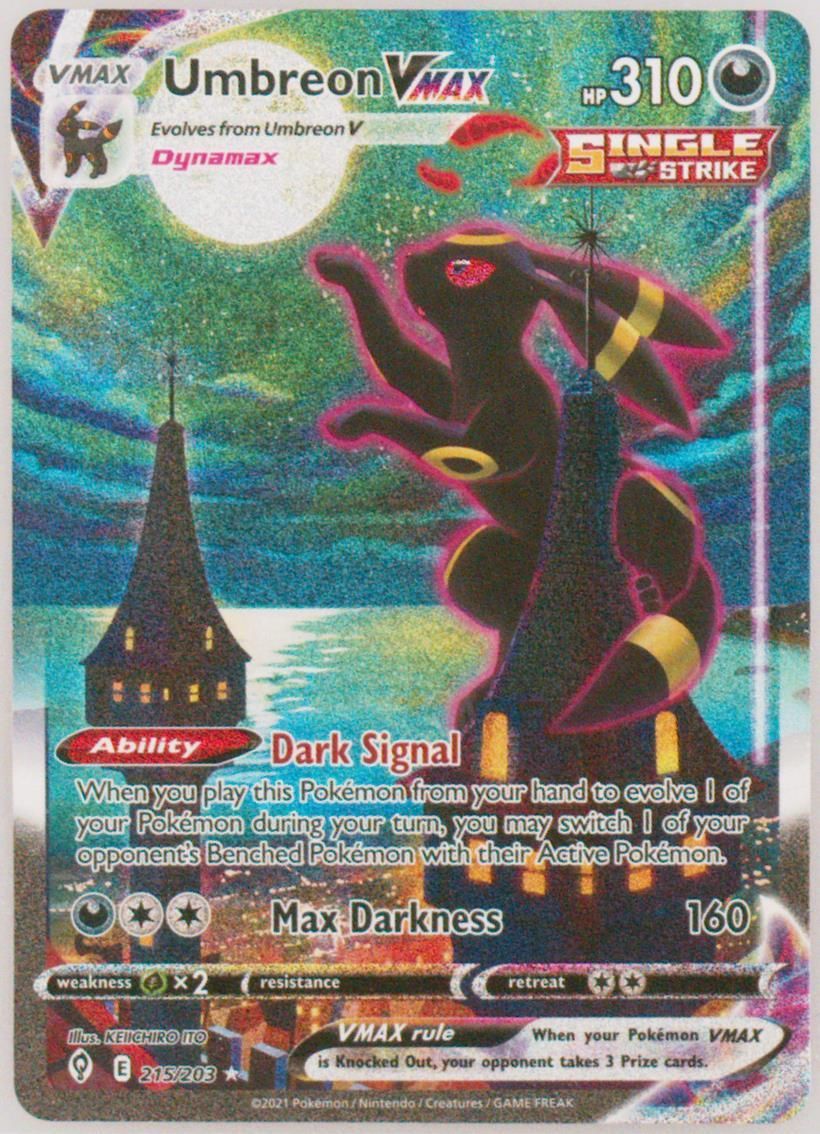
Evolving Skies is the clearest example. The Umbreon VMAX Alternate Art is trading around $325-$375 raw and $650-$800 in PSA 10. Those numbers are actually up from six months ago, when the card briefly dipped below $280 raw. Evolving Skies is being treated like "modern vintage" by the market — a set so good that its best cards transcend the typical modern depreciation cycle.
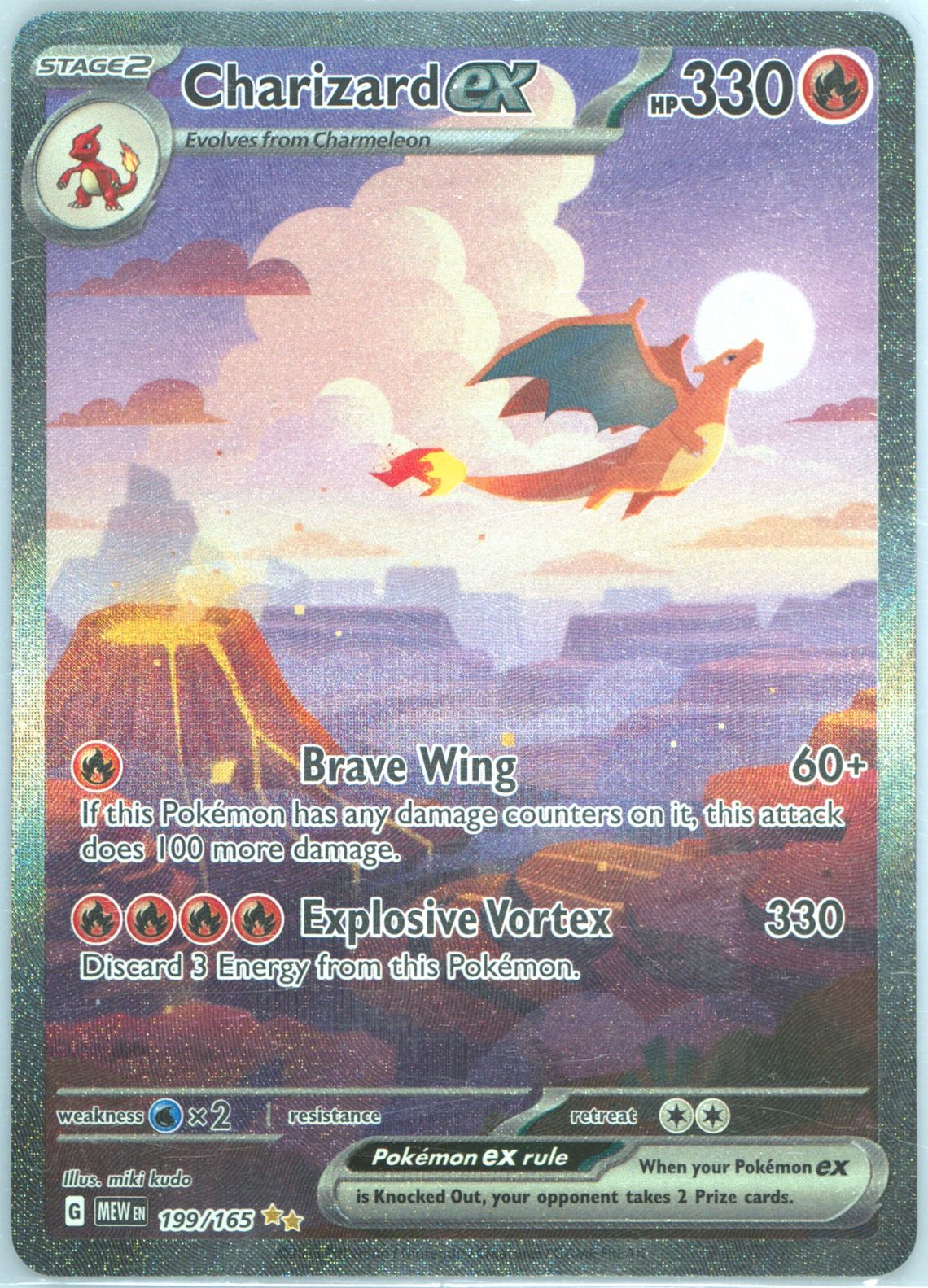
Pokemon 151 has shown similar resilience. The Charizard ex SAR is holding in the $180-$220 range raw. The nostalgia factor here is real. Every card in the set features an original 151 Pokemon, and the SARs have artwork that genuinely holds up as art, not just as trading card illustrations.
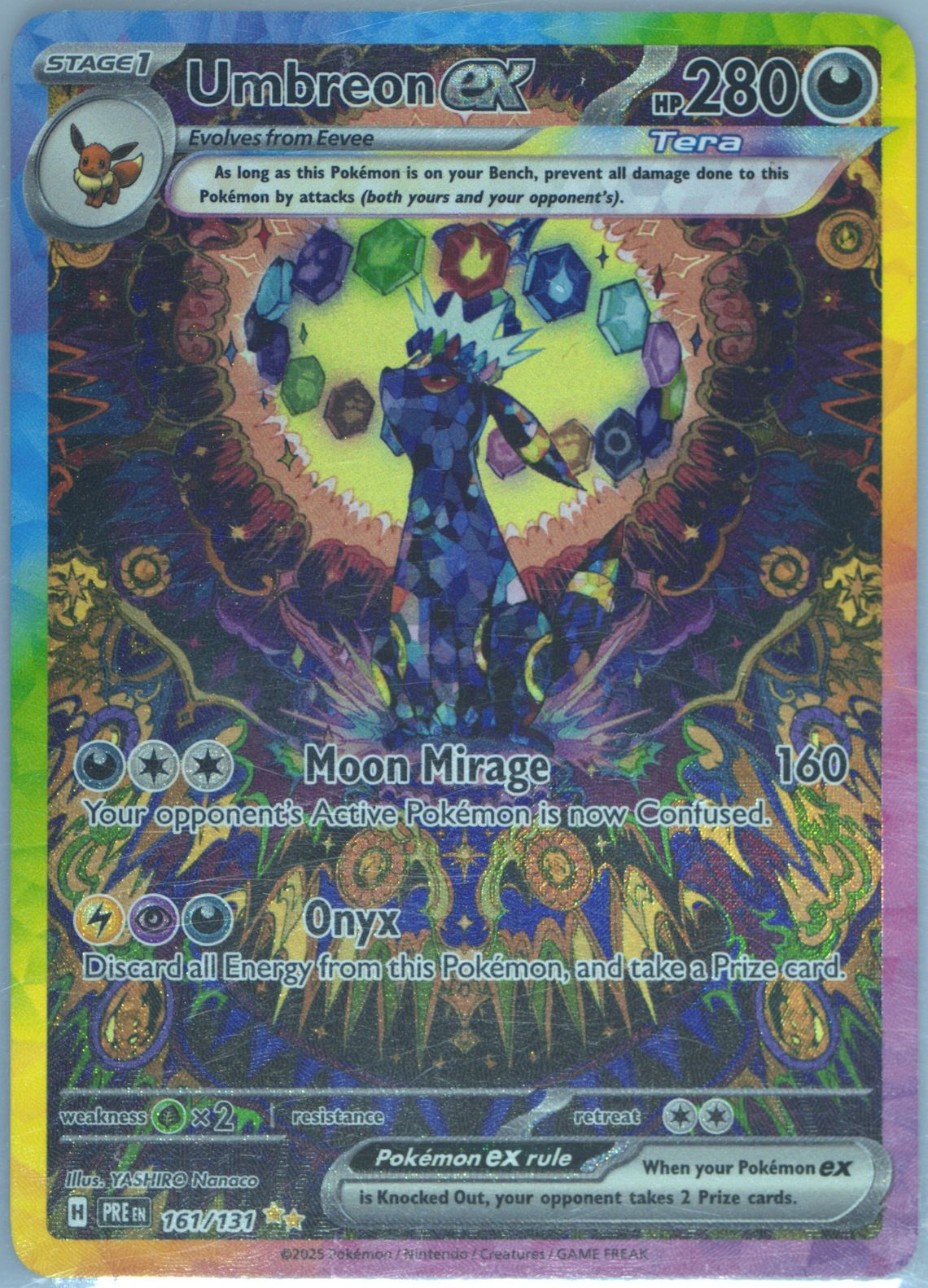
Prismatic Evolutions is fascinating because it's simultaneously the most opened modern set in history and home to some of the most expensive modern chase cards. The Eeveelution SIRs, especially the Umbreon ex, have maintained prices that seemed unsustainable six months ago. The Umbreon ex SIR is still selling for $140-$180 raw despite the set being printed into oblivion.
The Middle Shelf
Sets like Surging Sparks, Paldea Evolved, Obsidian Flames, and Temporal Forces occupy a weird middle ground. They have a few good cards each, but they lack the set-wide identity that drives long-term collecting interest.
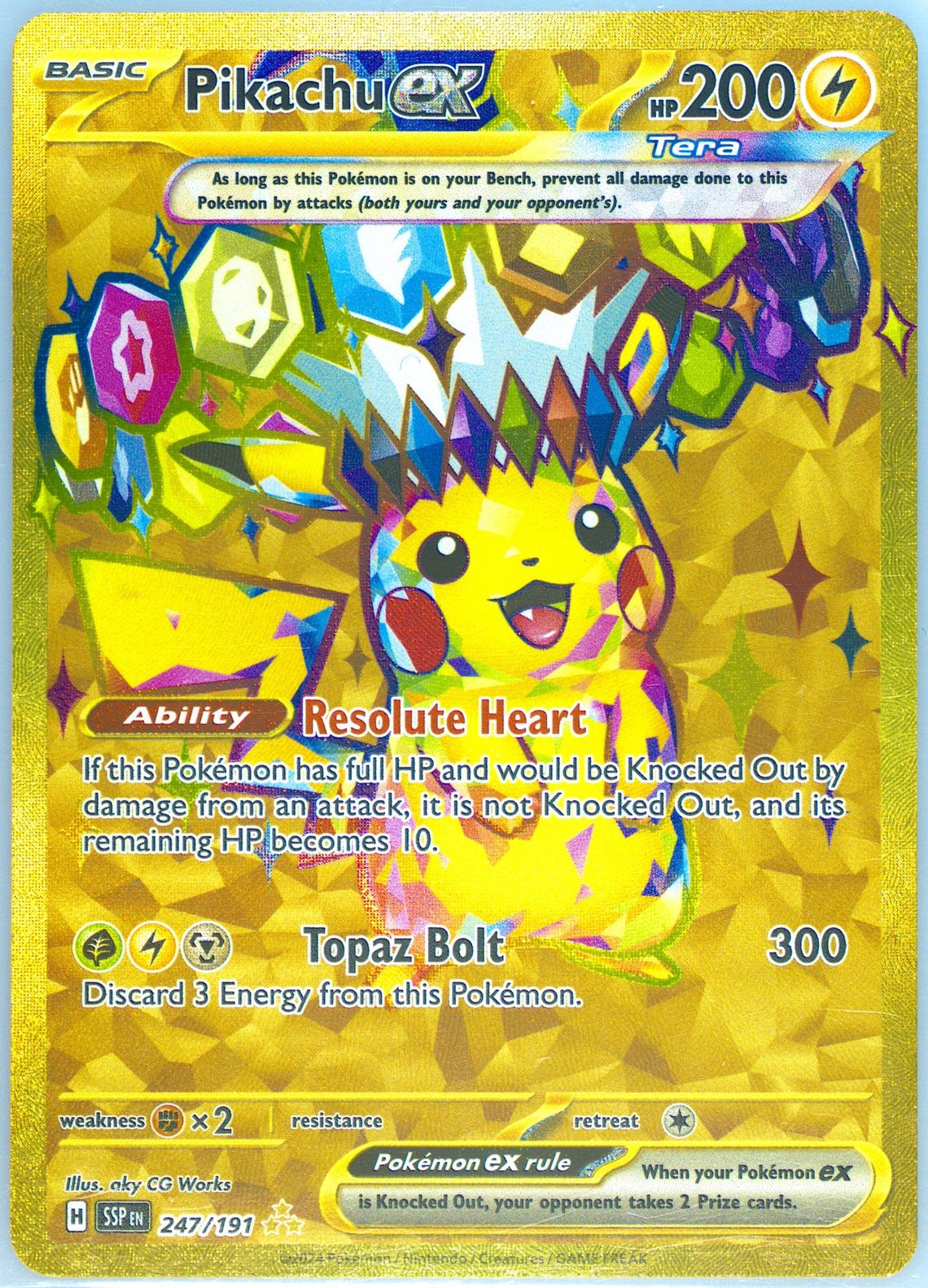
The Surging Sparks Pikachu EX Hyper Rare is a good case study. It's a beautiful card of the most popular Pokemon in the franchise, but it's settled into a $60-$80 range and seems stuck. There's no compelling set narrative pulling it higher, and the Pikachu collector base is split across too many modern options.
The Lower Tier
Bulk modern — V cards, VSTAR cards, regular holos, non-chase full arts from recent sets — has absolutely cratered. Cards that were $8-$15 during their release window are now $2-$5. The PSA 10 premium for these cards has compressed to almost nothing. A PSA 10 of a common modern V card might sell for $15-$20, which barely covers the cost of grading.
This is a permanent structural shift, not a temporary dip. The Pokemon Company's increased print runs mean that modern non-chase cards will never be scarce enough to command meaningful premiums. If you're holding boxes of slabbed modern V cards hoping for a comeback, we'd encourage you to recalibrate those expectations.
Segment Breakdown: Sealed Product
Vintage Sealed
This remains one of the most consistent segments in all of collectibles, not just Pokemon. Sealed WOTC booster packs and boxes continue their multi-year upward trend with almost no volatility.
A sealed Base Set Unlimited booster pack is trading around $1,200-$1,800 depending on art and condition of the packaging. A year ago, these were $1,000-$1,500. The supply ratchet — every opened pack reduces total supply permanently — combined with demand from both collectors and content creators keeps this category moving in one direction.
The ex era (2003-2007) sealed product is the newer story here. Sealed booster boxes from sets like EX Dragon, EX Deoxys, and EX Crystal Guardians have started moving meaningfully. An EX Dragon booster box that sold for $3,500 in early 2025 recently went for $5,200. The nostalgia wave for the ex generation is hitting in real time.
Modern Sealed
This is where the nuance matters most. Not all modern sealed product is created equal, and the market is making that distinction brutally clear.
Products holding or appreciating:
- Evolving Skies ETBs: Trading around $140-$165, up from $110-$130 a year ago. The set's reputation carries everything associated with it.
- Pokemon 151 Booster Boxes (Japanese): Holding steady at $160-$185. The Japanese 151 box has a devoted following.
- Prismatic Evolutions packs: Still commanding premiums at $12-$18 per loose pack due to the Eeveelution chase.
Products declining:
- Booster boxes from Scarlet & Violet base through Paldea Evolved: These are available below MSRP and still not selling quickly. Too much was printed, and the chase cards aren't compelling enough.
- ETBs from non-landmark sets: Sitting on shelves or selling below retail. The era of every ETB being worth holding is over.
Segment Breakdown: Japanese Cards
The Japanese market continues to operate somewhat independently from the English market, and it's been outperforming across most categories.
Japanese Exclusive Promos
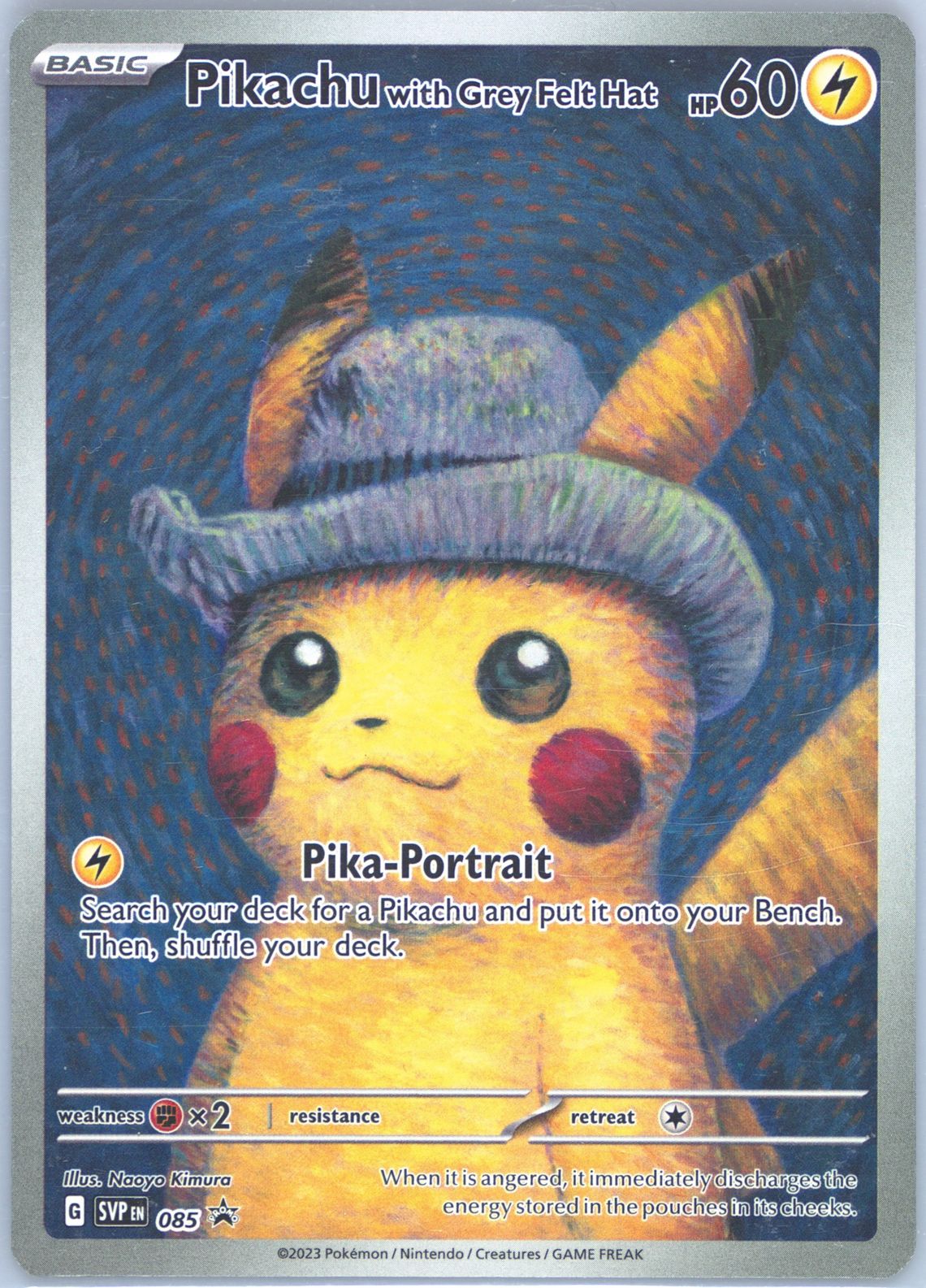
Up 25-40% year-over-year across the board for desirable promos. The Van Gogh Pikachu promo is an extreme example — it's traded as high as $450 in recent months after being distributed at museums for free. But even more common Japanese promos from Pokemon Center events, movie distributions, and tournament prizes are seeing consistent appreciation.
Japanese Set Cards vs. English
An interesting development in 2026 is the narrowing price gap between Japanese and English versions of the same card. Historically, English versions commanded significant premiums (2-5x in many cases). That gap has compressed to 1.5-3x for most modern cards, and for some highly sought-after Japanese exclusive art, the Japanese version actually commands a premium.
For more on this dynamic, our Japanese vs English comparison goes deep.
Japanese Sealed
Japanese booster boxes are one of the hottest segments in the market right now. The combination of lower price points (most Japanese boxes are $50-$80 at release), unique exclusive cards, and growing global demand has created a sweet spot. Older Japanese sealed product — especially anything from the ADV era (2003-2004) and before — has been rising steadily.
Segment Breakdown: Graded Card Market Dynamics
PSA vs. CGC vs. BGS vs. TAG
The grading landscape is shifting in ways that affect card values directly. PSA remains dominant, but two trends are worth highlighting:
CGC price discount narrowing. CGC 10 cards, which historically traded at 40-60% discounts to equivalent PSA 10s, are now closer to 25-40% discounts. CGC is gaining collector acceptance, and the arbitrage of buying CGC 10s cheap and cracking/regrading to PSA is closing.
TAG's emergence. TAG, the newer grading service, has been gaining traction particularly in the modern card community. TAG 10s are still heavily discounted versus PSA 10s, but the gap is closing faster than CGC's did. Whether TAG becomes a legitimate third player or fades away remains to be seen, but it's affecting how some modern cards are priced right now.
For a deeper comparison of grading companies, check out our PSA vs CGC vs BGS breakdown.
Pop Report Inflation
PSA 10 populations for modern cards continue to balloon. Cards that had 5,000 PSA 10 copies a year ago now have 8,000-12,000. This pop inflation directly suppresses prices because it undermines the scarcity argument for grading modern cards. The PSA 10 premium for a card with 15,000 copies at the grade is essentially just the cost of the slab and a modest certification premium — there's no scarcity value.
Vintage cards are the opposite. PSA 10 pops for WOTC holos have been flat for years. All the mint copies have already been found and graded. This is why the PSA 10 premium for vintage continues to expand while it compresses for modern.
Destined Rivals: The Latest Set's Market Impact
Destined Rivals dropped in late February and has already established some clear market patterns. The set's Team Rocket theme has driven nostalgia-fueled demand for the top chase cards.
The Team Rocket's Mewtwo EX SIR is the early headliner, selling in the $65-$90 range raw and commanding even more in early graded sales. It's a gorgeous card with strong Pokemon appeal, and the Team Rocket connection gives it a narrative edge.
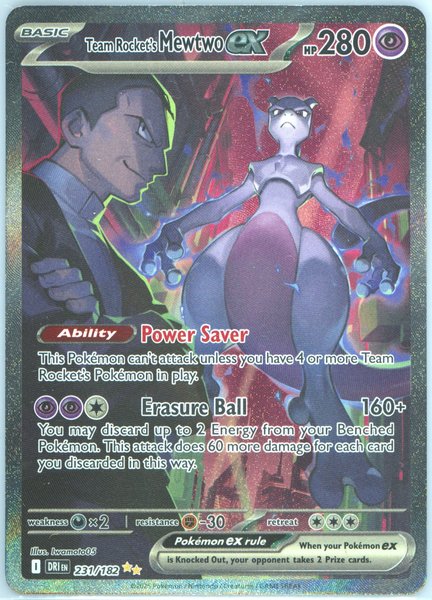
What's interesting about Destined Rivals from a market trends perspective is how quickly the non-chase cards have fallen to bulk levels. The gap between the top 5 cards and everything else in the set is stark — another data point in the flight-to-quality trend we've been tracking all year.
For the full breakdown of the set's best cards, see our Destined Rivals price guide.
What the Data Says About the Broader Trend
Pulling it all together, here are the five most important market trends we're seeing in 2026:
1. Bifurcation Is Accelerating
The gap between premium and non-premium cards keeps widening. This isn't a temporary dislocation — it's a structural shift in how the market values Pokemon cards. The market is saying: iconic, scarce, and beautiful holds value. Everything else doesn't, regardless of rarity symbol.
2. Sealed Product Is the Quiet Winner
Across both vintage and select modern products, sealed is outperforming singles on a risk-adjusted basis. The supply dynamics are favorable (permanently depleting inventory), and the demand base is diversified across collectors, investors, and content creators.
3. Japanese Cards Are Repricing
The historical discount for Japanese cards is compressing. For collectors and investors, this means Japanese cards — particularly promos and sealed product — still offer relative value compared to their English equivalents, but that window may be closing.
4. Grading Premiums Are Normalizing
The PSA 10 premium for modern cards is compressing toward where it should be given population sizes, while the premium for vintage is expanding. This is the market efficiently pricing scarcity, and it has implications for what's worth grading. Our grading value guide covers this in detail.
5. Set Identity Matters More Than Individual Card Rarity
A card's value is increasingly tied to the set it comes from rather than just its rarity tier. An ultra rare from a beloved set holds value better than a "higher rarity" card from a forgettable set. Evolving Skies, Pokemon 151, and Prismatic Evolutions are pulling away from the pack of modern sets, and that gap is probably permanent.
Practical Takeaways
If You're Buying
Focus your budget on the segments showing strength: high-grade vintage, landmark modern set chase cards, Japanese exclusives, and select sealed product. The temptation to "buy the dip" on everything that's dropped is real, but not all dips are opportunities. Some are corrections to fair value, and some are the market telling you a card was overpriced to begin with. Use Misprint to check historical price trends before buying — a card that's been declining for 18 months straight is a different proposition than one that dipped briefly and recovered.
If You're Selling
Price aggressively against current sold data, not stale listings. In a market where buyers have options, the card priced 10% below the nearest comparable sale sells first. If you're holding modern cards from non-landmark sets that you don't have personal attachment to, this is a reasonable time to convert them into cash or reallocate into stronger segments.
If You're Holding
The most important question for any card you own is: which side of the bifurcation is it on? If you're holding iconic cards from landmark sets or high-grade vintage, time is on your side. If you're holding mid-tier modern singles, the calculus is harder. They might recover, but they might also continue to lose ground to the cards at the top of the hierarchy.
If You're New
Honestly? This is one of the best times in recent memory to start collecting Pokemon cards. The correction has brought prices down across the board, which means your dollar goes further than it did two years ago. Start with cards you love from sets that have proven staying power, and don't worry about timing the market perfectly. The best card to buy is always the one that makes you happy to own, and right now, a lot of those cards are more affordable than they've been in years.
Check your cards' current values and track market trends on Misprint. In a market this nuanced, data is the difference between a smart decision and an expensive lesson.