What Are the Chase Cards in Pokemon Jungle?
A top 10 countdown of the most valuable cards in Pokemon's second expansion.
By Misprint Editorial | Published May 15, 2025 | 6 min read
Updated pricing as of March 2026
Pokemon Jungle was the second English expansion set ever released, hitting shelves in June 1999 just a few months after Base Set took over playgrounds and kitchen tables around the world. Where Base Set gave us the original starters and the iconic Charizard, Jungle introduced 64 new cards featuring Pokemon that didn't make the first cut -- fan favorites like Scyther, Snorlax, Mr. Mime, and the original Eeveelution trio of Flareon, Jolteon, and Vaporeon.
The set contained 16 holo rares in total, and those holos are what collectors are still chasing today. While Jungle has always lived in the shadow of Base Set, its unlimited holos have seen consistent price growth over the past two years as collectors expand beyond the obvious vintage picks. Below is a countdown of the ten most expensive Jungle holos, from number ten down to the card sitting at the very top.
Honorable Mentions
Before we get into the top ten, a handful of Jungle holos deserve a nod. These are the cards that didn't quite crack the list but are still legitimate vintage holos from a beloved set. "Budget" is relative here -- these are 25-plus year old holographic cards, and even the least expensive Jungle holo is worth considerably more than anything you'll pull from a modern booster pack.
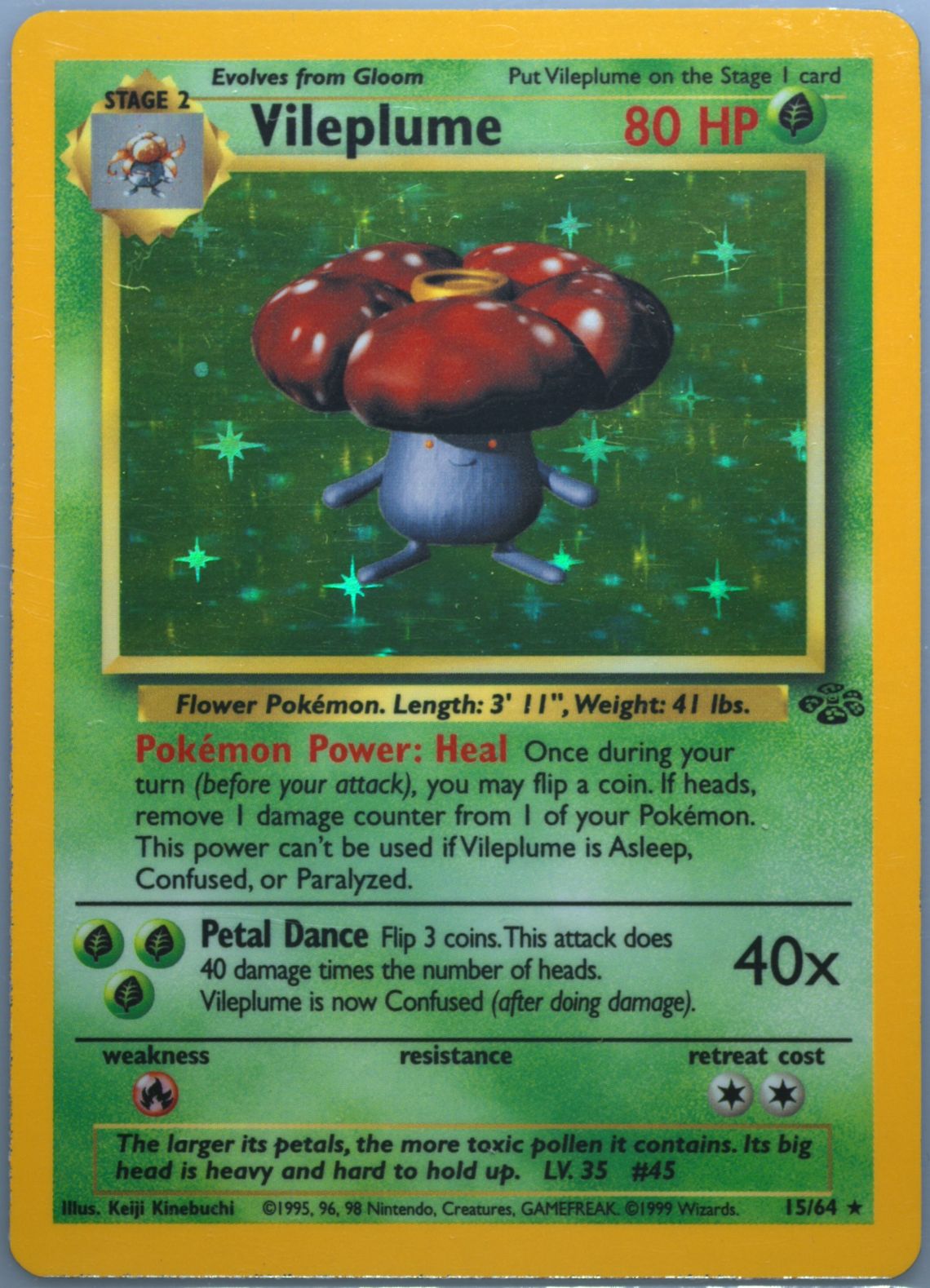
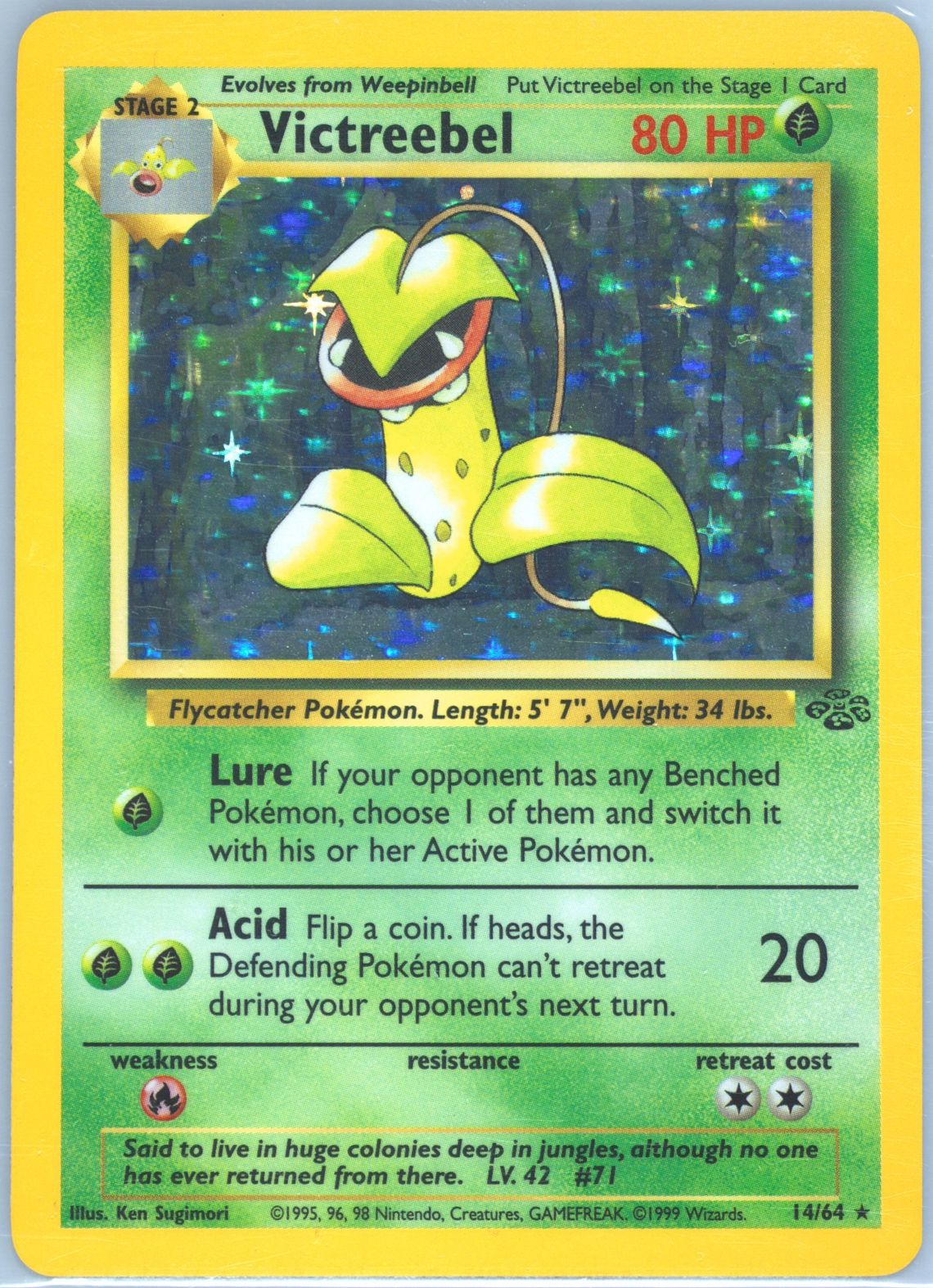
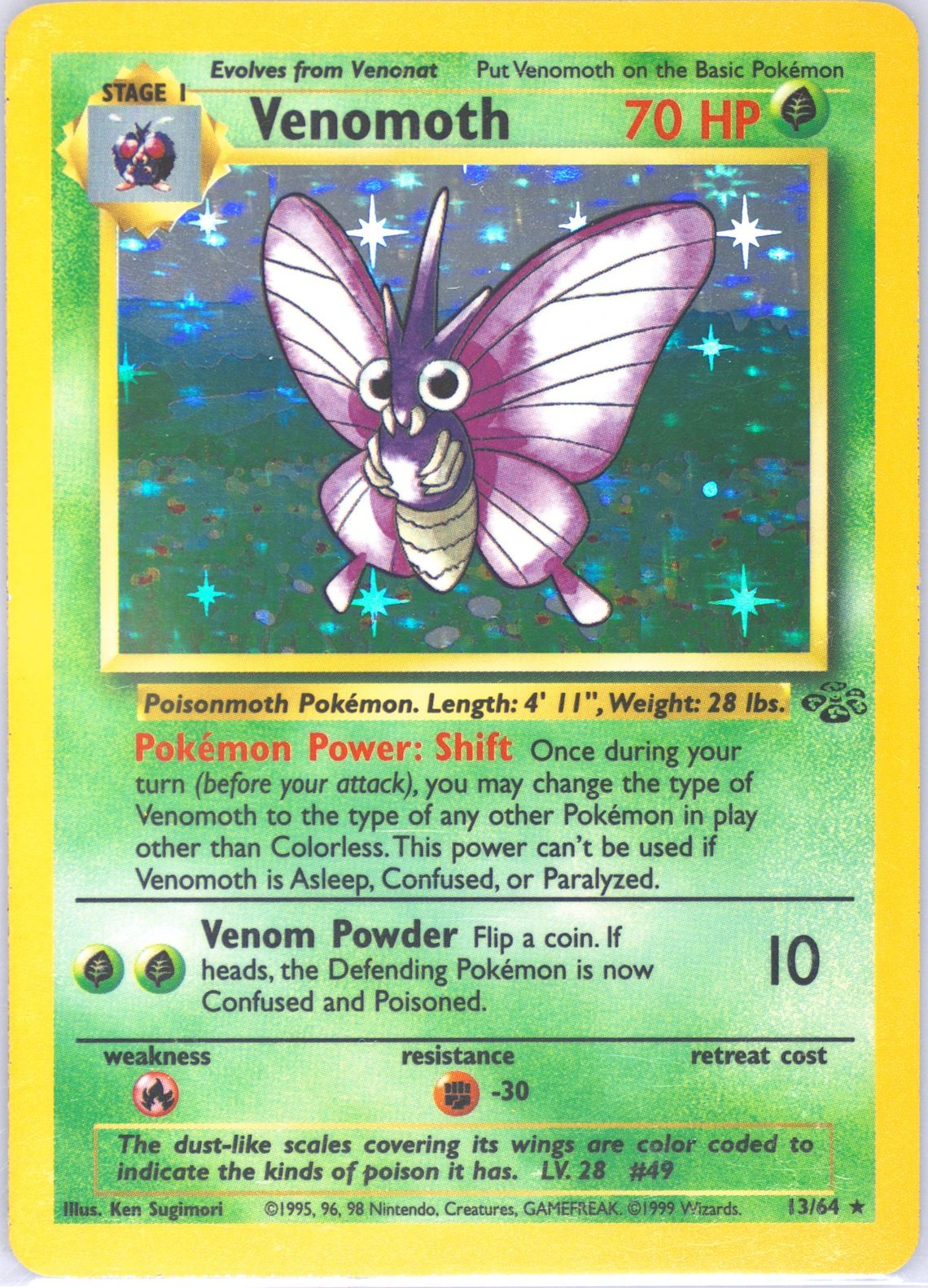
Vileplume (15/64) is typically the least expensive holo in the set. It has great Grass-type artwork, but Vileplume has never been a marquee Pokemon. Victreebel (14/64) and Venomoth (13/64) sit right alongside it. All three are Grass and Bug types that tend to attract less collector attention than the set's heavier hitters.
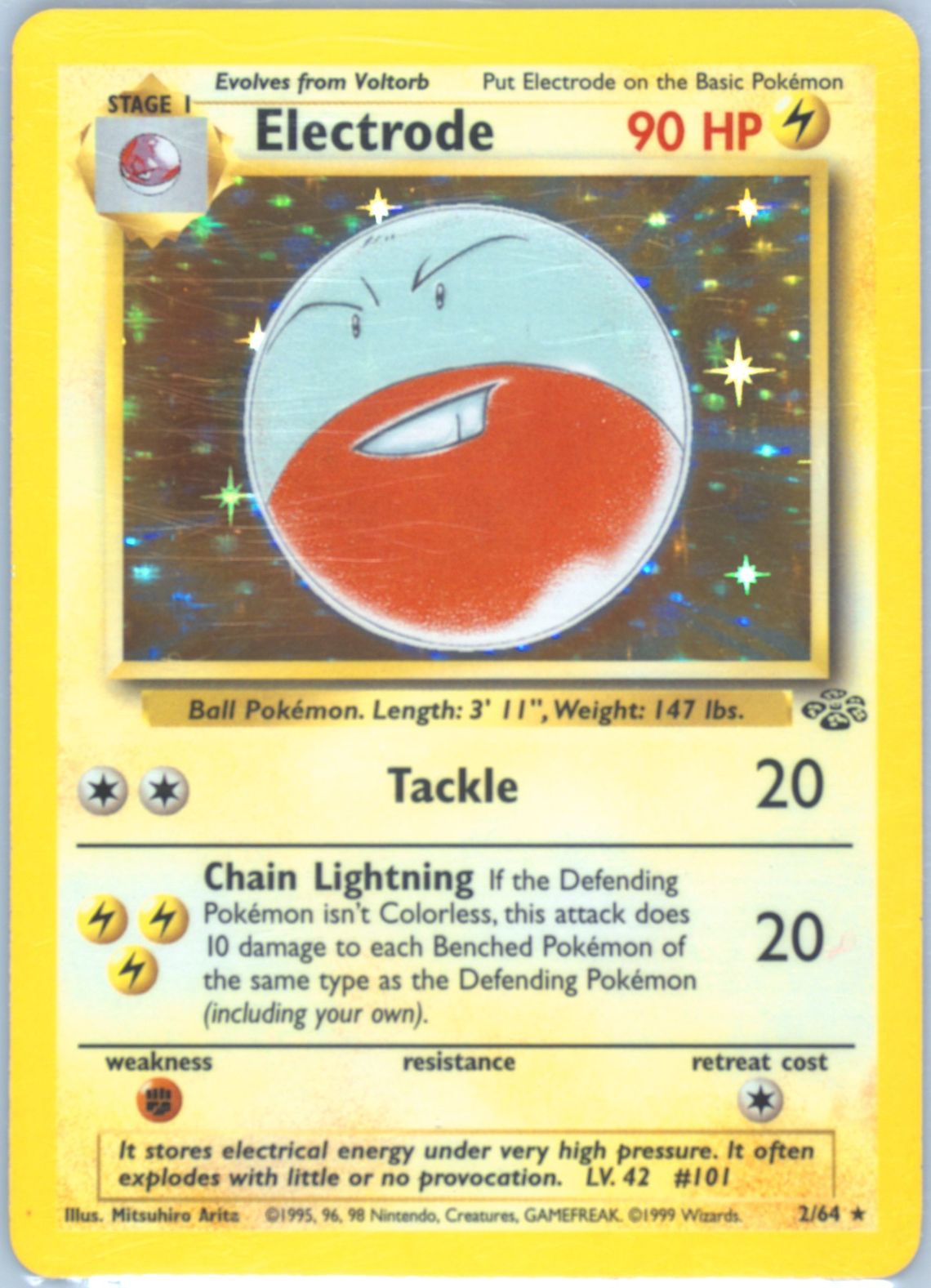
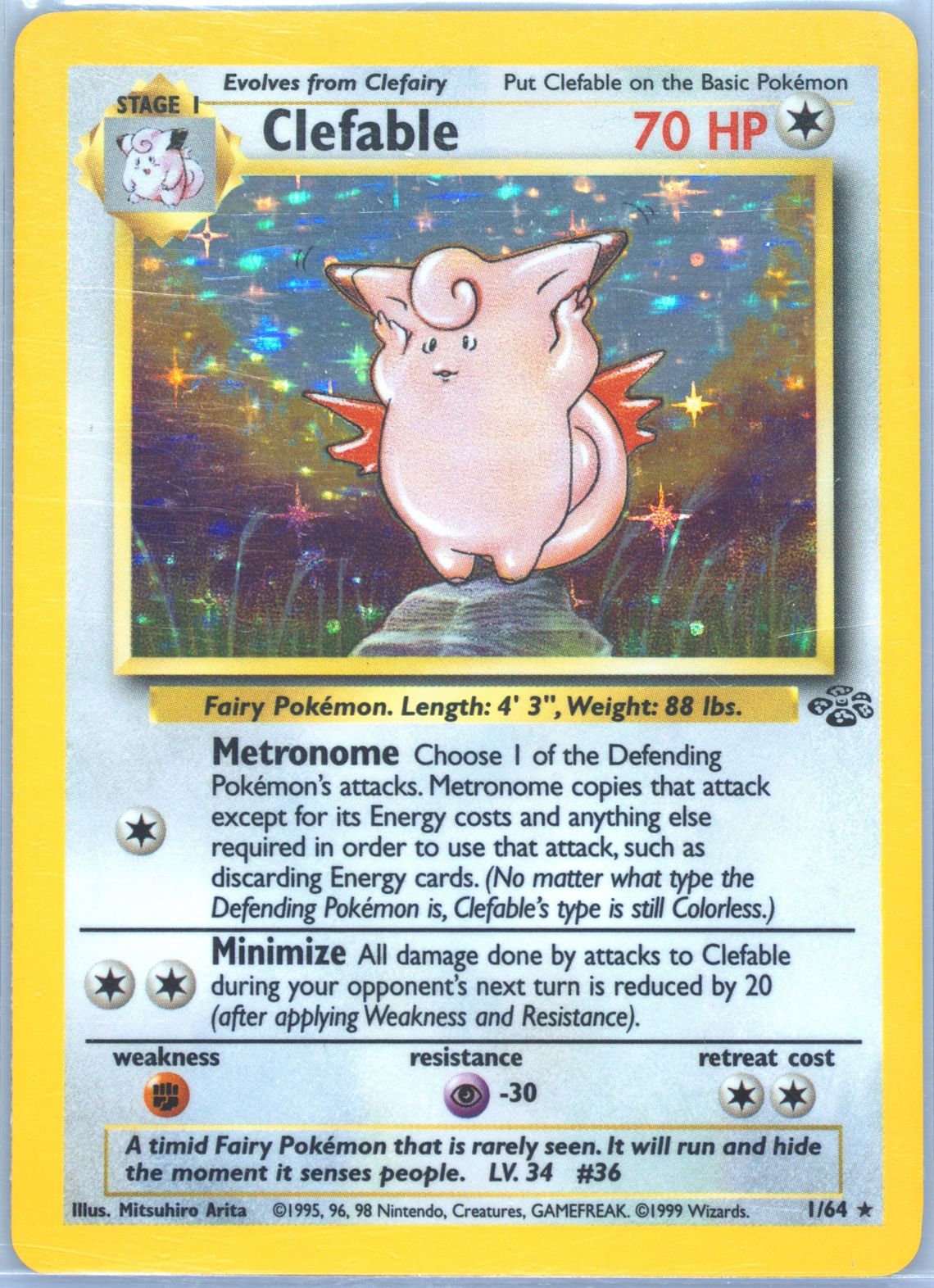
Electrode (2/64) has a niche following among Electric-type collectors, and Clefable (1/64) benefits from its Fairy-type popularity in later generations, but neither commands a significant premium over the other budget holos.
Now, onto the countdown.
#10. Pinsir
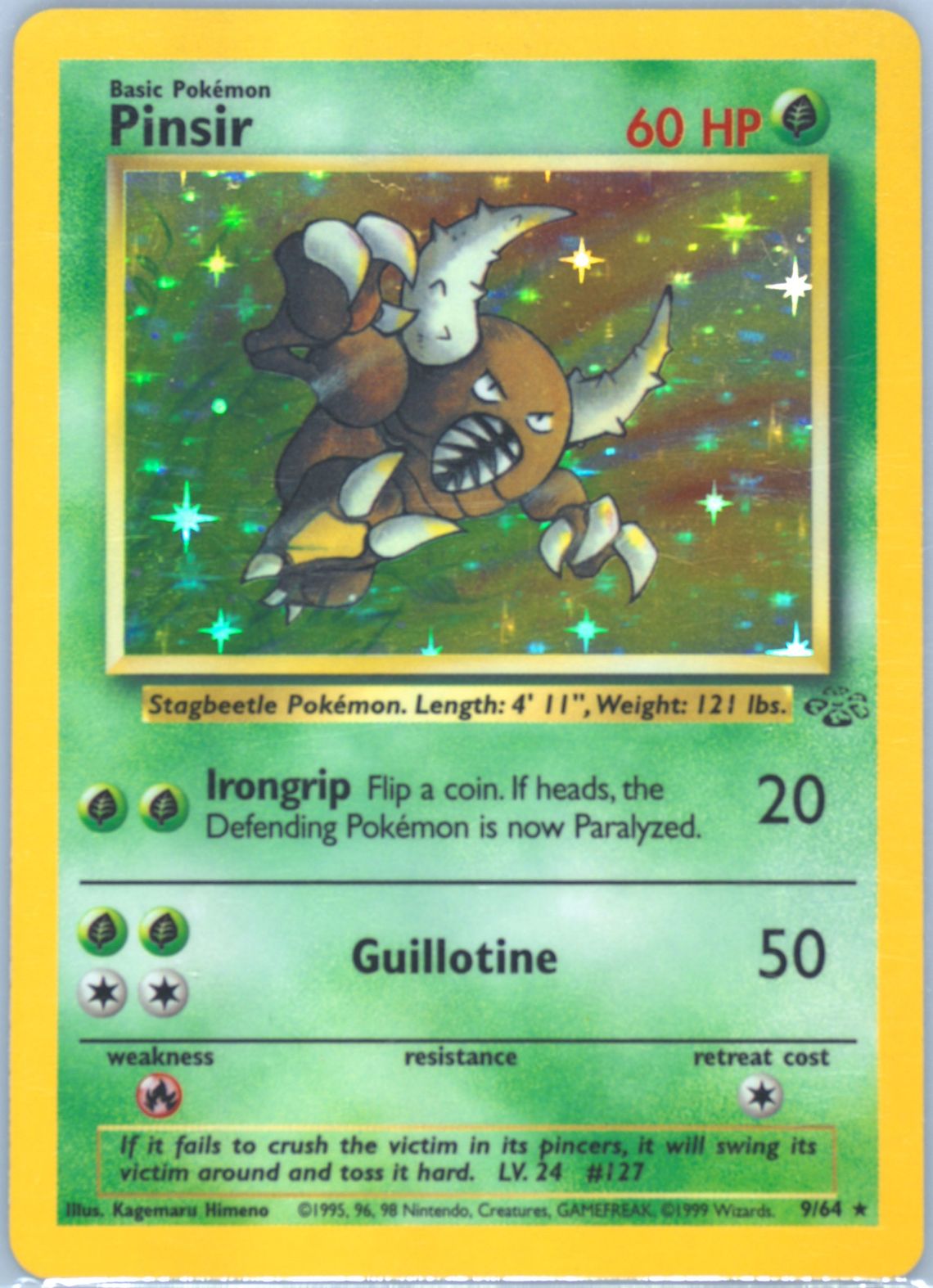
Pinsir (9/64) sits right at the edge of the top ten. It's a solid Bug-type holo with a loyal following, especially among fans of the original 151. Pinsir doesn't have the mainstream name recognition of the cards above it, but its artwork holds up well and it benefits from being a single-stage Pokemon with a clean, imposing design. For collectors working through the Jungle holo set, Pinsir is usually one of the first pickups -- affordable enough to grab without overthinking it, but still a satisfying vintage pull.
#9. Nidoqueen
Nidoqueen (7/64) carries some serious evolutionary line nostalgia. The Nidoran family was one of the first dual-gender Pokemon lines, and plenty of trainers ran a Nidoqueen on their in-game teams back in Red and Blue. The card itself has a regal presence that matches the Pokemon's design, and it tends to hold steady demand from collectors who are building out complete Jungle binders. It's not flashy, but it's the kind of card that quietly appreciates while everyone is looking elsewhere.
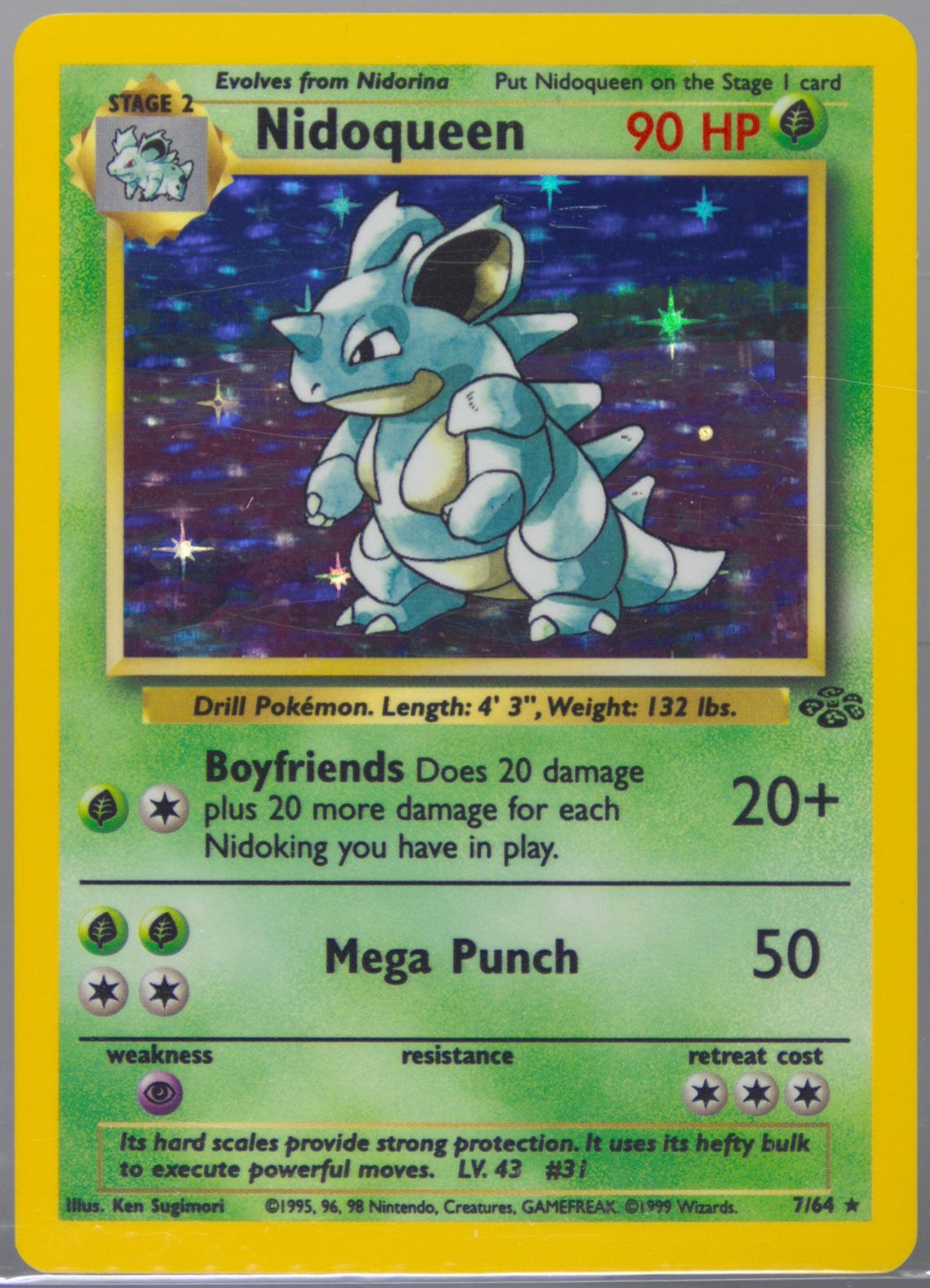
#8. Pidgeot
Pidgeot (8/64) was a staple on many players' in-game teams during the original generation. Almost everyone who played Red or Blue caught a Pidgey on Route 1 and eventually evolved it all the way up, so the nostalgia factor is real. The Jungle holo does a nice job capturing Pidgeot mid-flight, and the card has developed a following among collectors who appreciate the set's less obvious picks. It's a bird, sure, but it's a bird that a lot of people have genuine memories attached to.
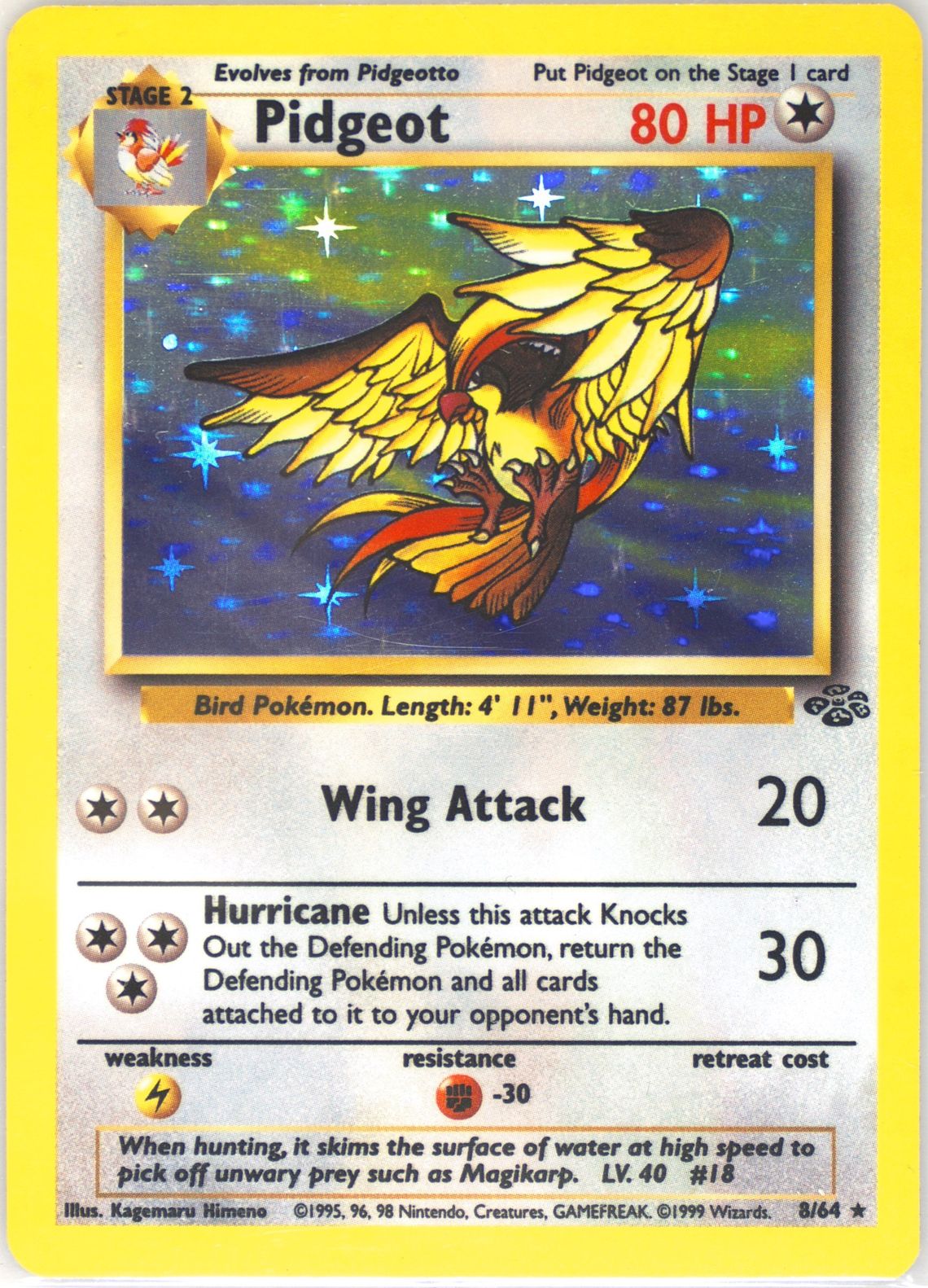
#7. Mr. Mime
Mr. Mime (6/64) has always been a polarizing Pokemon -- you either love the design or find it unsettling -- but that distinctiveness is exactly what keeps demand steady. In the original TCG format, Mr. Mime's Invisible Wall Poke-Power made it a genuine bench protector that saw competitive play, which gives it crossover appeal for both players and collectors. There's something about Mr. Mime that makes it hard to ignore, and that translates into consistent market interest. It's one of those cards that people tend to remember seeing in binders back in the day.
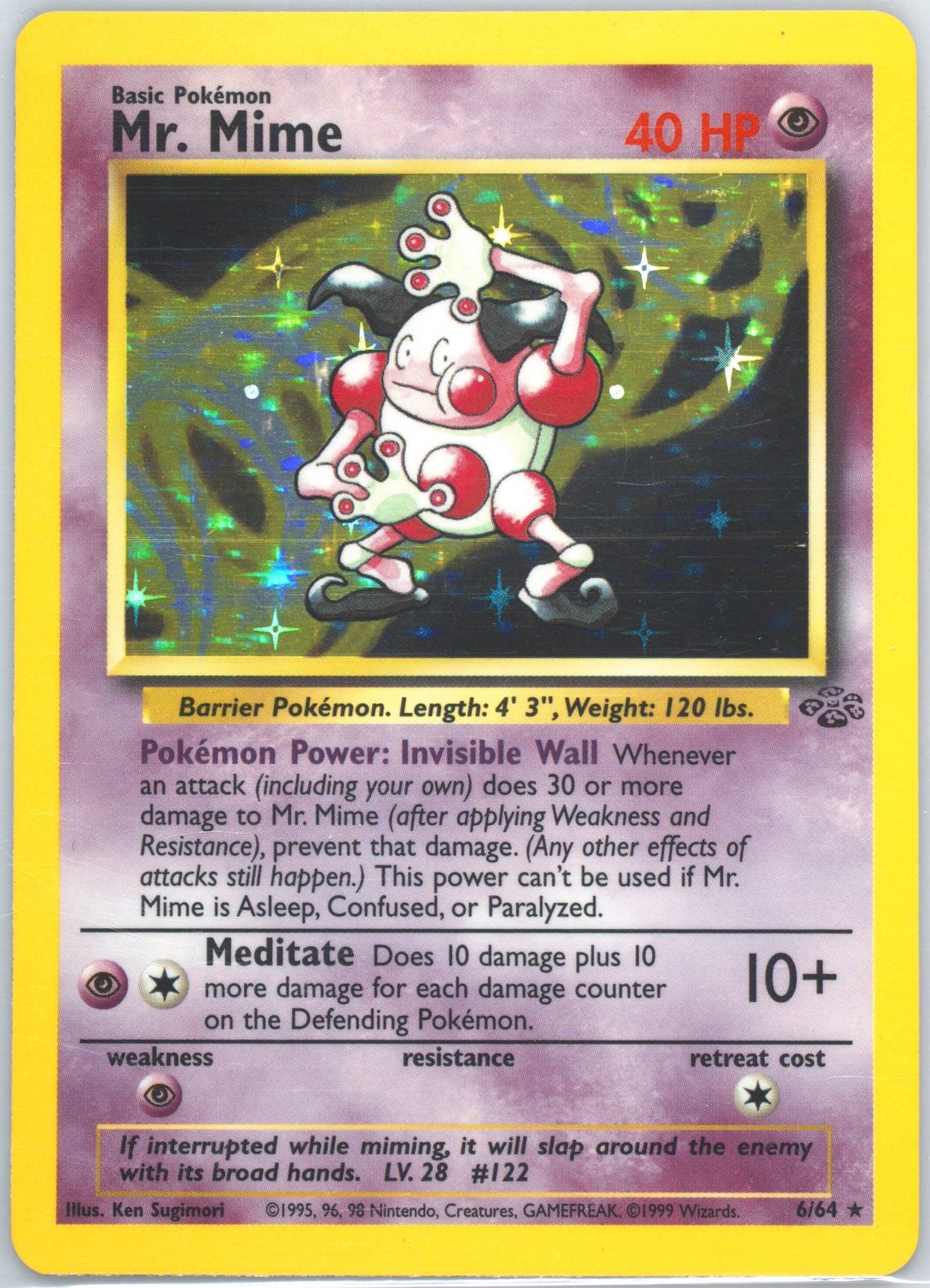
#6. Kangaskhan
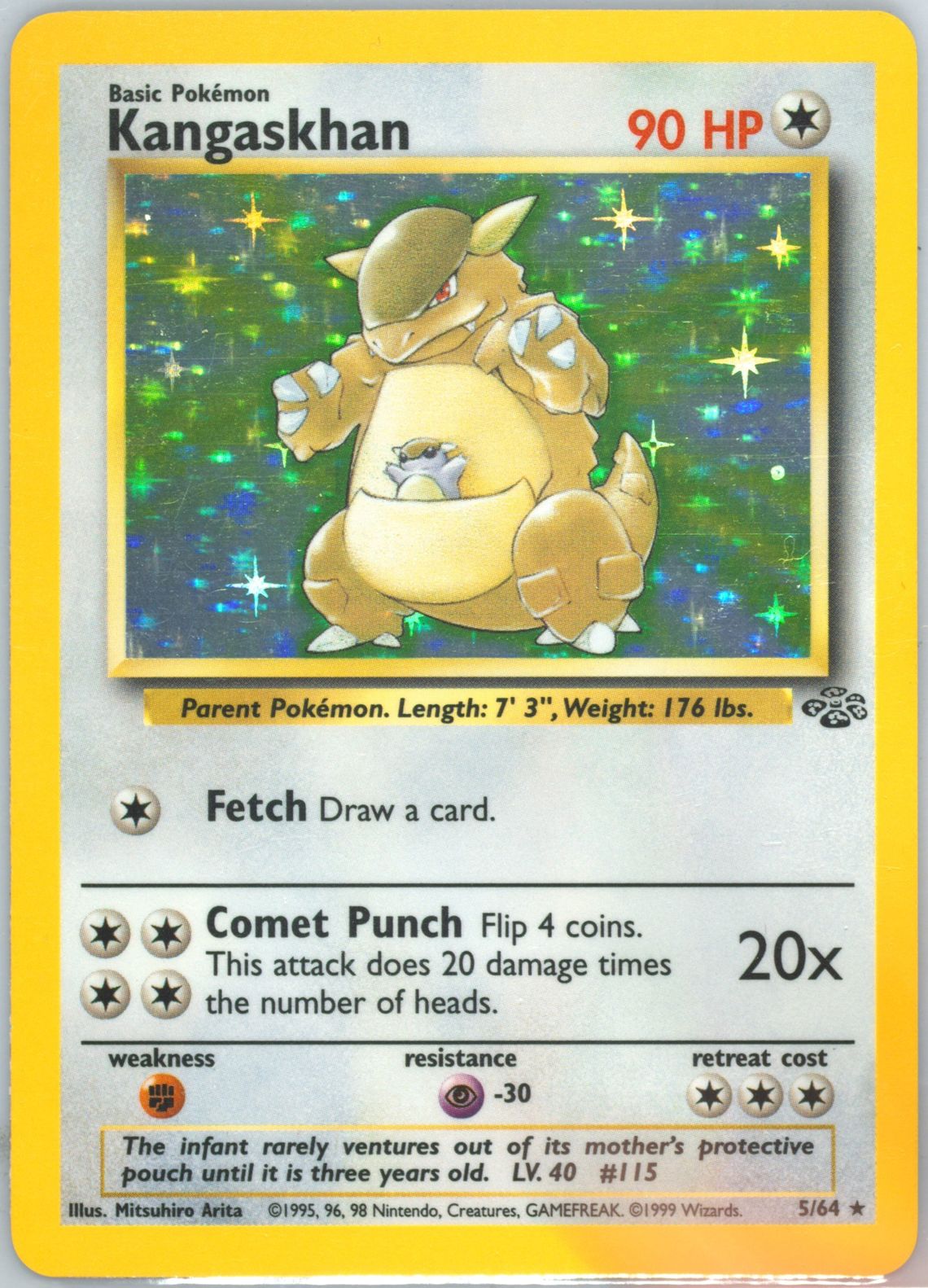
Kangaskhan (5/64) carries parent-Pokemon appeal that gives it a unique spot in the set. It was notably featured in the first Pokemon movie, and its Comet Punch attack was a fun gamble in casual play -- four coin flips for 20 damage each meant you were either celebrating or groaning. The artwork remains one of the most striking in the entire Jungle set, showing Kangaskhan looking genuinely protective with the baby peeking out of the pouch. Collectors who grew up with the anime tend to gravitate toward this one.
#5. Snorlax
Snorlax (11/64) is one of the most beloved Pokemon of all time, full stop. That universal appeal translates directly into collector demand. Beyond pure nostalgia, Snorlax was a genuinely strong card in the original TCG metagame -- its thick HP pool and solid attacks made it a wall that many decks struggled to get past. That combination of competitive history and cultural staying power keeps Snorlax prices climbing steadily. It's the kind of card that casual fans and serious collectors both want in their collection.
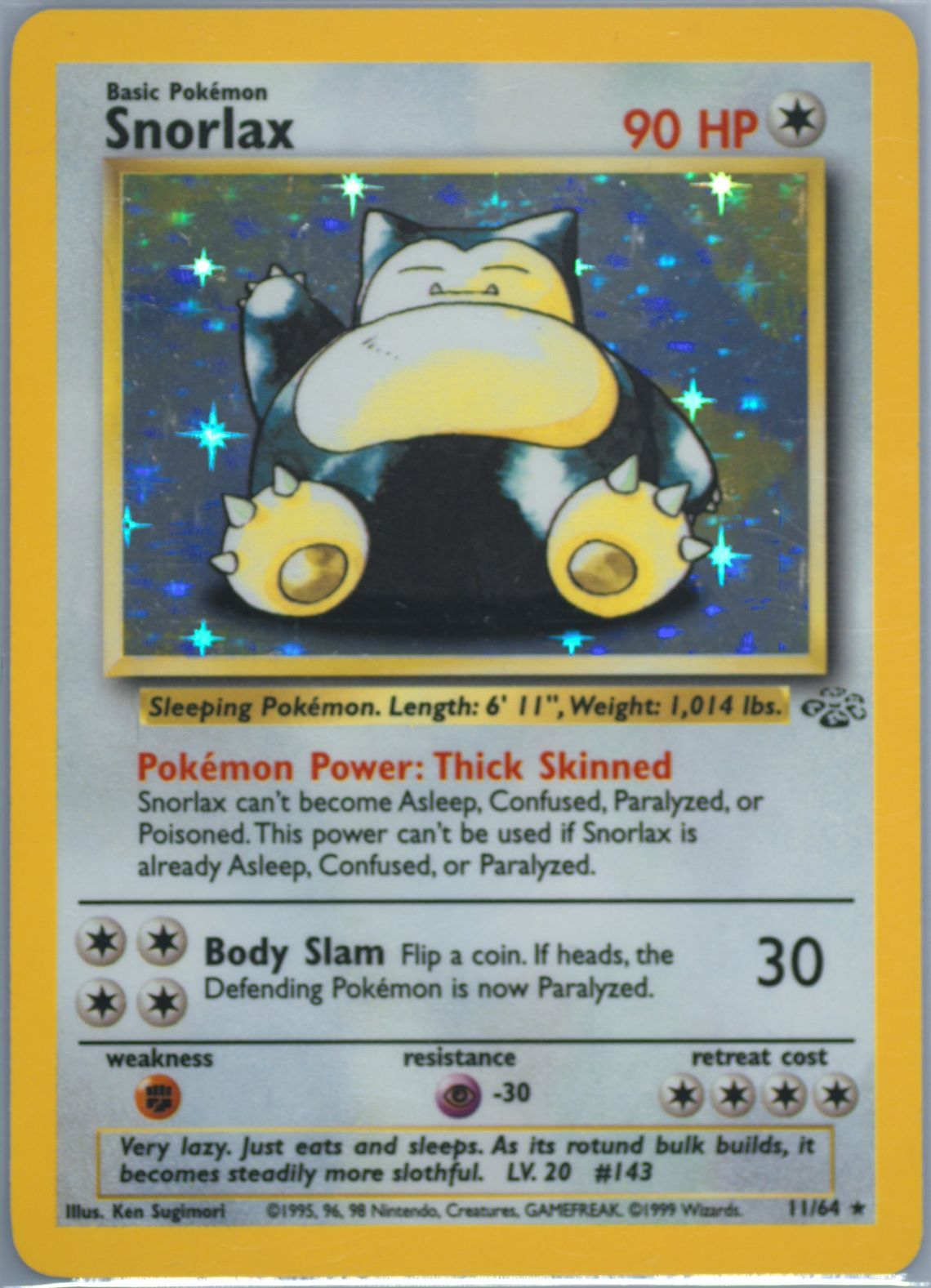
#4. Scyther
Scyther (10/64) is arguably the most competitively significant card in the entire Jungle set. In the early days of the TCG, Scyther was everywhere. No Colorless energy cost for Slash, free retreat cost, and 70 HP made it one of the most efficient attackers in the format. Competitive players remember Scyther fondly, and that translates directly into collector demand decades later. If you played the TCG in the late '90s or early 2000s, you almost certainly had a Scyther in one of your decks, and that kind of personal connection drives prices in a way that pure aesthetics can't always replicate.
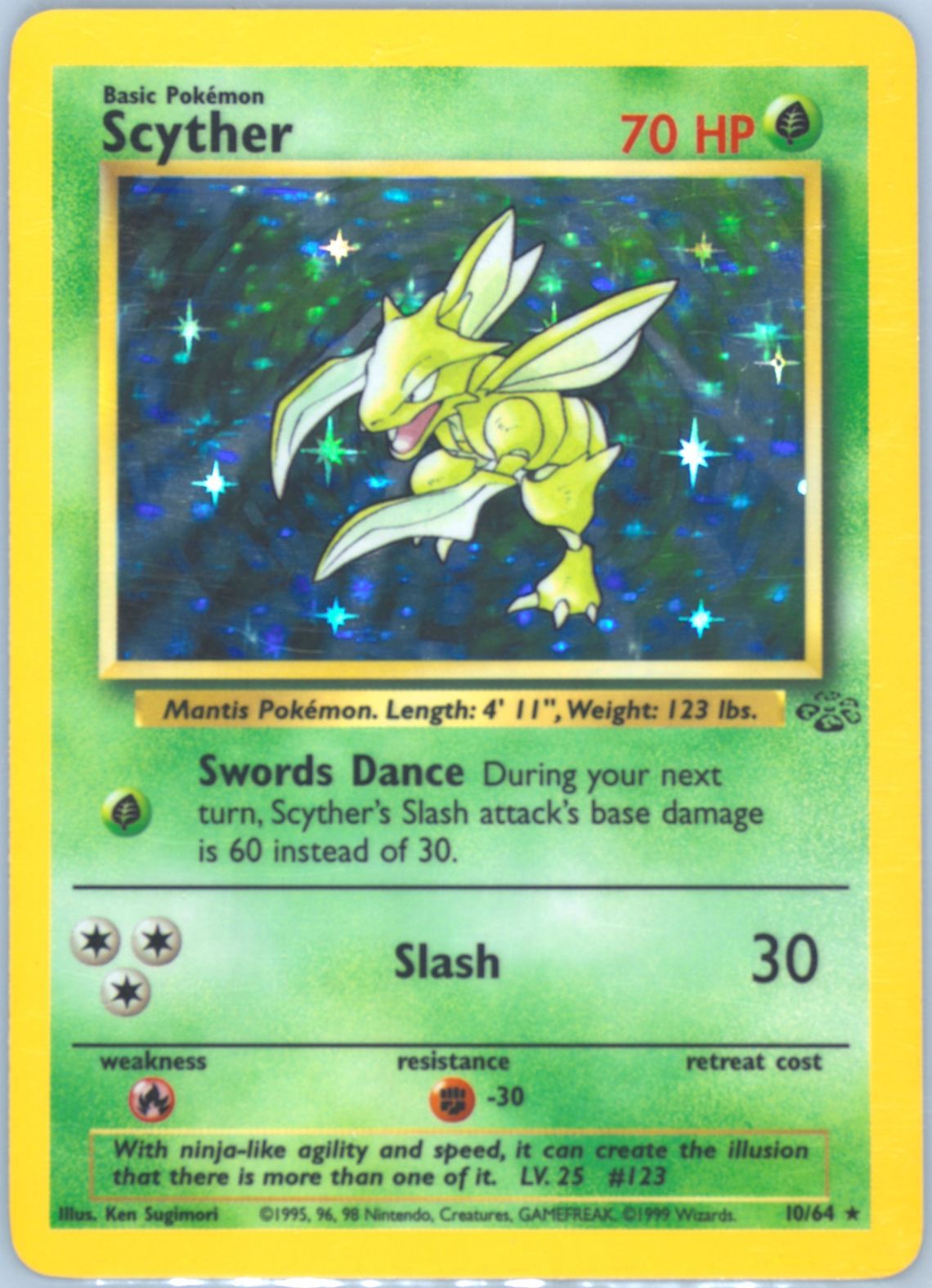
#3. Vaporeon
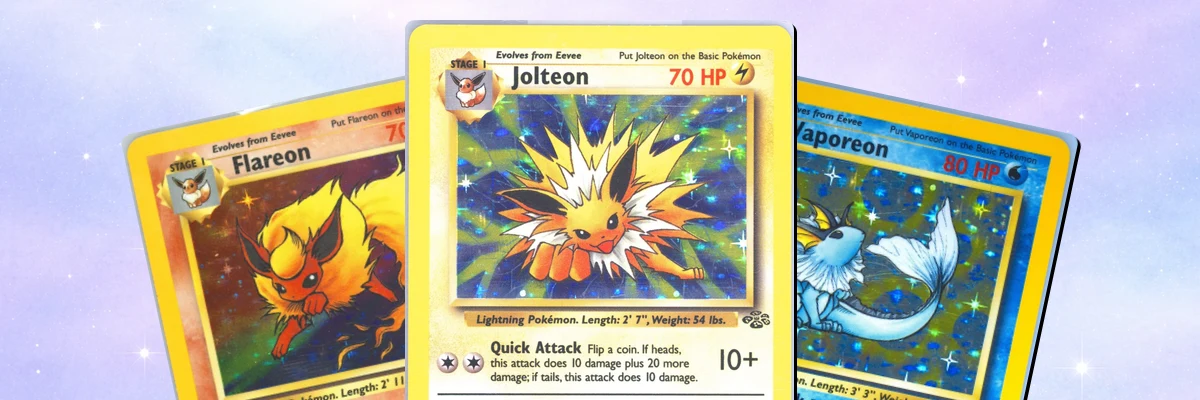
Vaporeon (12/64) is where we cross into Eeveelution territory, and from here on out the prices jump noticeably. Eeveelutions are one of the most consistently popular subsets in the entire Pokemon franchise -- from Jungle in 1999 to Evolving Skies in 2021 to Prismatic Evolutions in 2025, every set that features Eevee's evolutions becomes a collector event. These three Jungle holos are where that tradition started. Vaporeon's Water-type artwork has a calm elegance that stands out among the more action-oriented holos in the set. It tends to be the most accessible of the trio, but make no mistake, it still commands a real premium over everything else below it on this list.
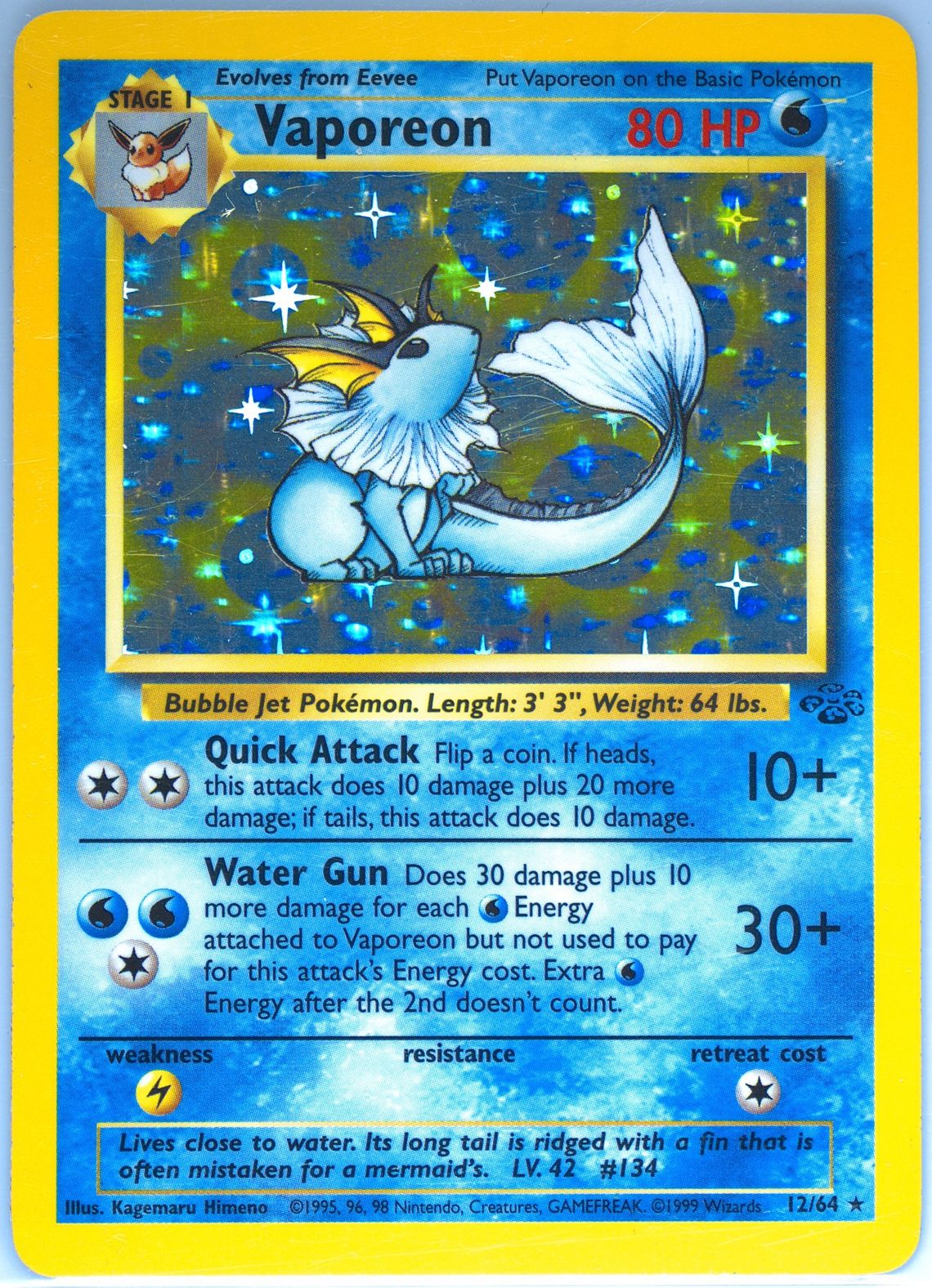
#2. Jolteon
Jolteon (4/64) commands a noticeable premium over Vaporeon, and it's not hard to see why. Electric-type collectors are a dedicated bunch, and Jolteon's sharp, angular design has aged incredibly well. It's the kind of card that looks just as good now as it did in 1999. There's an intensity to the artwork that gives it a slightly edgier feel compared to its siblings, and that seems to resonate with collectors who are willing to pay up. If you're trying to pick up the Eeveelution trio, Jolteon is usually the one that stings the wallet a little more than you expected.
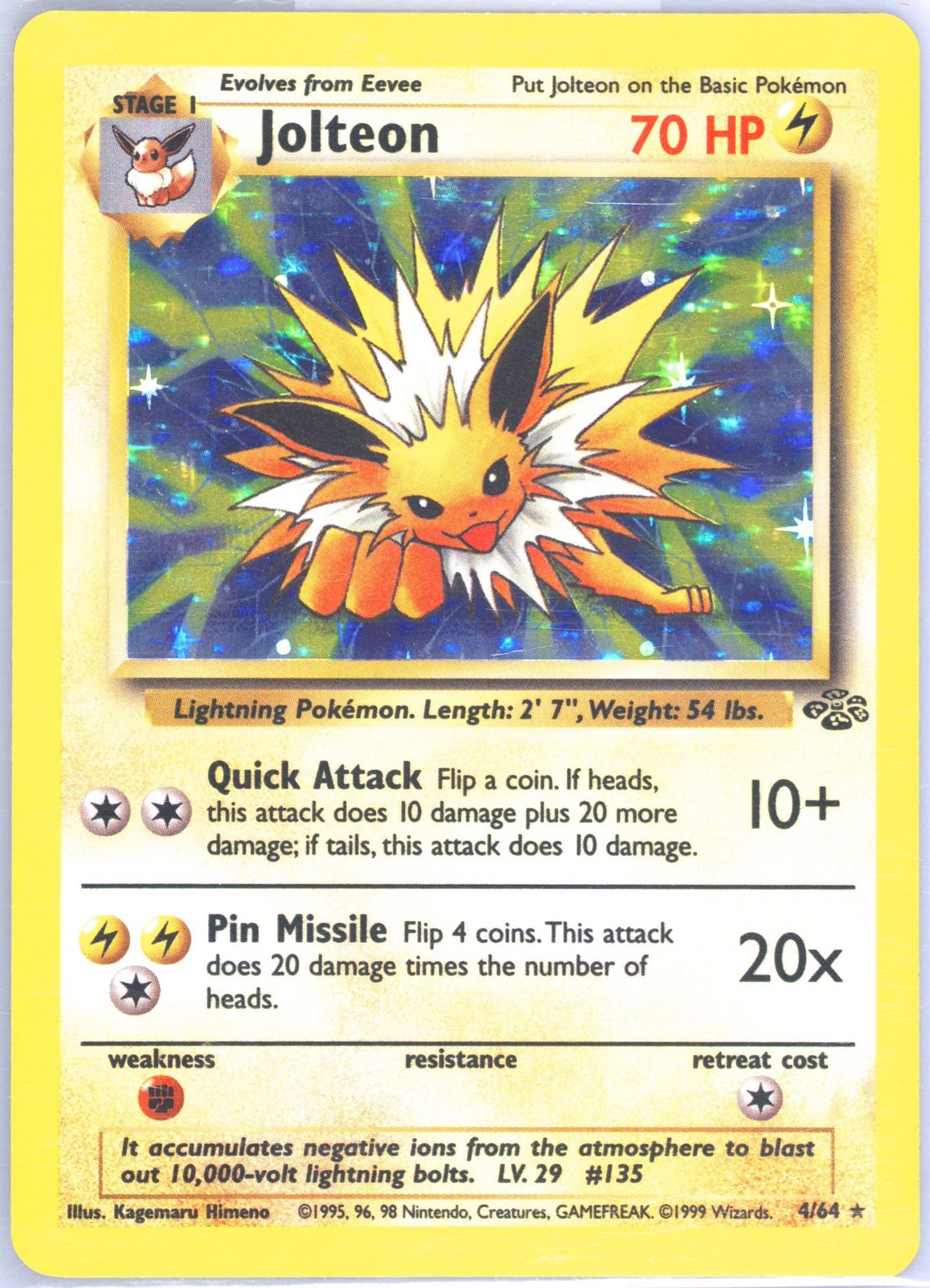
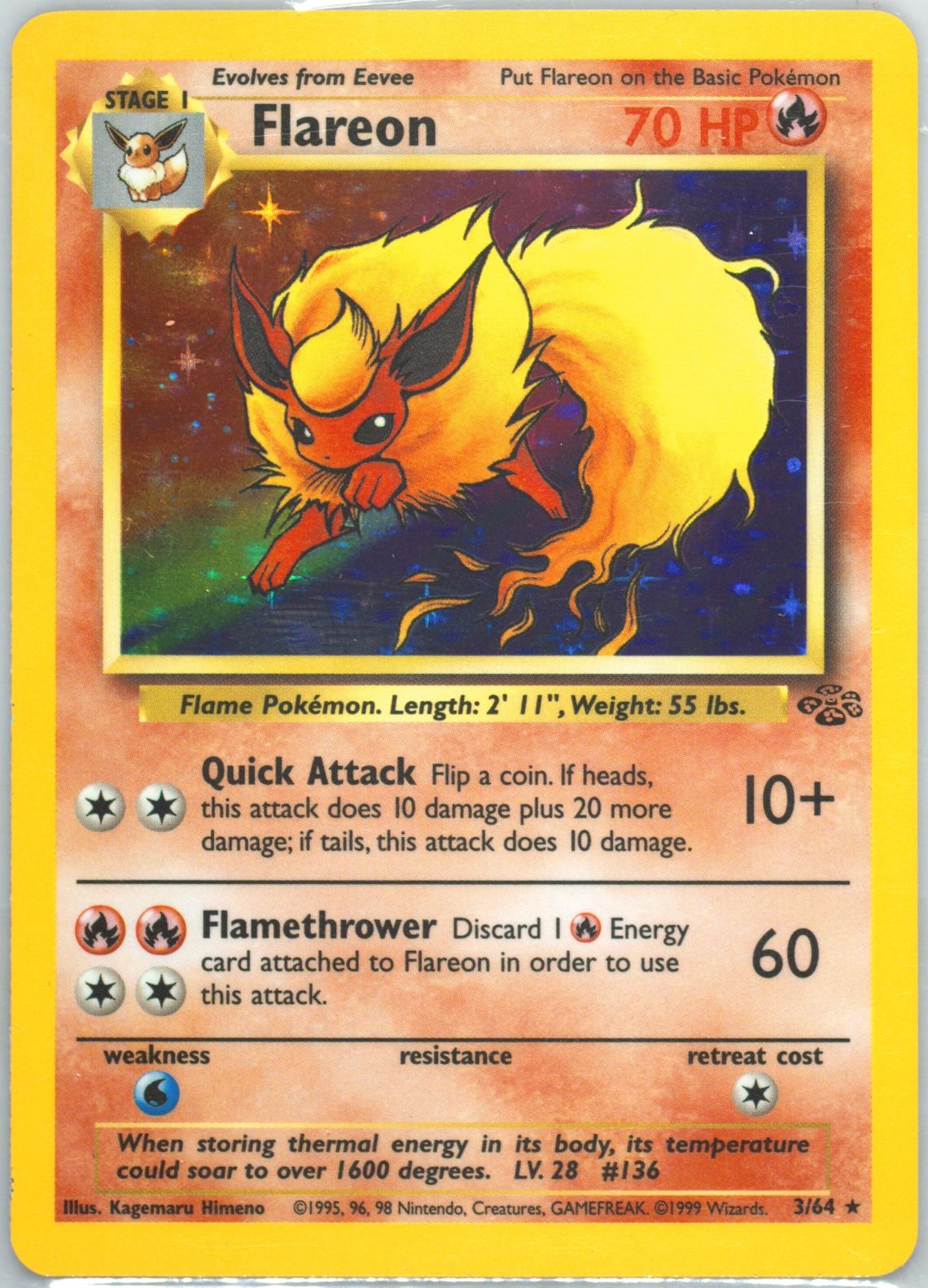
#1. Flareon
Flareon (3/64) is the most expensive card in the Jungle unlimited set, and it has held that position comfortably for a long time. Fire-type Pokemon have always carried a pricing premium in the TCG -- just look at what Charizard does to any set it appears in -- and Flareon benefits from that same energy. As the crown jewel of the Eeveelution trio and the flagship card of the entire Jungle set, Flareon consistently tops price lists and shows no signs of slowing down. If you're picking up just one card from Jungle, this is the one most collectors reach for first.
The Bottom Line
Jungle unlimited holos remain one of the more accessible entry points into vintage WOTC collecting. The honorable mention cards can still be found for reasonable prices, while the top-end Eeveelution trio offers genuine blue-chip vintage appeal without the four-figure price tags that Base Set holos demand. As collectors continue to expand beyond Base Set and look for the next undervalued vintage opportunity, Jungle is well-positioned to benefit.
It's also worth noting that 1st Edition Jungle holos carry a substantial premium over their unlimited counterparts across the board. If you're looking at unlimited right now because 1st Edition is out of your price range, that's a perfectly reasonable strategy -- unlimited cards still carry the same artwork, the same nostalgia, and a lot of the same long-term appreciation potential.
Whether you're filling out a vintage binder or picking up a single card that catches your eye, Jungle holos are a part of Pokemon TCG history that's only getting harder to find in great condition. The earlier you lock in the cards you want, the better.
Prices referenced are approximate market values as of March 2026 and will fluctuate. Check current listings on Misprint for the latest prices.