Top 10 Most Expensive Umbreon Cards of All Time
The Dark-type Eeveelution that dominates every era of the market, counted down.
By Misprint Editorial | Published Feb 21, 2026 | 11 min read
Updated pricing as of March 2026
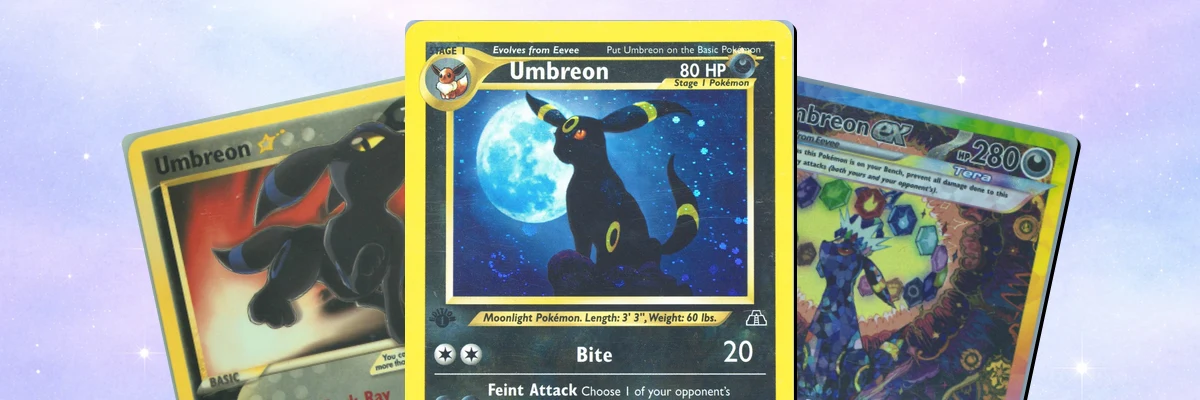
There is no single Pokemon that commands the secondary market quite like Umbreon. That is not hyperbole. Across nearly thirty years of the Trading Card Game, spanning the Wizards of the Coast era through the modern Scarlet and Violet block, the Dark-type Eeveelution has consistently appeared as the most expensive chase card in set after set. Other Pokemon have their moments. Charizard still moves the needle with casual collectors. Pikachu promos can spike when a new collaboration drops. But Umbreon is the only Pokemon that holds premium value across every generation of the TCG, vintage and modern alike, without exception.
The reasons are layered. Umbreon's design is iconic -- the sleek black silhouette with glowing rings translates beautifully to card art in a way that few other Pokemon can match. Its connection to the Eevee evolution line gives it a built-in fanbase that spans every demographic in the hobby. And critically, The Pokemon Company has made a habit of positioning Umbreon as the hardest-to-pull variant in major sets. When Evolving Skies needed a flagship alternate art, it was Umbreon. When Prismatic Evolutions needed a card to anchor the entire Special Illustration Rare lineup, it was Umbreon again. That pattern, repeated across decades, has created a collector ecosystem where Umbreon cards at every price point carry outsized demand.
What follows is a definitive countdown of the ten most expensive Umbreon cards ever printed, ranked from number ten to number one. We will also cover a handful of honorable mentions that did not quite crack the top ten but still belong in any serious Umbreon conversation.
Honorable Mentions
Before we get into the countdown, these cards deserve recognition. They did not make the top ten, but each one holds real collector value and carries its own piece of the Umbreon story.
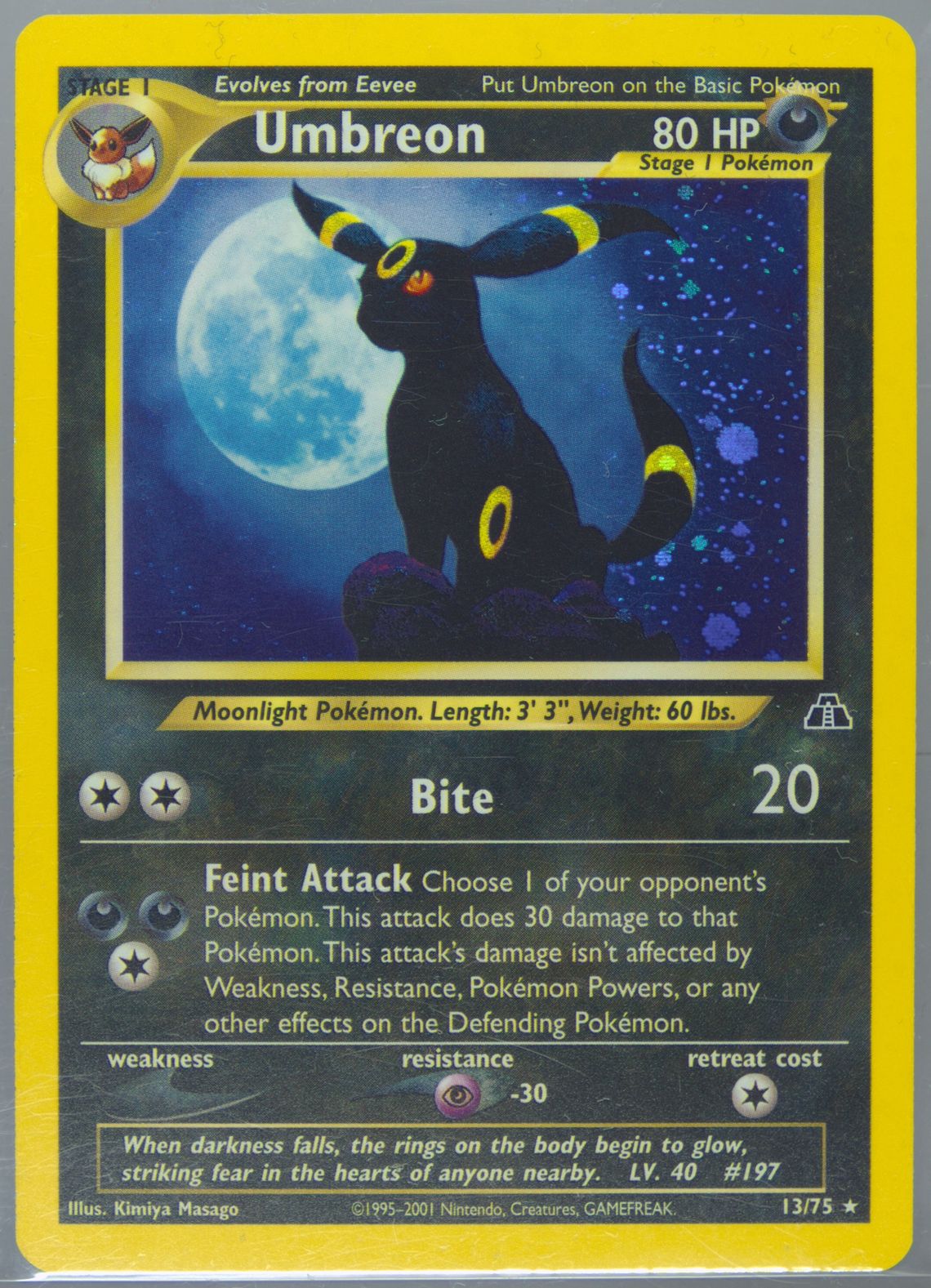
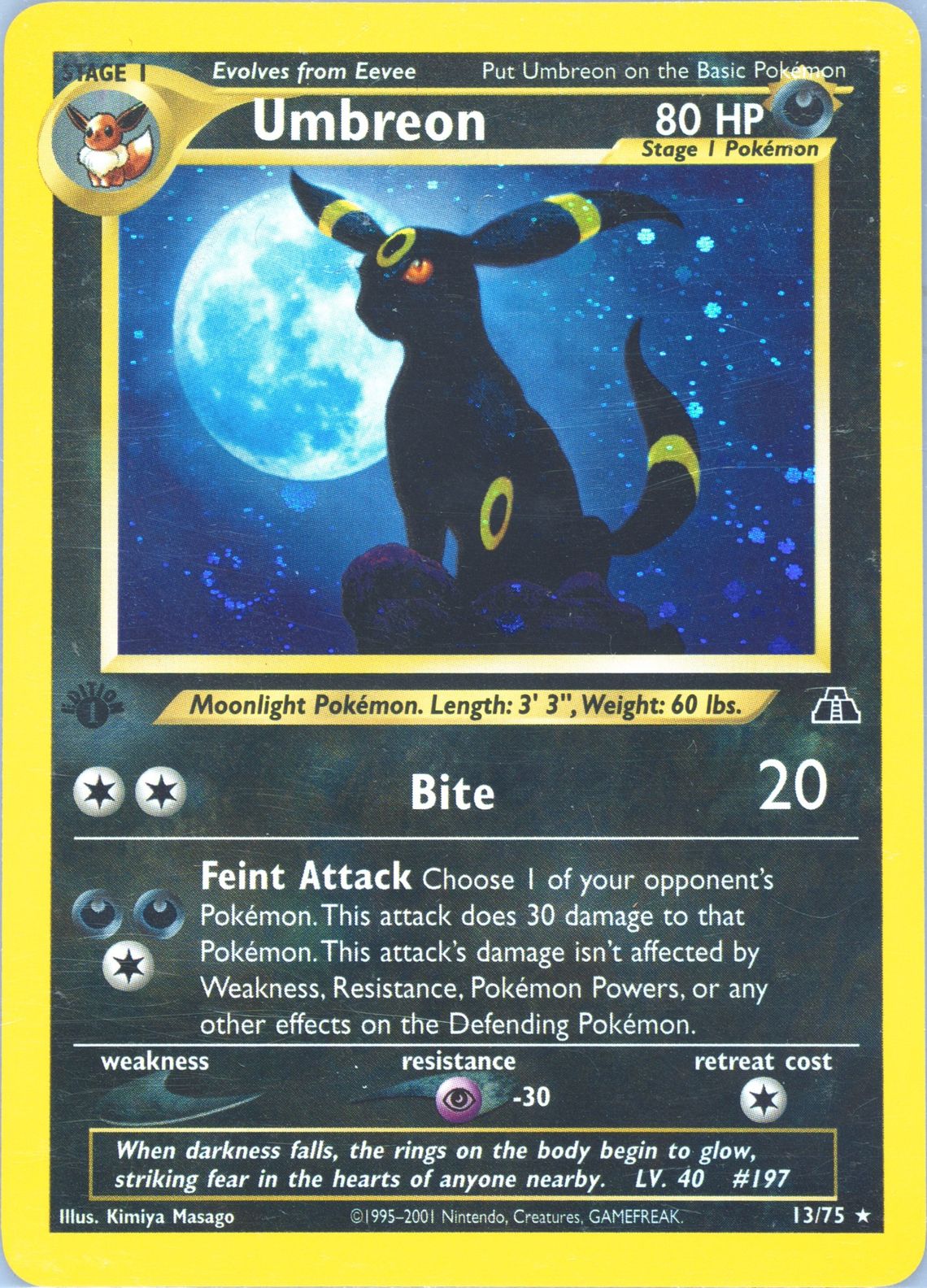
Umbreon Holo (13) from Neo Discovery (unlimited) is the more accessible version of a card that does make this list. The unlimited print run means it is significantly easier to find than its 1st Edition counterpart, but it is still the first English Umbreon holo ever produced. That historical weight keeps it relevant, with clean copies trading in the $50-100 range.
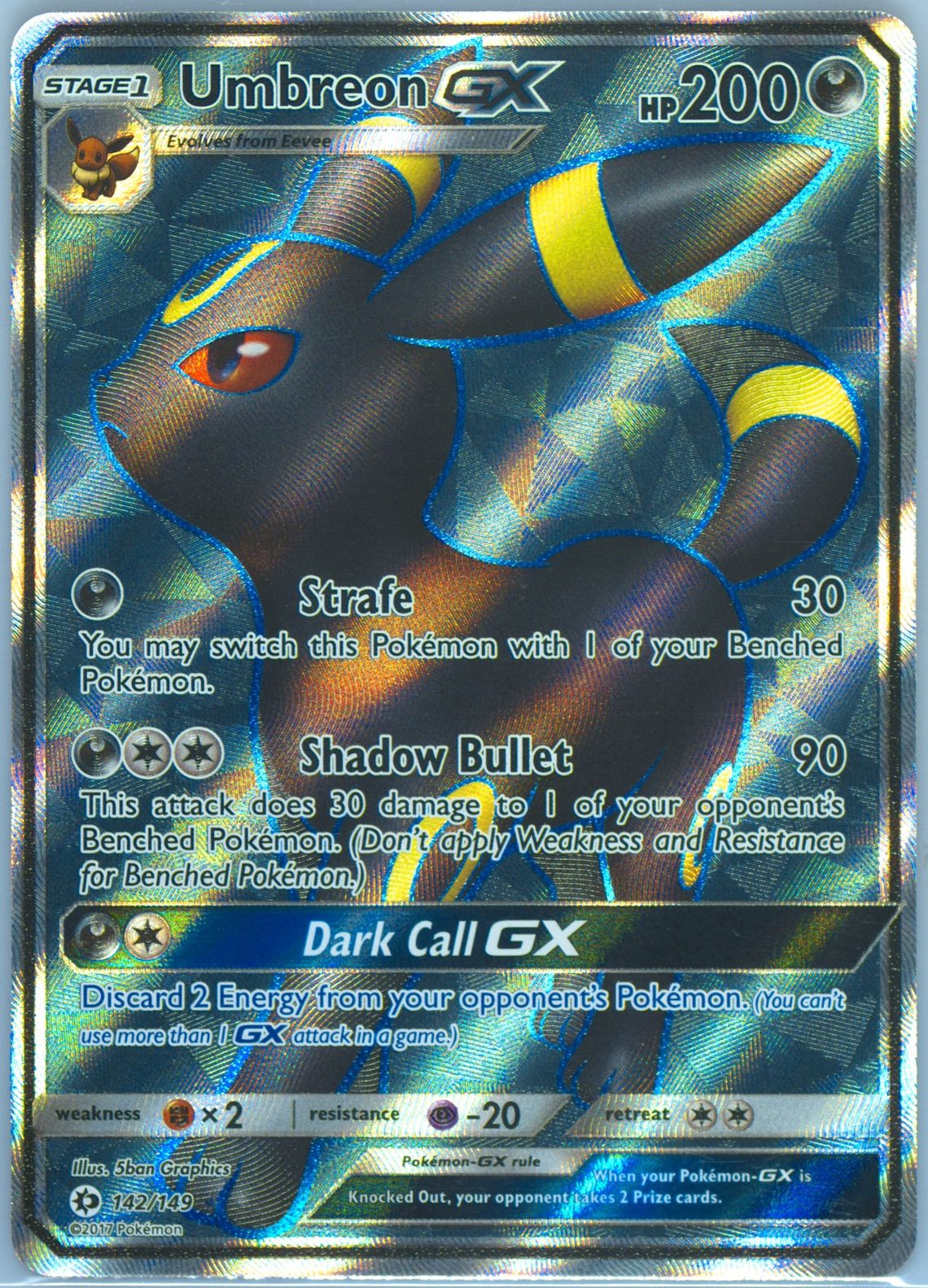
Umbreon GX Full Art (142) from Sun & Moon is one of the cleanest full art treatments Umbreon has received in the modern era. The simple composition and dark color palette give it a timeless look that has aged better than many other GX full arts from the same period. It trades in the $40-80 range.
Umbreon VMAX (TG23) from Brilliant Stars Trainer Gallery features Umbreon alongside its trainer in the character rare style that defined the Trainer Gallery subset. It sits in the $30-60 range and represents solid value for a card with strong artwork.
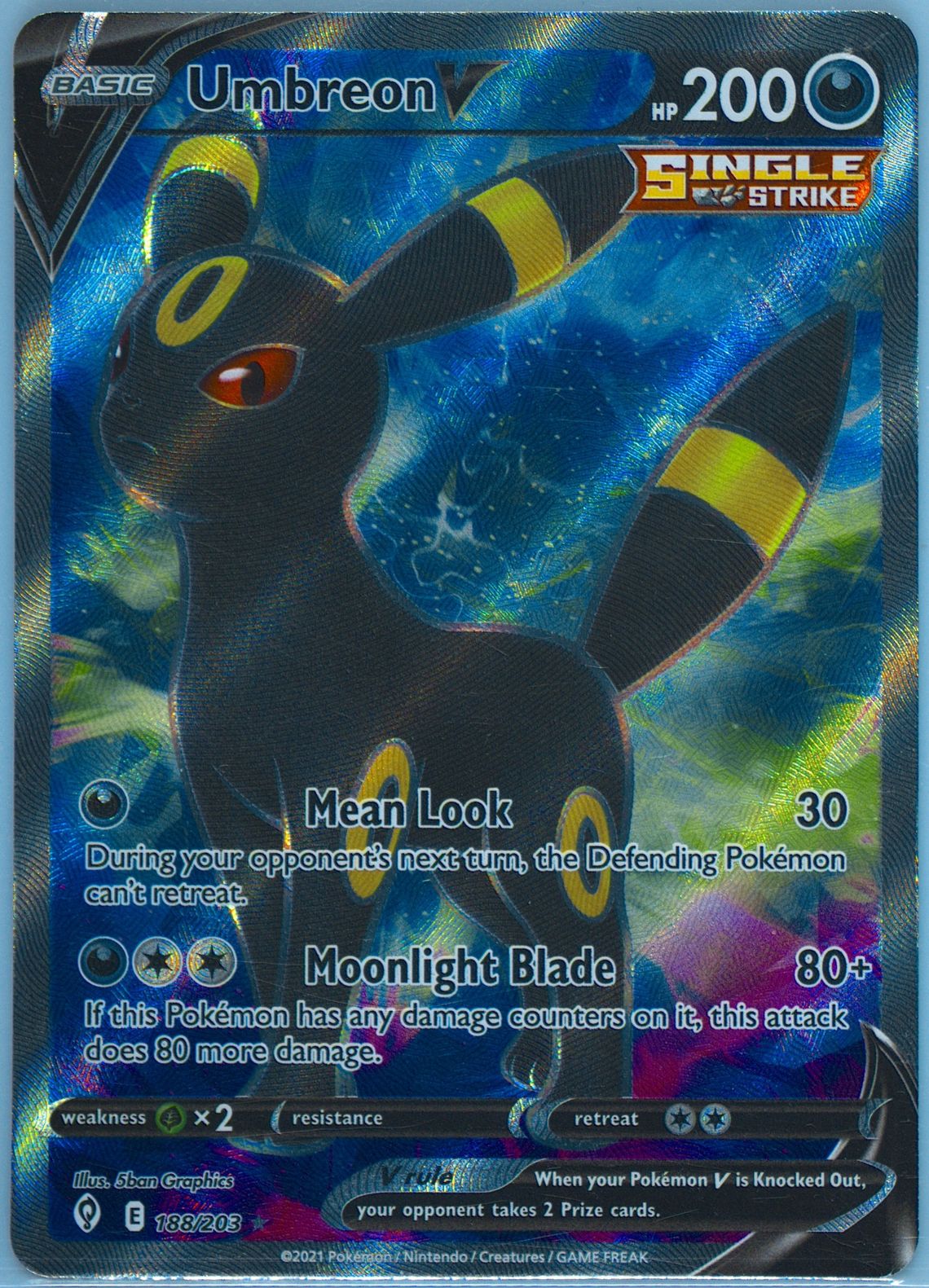
Umbreon V Full Art (188) from Evolving Skies benefits from the massive collector interest in the Evolving Skies set as a whole. It is not the card people chase from that set -- that distinction belongs to a card much higher on this list -- but it still pulls steady demand at $40-80.
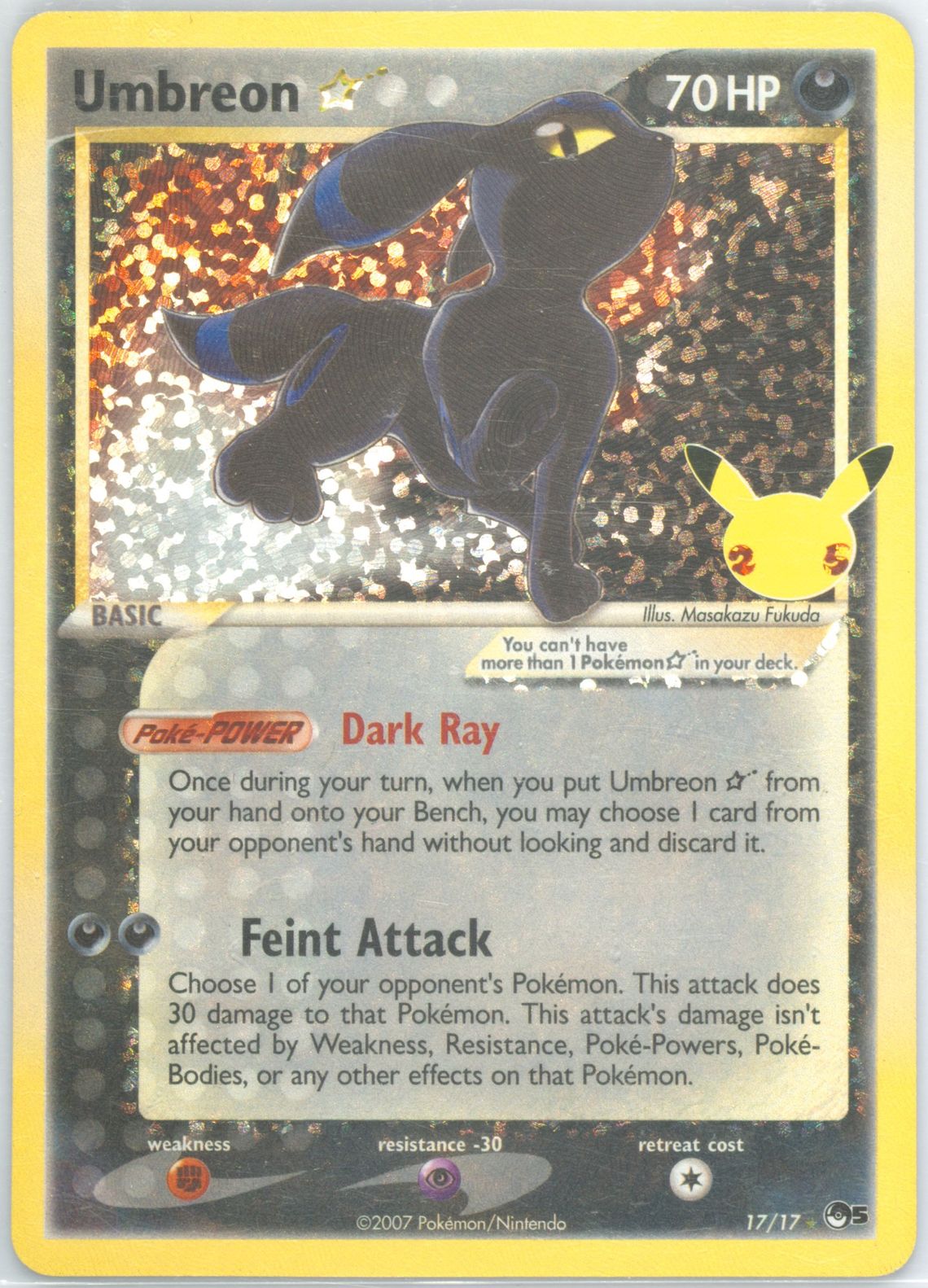
Umbreon Gold Star (17) from Celebrations Classic Collection is a reprint of the single most expensive Umbreon card in existence. At $30-50, it gives collectors access to the Gold Star artwork without the four-figure commitment of the original. It is one of the better value propositions in the entire Celebrations set.

Now, on to the main event.
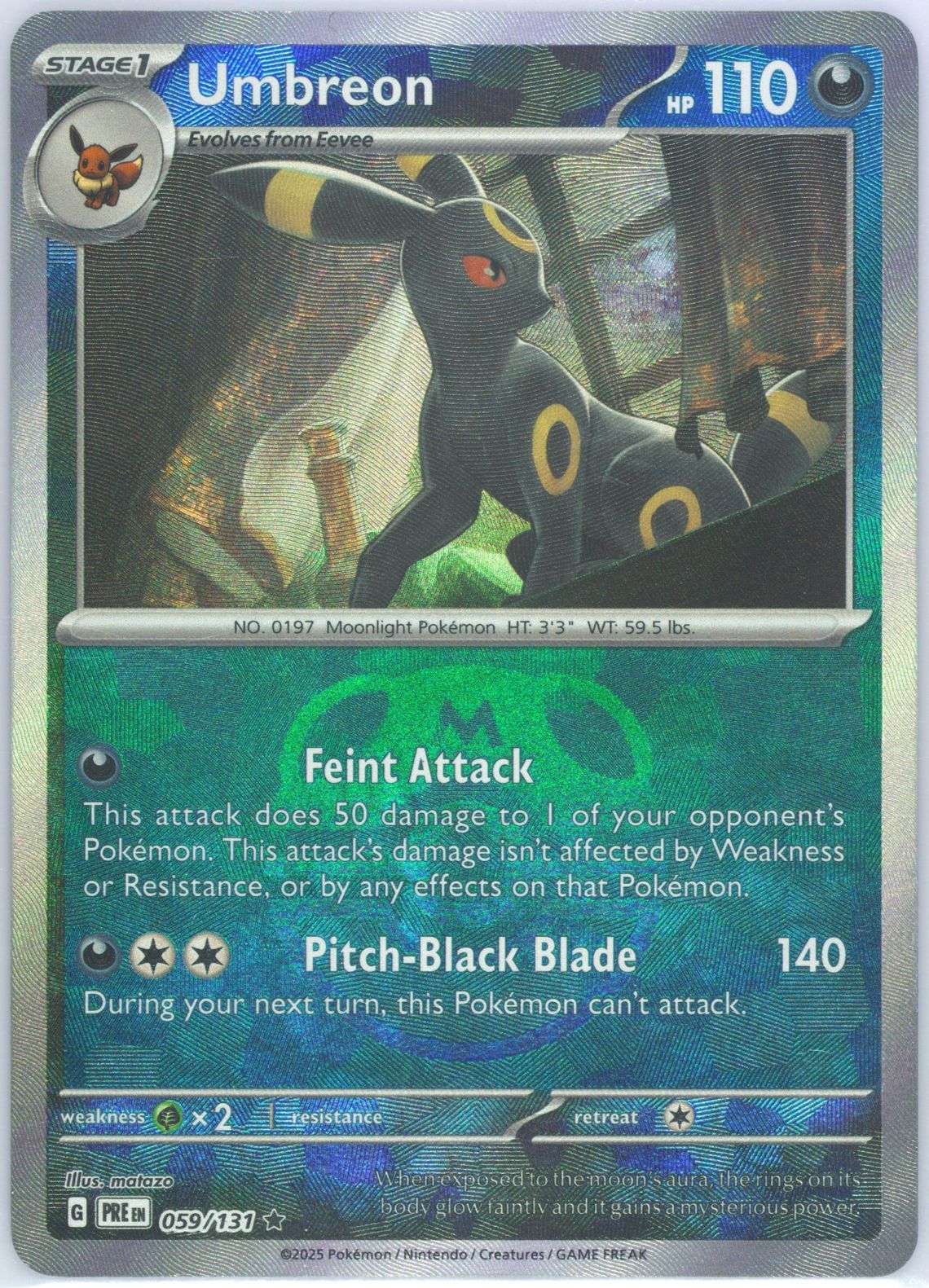
#10 -- Umbreon Master Ball Reverse Holo (Prismatic Evolutions)
Master Ball parallel cards from Prismatic Evolutions appear at a rate of roughly one per twenty packs, which makes any individual Master Ball pull uncommon on its own. But the Umbreon Master Ball holo operates in a different tier of demand than almost every other parallel in the set. Collectors who pull this card know exactly what they have, and the market reflects it.
The card itself is a standard Umbreon from the set, but the Master Ball foil pattern across the holo surface gives it a distinctive visual treatment that photographs well and stands out in a binder page. It currently trades in the $50-80 range, which might sound modest compared to the cards higher on this list, but it is worth remembering that this is a reverse holo variant commanding those prices. That tells you everything about where Umbreon sits in the collector hierarchy.
#9 -- Umbreon YU Nagaba Promo
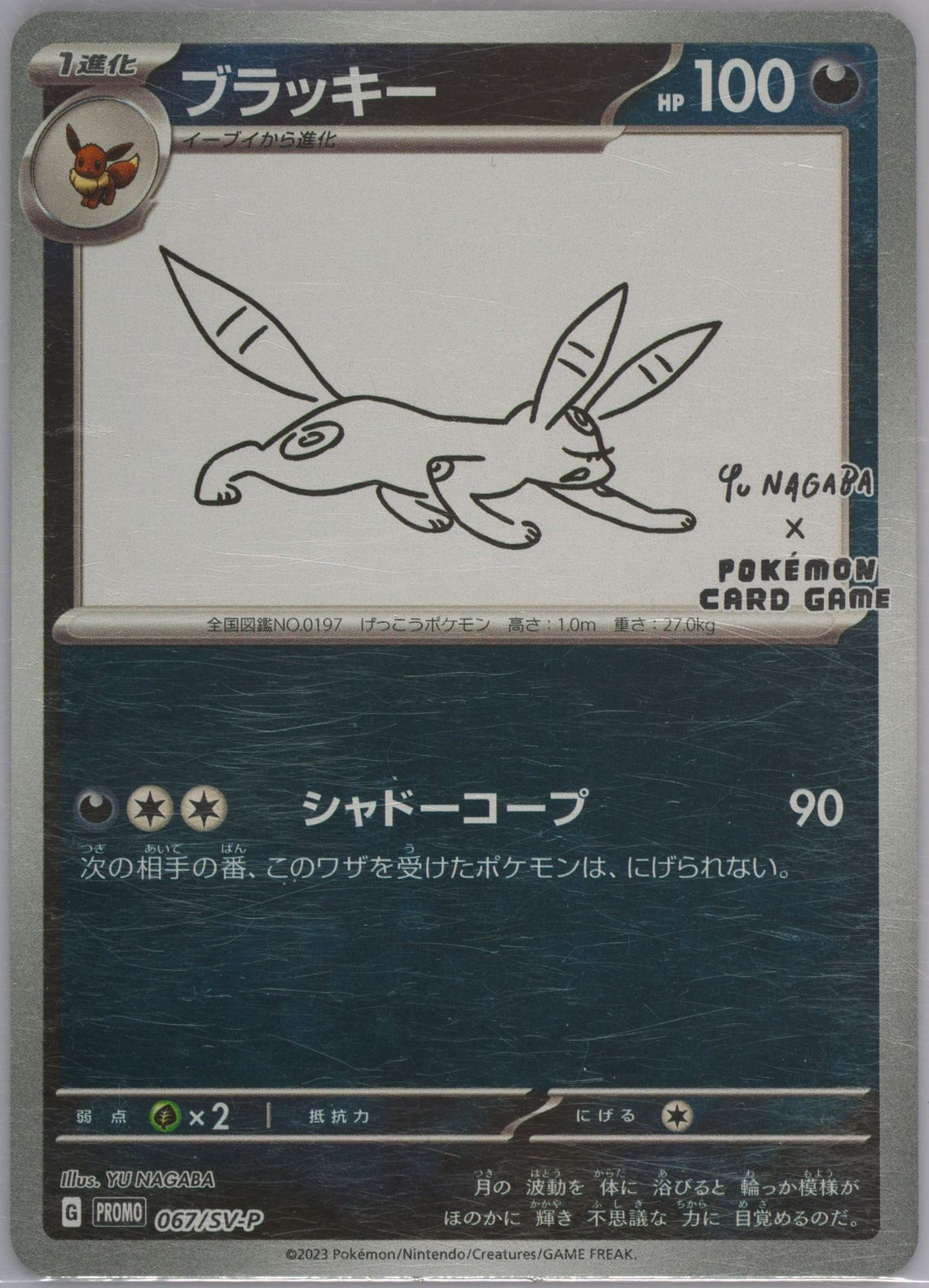
Yu Nagaba's minimalist line-art style has become one of the most recognizable aesthetics in the Pokemon TCG community. His promotional cards consistently command premiums over standard releases, and his Umbreon promo is no exception.
This Japanese-exclusive card features Nagaba's signature approach -- clean black lines on a stark background, with Umbreon rendered in an almost sketch-like style that feels completely different from every other card on this list. It is the kind of card that collectors display specifically because it does not look like anything else in their collection. It trades in the $100-200 range and remains one of the few Japanese promos that generates consistent demand from international buyers who are otherwise focused entirely on English-language product.
#8 -- Umbreon GX Secret (Sun & Moon)
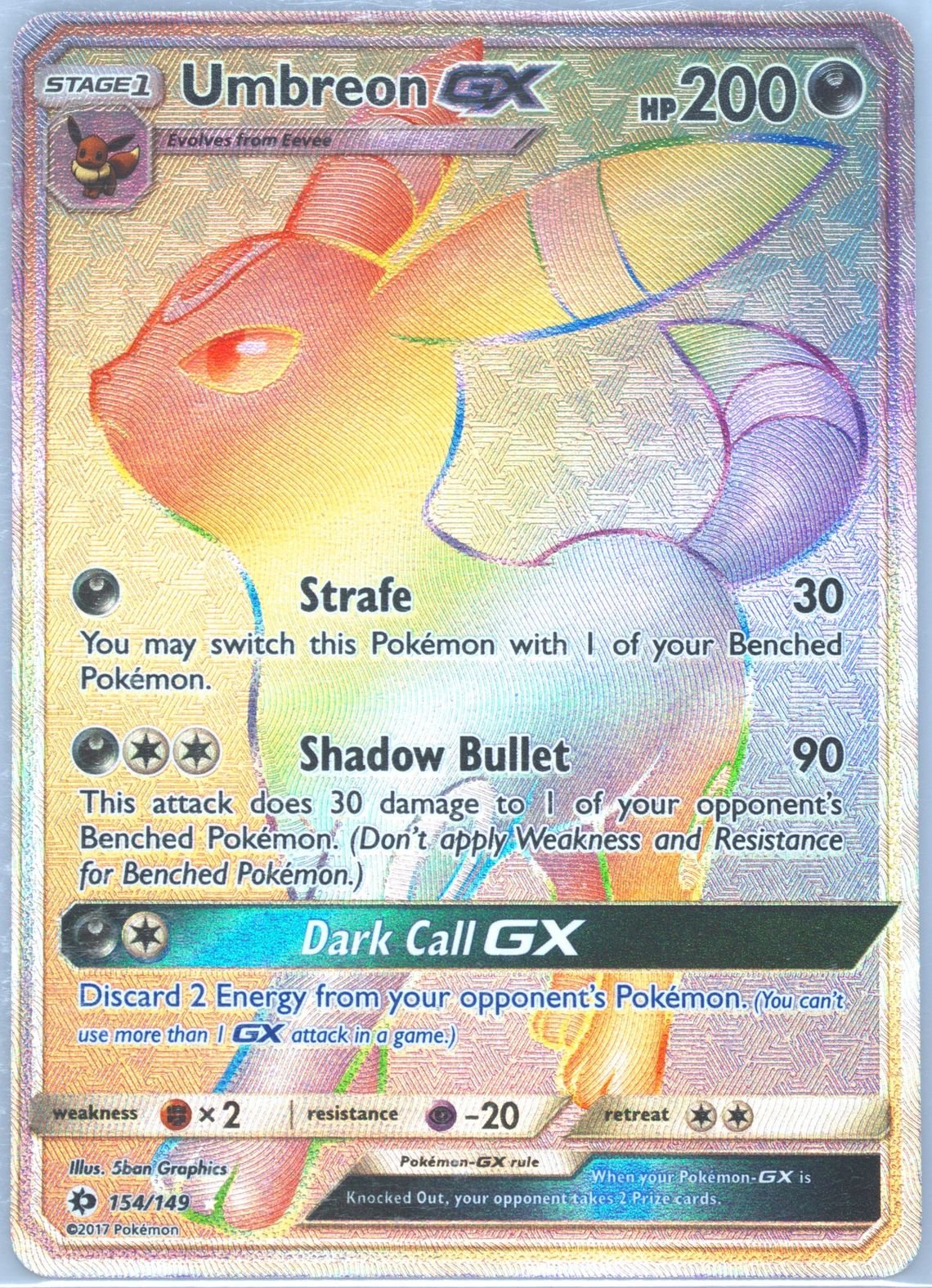
The rainbow hyper rare treatment from the Sun & Moon era was polarizing when it first appeared. Some collectors loved the textured, multicolored finish. Others felt it washed out the Pokemon's actual colors. But whatever your aesthetic preference, the market has spoken clearly on the Umbreon version: it holds value.
At $80-150 depending on condition, the Umbreon GX Secret from Sun & Moon base set sits comfortably in the upper range of modern Umbreon cards. The rainbow texture gives it a tactile quality that photographs well and looks striking in person, and the fact that it is a secret rare from a set with a massive card pool means the pull rate was genuinely low. Seven years after release, it continues to trade at a level that most other Sun & Moon secret rares cannot match.
#7 -- Umbreon GX Shiny (Hidden Fates)
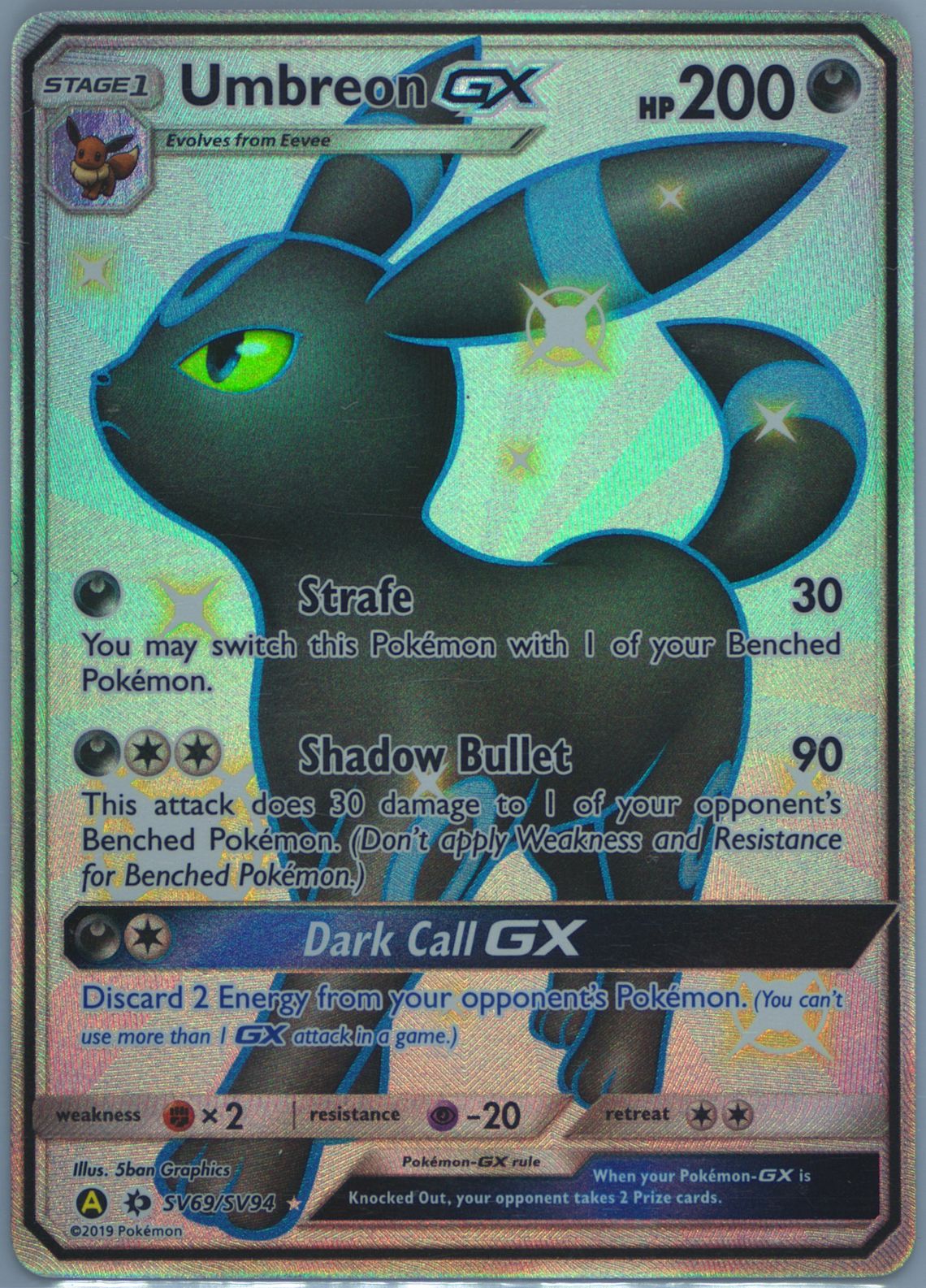
This is the card that proved shiny Umbreon has its own dedicated collector base. The Shiny Vault subset in Hidden Fates replaced Umbreon's signature yellow rings with blue ones, creating a visual that immediately became a fan favorite. There is something about that simple color swap -- black body, blue glow -- that resonates with collectors in a way that transcends the typical "shiny variant" appeal.
Hidden Fates itself was a wildly popular set with limited print runs during its initial release, which drove up prices for virtually everything in the Shiny Vault. But even after reprints increased the supply, the Umbreon GX Shiny has held its position in the $80-150 range. That kind of resilience through reprints is a hallmark of genuine collector demand rather than supply-driven scarcity, and it is a pattern you will see repeated throughout this list.
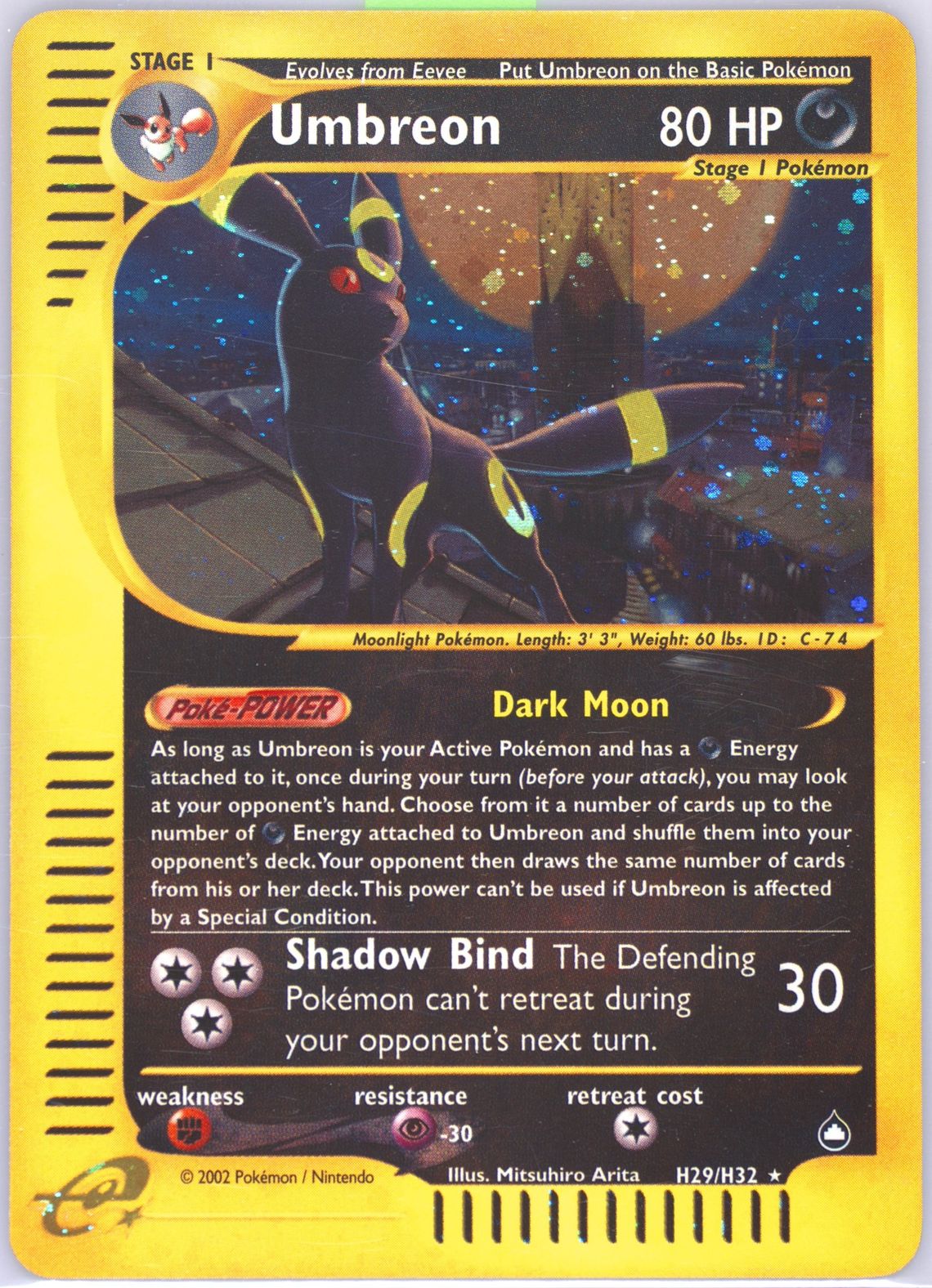
#6 -- Umbreon Holo (Aquapolis)
Now we step into the e-Reader era, and the conversation shifts from modern collector appeal to genuine vintage scarcity.
Aquapolis was part of the e-Reader series released in 2003, during a period when the Pokemon TCG was at a commercial low point in the West. Fewer packs were produced, fewer were opened, and fewer were preserved in collector condition. The result is a set where clean holos are significantly harder to source than most collectors realize. Aquapolis does not carry the same name recognition as Base Set or Neo Discovery among casual fans, but experienced collectors know that its holos are among the scarcest from the entire Wizards of the Coast era.
The Umbreon holo from Aquapolis features a vertical artwork composition that feels distinct from most other Umbreon cards. At $200-400 for ungraded copies in reasonable condition, it is the kind of card that quietly appreciates while flashier modern releases get all the attention.
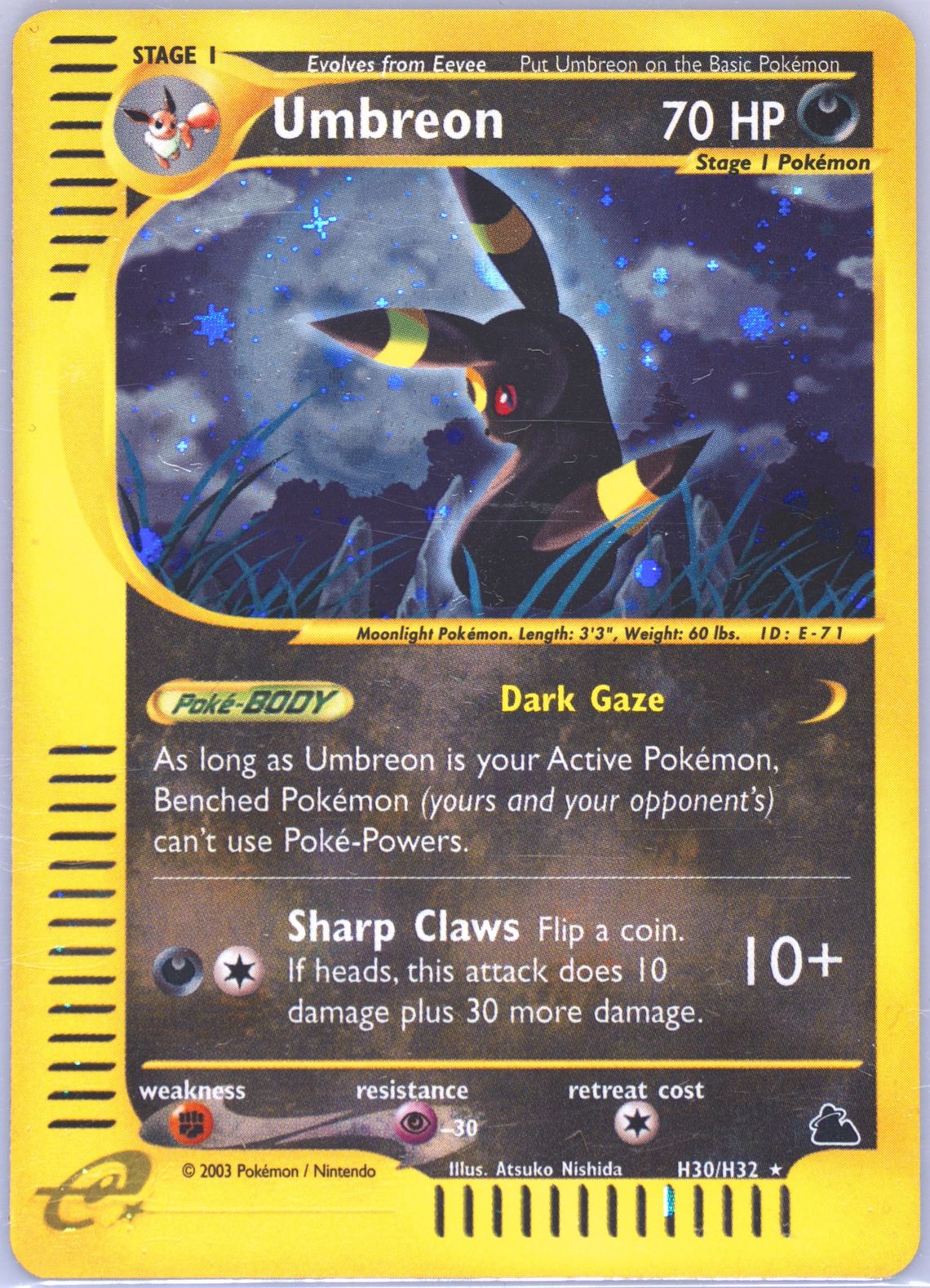
#5 -- Umbreon Holo (Skyridge)
If Aquapolis is the underrated gem of the e-Reader era, Skyridge is the crown jewel. Widely regarded as the rarest English-language set produced during the Wizards of the Coast period, Skyridge had an extremely limited print run that was cut short when Nintendo took over the Pokemon TCG license. The result is a set where even common cards carry premiums, and holos can reach prices that rival some of the most famous cards in the hobby.
The Umbreon holo from Skyridge features an illustration style that is distinctly early-2000s, and clean copies are genuinely difficult to find. Expect to pay $400-800 for an ungraded copy in collector condition, with prices continuing their upward trend as the supply of available copies slowly dwindles. This is a card that most Umbreon collectors know they need but many have never seen in person.
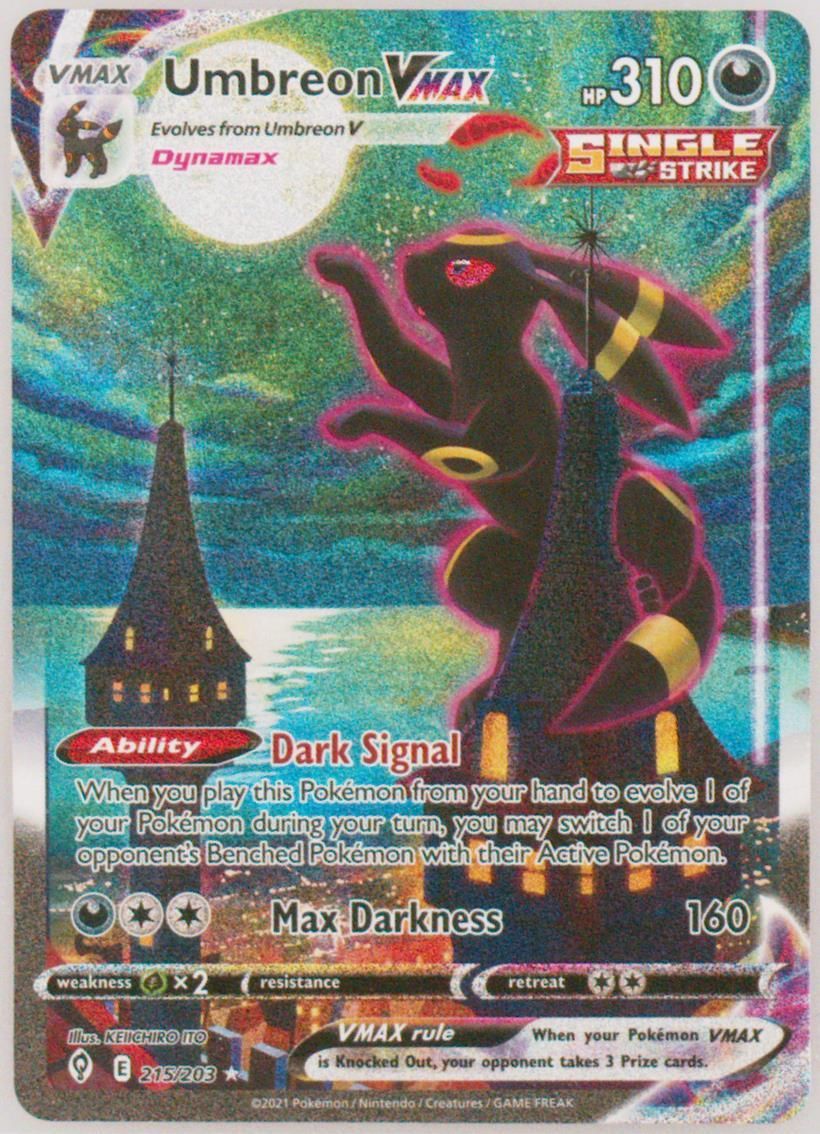
#4 -- Umbreon VMAX Secret Alt Art "Moonbreon" (Evolving Skies)
Moonbreon. If you have spent more than five minutes in the Pokemon TCG collecting community since 2021, you have heard the name. The alternate art Umbreon VMAX from Evolving Skies -- officially card number 215 out of 203 -- is arguably the most iconic modern Pokemon card ever printed.
The artwork tells the story. Umbreon perched on a moonlit rooftop, looking out over a sleeping city, its rings glowing softly against the night sky. The composition is cinematic in a way that most Pokemon cards simply are not. It feels less like a trading card illustration and more like a frame from an animated film, and that quality is what elevated it from "expensive chase card" to "cultural moment within the hobby."
At $300-600 for raw copies, Moonbreon has held its value through every market cycle since Evolving Skies released. It dipped when the set was reprinted aggressively in 2022 and 2023, then recovered. It dipped again when Prismatic Evolutions captured collector attention, then recovered again. That kind of price stability through multiple market shifts is exceedingly rare for a modern card, and it speaks to the depth of demand. Moonbreon is not expensive because of limited supply. Evolving Skies was printed into the ground. It is expensive because the demand is effectively bottomless.
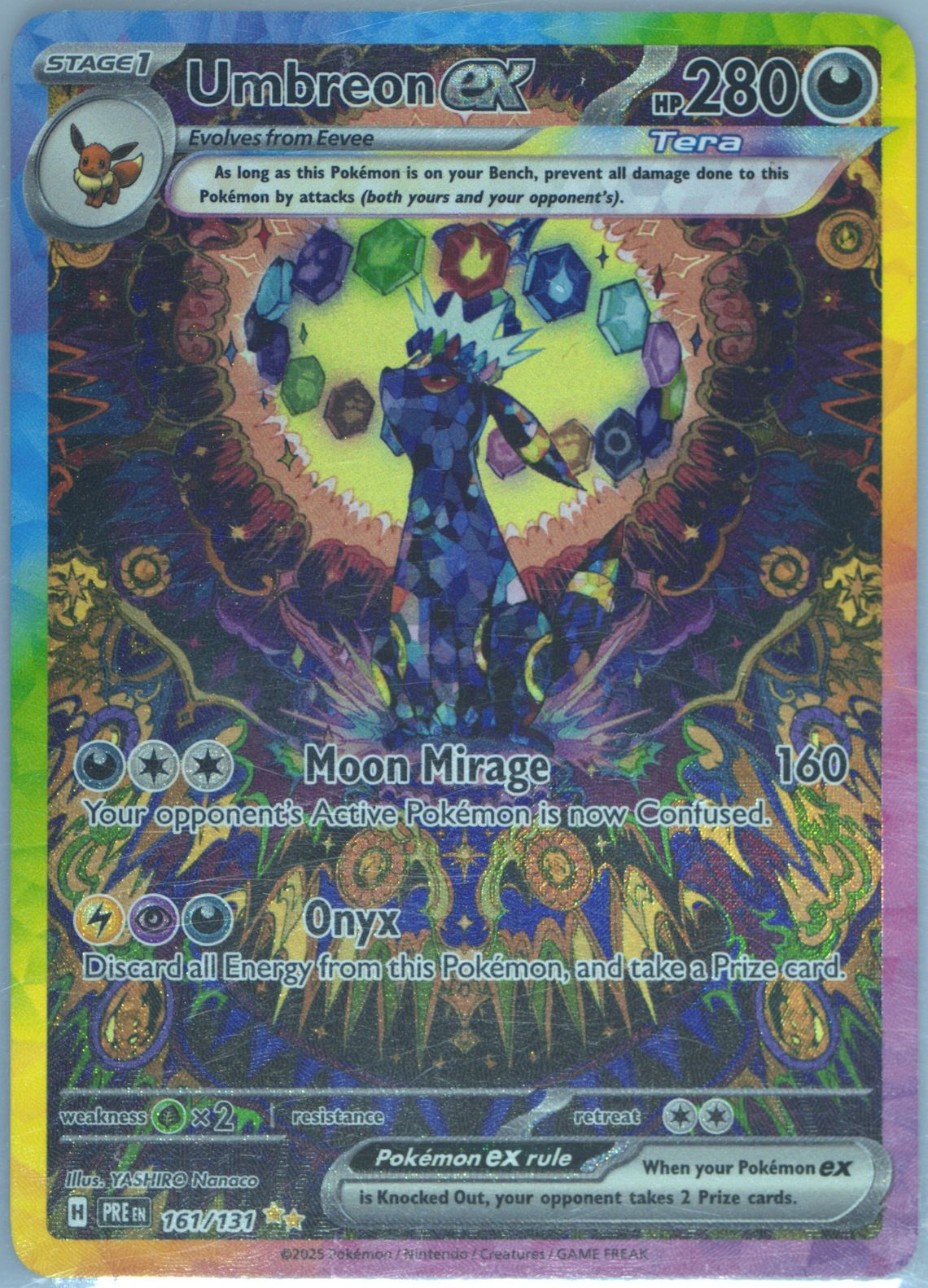
#3 -- Umbreon EX SIR "Sunbreon" (Prismatic Evolutions)
If Moonbreon defined the Evolving Skies era, Sunbreon is its spiritual successor for the Scarlet and Violet generation. The Special Illustration Rare Umbreon EX from Prismatic Evolutions earned its nickname by depicting Umbreon bathed in warm sunlight -- a deliberate visual contrast to its moonlit predecessor. Where Moonbreon is cool and contemplative, Sunbreon is bright and vibrant, and the juxtaposition between the two cards has become a defining narrative in modern Pokemon collecting.
Sunbreon currently trades around $1,000 for raw copies, making it one of the most expensive modern Pokemon cards ever printed at its current point in the release cycle. The question every collector is asking is whether it can sustain that price as Prismatic Evolutions supply increases. Early indications are encouraging. The set has been reprinted multiple times already, and while prices on most other cards from the set have declined, Sunbreon has shown the same resistance to reprints that Moonbreon demonstrated before it. The demand is real, and it is driven by the same fundamental dynamic that powers every Umbreon card on this list: collectors want Umbreon, period.
#2 -- Umbreon Holo 1st Edition (Neo Discovery)
We leave the modern era entirely now and step back to the year 2000, when the second generation of Pokemon was still new and the idea that a trading card could be worth thousands of dollars was laughable to most people.
The Neo Discovery 1st Edition Umbreon holo is the first English-language Umbreon holo ever printed, and the 1st Edition stamp makes it the most collectible version of that card. Neo Discovery's 1st Edition print run was modest compared to the unlimited version, which means genuine 1st Edition copies are scarce in any condition and genuinely rare in high grade. This is a card where the difference between "lightly played" and "near mint" can mean hundreds of dollars, and where a PSA 10 is the kind of thing that shows up at auction once or twice a year.
Current market value for raw copies in collector condition sits in the $800-1,500 range, with graded copies commanding significantly more depending on the grade. It is the kind of card that anchors an entire vintage collection -- the piece you build the rest of the binder around. If Moonbreon is the face of modern Umbreon collecting, the Neo Discovery 1st Edition holo is the foundation that everything else was built on.
#1 -- Umbreon Gold Star (POP Series 5)
This is the card. The one that sits at the absolute peak of the Umbreon market, and one of the most coveted English-language Pokemon cards in existence.
To understand why the Umbreon Gold Star commands the prices it does, you need to understand how POP Series 5 was distributed. POP stands for Pokemon Organized Play, and POP Series booster packs were not sold in stores. They were distributed exclusively through the Pokemon league program -- handed out at local game shops and organized play events as participation rewards. The total volume of POP Series 5 product that entered circulation was a tiny fraction of what a standard retail set would produce. Within that already-limited pool, Gold Star cards were the rarest possible pull, appearing at a rate that made them exceedingly difficult to obtain even for active league participants.
The result is a card with a supply so constrained that the market never has enough to meet demand. Clean ungraded copies trade above $2,000, and the price ceiling for high-grade examples continues to rise. PSA 10 copies have sold at auction for figures that place this card among the most expensive non-vintage Pokemon cards in the hobby. The artwork itself -- Umbreon depicted in its shiny color variant with the Gold Star designation -- carries an understated elegance that has aged beautifully over the twenty years since its release.
If Umbreon is the king of the Pokemon TCG secondary market, the POP Series 5 Gold Star is the crown. It represents the convergence of everything that makes Umbreon cards valuable: extreme scarcity, iconic artwork, an unbreakable collector base, and a legacy that spans the entire history of the game.

The Bottom Line
Umbreon's position at the top of the Pokemon TCG market is not a fluke, and it is not going away. What you see in this countdown is a Pokemon that has maintained premium status across every era of the game -- from the Wizards of the Coast days through the EX and GX periods and into the current Scarlet and Violet block. No other Pokemon can make that claim with the same consistency.
The pattern is clear. When The Pokemon Company prints an Umbreon in a premium rarity slot, that card becomes the most expensive in its set. It happened with Neo Discovery. It happened with the e-Reader sets. It happened with Hidden Fates, Evolving Skies, and Prismatic Evolutions. It will almost certainly happen again with whatever set comes next. Collectors have internalized this pattern, which creates a self-reinforcing cycle of demand that keeps prices elevated even when supply is abundant.
For collectors, the practical takeaway is straightforward. If you are building a collection around a single Pokemon, Umbreon gives you the deepest catalog of valuable cards at every price point. The honorable mentions on this list start at $30. The number one card trades above $2,000. And at every level in between, there is an Umbreon card with strong artwork, genuine collector demand, and a track record of holding value. That kind of range does not exist for any other Pokemon in the TCG.
Twenty-six years of proof is hard to argue with.
Prices referenced are approximate market values as of March 2026 and will fluctuate. Check current listings on Misprint for the latest prices.