The Most Expensive Magic: The Gathering Cards Ever Sold
A $3 million flower, a rapper, and nine cards that broke the game.
By Misprint Editorial | Published Jan 28, 2026 | 6 min read
A $3 million flower, a rapper, and nine cards that broke the game.
Magic: The Gathering turned 33 this year, and the cards printed in its first few months have become some of the most valuable pieces of cardboard on the planet. A single card recently changed hands for $3 million. A pop star paid roughly $2 million for another. And a handful of cards are so rare that no price exists at all, because only one copy was ever made and it has never been for sale.
This is the field guide to the top of that market: which cards command the money, what they have actually sold for, and (the part that matters if you own any of them) why condition and grading make the difference between a nice card and a life-changing one.
What Is the Most Expensive Magic Card of All Time?
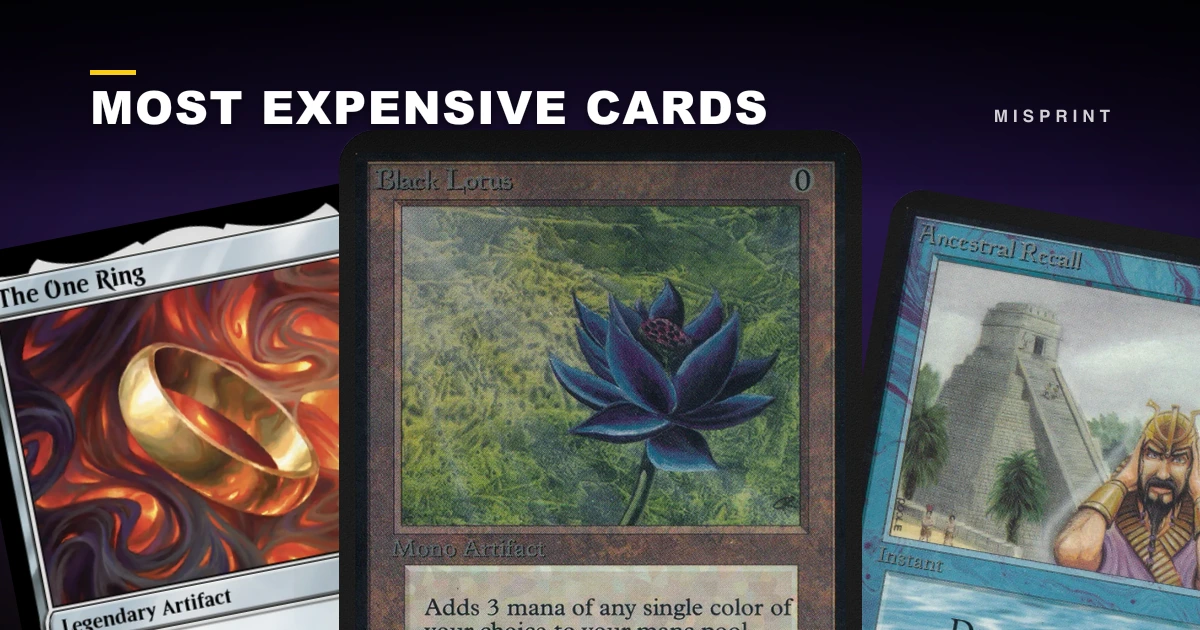
As of 2026, the record belongs to an Alpha Black Lotus graded CGC Pristine 10, which sold in a private sale for $3 million. The deal was brokered by Adam Cai of Pristine Collectibles to an undisclosed buyer, and the card is the only example to earn CGC's Pristine 10 grade in the company's population report. That single sale beat the previous record holder among CGC-certified collectibles, a 1952 Topps Mickey Mantle, and it pushed Magic's own prior record, the Post Malone One Ring, into second place.
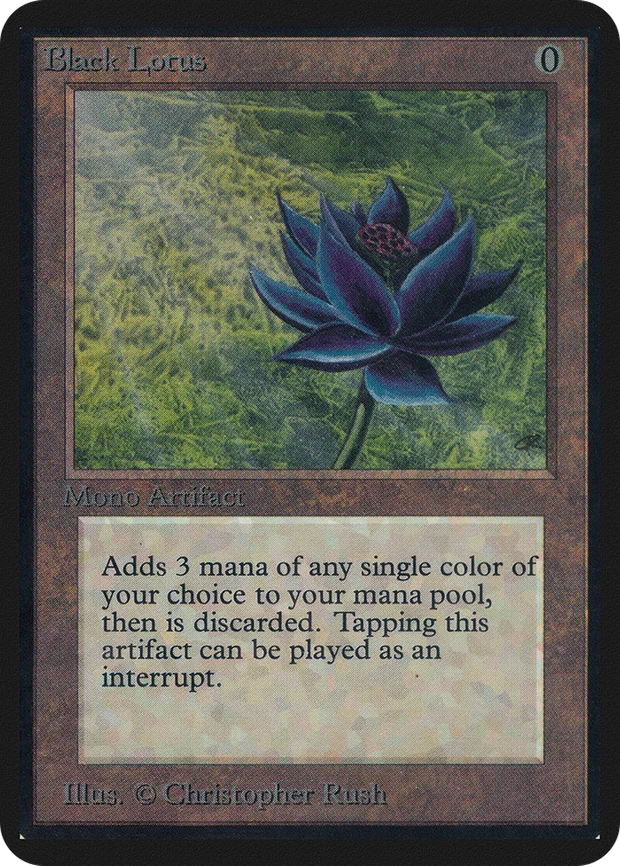
Black Lotus is the single most famous card in the game. It produces three mana of any one color for no cost, an effect so powerful it has been banned or restricted in essentially every competitive format for decades. It was printed only in the game's first three sets (Alpha, Beta, and Unlimited) in 1993 and never again.
Alpha is the crown. It was the very first print run, the smallest of the three, and Alpha cards are physically identifiable by their distinctly rounded corners (rounder than Beta or any later printing). Combine the tiny surviving population with 30-plus years of handling, and a genuinely gem-mint Alpha copy is close to a unicorn. Raw Alpha Black Lotus regularly trades in the tens of thousands of dollars. High-grade graded copies climb into six figures, and now, at the very top, seven.
The One Ring: The $2 Million Pop-Star Card
Before the Black Lotus sale, the public record belonged to a card from 2023: the serialized 001/001 The One Ring, the single one-of-one copy printed in The Lord of the Rings: Tales of Middle-earth set. A retail worker in Toronto opened it, and after a bidding frenzy it sold to musician Post Malone, a well-known Magic player, for a figure reported around $2 million (Canadian coverage put the number as high as $2.64 million CAD).
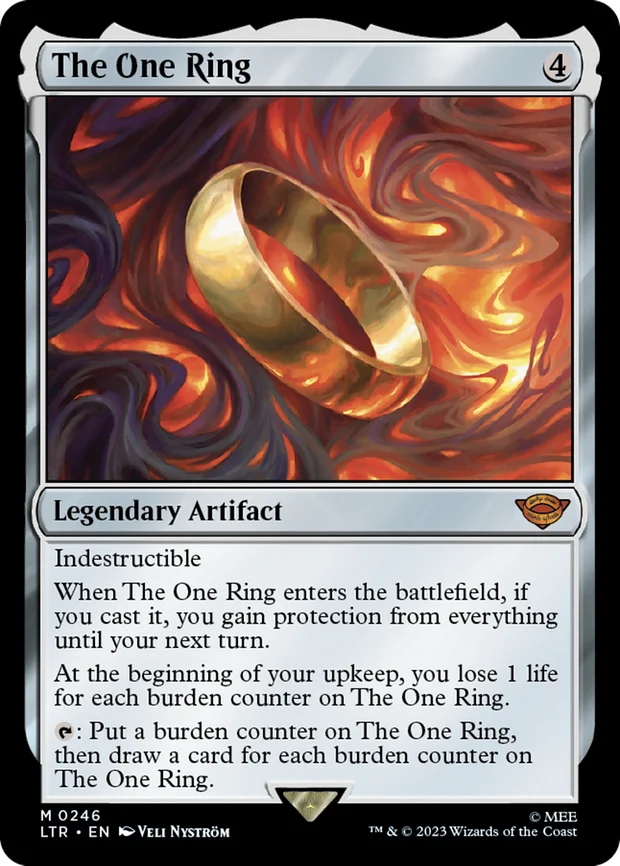
What makes the One Ring interesting is that it is a modern card, not a vintage one. Its value comes entirely from being a deliberate one-of-one, serialized and hunted by the entire community at release. That is a different kind of scarcity than Black Lotus. Alpha is rare because of how little was printed in 1993 and how few survived. The One Ring is rare because Wizards printed exactly one on purpose. Both stories now end in seven figures.
The Power Nine
If you ask a longtime player what the "expensive" Magic cards are, they will name the Power Nine before anything else. These are nine cards from Alpha, Beta, and Unlimited that were so absurdly strong they defined (and warped) the earliest years of the game:
- Black Lotus
- Ancestral Recall (draw three cards for one blue mana)
- Time Walk (take an extra turn for almost nothing)
- Timetwister
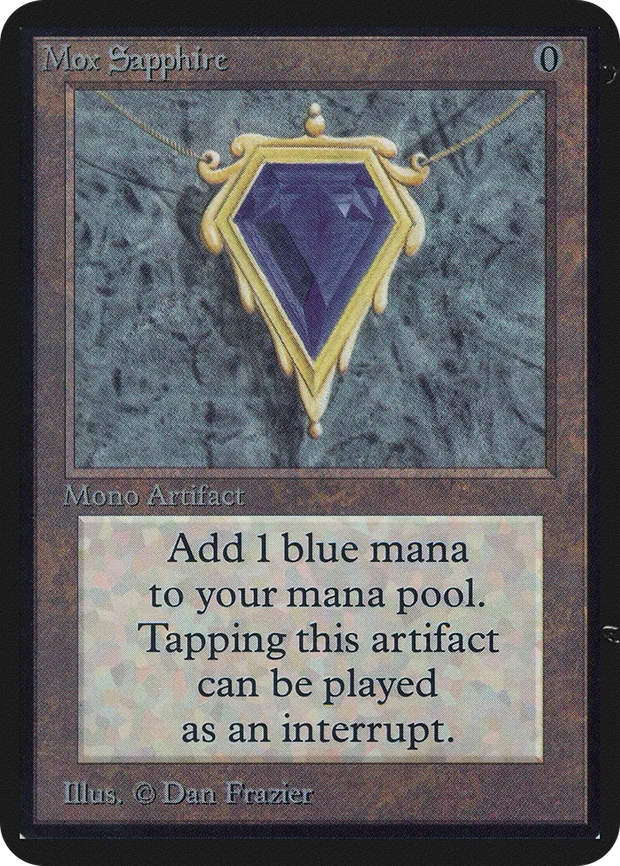
- The five Moxen: Mox Pearl, Mox Sapphire, Mox Jet, Mox Ruby, and Mox Emerald (each a zero-cost artifact that makes a mana)
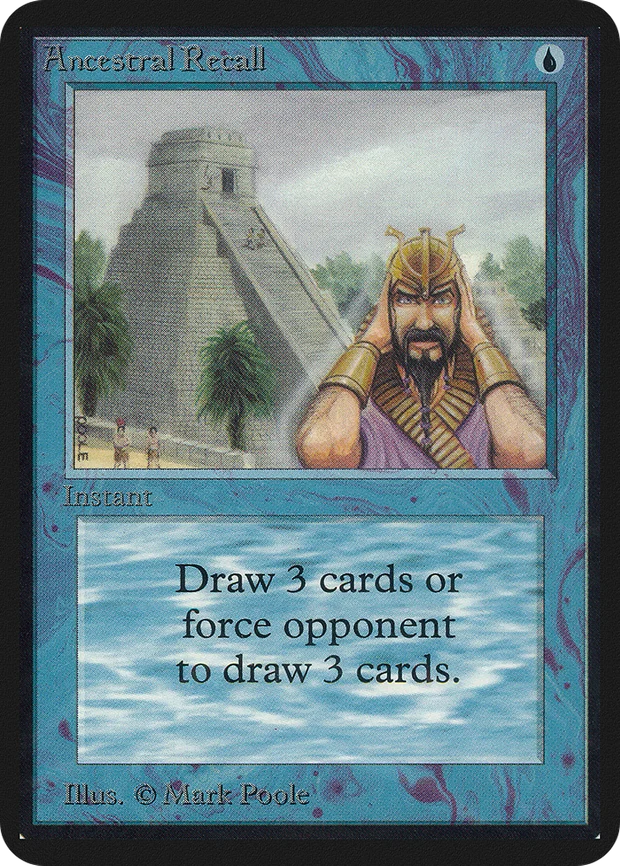
Every one of these is worth serious money, and the Alpha printings sit at the top of each card's price ladder. Raw Alpha copies of the non-Lotus Power Nine generally trade from the low four figures into the five figures, and graded high-grade examples run well past that. The Moxen are especially collectible as a set of five, and a matched, similarly graded run of Alpha Moxen is a genuine grail for vintage collectors.
The Reserved List and Why Dual Lands Cost So Much
Outside the Power Nine, the next tier of the vintage market is dominated by the original dual lands (cards like Underground Sea, Volcanic Island, and Tropical Island) and other early staples. The reason they hold so much value comes down to two words: Reserved List.
The Reserved List is a promise Wizards of the Coast made in 1996 that a specific set of older cards would never be reprinted in a functionally identical form. That guarantee put a permanent ceiling on supply. Demand keeps rising as new players enter formats like Vintage, Legacy, and Commander, but the supply of an Underground Sea can only ever shrink as cards are damaged or lost. That is why a piece of land with no flashy art can sell for hundreds or thousands of dollars in high grade, and why Reserved List cards are treated as one of the more stable stores of value in the hobby.
The Cards That Are Truly Priceless
A few Magic cards sit beyond any of this, because they are genuinely one of a kind and have never been sold:
- The 1996 World Champion card, awarded to a single tournament winner. Only one exists, and its printing plates were reportedly destroyed.
- The Shichifukujin Dragon, a unique card created to celebrate the opening of the DCI Tournament Center in Tokyo. It was illustrated by Christopher Rush, the same artist who painted Black Lotus, and it lives in institutional hands in Japan rather than a collection.
Guinness World Records has recognized the title of rarest trading card as effectively split between these two. Because neither has come to open-market auction, any dollar figure attached to them is pure speculation. They are the cards collectors talk about precisely because you cannot buy them.
What Actually Drives the Value
Read enough of these stories and the pattern is clear. Four things push a Magic card to the top of the market:
- Age and print run. The 1993 sets were tiny by modern standards, and Alpha smallest of all. Less printed means less surviving.
- Iconic status. Black Lotus and the Power Nine are famous beyond the game itself. Fame creates demand from people who will never cast the card.
- Deliberate scarcity. Serialized one-of-ones like the One Ring, and the Reserved List's no-reprint promise, engineer scarcity on purpose.
- Condition and grading. This is the one collectors control, and it is enormous.
That last point deserves its own emphasis. For 30-plus-year-old cards, the jump from a played copy to a gem-mint graded one is not a small premium, it is a multiple. The same Alpha card can be worth a few thousand dollars raw and mid-grade, and many times that in a high grade from PSA, CGC, or BGS. The record Black Lotus was not just any Alpha copy. It was the Pristine 10. Grade is a huge part of why one sold for $3 million while others sell for a fraction of that.
How to Tell What Your Magic Cards Are Worth
If you have old Magic cards in a shoebox somewhere, here is the practical version:
- Identify the set first. Alpha (rounded corners, 1993), Beta (squarer corners, 1993), and Unlimited (white border) look similar but sit at very different price points. Reserved List status matters too.
- Be honest about condition. Centering, corners, edges, and surface all matter. Vintage cards are rarely as clean as they look at a glance.
- Check recent graded sales, not asking prices. The gap between what people list cards for and what they actually sell for is wide in this market.
- Consider grading for high-end cards only. Grading fees make sense when the graded premium clearly exceeds the cost, which is generally the case for genuine vintage rares and much less so for bulk.
At Misprint, tracking graded-market data is the core of what we do, and the Magic vintage market is one of the clearest examples anywhere of how much a grade can move a price. Whether a card is worth $30 or $3 million, the same principle holds: know exactly what you have, and know exactly what condition it is in.
Card images are used for editorial and identification purposes. Magic: The Gathering, all card names, and card images are © Wizards of the Coast LLC. Card images sourced via Scryfall.