Are Magic: The Gathering Cards a Good Investment?
The honest answer: some of it, if you buy the right things for the right reasons.
By Misprint Editorial | Published Feb 5, 2026 | 3 min read
The honest answer: some of it, if you buy the right things for the right reasons.
"Are Magic cards a good investment?" is one of the most common questions collectors ask, and the honest answer is: some of them, some of the time, if you buy the right things for the right reasons. Magic has produced genuine long-term winners, but it has also produced plenty of cards and sealed products that quietly lost money. The difference is almost entirely about which part of the market you are buying. Here is how to think about it in 2026.
What Actually Holds and Gains Value
Reserved List and Vintage Cards
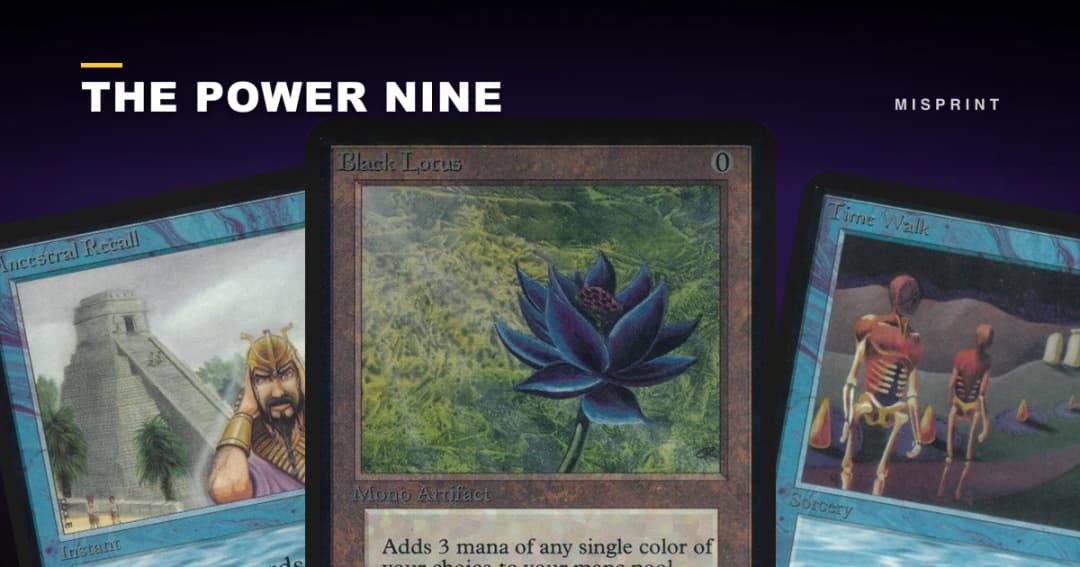
The safest long-term holds in Magic are high-grade Reserved List cards. The Reserved List is Wizards of the Coast's standing promise never to reprint a specific group of older cards in a functionally identical, tournament-legal form. That promise puts a permanent ceiling on supply, and it is why cards like the Power Nine and the original dual lands have held up better than almost any other trading-card asset over time.
High-grade Power Nine and other Reserved List staples have largely stabilized after the pandemic-era spike and, in many cases, are approaching or breaking previous highs. The caveat: mid-grade copies of many of these cards corrected from their peaks and have not fully recovered, so condition and grade matter enormously.
Iconic, Format-Defining Staples
Beyond the Reserved List, cards that see heavy play in eternal formats like Commander, Legacy, and the growing Premodern scene tend to hold value because there is constant real demand from players, not just speculators. The rise of Premodern in particular has quietly lifted a whole era of late-1990s and early-2000s cards that people are actually building decks with.
What Usually Loses Value
Standard-Legal Cards
Cards that are only relevant in Standard are generally poor long-term investments, because Standard rotates. When a set rotates out of the format, demand for most of its cards falls off a cliff. A chase card that is $40 during its Standard life can be a few dollars a couple of years later. Buy those to play with, not to hold.
Most Sealed Product
Sealed product is more complicated than it used to be. In 2026 the value in Magic concentrates in singles rather than sealed. Collector Boosters and Commander precons have seen repeated price increases, and the market has been volatile: the wave of new-investor money that flooded in around certain crossover sets faded quickly, and several Collector Box lines corrected hard from their highs. Some sealed appreciates, but the entry cost is higher and the risk of underperformance is real. Sealed makes the most sense if you also enjoy the prospect of opening it.
The Real Risks
Even the good parts of the market come with risks that stock-market investors do not face:
- Liquidity. Magic cards are not a liquid asset. Turning a valuable card back into cash means finding a buyer, which takes time and effort, especially for lower-value cards.
- Release fatigue. The sheer pace of new products in 2026 has caused real community burnout. When it is hard for players to keep up, speculative demand for new product cools.
- Storage and authentication. Cards can be damaged, lost, or faked. Protecting a valuable collection costs time and money, and authentication matters more as values rise.
- Volatility. Crossover-set hype has repeatedly driven prices up fast and then given much of it back.
So, Should You Invest?
A reasonable framework:
- If you want the steadiest bet: high-grade Reserved List and vintage cards have the best track record, but they require real capital and patience.
- If you play the game: buy cards you actually want to use in eternal formats. If they appreciate, that is a bonus on top of the enjoyment.
- What to be cautious about: Standard-only cards, and most sealed product bought purely to flip.
The healthiest mindset is the one most seasoned collectors land on: buy Magic because you love it, treat the investment angle as secondary, and if you do want to hold for value, concentrate on scarce, iconic, high-grade cards rather than chasing the newest hyped release.
At Misprint, watching graded-market data is the core of what we do, and Magic is a textbook case of how much condition and scarcity drive price. Whatever you buy, know exactly what you own and what condition it is in. That single habit separates collectors who do well over time from those who do not.