The Power Nine, Explained: Magic's Most Broken and Most Valuable Cards
Nine cards from 1993 that were too good to ever print again.
By Misprint Editorial | Published Feb 1, 2026 | 6 min read
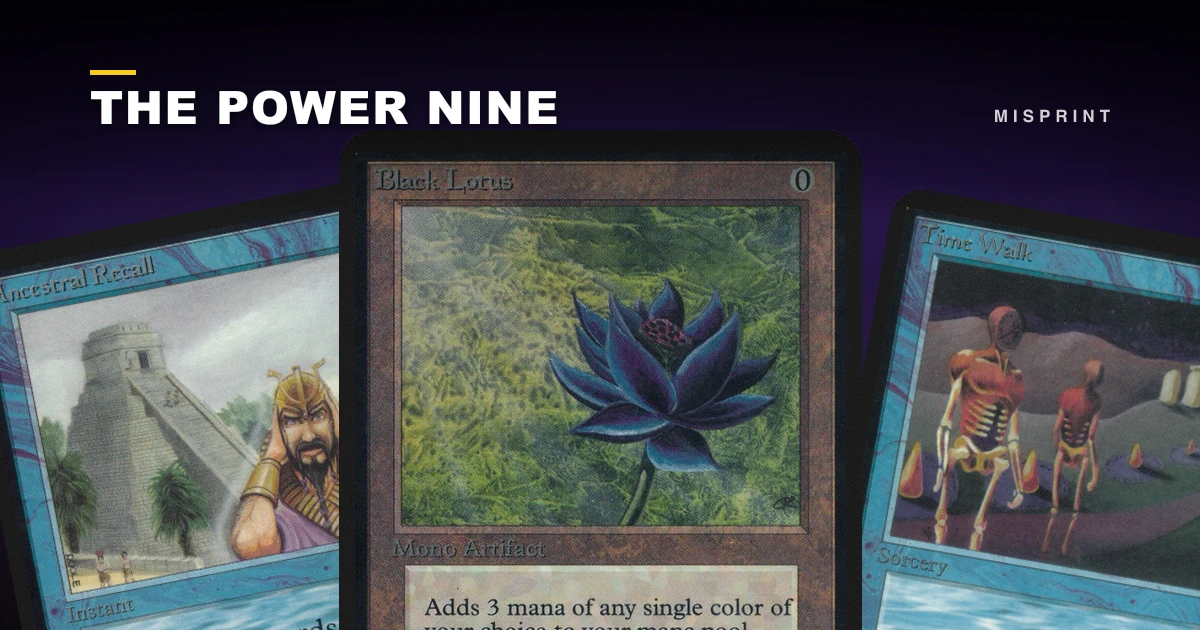
Nine cards from 1993 that were too good to ever print again.
If you have spent any time around Magic: The Gathering, you have heard the phrase "the Power Nine" said with a certain reverence. These are nine cards from Magic's earliest sets that were so overwhelmingly strong they broke the game, were quickly restricted in competitive play, and were never reprinted in a tournament-legal form. Scarcity plus fame equals money, and the Power Nine sit at the very top of the vintage Magic market. Below is a card-by-card breakdown: what each one does, why it is broken, and roughly what it costs.
What Are the Power Nine?
The Power Nine were printed only in Magic's first three sets, all released in 1993: Limited Edition Alpha, Limited Edition Beta, and Unlimited. They are Black Lotus, Ancestral Recall, Time Walk, Timetwister, and the five "Moxen" (Mox Pearl, Sapphire, Jet, Ruby, and Emerald). Every one of them hands you resources or advantages far beyond what its cost should allow. Today they are legal only in Vintage, where each is restricted to a single copy per deck, and banned in most other competitive formats.
The Nine, One by One
1. Black Lotus
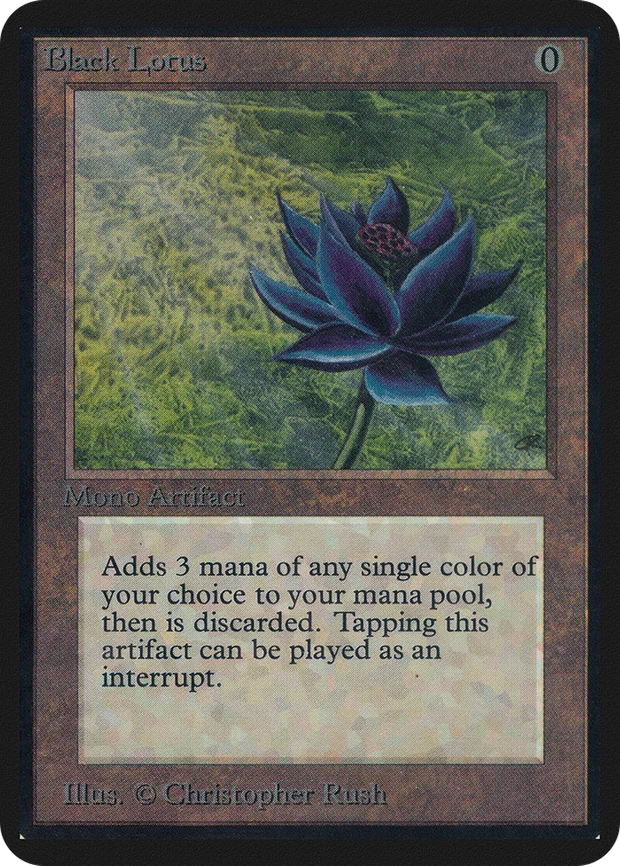
The king. Black Lotus costs nothing to play, and you can sacrifice it at any time to add three mana of any single color. In a game built around adding one land per turn, getting three mana instantly for free is like folding three extra turns into one card. An Alpha Black Lotus in top grade recently sold for $3 million, the most ever paid for a Magic card, and even played copies trade in the tens of thousands. It is the definitional piece of Power.
2. Ancestral Recall
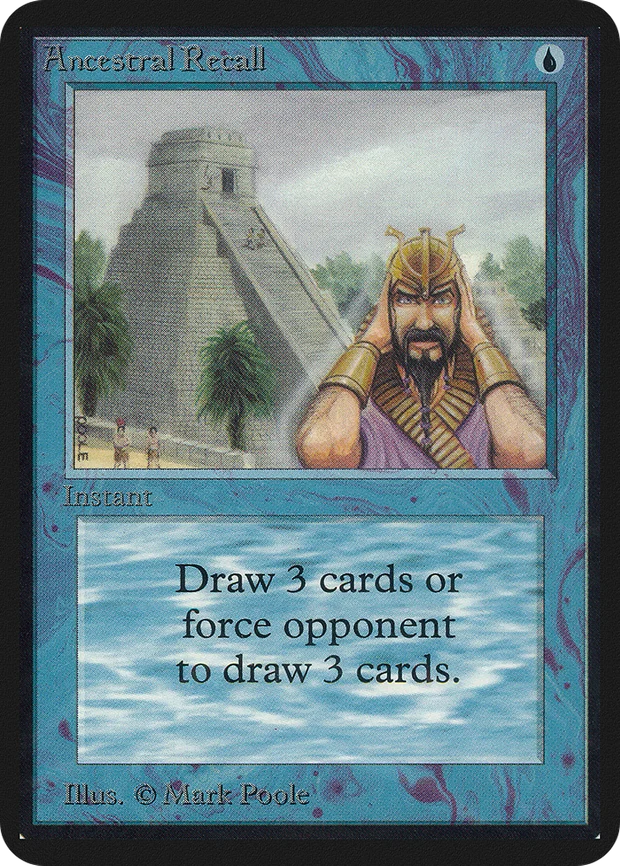
For a single blue mana, Ancestral Recall draws you three cards. Card advantage is one of the most important things in Magic, and paying one mana to net two extra cards is a rate nothing in the modern game comes close to. It is widely considered the most efficient card-draw spell ever printed, and it is one of the three blue Power cards that command the highest prices.
3. Time Walk
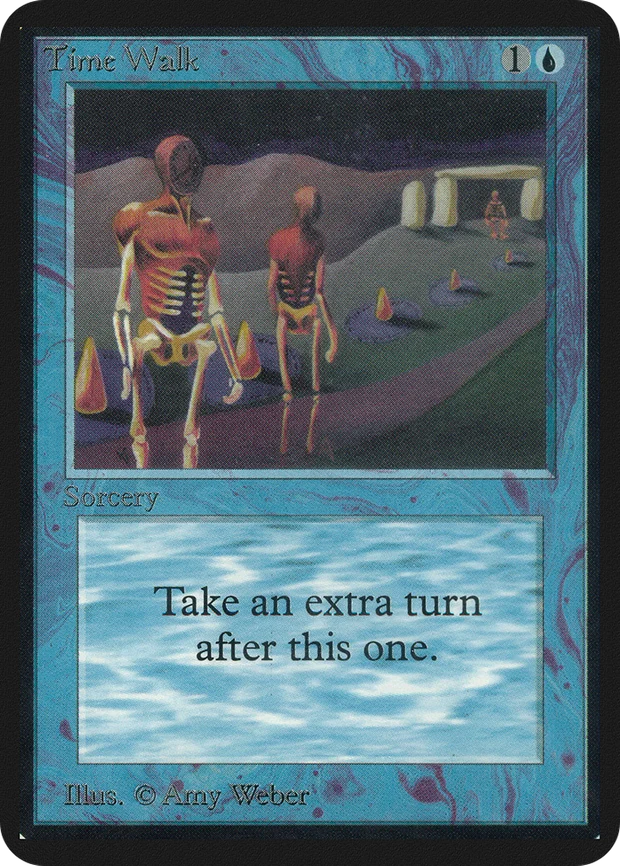
For just two mana (one generic and one blue), Time Walk lets you take an entire extra turn. An extra turn means extra land drops, extra attacks, and extra spells, all while your opponent does nothing. The modern versions of this effect cost far more or come loaded with drawbacks, precisely because a cheap extra turn is so dangerous. Like Ancestral Recall, its blue color keeps it near the top of the Power Nine price ladder.
4. Timetwister
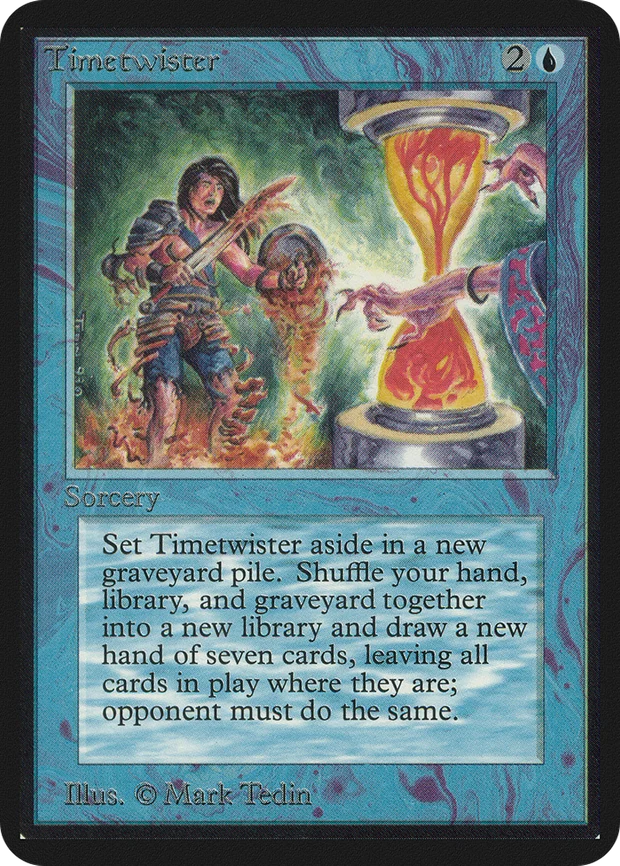
Also two mana, Timetwister is the most symmetrical of the nine: every player shuffles their hand and graveyard into their library and draws a fresh seven cards. In the right deck, refilling your hand at the perfect moment (ideally when yours is empty and your opponent's is full) is a devastating swing. Long the most affordable piece of Power, Timetwister has climbed sharply because it is legal and popular in Commander, and it is now one of the more expensive of the nine rather than the cheapest.
5. Mox Sapphire
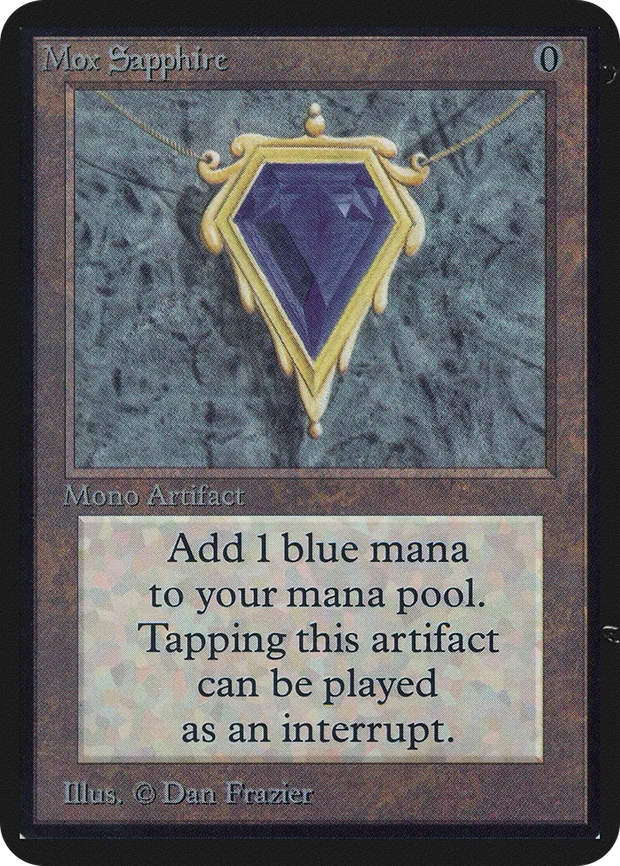
The five Moxen (all illustrated by Dan Frazier) are zero-cost artifacts that each tap for one mana of a single color. They are so strong because you can only play one land per turn, but you can play as many Moxen as you draw: they are free extra lands that let a deck explode out of the gate. Mox Sapphire taps for blue and is historically the most valuable Mox, because blue was the dominant competitive color for decades. It sits alongside Time Walk and Ancestral Recall in the top tier of Power.
6. Mox Jet
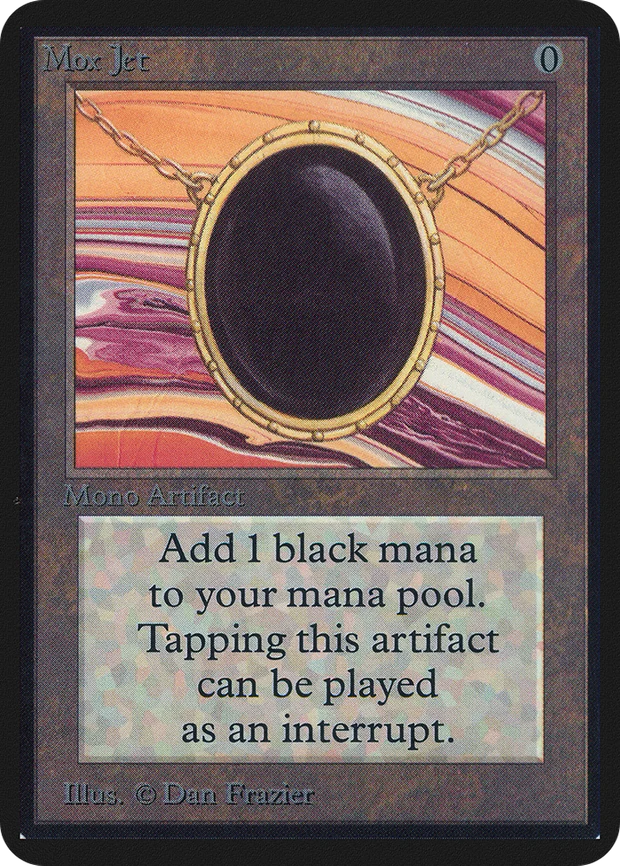
Mox Jet taps for black mana. It is typically the second most valuable of the Moxen, since black has long been one of the strongest colors in Vintage, so demand for its free mana runs high.
7. Mox Ruby
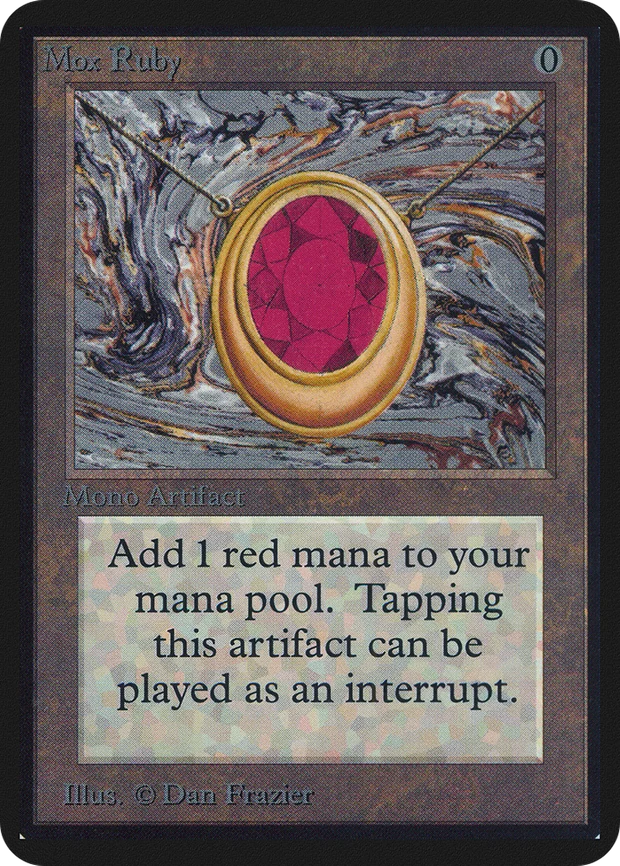
Mox Ruby taps for red mana and generally sits in the middle of the Mox price range, tracking red's solid but less dominant standing in competitive Magic.
8. Mox Emerald
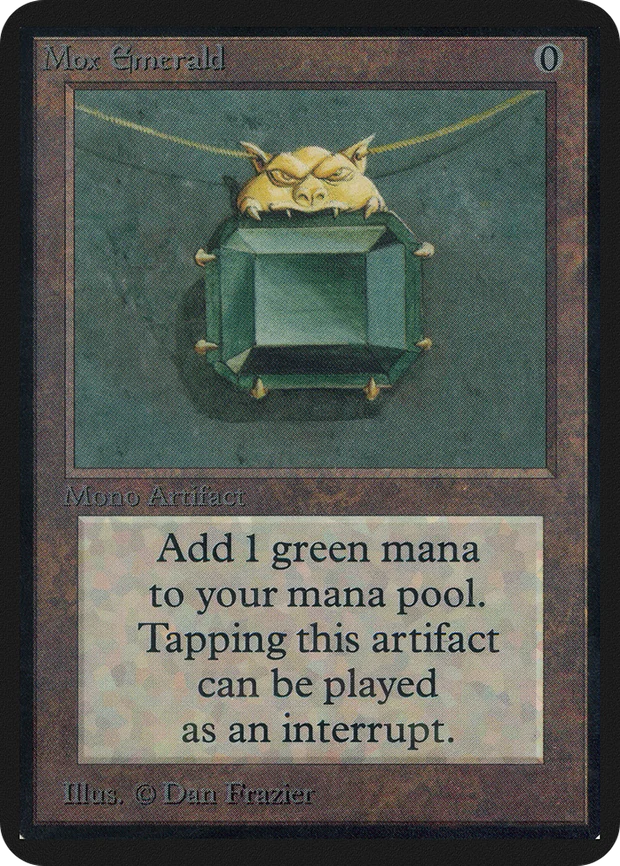
Mox Emerald taps for green mana. Along with Mox Pearl, it is usually among the more affordable of the five, reflecting green's historically weaker competitive footing. Even so, an Alpha copy commonly sells in the region of $10,000 to $19,000.
9. Mox Pearl
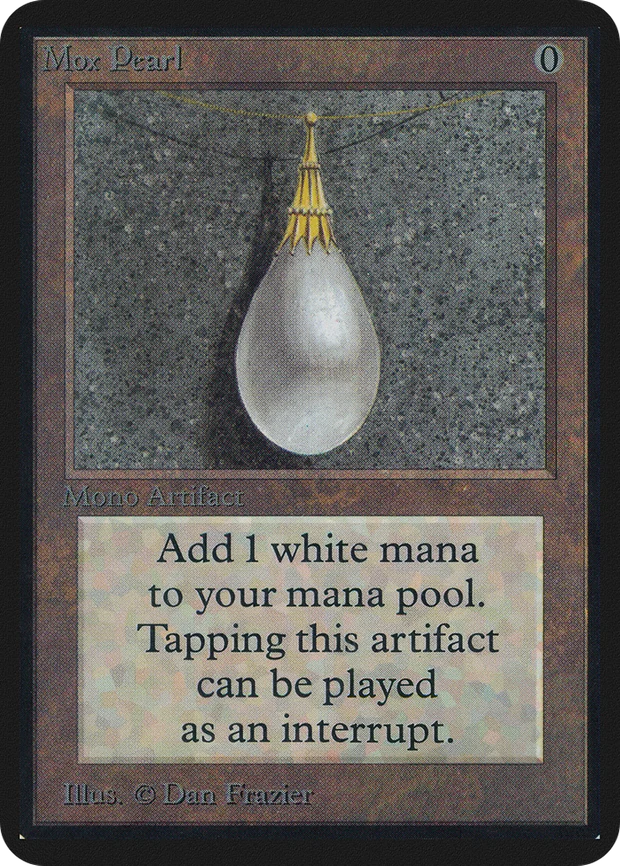
Mox Pearl taps for white mana and is often the most affordable Mox of all, as white has historically been the least dominant color in Vintage. "Most affordable," of course, is relative: an Alpha Mox Pearl still commonly sells for around $8,000 to $12,000.
Why the Power Nine Are Worth So Much
Four forces stack on top of one another:
- They were barely printed. The 1993 sets were tiny. Alpha in particular had a very small print run, and Alpha copies (identifiable by their distinctly rounded corners) are the most prized.
- They were never reprinted for tournament play. All nine sit on the Reserved List, Wizards of the Coast's standing promise never to reprint them in a functionally identical, tournament-legal form. That permanently caps supply.
- They are iconic. Even people who have never played Magic have heard of Black Lotus. Fame drives demand from collectors, not just players.
- Condition is scarce. After more than 30 years, finding these in high grade is genuinely hard, and grade drives enormous premiums.
Value Snapshot (Ungraded Alpha, 2026)
Prices vary heavily by printing (Alpha is worth the most, then Beta, then Unlimited) and by condition. The figures below are approximate ranges for ungraded Alpha copies, drawn from public price trackers in 2026. Graded, high-grade copies sell for multiples of these.
| Card | Approx. ungraded Alpha value (2026) |
|---|---|
| Black Lotus | $20,000 to $80,000 raw by condition; $50,000 to $250,000+ graded, and up to about $3M at the very top |
| Ancestral Recall | $10,000 to $27,000 |
| Time Walk | $12,000 to $20,000 |
| Timetwister | $8,000 to $14,000 (risen on Commander demand) |
| Mox Sapphire | $15,000 to $24,000 |
| Mox Jet | $12,000 to $21,000 |
| Mox Ruby | $12,000 to $23,000 |
| Mox Emerald | $10,000 to $19,000 |
| Mox Pearl | $8,000 to $12,000 (often the most affordable) |
These are ballpark ranges, not quotes. Ungraded vintage prices swing with condition, and aggregator prices can run ahead of actual sales, so always check recent sold listings before buying or selling.
The Bottom Line for Collectors
The Power Nine are the closest thing Magic has to blue-chip assets: iconic, permanently scarce, and consistently in demand. If you own any of them, condition is everything. The difference between a lightly played copy and a high-grade graded one can be a multiple, not a small premium, so knowing exactly what you have and what condition it is in matters as much as owning the card at all.
Card images are used for editorial and identification purposes. Magic: The Gathering, all card names, and card images are © Wizards of the Coast LLC. Card images sourced via Scryfall.