One Piece TCG vs Magic: The Gathering: How the Two Fastest-Growing Card Games Compare
The newcomer at #3 and the 30-year champion at #1 have more to teach each other than you think.
By Misprint Editorial | Published Jun 4, 2026 | 4 min read
Magic is the #1 card game and has been for three decades. One Piece is the #3 upstart that got there in under four years. Comparing them is not about picking a winner. It is about what the old champion can teach the newcomer's collectors.
Magic: The Gathering and One Piece sit at opposite ends of the trading-card timeline: one is 30-plus years into its run, the other is barely getting started. Yet both are among the fastest-growing games in the hobby right now, and the contrast between them is genuinely instructive, especially the one difference that matters most for anyone holding cards as an investment. Let's compare them across the dimensions that count.
Market Position and Scale
By TCGplayer's 2026 sales data, the order is Magic #1, Pokémon #2, One Piece #3, Yu-Gi-Oh #4. But the gap between #1 and #3 is vast:
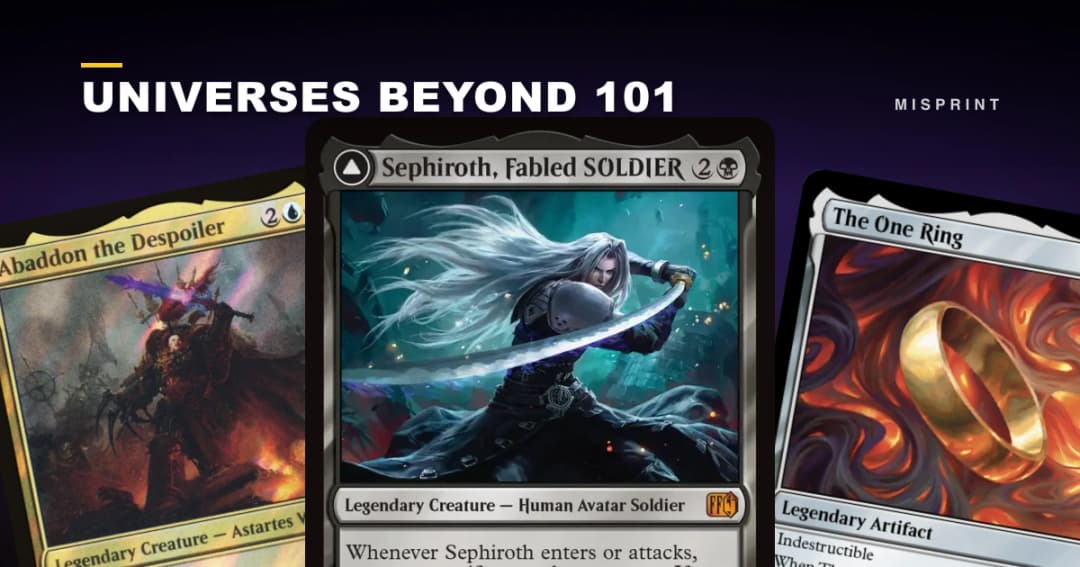
- Magic generated roughly $1.7 billion in revenue in 2025, a record year driven heavily by its Universes Beyond crossover sets. It is a mature, deeply liquid market with decades of price history.
- One Piece is #3 by TCGplayer secondary-market volume, an achievement for its age, but at a fraction of Magic's absolute scale. See what the #3 ranking actually means.
So One Piece is growing faster in relative terms, while Magic remains far larger in absolute terms.
Age and Maturity
This is the crux of the comparison. Magic launched in 1993 and has survived multiple booms, busts, and format overhauls. Its market has been stress-tested repeatedly, and collectors know which cards hold value across cycles. One Piece launched in 2022 and has never experienced a sustained downturn. That difference (proven versus unproven) should temper how confidently anyone treats One Piece as a store of value.
How They Play
Mechanically, One Piece was designed to be more accessible. Its DON!! resource system avoids Magic's infamous "mana screw and flood," where you lose because you drew too few or too many lands. One Piece games are fast, use a single power stat, and are easy to pick up. Magic is deeper and more complex, with 30 years of accumulated mechanics. Neither is "better," but One Piece's lower barrier to entry is part of why it grew so quickly.
The Difference That Matters Most: Reprint Policy
If you take one thing from this comparison, take this. The two games have opposite philosophies on scarcity:
- Magic protects scarcity with the Reserved List, a formal, published promise never to reprint certain older cards. This list exists precisely because reprints historically destroyed card values, and it is a major reason Magic's vintage collectibles have held value for decades.
- One Piece does the opposite: reprint-to-demand. Bandai has no reserved list and will reprint sets and cards to meet demand, which structurally caps how much sealed product and in-print singles can appreciate. We cover this in why One Piece reprints are coming.
There is one partial offset: One Piece's "Block X" system keeps certain cards permanently legal and protected from rotation, giving those specific cards more durable collectible status. But it is a narrow exception, not a Reserved List. See Block X explained.
Most Valuable Cards
The ceilings tell a story:
- Magic's benchmark is the Alpha Black Lotus, with a CGC Pristine 10 copy selling for around $3 million in 2024. Magic's most durable value sits in scarce early-era collectibles, not tournament staples.
- One Piece's top of the market is dominated by ultra-rare tournament trophy cards. A 1st-place World Championship gold Monkey D. Luffy promo (CGC Pristine 10) sold for around $315,600 in late 2025, the most expensive One Piece card sold at public auction. Its value is driven by extreme scarcity and the fact that the English gold version was never officially distributed.
Both ceilings are built on scarcity plus prestige, but Magic's took 30 years to establish and One Piece's is still forming.
What One Piece Collectors Can Learn From Magic
Three decades of Magic history offer real lessons:
- Reprint risk is the enemy of value. Magic's Reserved List exists because reprints crushed prices. One Piece has no such protection, so buy expecting reprints unless a card is genuinely scarce or rotation-protected.
- Collectibles outlast staples. Magic's most durable value lives in scarce collectibles, not playable tournament cards (which get reprinted and rotated). Many One Piece chases are currently playable rares, which carries more reprint and meta risk. Our sealed vs graded singles guide applies this lesson.
- Longevity reveals what lasts. Magic's 30 years show which value survives (early scarcity, nostalgia, iconic cards). One Piece has not had time to prove this yet, so treat its "blue chips" as promising rather than proven.
Our Take
Magic and One Piece are not really rivals; they are a mature market and an emerging one, and the most useful thing about comparing them is what the old teaches the new. One Piece's growth is real and its accessibility is a genuine strength, but its reprint-to-demand model is the mirror image of the Reserved List that protected Magic's values for decades. If you collect One Piece as an investment, borrow Magic's hard-won lesson: durable value comes from real scarcity, not from hype or playability. For the full One Piece investment picture, see our investment guide.
Figures reflect the best available data as of 2026, including TCGplayer sales rankings, Hasbro earnings for Magic, and public auction results. Informational only, not financial advice. Verify current prices before buying.