Universes Beyond, Explained: Marvel, LOTR, and More
How Magic turned licensed crossovers into its biggest sets ever, and what that means for players and collectors.
By Misprint Editorial | Published Jun 29, 2026 | 6 min read
How Magic turned licensed crossovers into its biggest sets ever, and what that means for players and collectors.
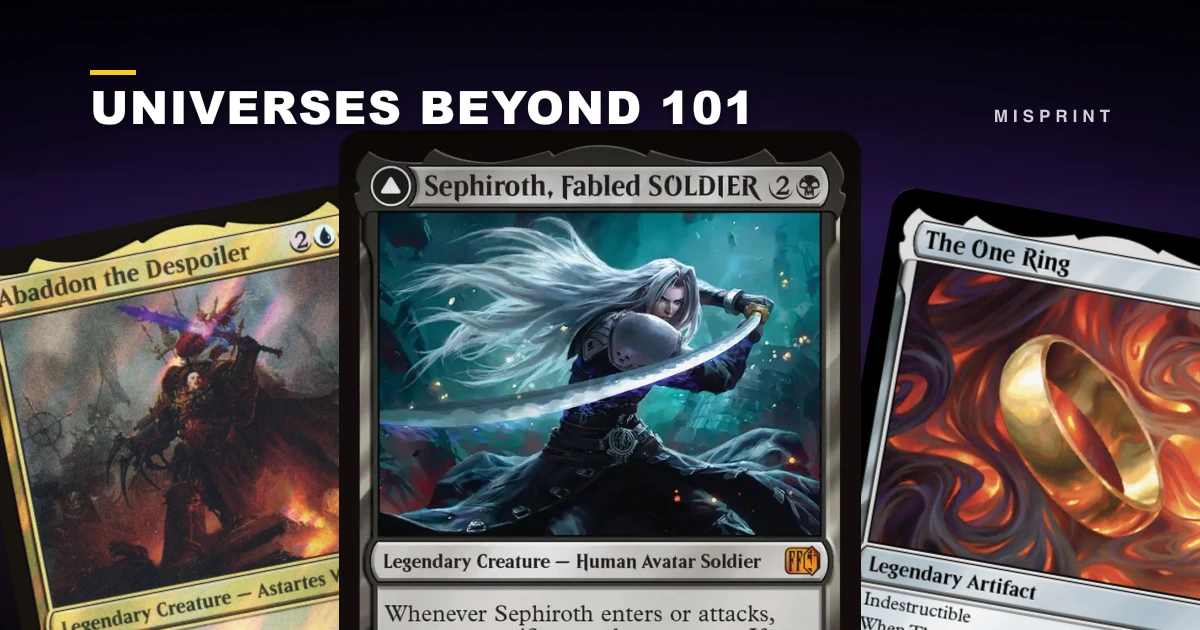
Universes Beyond is the label Wizards of the Coast puts on any Magic set built around a property it does not own. Instead of the game's homegrown planes and characters, you get Frodo Baggins, Sephiroth, Spider-Man, and Space Marines rendered as real, playable Magic cards. What started as a novelty Secret Lair in 2020 has become the single most commercially important thing Magic does. When Hasbro's CEO told investors that Final Fantasy was the best-selling Magic set of all time on its first day, that was Universes Beyond talking.
For a game that spent nearly three decades guarding its own fiction, this is a massive shift. It has also been one of the most divisive changes in Magic's history. Here is what Universes Beyond actually is, how it works at the table, and why collectors are paying attention.
What Universes Beyond actually is
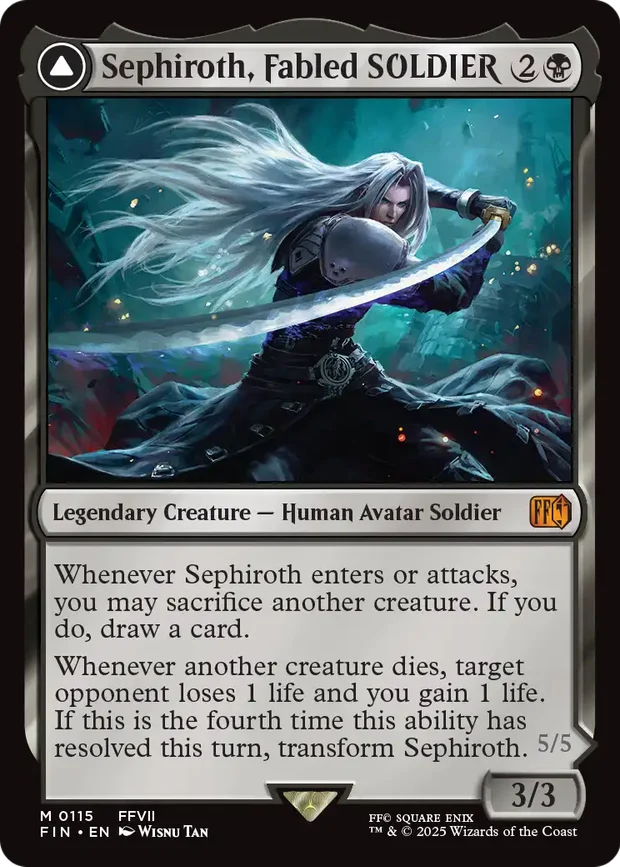
The clearest way to think about it: Universes Beyond cards are mechanically normal Magic cards wearing someone else's costume. Sephiroth is a legendary creature you can put in a Commander deck. He also happens to be from Final Fantasy VII. The rules text follows Magic's rules exactly. Only the name, art, and flavor come from the licensed world.
Wizards draws a line between two things. "Universes Beyond" is the licensed crossover itself. "Universes Within" is the in-house version of those same cards, reskinned into Magic's own multiverse so the mechanics live on under a Magic-native name. Early on, that second layer existed to reassure players who did not want Rick Grimes staring back at them across a tournament table. The company has largely stopped bothering with Universes Within conversions now that the crossovers are mainstream.
It is worth separating true Universes Beyond from the earlier flirtations. The Godzilla monster cards packaged with Ikoria in 2020 and the Dracula treatments in Crimson Vow were alternate art on otherwise normal Magic cards. They are not counted as Universes Beyond. The real starting gun was the Secret Lair x The Walking Dead drop in October 2020, which introduced cards that existed nowhere else.
The crossovers so far
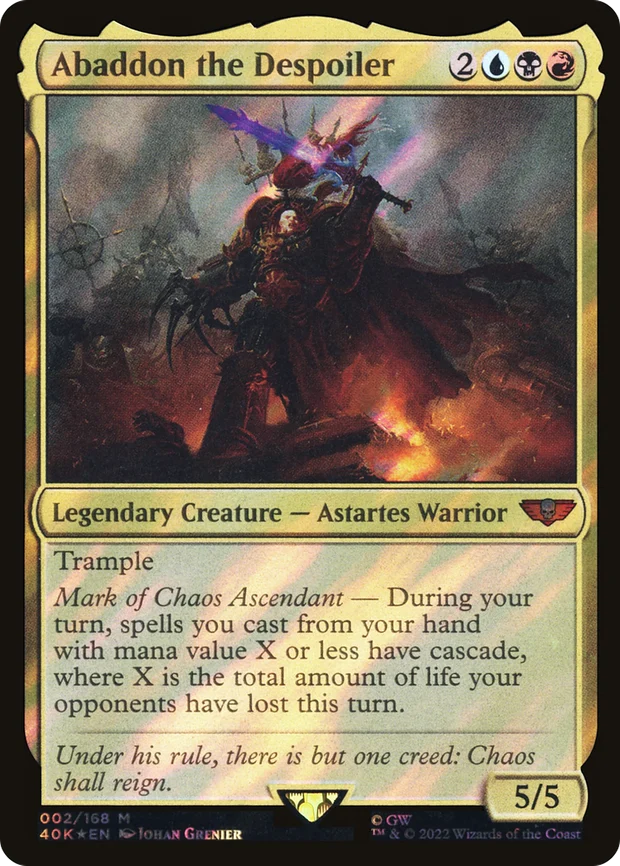
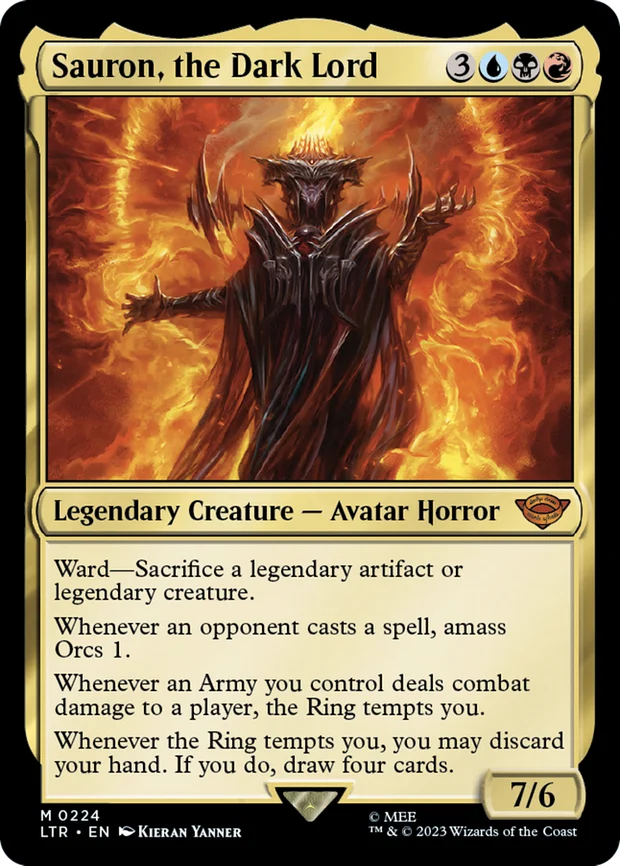
The list has grown fast. After The Walking Dead came a run of Secret Lairs and full sets covering Stranger Things, Street Fighter, Transformers, and Fortnite. Then the format graduated to tentpole releases: The Lord of the Rings: Tales of Middle-earth in 2023, Warhammer 40,000 Commander decks, Doctor Who, Fallout, Assassin's Creed, and Jurassic World.
2025 raised the ceiling again. Final Fantasy launched in June and reportedly delivered around $200 million in revenue on day one, a figure that took The Lord of the Rings roughly six months to reach. Marvel's Spider-Man followed on September 26, 2025, the first release in a multi-year Marvel deal, and Avatar: The Last Airbender closed out the year on November 21. The 2026 slate keeps the pace with a broader Marvel Super Heroes set in June, a return to Middle-earth by way of The Hobbit in August, and a Star Trek set in November. If you want the full calendar, our 2026 set release schedule lays out the release order, and our deeper dive on how Universes Beyond changed the market covers the business side.
Are they legal in tournaments?
This is where the story gets interesting, and where the policy has flipped.
For years, Universes Beyond sets went straight to Modern and older formats, skipping Standard entirely. The Lord of the Rings, for instance, was Modern-legal but never Standard-legal. That kept the crossovers out of the game's most-watched competitive format.
That is over. Starting with the 2025 sets, new Universes Beyond booster releases are legal in every Constructed format, Standard included, exactly like a normal expansion. Sephiroth and Spider-Man are Standard cards. Wizards framed this as ending an awkward double standard, since players were already registering these cards by the thousands in Commander and Modern. If you are new to how formats and rotation work, our explainer on Standard rotation is a good primer.
The one lasting scar is the original Walking Dead Secret Lair. Those six cards were mechanically unique and only sold for a limited window, which meant tournament-relevant cards were locked behind a one-time purchase. The backlash pushed Wizards to promise it would stop making mechanically unique, limited-availability promos, and it eventually released Universes Within versions of those cards in Wilds of Eldraine in 2023 so the effects could be bought normally. The Commander Rules Committee opted not to ban the originals, so a Rick, Steadfast Leader from that drop is still legal, just expensive and awkward.
The collector angle
Universes Beyond has produced some of the most valuable modern Magic cards ever printed, and the reason is straightforward: these sets pull in fans of Tolkien, Square Enix, and Marvel who never played a game of Magic, and many of them buy for the art and the character, not the deck.
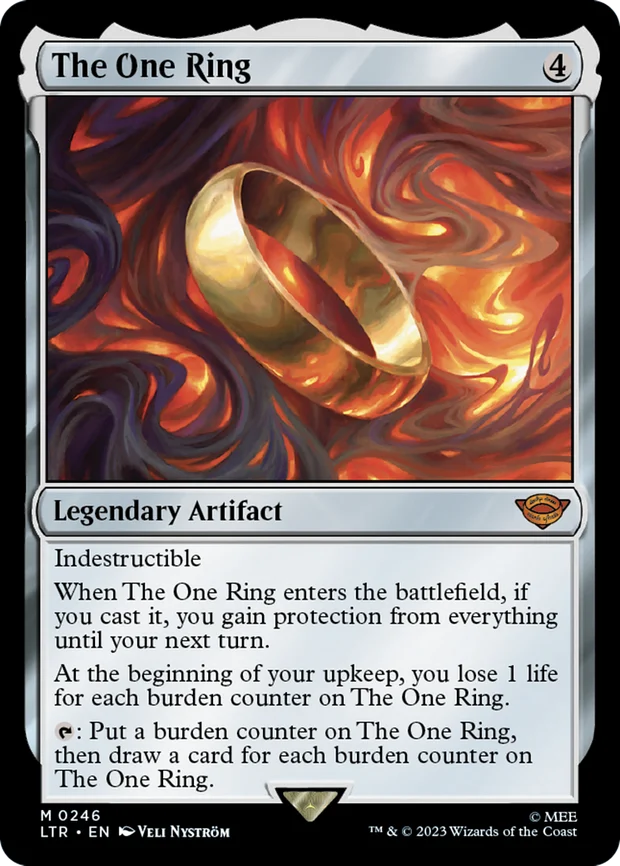
The signature example is The One Ring from The Lord of the Rings. Wizards printed exactly one serialized copy numbered 001/001, its text set in the Black Speech of Sauron using Tengwar letterforms, seeded into packs. A collector named Brook Trafton opened it, it was graded PSA Mint 9, and Post Malone bought it for a reported $2 million in August 2023, making it the most expensive Magic card ever sold. The ordinary version of The One Ring is a far more modest object, trading in the range of about $90 to $110 depending on treatment, though prices move and aggregator listings often sit above actual sold prices.
Below the 1-of-1, Universes Beyond value clusters around scarce treatments. The serialized Middle-earth location lands, such as Mount Doom and Balin's Tomb (a serialized Ancient Tomb), trade from the low thousands up to the mid four figures, with the more playable lands sitting at the top of that range. In Final Fantasy, the borderless surge foil Sephiroth has climbed to roughly $600 to $825, while the standard printing sits around $27 to $34. Grading matters here as much as it does for vintage cardboard, and if you are weighing whether to slab a chase pull, our guides on whether grading increases value and PSA vs BGS vs CGC are worth a read. Tools like Misprint's graded-market data can help you see where sold prices for these serialized cards actually land versus where sellers are asking.
A word of caution for anyone treating these as investments. Print runs on modern sets are enormous, Universes Beyond sets are printed to demand, and the record-setting sales are outliers driven by 1-of-1 scarcity and celebrity attention. The bulk of the cards behave like any other modern-set product, which is to say most of them are not appreciating assets. Our broader take on Magic as an investment applies here in full.
The bottom line
Universes Beyond is no longer a side experiment. It is now half of Magic's release engine, it is fully legal across Constructed play, and it produced the most expensive Magic card ever made. Whether that thrills you or annoys you depends on whether you came to Magic for its own world or for the chance to build a deck around your favorite character. Either way, the crossovers are here to stay, and they are selling faster than anything Magic has ever printed.
Prices cited here reflect public aggregator data at the time of writing and can shift quickly, especially for serialized and freshly released cards.
Quick reference
| Set / Product | Property | Released | Notable card |
|---|---|---|---|
| Secret Lair x The Walking Dead | The Walking Dead | Oct 2020 | Rick, Steadfast Leader |
| The Lord of the Rings: Tales of Middle-earth | Tolkien | June 2023 | The One Ring (serialized 001/001, sold for $2M) |
| Warhammer 40,000 Commander | Warhammer 40K | Oct 2022 | Abaddon the Despoiler |
| Final Fantasy | Square Enix | June 2025 | Sephiroth, Fabled SOLDIER |
| Marvel's Spider-Man | Marvel | Sept 2025 | Spider-Man |
| Avatar: The Last Airbender | Nickelodeon | Nov 2025 | Aang / Team Avatar |