Should You Grade Your Magic Cards?
The graded premium is real, uneven, and easy to lose money on. Here is how to know before you write the check.
By Misprint Editorial | Published Mar 31, 2026 | 7 min read
The graded premium is real, uneven, and easy to lose money on. Here is how to know before you write the check.
Grading a Magic card is a bet. You pay a fee, ship a piece of cardboard across the country, wait weeks or months, and hope a stranger with a loupe agrees that your card is as clean as you think it is. When the bet pays off, a raw card worth a few hundred dollars comes back in a slab worth thousands. When it misses, you have spent real money to entomb an ordinary card in plastic that nobody wants to pay extra for.
So the honest answer to "should you grade your Magic cards" is: usually not, occasionally absolutely, and the whole game is knowing which bucket a given card falls into before you write the check. Here is how to tell the difference in 2026.
What grading actually costs right now
Grading is not free, and the sticker price is the smallest part of the bill. As of mid-2026, PSA's cheapest orderable tier is Regular at $79.99 per card, with a roughly 40 to 50 business-day turnaround. The old Value tiers ($24.99 to $64.99) that most collectors leaned on were paused on June 2, 2026 because of a 10-million-card backlog, so the $79.99 floor is real for now. Express runs $149, Super Express $349, and the high-declared-value tiers climb to $599 and $999.
Then come the parts people forget. Shipping your submission in, return shipping, the sleeves and semi-rigid holders, and the annual membership all stack up. A single PSA card at the Regular tier realistically costs around $130 to $135 all in by the time it is back in your hands.
The alternatives are cheaper per card. BGS grades singles from about $14.95, but free subgrades only kick in at its Standard tier ($34.95) and above; at the $14.95 base tier, subgrades cost extra. CGC's bulk tier starts around $17 per card but requires a minimum of 25 cards. Neither CGC nor PSA offers subgrades anymore, so BGS is the only major grader whose slab tells a buyer exactly where a card fell short. We break the full fee structure down in How Much Does It Cost to Grade Magic Cards?.
The takeaway: your all-in cost is the number you have to beat, not the raw grading fee. If grading a card cannot plausibly add more than about $130 to its resale value at PSA, or your break-even at BGS or CGC, you are paying to lose money.
The graded premium, and why it is uneven
The reason anyone grades is the premium: a graded card in a strong grade sells for more than the same card raw. But that premium is wildly uneven, and it concentrates in two places, high-value vintage and scarce high grades.
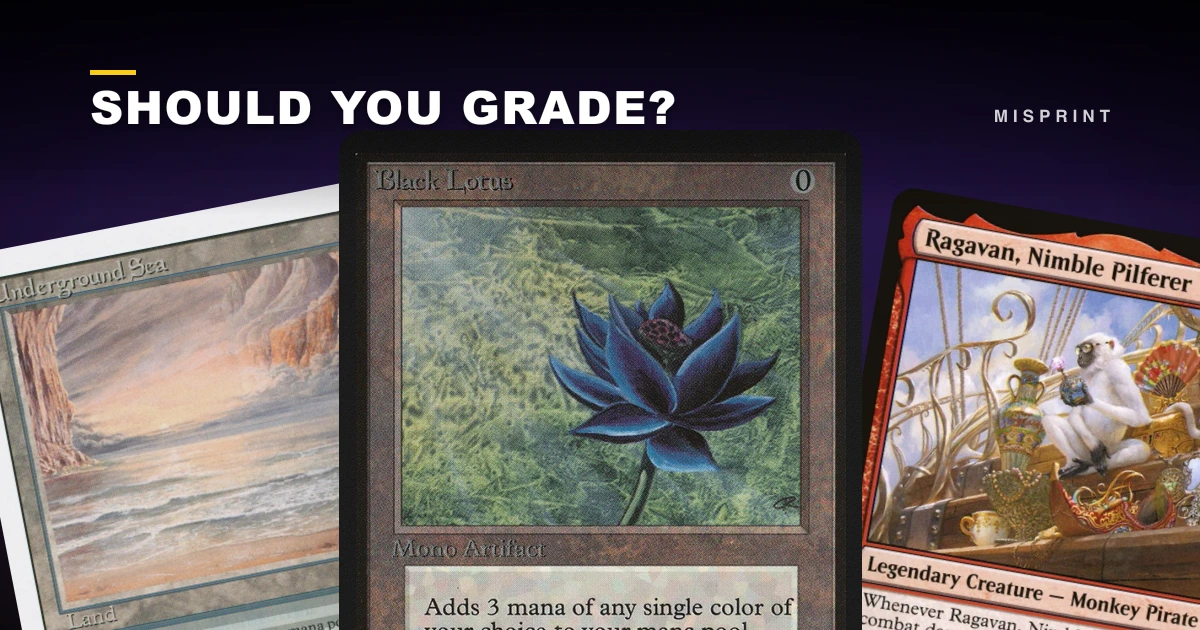
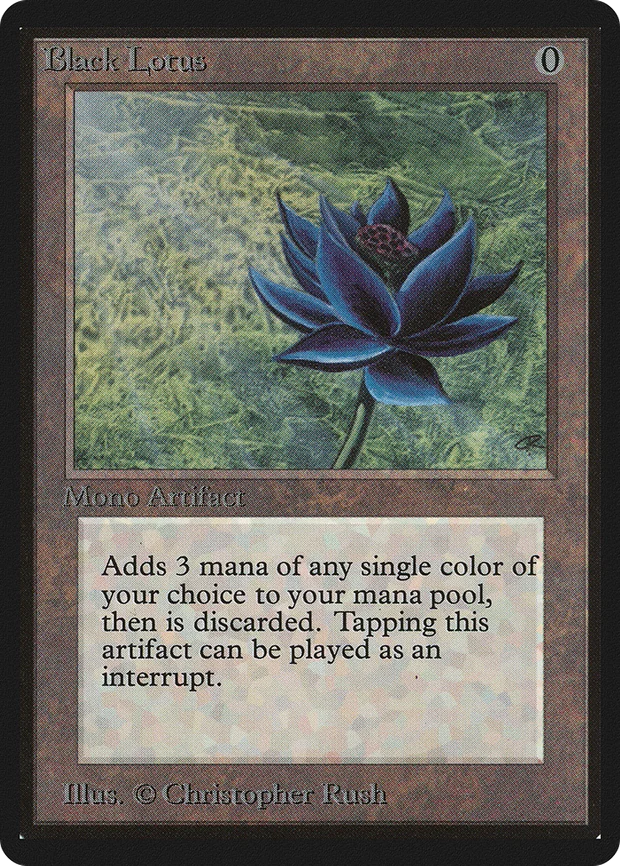
At the top of the market, the gap is enormous. A raw Near Mint Beta Black Lotus trades somewhere around $18,000 to $35,000 depending on eye appeal, while PSA 9 examples routinely clear $55,000 and have sold well past $100,000. That is not a premium, it is a different asset class, and it exists because six-figure buyers refuse to wire money for unauthenticated cardboard. At this level grading is not optional. For the backstory on why this card anchors the whole hobby, see What Is a Black Lotus and Why Is It Worth So Much?.
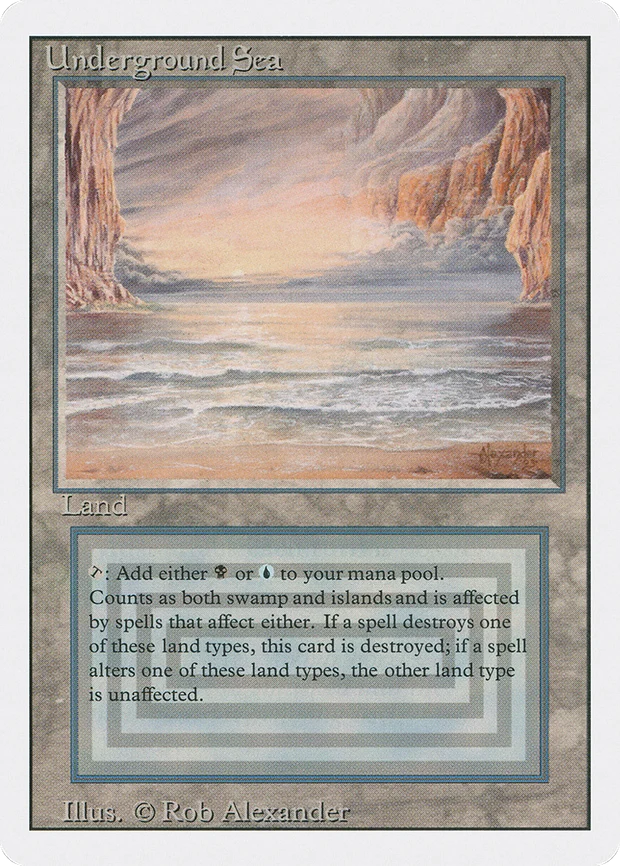
The same logic applies a rung down. An Unlimited Black Lotus in raw Near Mint sits around $6,000 to $12,000, while PSA 9 copies generally land in the $12,000 to $22,000 range. Old dual lands tell a similar story: Revised Underground Sea is common enough raw, but genuinely gem-mint copies are scarce because 1994 print quality was rough, so a PSA 10 commands a large multiple over a raw Near Mint. That scarcity of quality is the whole engine behind the graded premium on early cards, and it is covered in The Original Dual Lands: A Collector's Value Guide.
For modern cards the math is different and much less forgiving. Modern print runs are enormous and print quality is excellent, so PSA 10 populations balloon into the thousands and the premium compresses. As a rule of thumb, PSA 10 sells for roughly 3x to 5x the PSA 9 price on desirable modern cards, but that only matters if the raw card is worth enough for the multiple to clear your costs.
When grading is worth it
Grading makes sense when several of these are true at once.
The card is genuinely valuable raw. A useful floor is a raw value of at least a few hundred dollars. Below that, the PSA 10 premium rarely outruns your all-in cost plus selling fees (eBay alone takes 12 to 15 percent).
The card can realistically earn a top grade. The premium lives almost entirely in PSA 10 and BGS 9.5 or higher. A PSA 9 on a modern card often sells for barely more than a clean raw copy. If your card has soft corners, off-center framing, or print lines, you are likely paying for a 9 that adds nothing.
High grades are scarce. Check the population report before you submit. A card with 40 PSA 10s in existence behaves very differently from one with 4,000. Scarcity in the grade is what you are actually buying.
Authentication carries weight. For anything on the Reserved List or any card counterfeiters target, a slab is trust. The premium there is partly a fraud-insurance premium.
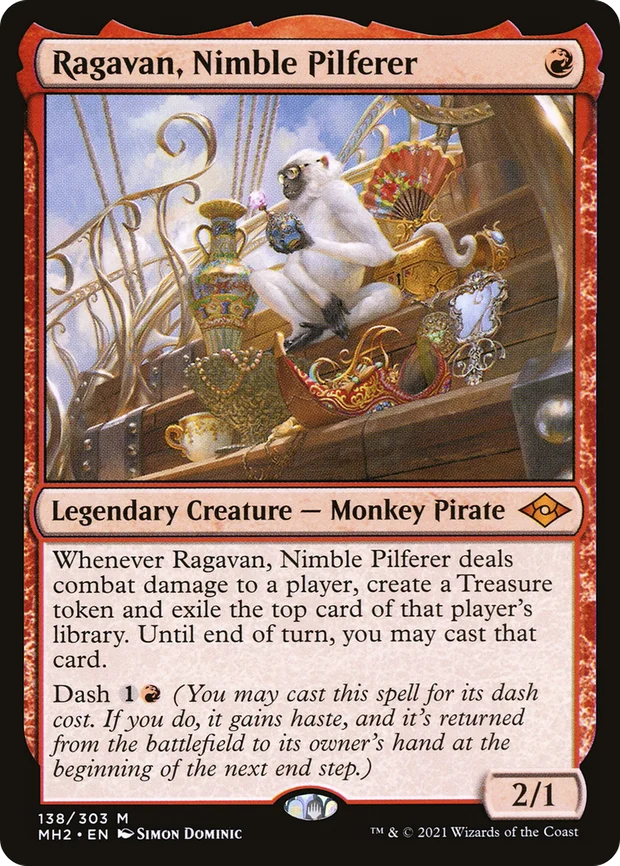
Ragavan, Nimble Pilferer from Modern Horizons 2 is a good modern test case. It is a beloved chase mythic with real demand, and its graded market is comparatively stable, but its PSA 10 population is healthy, so the premium is modest rather than transformative. Grade a flawless copy and you may come out ahead; grade a 9 and you have mostly bought plastic.
When grading is not worth it
Do not grade cards you plan to play. A slab is a paperweight at the kitchen table, and the moment you crack it you have destroyed the entire premium you paid for.
Do not grade bulk rares, most Standard-legal cards, or freshly opened commons and uncommons hoping to strike gold. The expected value is negative once fees are counted. Do not grade a card whose raw value plus the plausible PSA 10 premium still lands below your all-in cost. And do not send in cards with visible flaws expecting a miracle; graders are strict on modern surfaces, and a returned PSA 7 can actually sell for less than the raw card did.
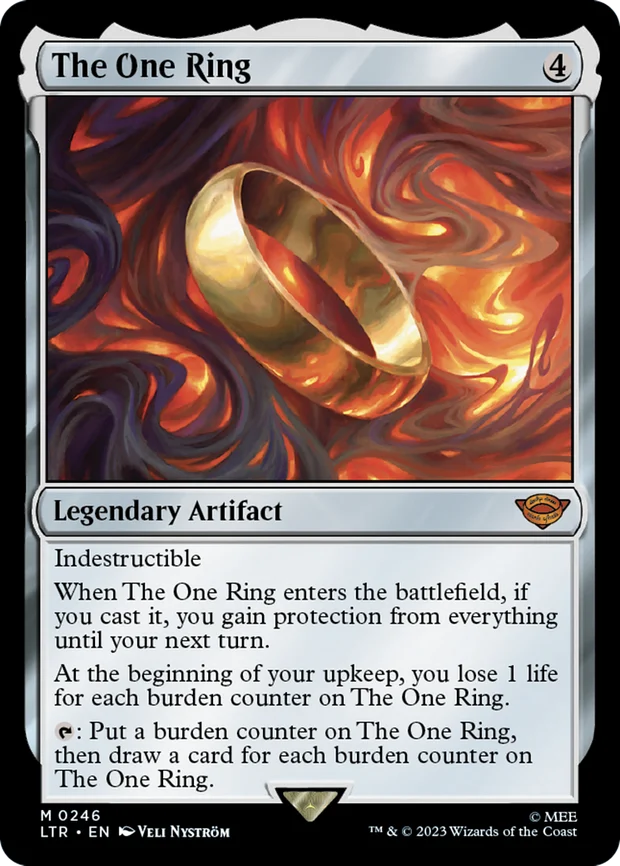
There is also a timing trap. Modern foils from hyped sets often spike at release, and grading windows lag by weeks or months. By the time your slab returns, the hype and the price may both have cooled. The One Ring is the extreme illustration of grading's ceiling. The unique one-of-one printing was slabbed PSA 9 and sold to Post Malone for $2 million, while an ordinary graded copy from the same set is worth a tiny fraction of that. The slab did not create the value; the card did.
PSA, BGS, or CGC?
For Magic specifically, PSA generally commands the highest resale, often 15 to 25 percent more than the same vintage card in a BGS holder, largely because sports-card buyers and cross-hobby investors trust the label. BGS wins on transparency: its free subgrades (on the Standard tier and up) tell a buyer exactly where a card fell short, and a BGS 9.5 with strong subgrades can outsell a PSA 9. CGC's cheaper bulk pricing makes it the sane choice for grading playsets of Commander or Modern staples where the PSA premium would never justify $130 a card. The full comparison lives in PSA vs BGS vs CGC for Magic Cards.
The bottom line
Grade the card if it is valuable raw, can plausibly hit a top grade, is scarce in that grade, or needs authentication to sell. Skip it if the card is cheap, flawed, meant to be played, or so common in high grade that the premium has already evaporated. Before you submit anything, pull the population report and pull recent sold prices for both the raw card and the target grade, because aggregator listings and asking prices routinely run ahead of what cards actually sell for. Tools that track graded-market sales (Misprint and price trackers like PriceCharting and Card Ladder among them) exist precisely so you can run that math before you spend the money, not after.
Grading rewards discipline and punishes optimism. When the numbers work, they work loudly. When they do not, no slab will save you.
| Scenario | Grade it? | Why |
|---|---|---|
| High-value vintage (Power Nine, dual lands) | Yes | Authentication is mandatory; premium is huge |
| Modern chase card, flawless copy, low PSA 10 pop | Maybe | Only if the 3x to 5x PSA 10 premium clears about $130 in costs |
| Modern card likely to grade PSA 9 | No | PSA 9 premium on modern cards is often near zero |
| Cards you play with | No | Slabs are unplayable; cracking one destroys the premium |
| Bulk rares and Standard staples | No | Negative expected value after fees |
| Cards with visible flaws | No | A low grade can sell for less than raw |
Prices here reflect mid-2026 tracker data and public sold listings and will move. Aggregator prices and asking prices frequently sit above real sold prices, so always confirm against recent completed sales before you commit.