What Is a Black Lotus and Why Is It Worth So Much?
The zero-cost artifact that became the most valuable card in the game.
By Misprint Editorial | Published Feb 12, 2026 | 6 min read
The zero-cost artifact that became the most valuable card in the game.
Ask someone who has never shuffled a deck to name a Magic card, and there is a decent chance they say Black Lotus. It is the closest thing the trading card hobby has to the Honus Wagner T206, a single piece of cardboard that stands in for an entire market. A pristine Alpha copy sold privately for $3 million in 2024. So what is it, exactly, and why does a small painting of a flower command supercar money?
What the card actually does
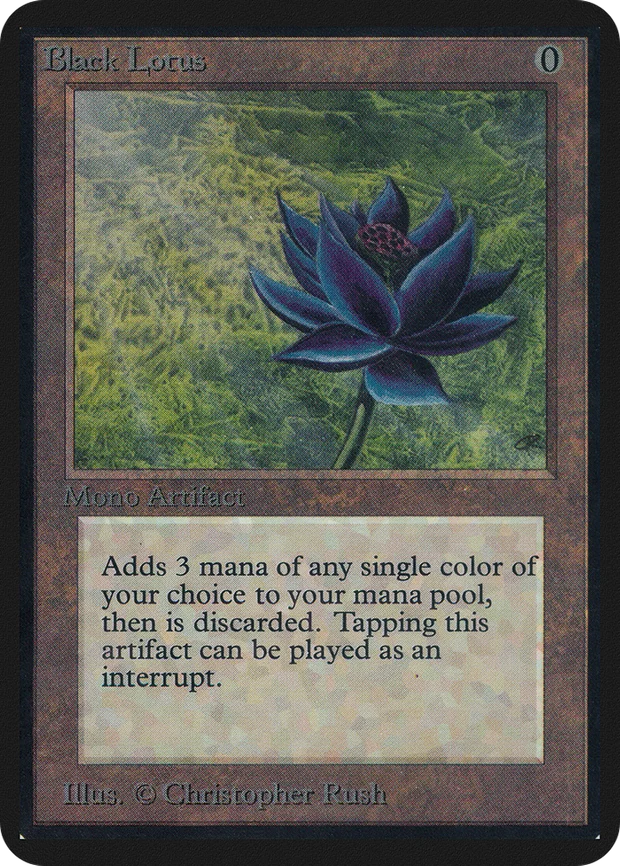
Black Lotus is an artifact that costs zero mana to play. The moment it hits the table you can sacrifice it and add three mana of any one color to your pool. In practical terms, it is a battery: a free card that instantly turns into three of anything, one time.
That sounds modest until you understand how Magic works. Mana is the resource that pays for everything, and in the normal course of a game you gain access to it one land at a time, roughly one extra land per turn. Black Lotus breaks that pacing entirely. It lets a player deploy something on turn one that an opponent could not realistically answer until several turns later. Cards that generate more resources than they cost, with no drawback, are the most dangerous thing a game designer can print, and Black Lotus is the purest example ever made.
Richard Garfield created Magic in 1993, and Black Lotus was in the game from day one. It proved so strong that it is now banned in most competitive formats and restricted to a single copy in Vintage, the one format old enough to still allow it. Its value has almost nothing to do with playing it and almost everything to do with what it represents.
Where it comes from: the Power Nine
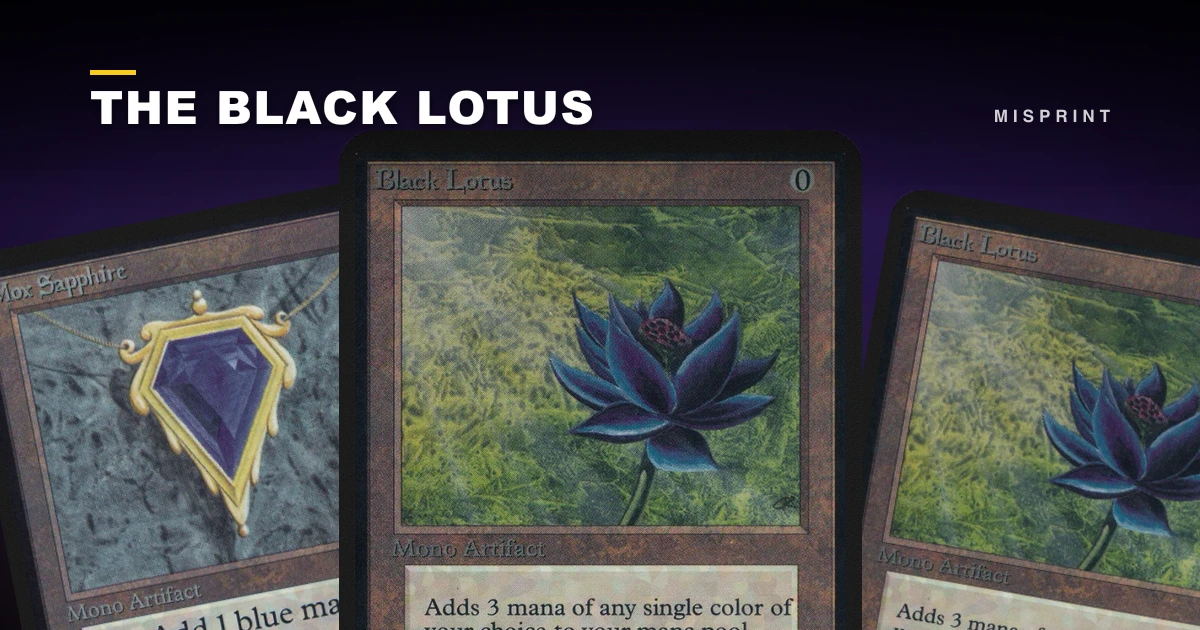
Black Lotus is the headline member of a group collectors call the Power Nine: nine absurdly strong cards printed only in Magic's earliest sets. The other eight are Ancestral Recall, Time Walk, Timetwister, and the five Moxen (Mox Pearl, Sapphire, Jet, Ruby, and Emerald). All nine appeared in the first three print runs in 1993 and were never printed in a tournament-legal form again.
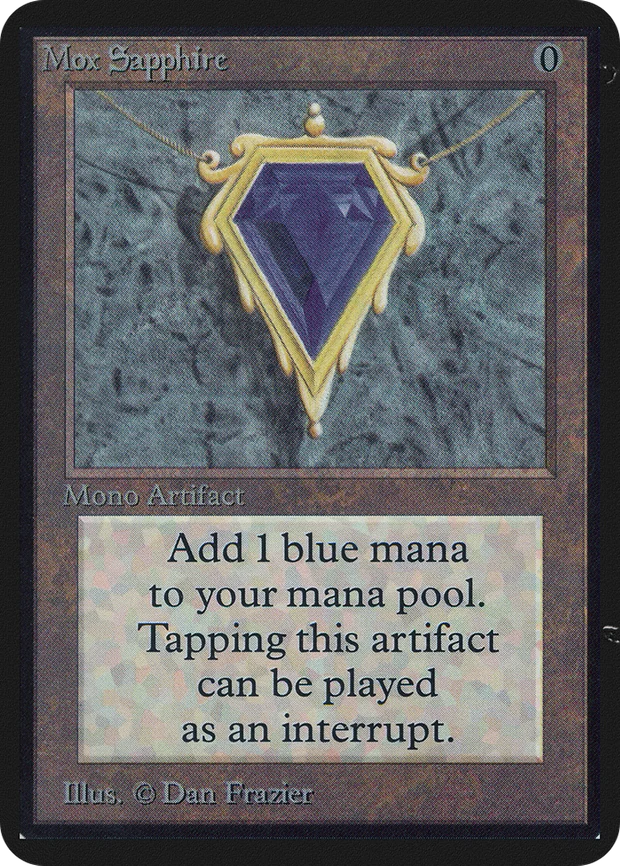
That permanence is not an accident. Every Power Nine card sits on Magic's Reserved List, a promise Wizards of the Coast made in 1996 that these cards would never be reprinted in a standard, playable form. The Reserved List is the single biggest reason vintage Magic behaves like a collectibles market instead of a game-supply market. Supply is frozen forever, so demand does all the moving.
The three printings that matter
Nearly every Black Lotus conversation comes down to which of the three 1993 printings you are holding. They look similar at a glance but are worlds apart in value. If you want the full field guide, we have a dedicated breakdown of Alpha vs Beta vs Unlimited, but here is the short version.
Alpha
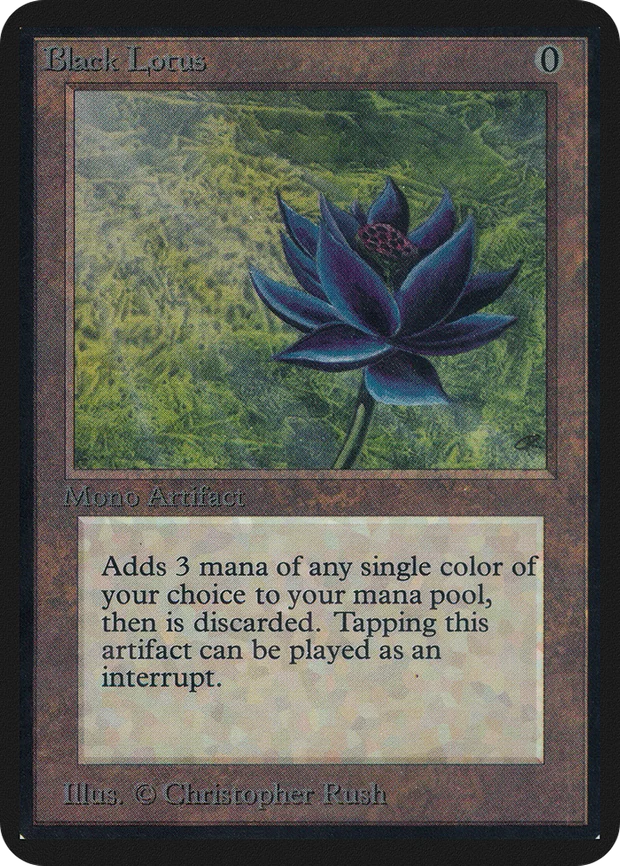
Limited Edition Alpha was the very first Magic set ever printed, with only around 1,100 Black Lotus copies made. Alpha cards have distinctive rounded corners and a slightly different border than everything that came after. This is the holy grail printing, the one behind every headline sale.
Beta
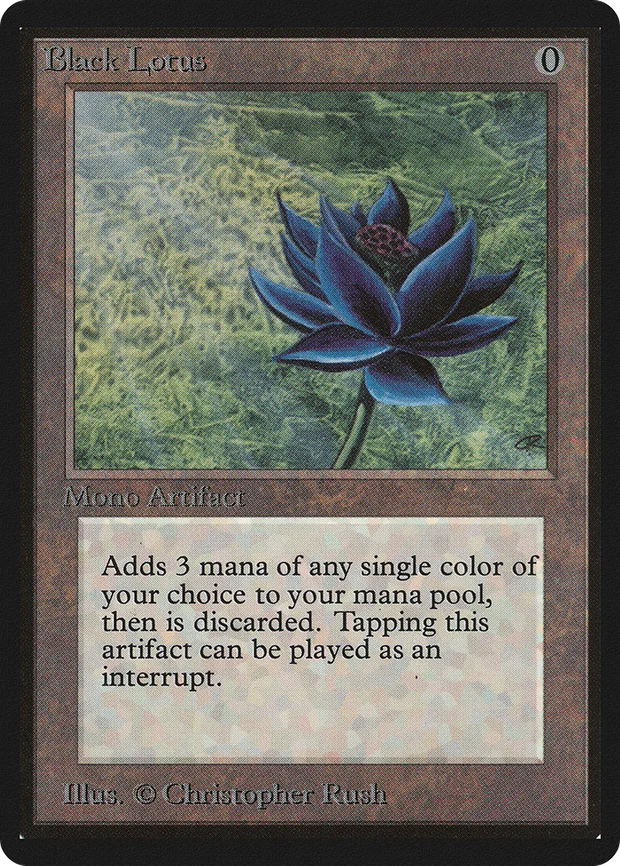
Beta followed within months as a corrected reprint, with about 3,300 Black Lotus copies and the sharper, squared-off corners that became the standard. Beta is still black-bordered and still tiny in supply, so it trades at a fraction of Alpha but far above Unlimited.
Unlimited
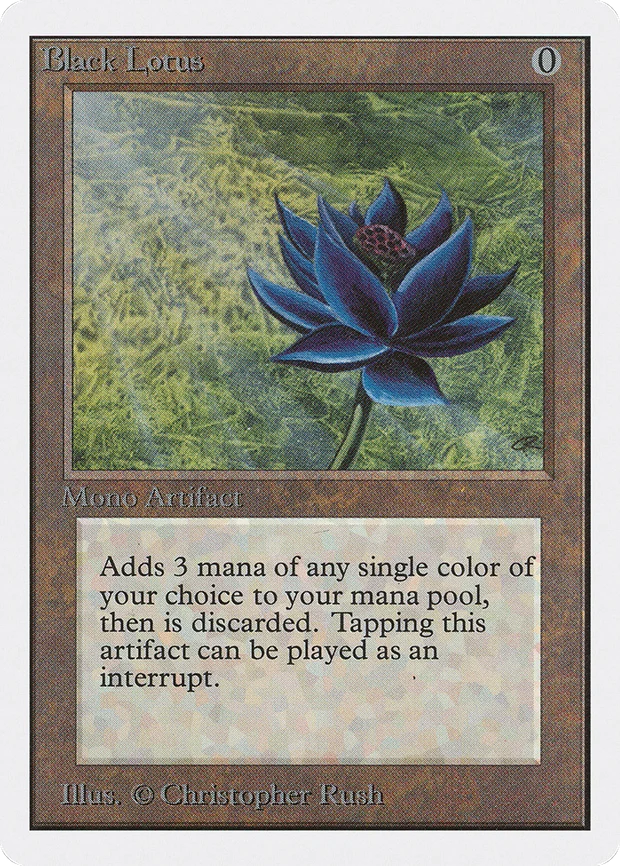
Unlimited arrived in late 1993 with a white border and a much larger run, more than 18,000 copies of Black Lotus. It is the "attainable" version, the one an everyday collector might realistically chase, though attainable still means a five-figure card.
The record sales
The numbers that make headlines are almost always Alpha copies in top grades. A few landmarks:
- In early 2021, a signed PSA 10 Alpha copy, autographed on the slab by the late artist Christopher Rush, sold at PWCC for $511,100, the first time a single Magic card cleared half a million dollars in a public sale.
- In March 2023, another signed PSA 10 Alpha, again carrying a Rush autograph on the case, sold through auction house PWCC for $540,000, setting a new public auction record.
- In 2024, a CGC Pristine 10 Alpha copy changed hands privately for $3 million, a figure logged by Guinness World Records as the most expensive Magic card ever sold.
Those top-of-market results depend enormously on the grade on the slab, which is exactly why serious buyers care so much about who certified the card. If you are weighing the trade-offs between the major graders, we cover them in PSA vs BGS vs CGC for Magic cards. A one-point difference at the top of the scale can mean a six-figure swing.
What a Black Lotus actually costs in 2026
Most people will never touch a $3 million card. Here is roughly where the market sits in mid-2026, drawn from public trackers like PriceCharting and recent auction results. Treat these as guide rails, not quotes. Prices move constantly, and aggregator "market" values often run ahead of what cards actually sell for, so always check recent sold listings before you buy or sell.
| Printing | Raw (played to NM) | PSA 8 | PSA 9 | PSA 10 |
|---|---|---|---|---|
| Alpha | $14k to $80k | $50k to $90k | $120k to $250k | $400k to $600k+ |
| Beta | $7k to $35k | $24k to $45k | $55k to $120k | $150k to $300k |
| Unlimited | $2.5k to $12k | $7k to $12k | $12k to $22k | $30k to $60k |
The gap between raw and graded, and between one grade and the next, is the whole game at this level. A raw Unlimited copy with a soft corner and a graded PSA 9 of the same card can differ by more than ten thousand dollars.
Why it holds value
Three forces stack on top of each other here. First, supply is permanently capped by the Reserved List, so no new copies will ever enter the market. Second, the card is the game's origin story, the single most recognizable object in a hobby with millions of players. Third, condition scarcity compounds everything: these are 33-year-old pieces of cardboard, many of them shuffled hard in the 1990s, so high-grade survivors are vanishingly rare. Combine a frozen supply with universal recognition and brutal condition attrition, and you get a price curve that has bent steeply upward for two decades.
Whether that makes it a smart buy is a separate question, and one worth reading up on before wiring money for a slab. We dig into the case for and against in Are Magic cards a good investment? The Black Lotus market is thin at the top, meaning very few copies trade in any given month, which cuts both ways: prices can spike on a single hyped sale and can also stall when the handful of active buyers step back.
The bottom line
Black Lotus is worth what it is worth because it is three things at once: a broken game piece, the founding artifact of a global hobby, and a fixed-supply collectible that time is slowly making rarer. You do not need to spend a fortune to own the legend. A played Unlimited copy puts the real card in your binder for a used-car price instead of a house price. Just know which printing you are looking at, insist on seeing the grade, and check what comparable copies have actually sold for, since with a card this scarce, tracking real graded-market data (something we spend a lot of time on at Misprint) matters more than any single sticker price.