Serialized Magic Cards, Explained
How a small stamped number turned ordinary cards into the most sought-after objects in the game.
By Misprint Editorial | Published Feb 24, 2026 | 6 min read
How a small stamped number turned ordinary cards into the most sought-after objects in the game.
A serialized Magic card is exactly what it sounds like: a card stamped with a unique number showing where it sits in a limited run. A stamp reading 047/500 means you are holding the 47th of 500 copies ever printed, and no other card carries that same number. The stamp is usually foil-pressed onto the art or the frame, and it turns an otherwise reproducible piece of cardboard into a genuinely finite object. That single detail is why serialized cards have become the most expensive chase pulls in modern Magic, culminating in a card that sold for more than any Magic card in history.
Here is how the system actually works, which sets use it, and why the 1/1 The One Ring became a multimillion-dollar object.
Where serialized cards came from
The first serialized Magic cards were a quiet experiment. In late 2021, the Phyrexian Praetors: Compleat Edition Secret Lair drop included a reversed, oil-slick foil printing of the sacrifice outlet Viscera Seer, hand-numbered from 001/100 to 100/100. Wizards of the Coast never made a big announcement about it, and for a while those cards were a curiosity rather than a category.
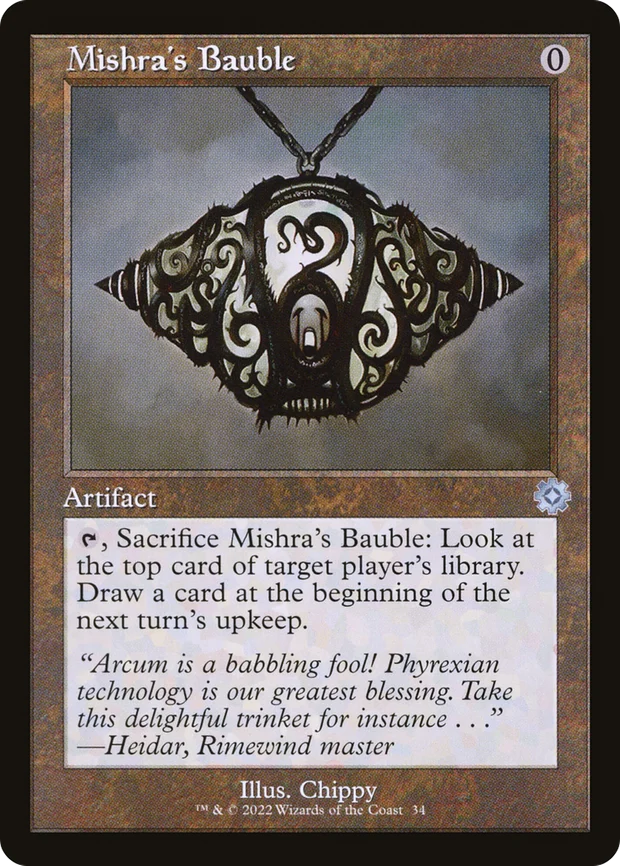
That changed with The Brothers' War in November 2022. The set introduced 63 retro-frame artifacts, each printed in a "schematic" blueprint treatment, and each of those got a serialized version numbered to 500. Suddenly there were 31,500 serialized cards seeded across Collector Boosters at a pull rate under 1 percent, and the concept became a permanent fixture. Serialized cards then appeared in set after set: Ravnica Remastered, March of the Machine, Murders at Karlov Manor, Fallout, Doctor Who, and Assassin's Creed among them.
How the numbering and rarity work
The math is simple and it is the whole point. If a card is numbered to 500, there are 500 of it, full stop. That certainty is different from the rest of Magic, where a "rare" or "mythic" exists in quantities Wizards never publishes. With a serialized run you know the ceiling precisely, and collectors price accordingly.
Print runs vary by product. Most serialized cards have been cut to 500 copies, but the scarcer ones run to 250, and a few Secret Lair experiments have gone lower. The individual serial number matters too. Single-digit numbers, a card's own final number (500/500), and "meme" numbers like 069 or 420 routinely command a premium over a middle-of-the-run copy of the same card, purely because collectors want the trophy digits.
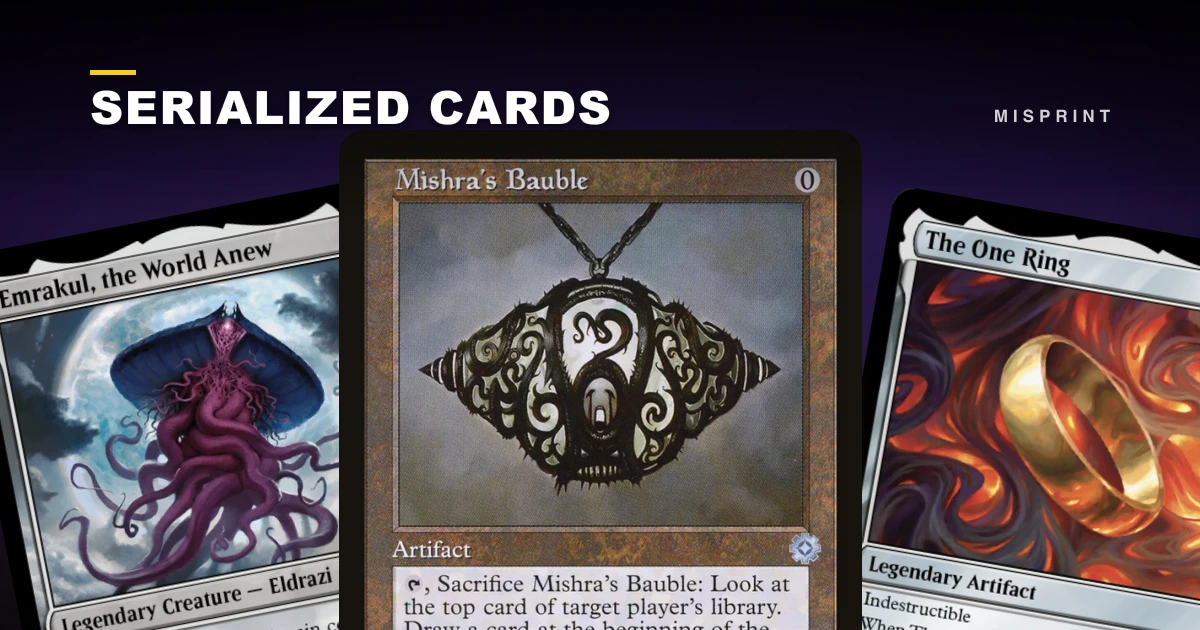
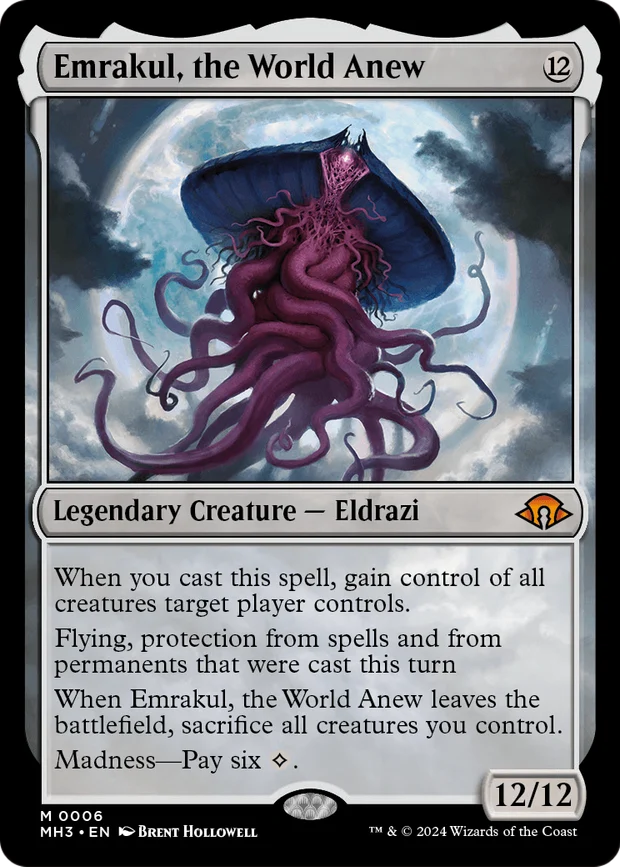
Playability drives the rest of the price. A serialized card that also sees tournament play is worth far more than a serialized card nobody wants to cast. The Modern Horizons 3 Eldrazi titans, printed to just 250 each, trade from roughly $1,100 to $2,500 because they are both scarce and heavily played, with Emrakul, the World Anew commanding the top of that range. A Niv-Mizzet, Guildpact from Murders at Karlov Manor with the identical 250-copy run sells closer to $470, because the demand simply is not there. Same rarity, very different market.
The 1/1 The One Ring
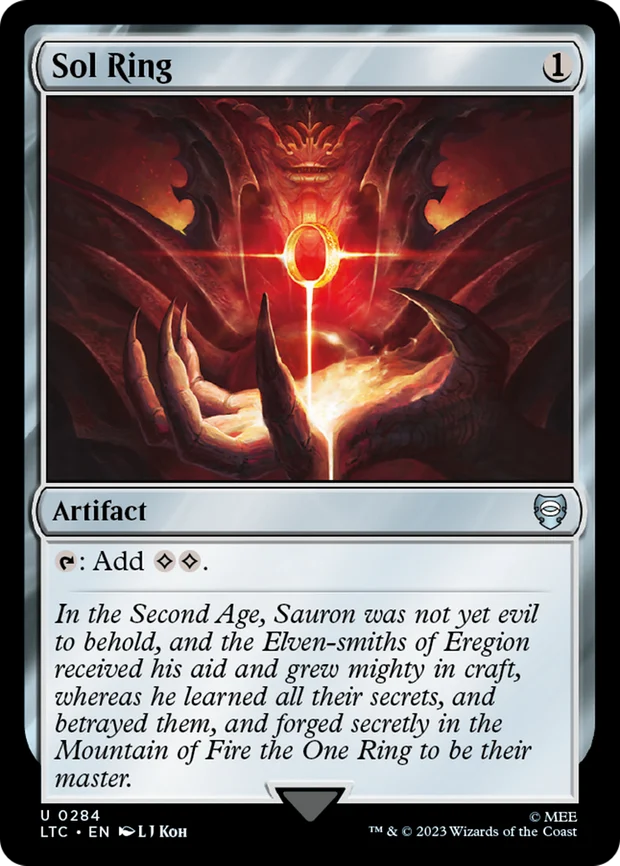
Then came The Lord of the Rings: Tales of Middle-earth in June 2023, and the single most famous serialized card ever made. Alongside serialized Sol Rings representing the various Rings of Power (printed in double-rainbow foil at counts of 300, 700, and 900) and other numbered treatments, Wizards seeded exactly one copy of The One Ring, its inscription rendered in Tengwar, Tolkien's Elvish script, and stamped 001/001. It was the first time a truly unique, one-of-one Magic card could only be pulled from a booster pack rather than handed out at an event.
The odds were staggering. Amazon listed the chance of pulling it at under 0.00003 percent, which implied at least 3.3 million Collector Boosters in circulation. On June 30, 2023, a Toronto retail worker named Brook Trafton cracked the pack and found it. The card was authenticated by PSA, graded a PSA 9, and confirmed as genuine by Magic's official channels.
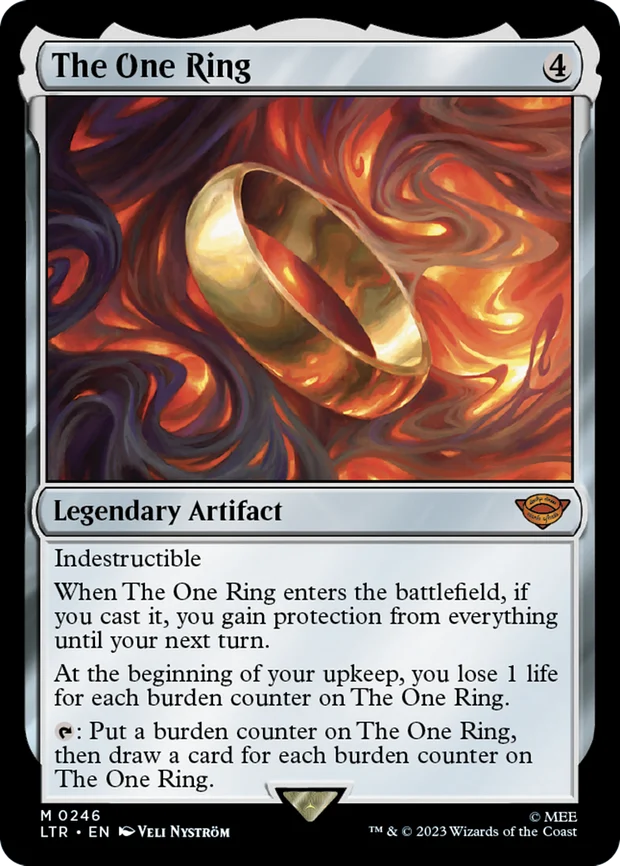
What happened next reads like marketing fiction but is real. Trafton connected with the musician Post Malone, a well-known Magic player, and the meeting turned into a sale. Reported figures differ slightly: Post Malone's representatives cited $2 million, while Trafton told CBC Toronto the number was $2.64 million. Either way it is far and away the most expensive Magic card ever sold, clearing the old Black Lotus records. Post Malone has said he actually plays the card. For the full picture of that market, see our roundup of the most expensive Magic cards ever sold.
It helps that The One Ring is not just a novelty. The regular version is a genuine eternal-format staple that has shown up in tens of thousands of Modern, Legacy, and Vintage decks, and the standard non-foil trades around $100 to $110 as of mid-2026. A card that good, printed exactly once, is about as close to a perfect collectible as Magic has produced.
What serialized cards are worth in 2026
By 2026 there are more than 280 different serialized cards across dozens of products, and the market has matured out of its frenzy. As a rough rule, a serialized card sells for three to four times the price of its non-serialized counterpart, but the spread is enormous. The Brothers' War schematic artifacts range from about $250 for a fringe card up to $1,000 to $2,500 for the most desirable ones. Scarcer, playable cards like the MH3 titans run from about $1,100 to $2,500, while unplayed 250-run legends languish in the mid-hundreds.
There has also been a cooling. Collector Booster prices softened noticeably through 2025, with some sets seeing presale hype near $1,000 collapse below $300 once product hit shelves. Wizards responded by pulling back, leaning on a single "Headliner" chase card per Standard set and letting a few major releases ship with no serialized cards at all, an attempt to keep the category scarce enough to matter. If you are weighing these as long-term holds, our take on Magic cards as an investment is worth reading first.
A practical note on grading: because serialized cards live and die on condition and authenticity, the graded market is where their real values get set, and services like PSA, BGS, and CGC each treat them a little differently (we compare them in PSA vs BGS vs CGC for Magic cards). Tracking sold prices for graded serialized copies, which is the kind of data Misprint follows across the graded market, tends to give a far more honest read than aggregator "market" prices, which can run well ahead of what cards actually sell for.
The bottom line
Serialized cards took Magic's oldest question, "how rare is this really," and answered it with a printed number. That transparency is the whole appeal. Whether it is a 500-run schematic artifact or the lone 001/001 The One Ring sitting in a musician's collection, the stamp is a promise: this many exist, and no more. Prices move, aggregator values can overstate reality, and the category is cooling from its peak, but the underlying idea, finite and provable scarcity, is not going anywhere.