Foil vs Non-Foil Magic Cards: Which Is Worth More?
Sometimes the shiny version is worth ten times more. Sometimes it is worth a few cents more. Here is how to tell.
By Misprint Editorial | Published Jul 9, 2026 | 7 min read
Sometimes the shiny version is worth ten times more. Sometimes it is worth a few cents more. Here is how to tell.
Ask a collector whether the foil is worth more and you will get the most honest answer in the hobby: it depends. For a Reserved List rare from 1999, the foil can be worth eight or ten times the non-foil. For a bulk common out of a modern Collector Booster, the shiny version might add a nickel. The gap between those two outcomes is where a lot of money gets made and lost, so it is worth understanding exactly what drives it.
The short version: foils usually carry some premium, but the size of that premium has been shrinking for a decade, and for most cards printed after about 2018 the foil is worth only a little more than the regular version. The exceptions are where the real value lives.
The general rule, and why it has weakened
Foils entered Magic in February 1999 with Urza's Legacy. For years they were genuinely scarce, printed at roughly one foil per 100 cards, which works out to about one every six or seven packs. Premium treatments did not exist yet, so pulling a foil rare felt like pulling a chase card. That scarcity supported multipliers of two to five times the non-foil, sometimes far more for playable staples.
Then Wizards changed the supply. Set Boosters and, especially, Collector Boosters (introduced with Throne of Eldraine in 2019) are engineered to spit out foils. A Collector Booster is essentially all-foil and alternate-treatment cards. That flooded the market with shiny copies of everything, and the average foil premium on new commons, uncommons, and even ordinary rares collapsed. Today a run-of-the-mill Standard-legal foil rare often trades within a dollar or two of its non-foil, and plenty of foil commons add only pennies.
So the modern question is not "foil or non-foil" in the abstract. It is "which foil, from which era, in which treatment, in what condition."
When foils command a real premium
Old foils (pre-2003 "shooting star" foils). Cards from Urza's Legacy through roughly Onslaught carry the old Wizards logo, a small shooting star in the lower-left corner. These were printed in tiny quantities and many have not survived in clean condition. Even unplayable commons from this window can be shockingly expensive as foils because so few exist. This is a pure supply story.
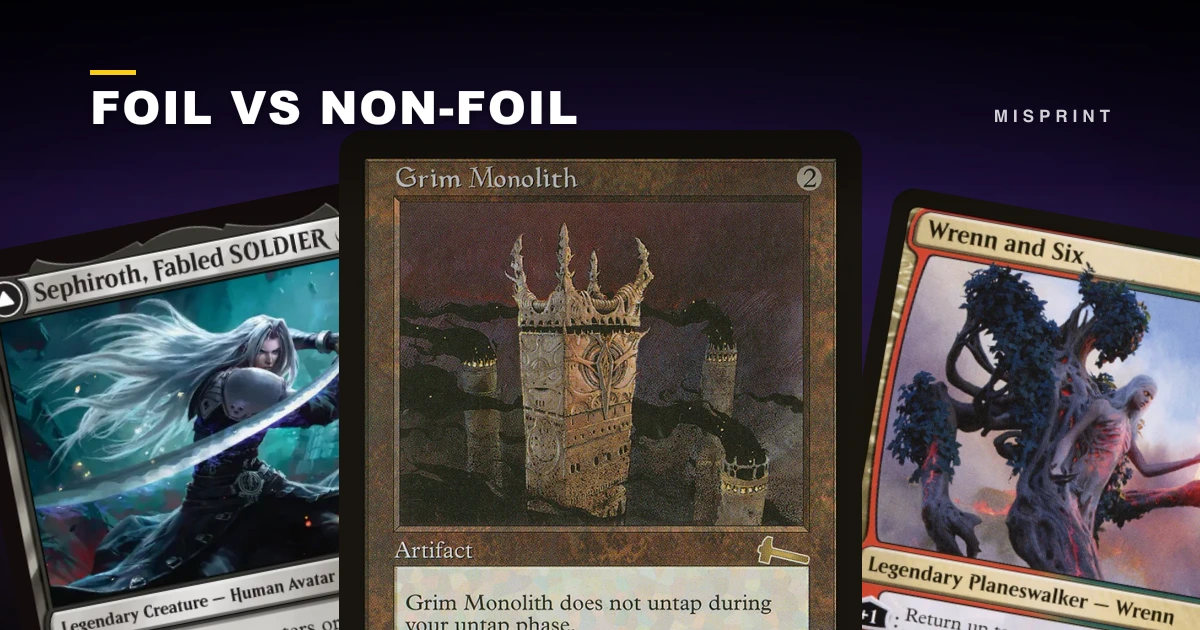
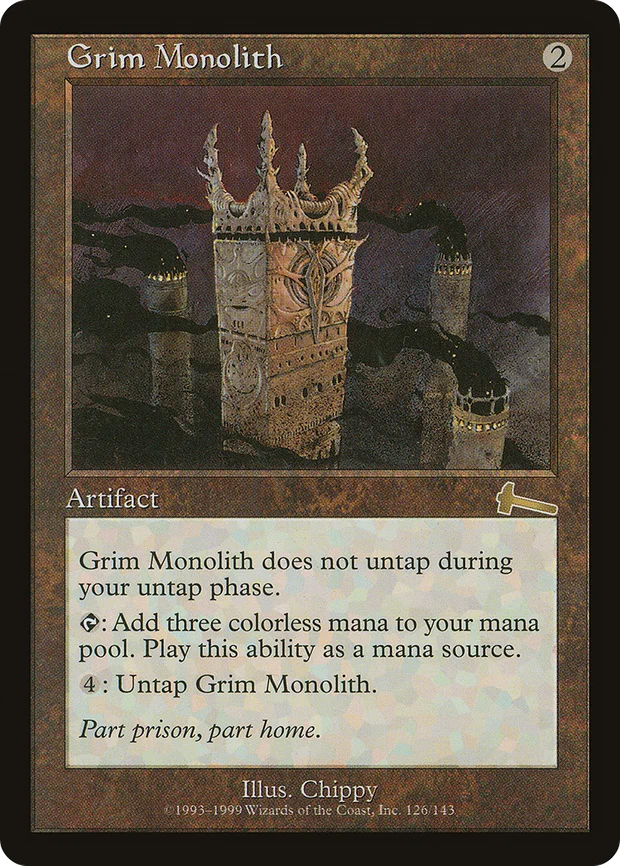
Reserved List foils. This is the big one. Wizards had a brief window where it could print Reserved List cards in premium (foil) form, but it closed that "foil loophole" in 2010 and has kept it closed since. That means the only foil copies of many Reserved List cards that will ever exist were printed in a narrow span from 1999 to 2003. Take Grim Monolith from Urza's Legacy, the very first set to include foils: the non-foil sits around $400 to $435, while the foil, which is genuinely rare and can never be reprinted, trades around $3,500, roughly eight times as much. Fixed supply plus real demand is the strongest premium in the game. If you want the full picture on why these cards can never come back, see Magic's Reserved List, Explained.
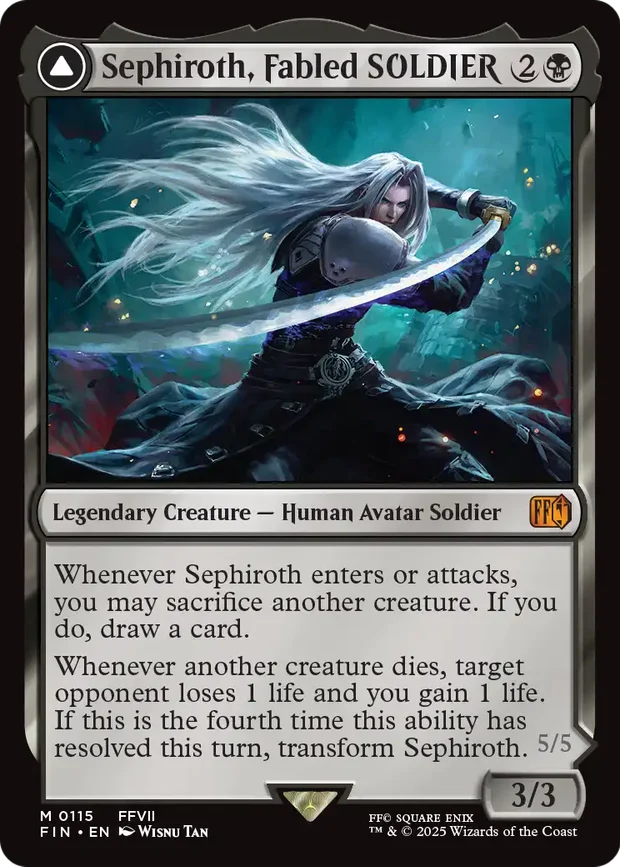
Special foil treatments and Universes Beyond chase cards. This is where the current market is hottest. When a treatment is scarce and tied to a popular property, foils go vertical. In June 2025, surge foil Commander cards from the Final Fantasy set went on a tear: Cloud reportedly jumped from around $150 to about $600, Y'Shtola climbed from around $400 to roughly $700, and Tifa doubled from about $200 to $400 in a matter of days. The non-foil versions did not move nearly as much. Universes Beyond has become a major force here, and we broke that down in How Universes Beyond Changed Magic's Collectible Market.
When foils barely move the needle
For most cards printed in the Collector Booster era, the foil premium is thin. Standard-legal rares, mass-printed commons and uncommons, and reprints that show up in every supplemental product tend to trade close to their non-foil price because the supply of foils is enormous. If anything, some players prefer the non-foil for competitive decks specifically to avoid the condition problems described below.
The takeaway: do not assume the foil is the better buy just because it is shinier. On a modern staple, the extra dollars you pay for the foil may never come back.
The treatments, briefly
The word "foil" now covers a whole family of finishes, and they are not worth the same. A quick tour, from oldest to newest:
- Traditional foil: the classic rainbow-shimmer finish that has been around since 1999.
- Etched foil: debuted in Commander Legends (2020). It looks grainy and metallic, with the effect concentrated along borders and details rather than the whole card.
- Textured foil: introduced in Double Masters 2022, with raised, visible lines you can feel and see from across a table. These were deliberately made rare and became instant chase cards.
- Surge foil: a rippling, wave-like finish first used in the Warhammer 40,000 Commander decks (October 2022) and now common on Universes Beyond releases.
- Halo foil: a swirling, liquid-metal look introduced for the Multiverse Legends cards in March of the Machine.
- Oil slick foil: a dark, glistening raised treatment from the Phyrexia: All Will Be One Compleat Edition bundle, made to look like the cards were dipped in Phyrexian oil.
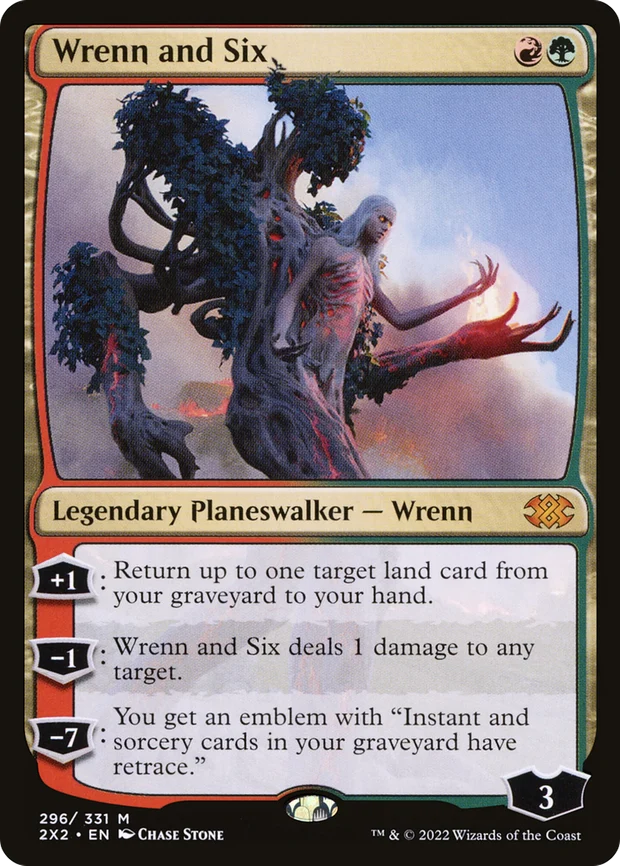
Because these are not interchangeable, always confirm exactly which finish a listing refers to before you pay a premium. A "foil" price on an aggregator might be the cheap traditional version while the textured or surge copy sells for many times more. For a deeper walkthrough with photos, see Every Magic Foil Treatment, Explained.
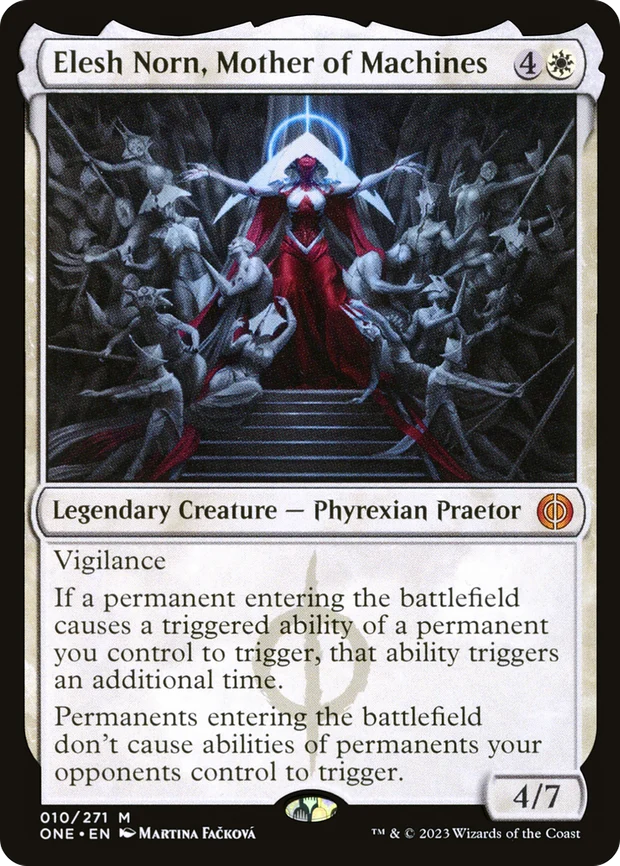
The condition problem: foils are fragile
Here is the catch that trips up new buyers. Foils are much harder to keep in top condition than non-foils, and condition is a huge share of a foil's value.
The most common issue is curling. Foil cards have a metal layer laminated to cardstock, and the two materials react differently to humidity. In dry air the card bends into a taco or, at its worst, a full Pringle shape. Some sets are notorious for it; Commander Legends foils were a low point. Curling can often be reversed with a humidity chamber, but heavy curling scares off buyers and drags the price down.
Then there is clouding (a hazy film that develops on the foil layer), edge wear that shows up as white specks against the dark foil, and the old "print line," a faint seam across the face that appeared on some early foils during manufacturing. Foils also show scratches and fingerprints far more readily than non-foils.
All of this matters enormously if you plan to grade. A foil has to be flatter, cleaner, and better centered than a non-foil to earn the same numeric grade, and gem-mint foils are genuinely scarce, which is exactly why graded foil copies can command such steep premiums. Before you send anything off, read Should You Grade Your Magic Cards? so you know whether the fee is worth it. At Misprint we track graded-market data across grading companies, and the pattern is consistent: for foils, the jump in value from a 9 to a 10 is usually larger than it is for the same card in non-foil.
Quick reference
| Situation | Is the foil worth more? |
|---|---|
| Pre-2003 shooting-star foil | Yes, often a large premium |
| Reserved List foil (never reprintable) | Yes, frequently a big multiple |
| Textured / surge / oil slick chase card | Yes, sometimes many times the non-foil |
| Universes Beyond popular character | Often yes, and volatile |
| Modern Standard-legal rare | Small premium, sometimes near zero |
| Mass-printed common / uncommon | Pennies to a dollar |
| Heavily curled or clouded foil | Often worth less than a clean non-foil |
One last caveat on numbers. Every figure here comes from public price trackers such as TCGplayer, Card Kingdom, MTGStocks, and PriceCharting, and prices move constantly. Aggregator "market" prices can also run ahead of what cards actually sell for, especially on thinly traded foils where a single optimistic listing can skew the average. Check recent sold data, not just the asking price, before you buy or sell.
So which is worth more? The foil, usually, but treat that as a starting assumption and not a rule. The premium is real when supply is fixed, the treatment is scarce, or the property is hot, and it is close to nothing when the card poured out of a Collector Booster last year. And whatever you are buying, look at the card straight-on under good light first, because a foil's condition can make or break every bit of that premium.