Every Magic Foil Treatment, Explained
Traditional to neon ink to oil slick: what each finish is, how to spot it, and which shiny cards actually command a premium.
By Misprint Editorial | Published Jun 1, 2026 | 7 min read
Traditional to neon ink to oil slick: what each finish is, how to spot it, and which shiny cards actually command a premium.
Magic used to have one kind of shiny card. You cracked a pack, saw a rainbow shimmer, and knew you had a foil. That world is gone. Wizards of the Coast now prints something like a dozen distinct foil treatments, and the gap between the cheapest and the most expensive versions of a single card can run from a few dollars to well over a thousand. If you collect, sort, or sell, knowing a surge foil from a textured foil from a neon ink card is no longer trivia. It is the difference between a bulk rare and a chase card.
Here is a plain-language tour of every major foil treatment, roughly in the order Magic introduced them, with real prices and an honest read on which finishes are worth chasing.
The originals: pre-modern and traditional foil
Foils first appeared in Urza's Legacy in 1999. Those early "pre-modern" foils are easy to identify because the whole card, frame and text and art, carries the shine, and they wear the classic shooting-star logo in the corner instead of a set symbol. Print runs were tiny and the stock is famously prone to curling, which is why clean old-border foils still command a premium over their non-foil counterparts.
Eighth Edition in 2003, Magic's 10th-anniversary set, brought the new card frame and the modern traditional foil process, where an artist chooses which parts of the card the rainbow shine accents. This is the default shiny you have opened a thousand times. Worth noting for sellers: on cheap cards a traditional foil can actually sell for less than the non-foil, because foil-only players are a small crowd and the supply is large. Foil premiums only kick in on cards people actually want, a point we dig into in Foil vs Non-Foil Magic Cards: Which Is Worth More?.
The texture era: etched, gilded, and textured
Around 2020, Wizards stopped competing with itself on plain rainbow foil and started experimenting with finishes you can feel.
Foil-etched debuted in Commander Legends (2020). Instead of a full laminate, it uses metallic paint applied to specific areas, so the card looks darker and matte until light hits the etched lines and they sparkle. You see it most often on Commander deck face cards. It is attractive but common, so it rarely drives big value on its own.
Gilded foil arrived with Streets of New Capenna (2022), fitting the set's Art Deco crime-family theme. The golden frame is embossed and physically raised off the card. It is tournament legal and looks luxurious, though print quantities keep most gilded cards affordable.
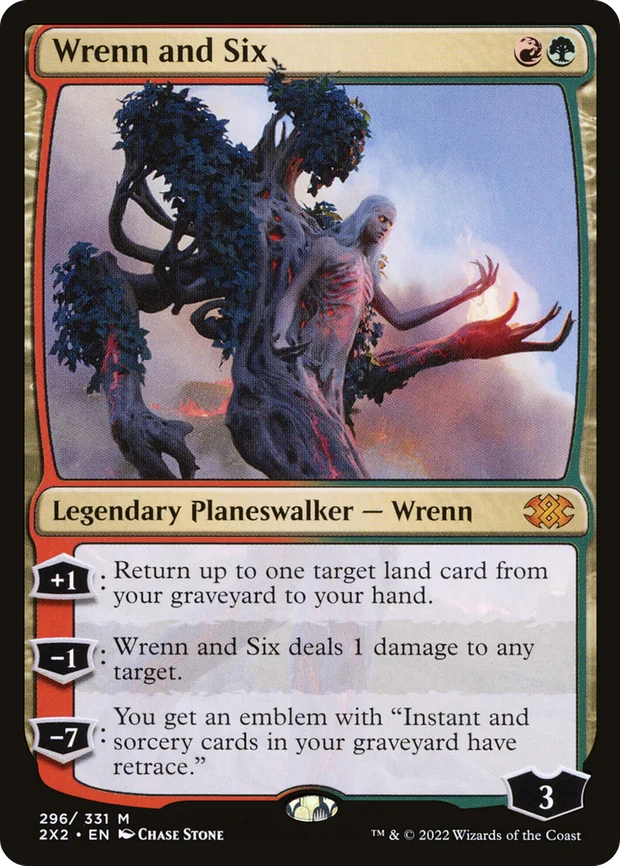
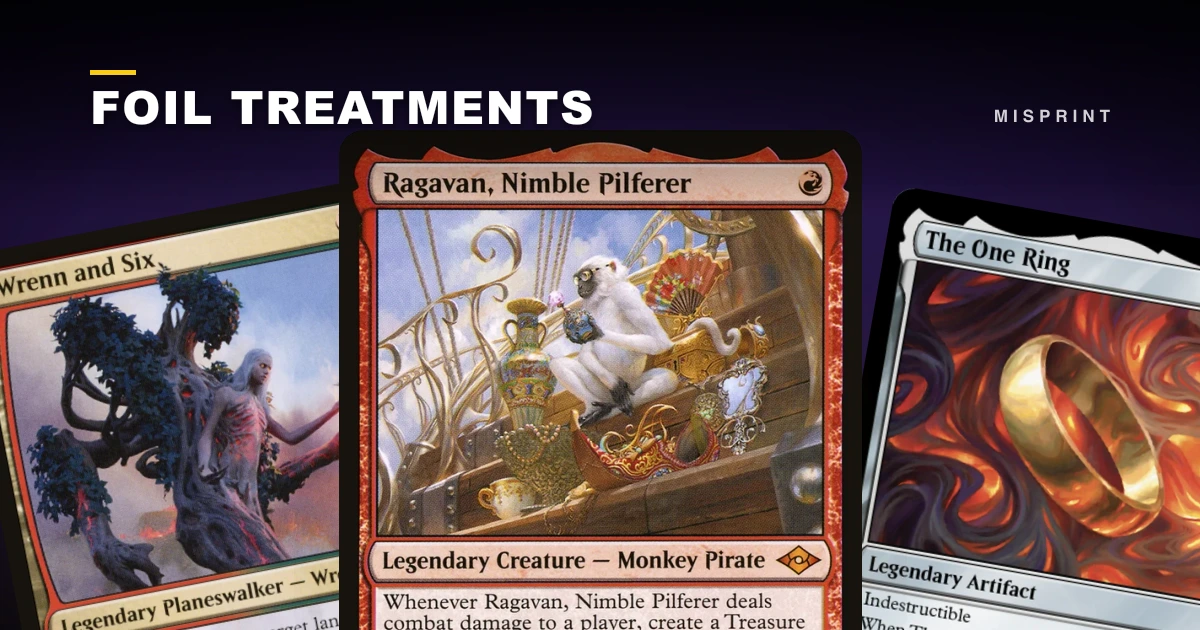
Textured foil is the one collectors actually fight over. Introduced in Double Masters 2022, it adds a fine embossed grain you can feel with a fingertip, giving the art a shifting, holographic depth that reminds a lot of people of vintage Pokémon cards. These appear only in Collector Boosters, so supply is thin. The Double Masters 2022 textured Wrenn and Six sits around $38 to $52 in near mint (versus a few dollars for the normal foil), and the format's marquee reprints have historically pushed higher. Later sets reused the idea, including a stained-glass-style textured foil for the legends of Dominaria United. As always, aggregator prices can run ahead of actual sold prices, so check recent sales before you buy or list.
The Universes Beyond boom: surge, halo, and confetti
When Magic leaned hard into crossover sets, it also leaned into flashy foils to sell Collector Boosters.
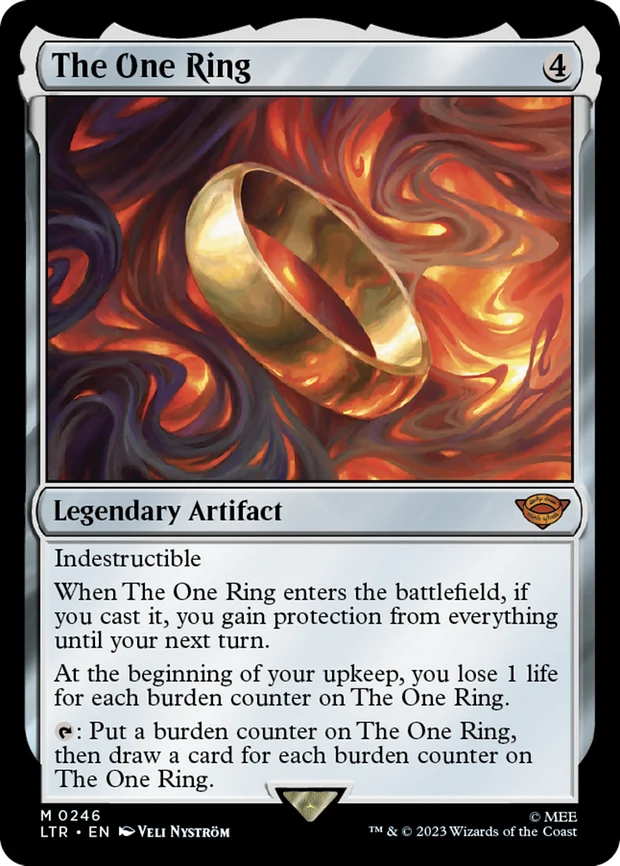
Surge foil launched in the Warhammer 40,000 Commander decks (2022) and became famous in The Lord of the Rings: Tales of Middle-earth (2023). It lays a rippling, scale-like pattern under the foil so the whole card looks like it is vibrating with light. It is now the house-style premium finish for Universes Beyond products. Surge foil versions of genuinely wanted cards carry real premiums, and the treatment is a big part of why crossover sets reset collector expectations, which we cover in How Universes Beyond Changed Magic's Collectible Market.
Halo foil showed up in March of the Machine (2023). It is a cousin of surge foil, with swooping curved lines of shine layered over the art. Pretty, but printed widely enough that it mostly reads as a nice bonus rather than a value driver.
Confetti foil came with Wilds of Eldraine (2023), specifically on the Enchanting Tales bonus sheet. It scatters tiny speckles of foil across the card like thrown glitter, a descendant of the earlier galaxy foil from Unfinity. It is one of the harder pulls, so confetti versions of popular reprints like Sylvan Library sell at a clear premium over the standard foil.
Neon ink: the priciest treatment on this list
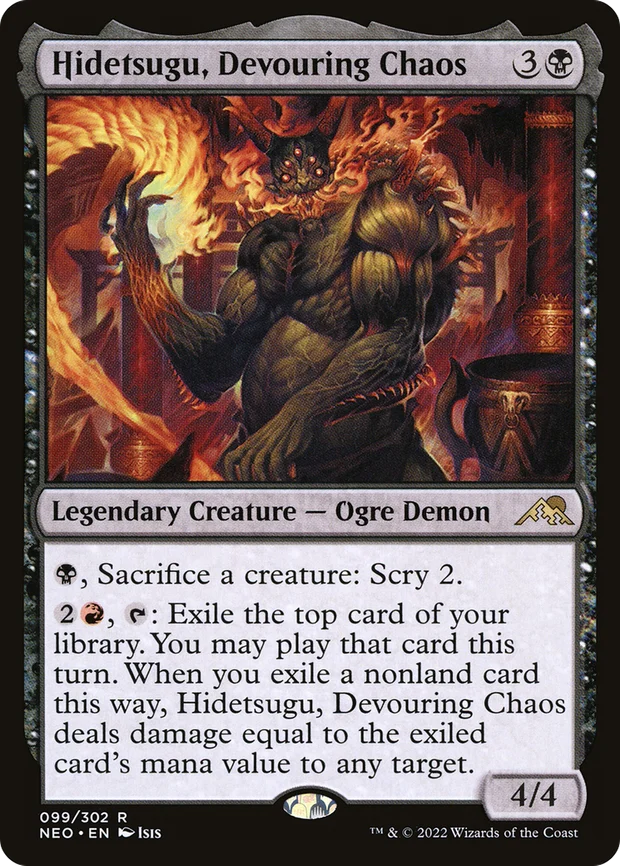
Kamigawa: Neon Dynasty (2022) produced the single most valuable foil treatment Magic has made: neon ink. Applied to showcase versions of Hidetsugu, Devouring Chaos, it comes in colored variants (blue, green, yellow, and the very rare red), where the frame glows in a solid fluorescent color instead of rainbow. The blue is the common one, the red is the trophy. The standard neon red Hidetsugu trades in the $500 range, and pristine or premium listings have been advertised well into four figures. Values move fast on cards this thin in supply, so treat any single price as a snapshot.
Phyrexia's finishes: oil slick and step-and-compleat
Phyrexia: All Will Be One (2023) gave us two of the most on-theme treatments in the game. Step-and-compleat foil stamps a repeating Phyrexian Phi symbol across the card in foil. It looks great, though collectors noted the pattern can wear if the surface is rubbed repeatedly.
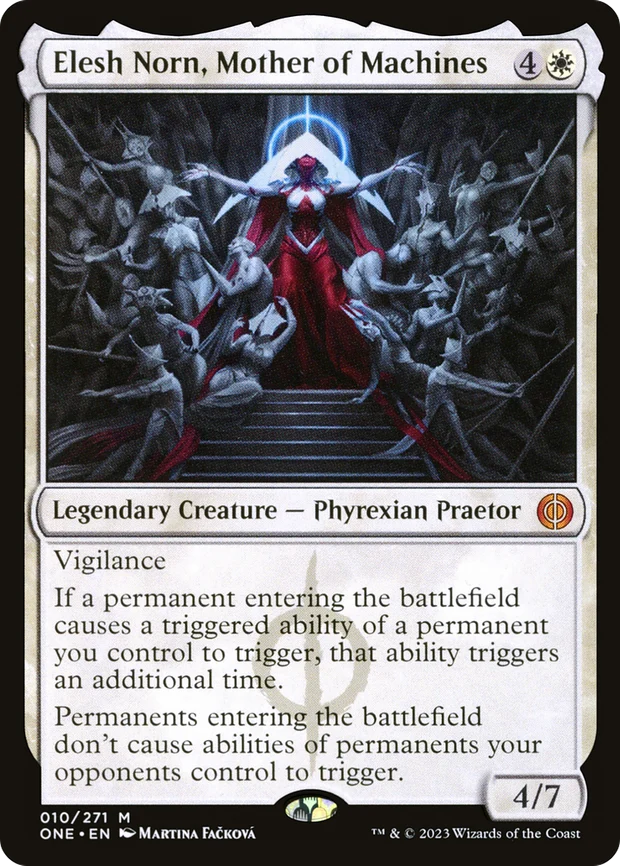
The star was oil-slick raised foil, available only in the set's Compleat Edition bundle. It renders the card in a dark, greasy, petroleum-rainbow sheen with a raised textured outline, and the extreme scarcity of the bundle made these instant collector pieces that trade well above the normal foils.
Double rainbow and the serialized cards
Double rainbow foil debuted in The Brothers' War (2022) and is reserved for the set's serialized cards. It stacks two foil layers for an intense, deep shine, and it was applied to the retro-schematic artifacts numbered out of 500.
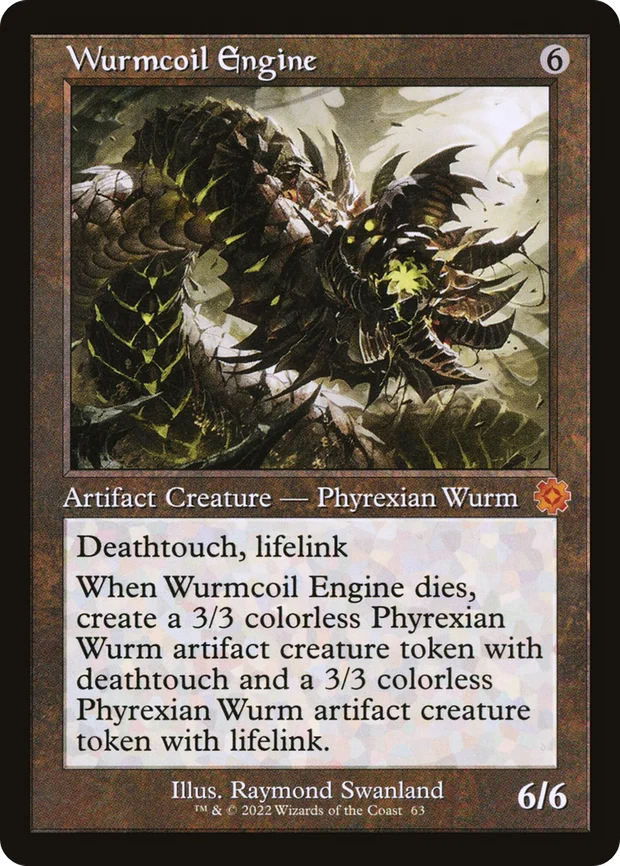
Because each is hand-numbered and Collector Booster only, prices swing hard by card: serialized schematic Wurmcoil Engine has traded in the $450 to $900 range, while lesser artifacts land anywhere from $250 up. Serialization has since become its own value category across Magic, and it is worth understanding separately in Serialized Magic Cards, Explained.
The newest wave: ripple, raised, and fracture
Wizards keeps inventing finishes. Ripple foil arrived in Modern Horizons 3 (2024) and makes the card shimmer like the surface of disturbed water; it landed on some of the format's most expensive reprints, covered in Modern Horizons 3: The Most Valuable Cards. Raised foil debuted in Outlaws of Thunder Junction (2024), embedding a physically elevated golden stamp into the frame of the Vault showcase cards, then returned on Bloomburrow's golden-framed showcases. Fracture foil came with Duskmourn: House of Horror (2024) on its Japan Showcase cards, giving the card border a cracked, faceted foil texture. These are still finding their price levels, but the pattern is clear: scarcity plus a distinctive look equals a premium.
Which foils actually hold value
A treatment alone does not make a card valuable. Demand for the card underneath it comes first. But scarcity multiplies that demand, and the rule of thumb is simple: the treatments locked to Collector Boosters, serialized runs, or one-off bundles (neon ink, textured, oil slick, double rainbow, confetti, surge) are where premiums live. The widely printed finishes (traditional, etched, gilded, halo) are lovely to own and rarely move the needle on price. If you are deciding what to keep versus sell, prioritize the scarce treatments on cards people play, and remember that condition and grading matter more the pricier the foil gets. Misprint's graded-market data is one way to track how much a specific treatment is actually clearing at, rather than trusting a single aggregator sticker.
| Treatment | Debut set | Scarcity | Value read |
|---|---|---|---|
| Traditional | 8th Edition (2003) | Common | Low, sometimes under non-foil |
| Foil-etched | Commander Legends (2020) | Common | Low |
| Gilded | Streets of New Capenna (2022) | Moderate | Low to moderate |
| Halo | March of the Machine (2023) | Common | Low to moderate |
| Confetti | Wilds of Eldraine (2023) | Scarce | Moderate premium |
| Surge | Warhammer 40K / LOTR (2022 to 2023) | Scarce | Moderate to high |
| Textured | Double Masters 2022 | Scarce | High |
| Step-and-compleat | Phyrexia: All Will Be One (2023) | Scarce | Moderate to high |
| Oil-slick raised | Phyrexia Compleat bundle (2023) | Very scarce | High |
| Double rainbow (serialized) | The Brothers' War (2022) | Very scarce | High to very high |
| Neon ink | Kamigawa: Neon Dynasty (2022) | Very scarce | Highest on this list |
Prices quoted here move constantly, and aggregator listings often sit above real sold prices, so always sanity-check recent sales before you buy or sell a premium foil.