How to Spot a Fake Magic: The Gathering Card
The light test, rosette printing, and the tells counterfeiters still cannot fake.
By Misprint Editorial | Published May 5, 2026 | 7 min read
The light test, rosette printing, and the tells counterfeiters still cannot fake.
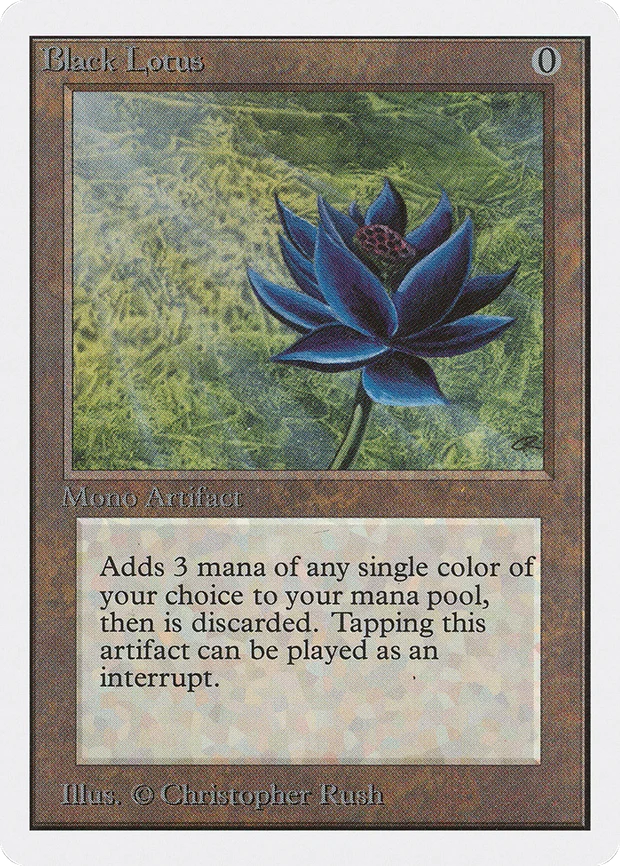
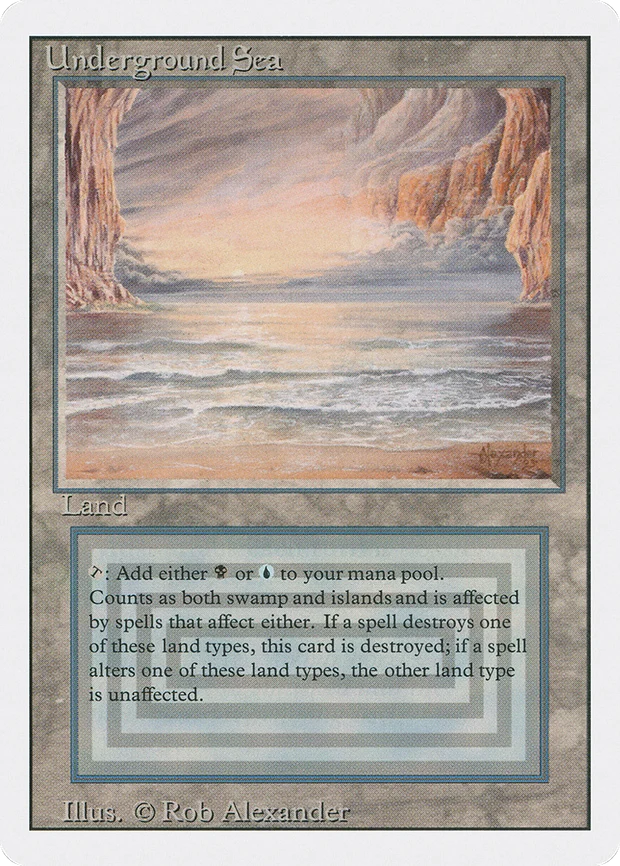
Counterfeit Magic cards used to be easy to laugh off. The old fakes were glossy, too light, and printed with fuzzy art that fell apart under any real scrutiny. That is no longer the world we live in. The counterfeits circulating on eBay, at flea markets, and inside "vintage collection" lots in 2026 are good enough that a rushed buyer will miss them, and the money on the line is serious. An Unlimited Black Lotus tracks around $20,000 to $24,000 on aggregators like MTGPrice, and even a plain Revised dual land such as Underground Sea sits near $700 to $1,200. When a fake can pass for four figures, it pays to know exactly what you are looking at.
The good news is that Wizards of the Coast has printed cards the same way for decades, and that consistency leaves fingerprints. Here is how to read them.
Why counterfeiters aim high (and now low too)
For years the fakes clustered around the obvious trophies: the Power Nine, the original dual lands, and Reserved List staples that will never be reprinted. Those are still the primary targets, because a single successful fake nets thousands of dollars.
What changed is the bottom of the market. Counterfeiters now churn out $15 Commander staples, Standard playables, and Pauper mainstays by the sheet, betting that nobody loupe-checks a card they paid twelve dollars for. That means the habit of authenticating is not just for people buying a Black Lotus. It is worth building for anything you buy sight-unseen.
The five-second checks
Start with your hands and your eyes before you reach for any tools.
Feel and weight. Genuine Magic cardstock has a specific stiffness and a slightly textured face. A real card weighs about 1.7 to 1.8 grams. Many counterfeits run heavier, closer to 1.9 grams, because the substitute cardstock packs in more plastic. Fakes often feel too slick, too soft, or oddly flexible. If you own a jeweler's scale, weigh a card you know is real and compare.
The look under good light. Hold the card at an angle in daylight. Authentic cards have a matte-to-satin finish that scatters light evenly. Cheap fakes are glassy or plasticky, and the artwork can look slightly washed out or oversaturated compared to a genuine copy of the same card. When possible, put a suspect card next to one you trust from the same set. Side by side, a fake usually announces itself.
The light test and the blue core
This is the single most useful test that requires no equipment beyond your phone. In a dim room, press your phone's flashlight flat against the back of the card and look at the front.
A real Magic card is not solid cardboard. It is two paper layers bonded around a thin glue core, and that core carries a faint blue-grey tint. On a genuine card, light passes through with a distinct bluish cast, and you can see the layout backlit as an even, soft glow. Fakes fail this in one of two directions. Some are completely opaque and block the light, because they used the wrong core material. Others are too thin and let light blast through, looking pale and washed out with no blue hue at all.
You can confirm the same thing by looking at the edge of the card under strong light. A real card shows that faint blue-grey line sandwiched in the middle. Most counterfeits reveal a black core or a uniformly white one instead. Of all the quick checks, the blue core is the hardest for a counterfeiter to reproduce, which makes it the one worth trusting most.
Under a loupe: the rosette test
If you get serious about this, buy a jeweler's loupe of 30x magnification or higher. It is the cheapest insurance in the hobby.
Real Magic cards are made with offset printing, which builds every color from thousands of tiny dots arranged in a tidy, repeating flower pattern called a rosette. Here is the key part. On a genuine card, the solid black text and the black border sit cleanly on top of those colored rosettes as crisp, unbroken ink. On a counterfeit, the black is built from the same overlapping cyan, magenta, and yellow dots as the artwork, so the text looks fuzzy, dotty, and slightly out of register under magnification. A real card's rosettes are uniform and orderly. A fake's dot pattern looks chaotic, and the black is never truly black. This is about as close to foolproof as any single test gets.
The green dot test
Flip the card over and find the green orb in the ring of mana-color dots on the card back. Under your loupe, look inside the bright part of that green area. Genuine cards printed since Alpha carry four small red dots arranged in an L shape inside the green. Wizards has reused the same back-of-card design file since 1993, so this pattern is remarkably consistent across sets and decades.
The catch: this test has aged. Sophisticated counterfeiters know about the green dot and have started reproducing red dots there to pass a quick check. Treat a missing L pattern as a strong red flag, but do not treat its presence as a clean bill of health. Pair it with the rosette and blue-core tests rather than leaning on it alone.
Font and layout tells
The card back hides a few more details that older fakes botch. On authentic cards, the letter "T" in the word "The" (in the reminder text on the back) has a smooth left edge and a subtly wavy right edge. Look closely at "Deckmaster" as well, where tiny crescent marks sit above the letter E's like small horns. These micro-details are easy to overlook when you are copying a scan, and their absence or distortion often gives a fake away. On the front, watch for off fonts, incorrect collector numbers, wrong set symbols, or artist credits that do not match the real printing.
Foils, and the fakes getting better
Foils deserve extra caution. On a genuine foil, the shine is integrated into the printing and follows the art naturally. Many counterfeit foils use a separate plastic-like reflective layer that looks pasted on, with a flatter or more uniform sparkle. The holographic stamp on modern rares is printed flat into the card. If the stamp feels raised or looks glued, be suspicious.
It is worth being honest about the arms race. The best fakes now get the weight, the back design, and even the rosette close enough that no single test is decisive. That is why you stack them: feel, light, edge, loupe. A card that passes all four is almost certainly real. A card that fails any one deserves a hard second look.
Tests to skip
Some old advice needs to die. The rip test (tearing a corner to look for a blue or purple line in the core) and the bend test are destructive, and modern fakes can pass them anyway. You could shred a genuine card for nothing. Skip them entirely. The water test and other folk methods are similarly unreliable. Non-destructive inspection tells you everything the destructive tests would, without the risk.
When real money is on the line, grade it
For anything expensive, the surest protection is a third-party grader. PSA, BGS, and CGC all authenticate before they grade, and a card in a sealed slab from a reputable service has already cleared an expert's eyes. Buying already-graded copies of high-value vintage removes most of the counterfeit risk in one move, which is a big part of why serious collectors grade at all. Graded-market data, including the kind of population and sold-price tracking we follow at Misprint, also makes it easier to sanity-check whether a listing's price and grade actually line up.
For raw cards, build the habit anyway. Buy from sellers with real return policies, compare against a known-good copy, and run the four-test stack before money changes hands.
Quick reference
| Test | What real looks like | Red flag |
|---|---|---|
| Weight | About 1.7 to 1.8 g | 1.9 g or heavier |
| Light test | Even glow, bluish cast | Opaque, or pale with no blue |
| Edge / core | Faint blue-grey line | Black or uniform white core |
| Rosette (loupe) | Crisp black on tidy dots | Fuzzy black built from CMYK dots |
| Green dot | Four red dots in an L | Missing (but can be faked) |
| Foil | Shine integrated into art | Pasted-on, uniform, raised stamp |
Prices quoted here move constantly, and aggregator numbers often run ahead of what cards actually sell for, so treat them as ballpark. The authentication tells, by contrast, have barely changed in thirty years. Learn them once and they protect every purchase you make after.