Magic Card Rarities Explained: Common to Mythic and Beyond
The symbol color is only the start of the story.
By Misprint Editorial | Published May 1, 2026 | 7 min read
The symbol color is only the start of the story.
Open a pack of Magic: The Gathering and the first thing you learn to read is the little symbol on the right side of the card, just below the art. Its color tells you the card's rarity. That single detail drives how the game is designed, how packs are built, and how the secondary market prices nearly everything. But rarity in Magic has grown well past the four tiers most players can name, and the gap between "rare" and "actually rare" is now wide enough to drive a truck through.
Here is how the system works, from the commons you toss in a bulk box to the one-of-one that sold for two million dollars.
The color code, decoded
Since the Exodus set in 1998, the color of a card's expansion symbol has been the universal shorthand for rarity. Before that, every symbol was printed in black regardless of how scarce the card was, which is why sorting Alpha, Beta, and Unlimited cards still takes a reference chart. From Exodus forward, the code is fixed:
- Black symbol: common
- Silver symbol: uncommon
- Gold symbol: rare
- Orange or bronze symbol: mythic rare
That is the whole visible ladder. Everything more exotic is a treatment layered on top of one of these four tiers, not a fifth or sixth rarity. Keep that distinction in mind, because marketing copy loves to blur it.
Common
Commons are the bricks. You get the most of them in every pack, they carry the fundamentals of Limited play, and they are the entire basis of the Pauper format, where only commons are legal. Most are worth pennies. A handful of format-defining commons buck that, but as a rule the value here is in playing the cards, not holding them.
Uncommon
Uncommons sit one notch up and tend to do more interesting things: removal spells, efficient creatures, the glue of a deck. This is the tier that most reliably embarrasses the rarity-equals-value assumption. An uncommon that slots into dozens of Commander and Constructed decks can out-earn plenty of rares from the same set.
Rare
Rares are the splashy build-arounds and the payoffs, and there is usually one rare-or-mythic slot per pack. Historically this tier includes some of the most valuable cards ever made, because the game's oldest and most powerful cards predate mythic entirely. The original dual lands and most of the Reserved List live here. If you want the deeper story on why old rares command what they do, see The Original Dual Lands: A Collector's Value Guide.
Mythic rare
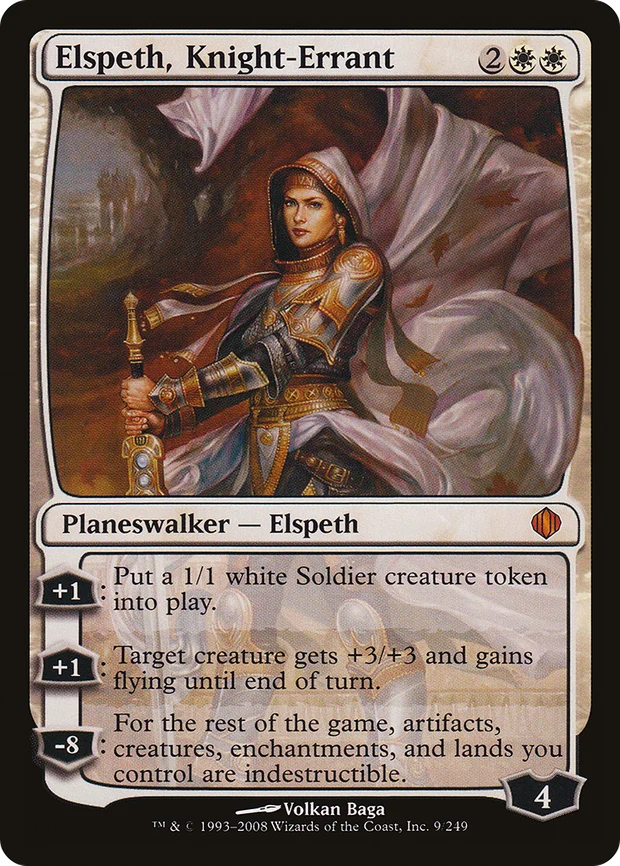
Mythic rare is the newest of the four, introduced with Shards of Alara in October 2008. Wizards created it to give the truly marquee cards, the biggest bombs and the planeswalkers, a home above ordinary rares. Elspeth, Knight-Errant was one of that first wave, and mythic planeswalkers quickly became the tier's signature.
Mythic is scarce, but it is not a guarantee of money. It is a design label for "this card is a big deal," and plenty of mythics from recent sets sell for a dollar or two once the hype cools.
How rarity actually lands in your pack
The modern Play Booster, which replaced the old draft and set boosters in 2024, holds 14 cards: seven commons (one of which has a 12.5 percent chance of instead being a card from The List), three uncommons, one guaranteed rare or mythic, two wildcard slots that can be any rarity, and a basic land. Most packs also drop in a non-playable art card or token on top of the 14.
The key number is the split on that guaranteed slot. It comes up rare roughly six times out of seven and mythic about one time in seven, so call it a 1-in-7 shot at mythic. Because the two wildcard slots can each independently roll into rare or mythic, plenty of packs deliver a second or even a third hit above the guaranteed card. If the difference between Play and Collector Boosters is new to you, Magic Booster Types Explained: Play, Collector, and Beyond breaks down how each product is built.
Rarity is not the same as value
This is the single most important thing to internalize. The rarity symbol tells you how often a card appears in its print run. It says nothing on its own about demand, playability, or price. A mythic can be a bulk card. An uncommon can be a staple worth more than every rare in the box. Age, format legality, foil treatment, condition, and grade all move price independently of the symbol. For the full breakdown of what actually drives price, read What Makes a Magic Card Valuable?.
Beyond the four tiers: treatments and bonus sheets
Once you leave the standard ladder, "rarity" starts to mean scarcity of a specific version rather than a printed symbol. A few cases are worth knowing.
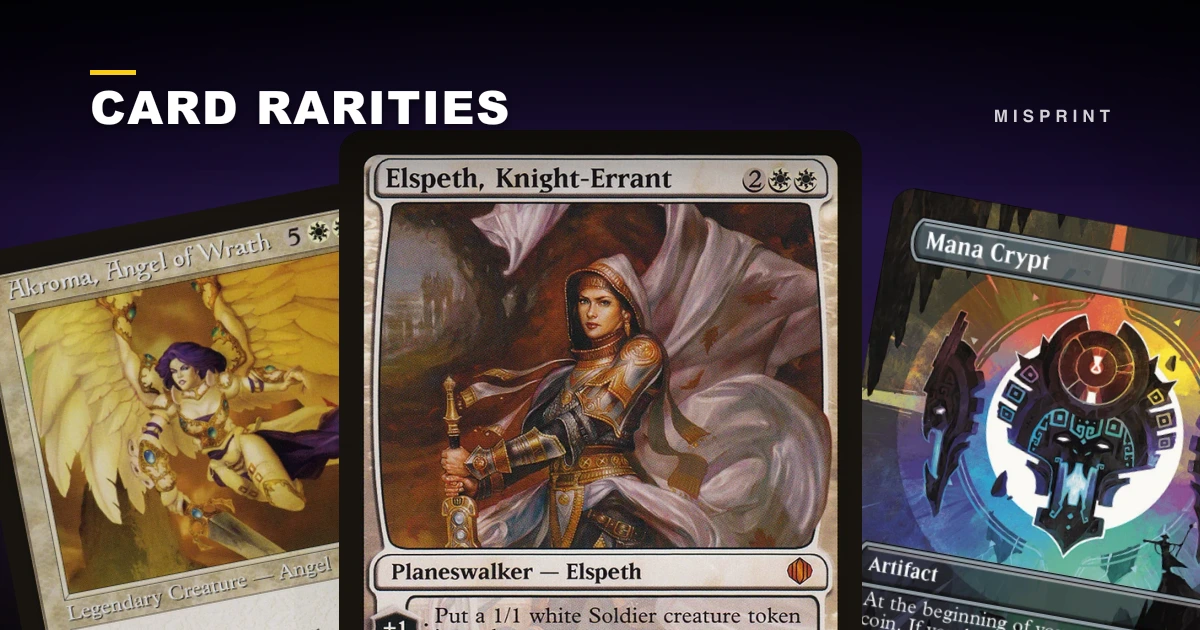
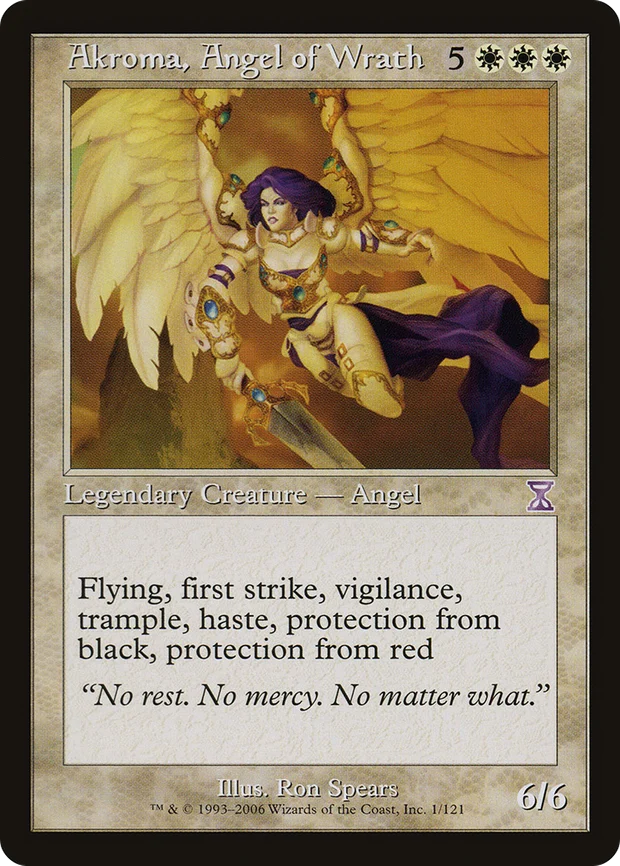
The purple timeshifted symbol. Time Spiral in 2006 did briefly experiment with a genuine extra rarity: a 121-card subset of reprints drawn from every set before Mirrodin, cards like Akroma, Angel of Wrath, stamped with a purple expansion symbol that sat above rare. Wizards reused the purple treatment for the retro-frame timeshifted sheet in Time Spiral Remastered in 2021, then retired it. The company found that a color outside the normal ladder mostly just confused players, so purple is now a collector curiosity rather than a live rarity.
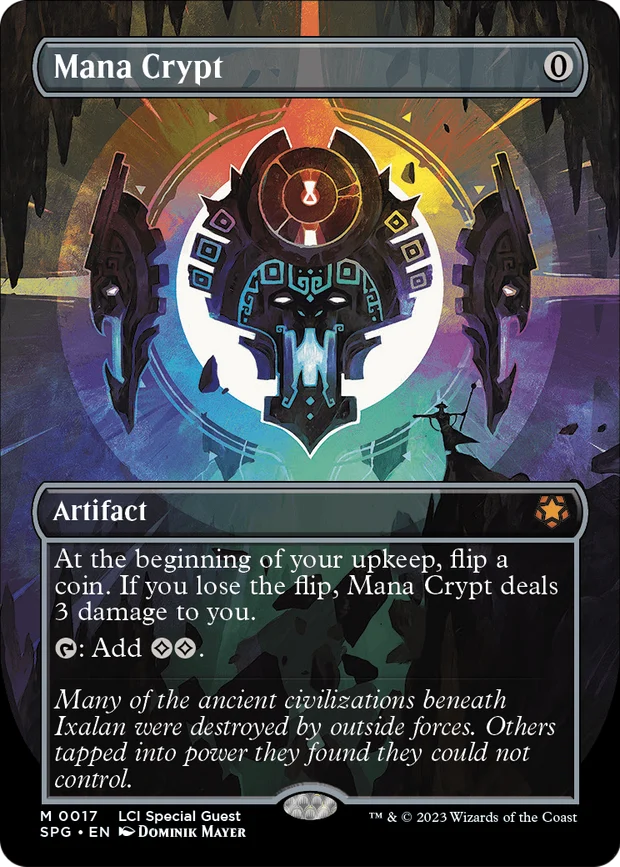
Bonus sheets and Special Guests. Modern sets often ship with a side sheet of cards drawn from Magic's history. Special Guests, introduced with The Lost Caverns of Ixalan in 2023, carry their own set code, SPG, and their own symbol so they read as clearly separate from the main set. They are seeded thinly: in Foundations, a Special Guest turned up in roughly 1 out of 64 Play Boosters, with better odds in Collector Boosters. The cards themselves are often high-demand reprints, including Lost Caverns of Ixalan's Mana Crypt, which is exactly why people chase them.
Serialized cards: the real scarcity guarantee
The closest thing Magic now has to a rarity above mythic is not a symbol at all. It is a serial number stamped into the art box, in the format 047/500, telling you exactly how many copies of that specific version exist.
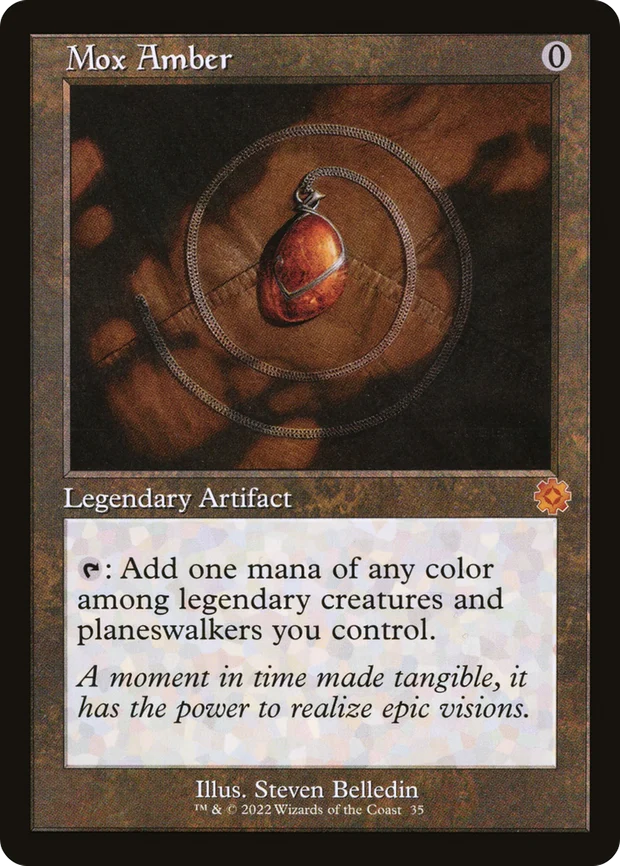
The program launched properly with The Brothers' War in November 2022, which put 63 retro-frame artifacts into Collector Boosters, each numbered to 500 with a distinctive double-rainbow foil. These trade for real money: the serialized Mox Amber has changed hands in the $1,000 to $2,500 range on the secondary market, though serialized prices swing hard with demand and aggregator listings often run ahead of what cards actually sell for.
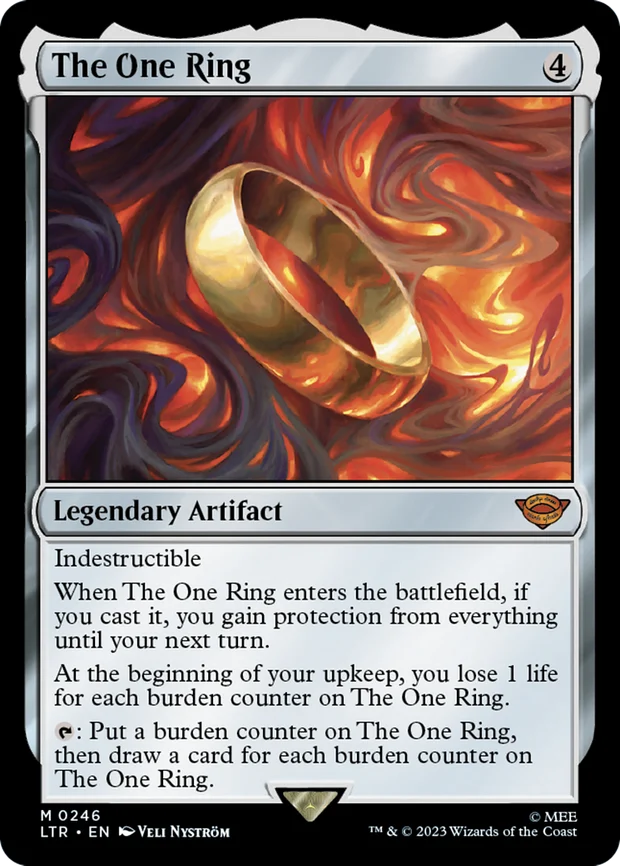
The ceiling case is The One Ring from The Lord of the Rings: Tales of Middle-earth in 2023. Wizards printed exactly one serialized 1/1 copy, in the Black Speech of Sauron using Tengwar script, and buried it randomly in the print run. After it was opened in Toronto and graded PSA 9, it sold to musician Post Malone for $2 million, making it the most expensive Magic card ever sold. That single card is the whole thesis of serialization in one artifact: scarcity you can verify down to the individual copy.
For the mechanics of how these numbered runs work and how they are priced, see Serialized Magic Cards, Explained. And if you want to know where the biggest numbers cluster, The Most Expensive Magic: The Gathering Cards Ever Sold is the companion piece.
What collectors should take away
Read the symbol first, but never stop there. Rarity is the game designer's tool for pacing power and building packs, and it correlates loosely with value at best. The money lives at the intersection of scarcity, demand, condition, and treatment. A common can anchor a format, a mythic can be worthless, and a numbered 1-of-1 can outsell a house. At Misprint we track graded-market data across all of these tiers, and the pattern holds: the printed rarity is where the conversation starts, not where it ends.
Rarity at a glance
| Tier | Symbol color | Introduced | Notes |
|---|---|---|---|
| Common | Black | 1993 | Backbone of Limited and Pauper |
| Uncommon | Silver | 1993 | Often the sneaky-valuable tier |
| Rare | Gold | 1993 (color code 1998) | Home of the Reserved List and dual lands |
| Mythic rare | Orange/bronze | 2008 | About 1-in-7 of the rare slot |
| Timeshifted | Purple | 2006 | Retired experiment, collector curiosity |
| Special Guests | SPG symbol | 2023 | Bonus-sheet reprints, seeded thinly |
| Serialized | Stamped number | 2022 | Numbered to 500 (or 1) per version |
Prices and pull rates cited here move constantly, and tracker prices can sit above real sold prices, so treat every figure as a snapshot rather than a quote.