Collecting Magic: The Gathering for Beginners
Where to start, what to buy, and how to protect it, without lighting money on fire.
By Misprint Editorial | Published Jun 30, 2026 | 6 min read
Where to start, what to buy, and how to protect it, without lighting money on fire.
Magic: The Gathering has been printed continuously since 1993, which means a new collector in 2026 is walking into more than three decades of cards, dozens of active sets, and a secondary market where a single piece of cardboard can cost anywhere from a nickel to a used car. That range is exciting once you understand it and paralyzing before you do. The good news is that the fundamentals are simple, and you can build a collection you actually enjoy for far less than the horror stories suggest.
This guide walks through the parts that matter first: how sets and rarities work, whether to buy sealed product or singles, how to protect what you own, and how to spend a starter budget without regret.
Start by understanding sets
Everything in Magic is organized into sets, and knowing which kind of set a card comes from tells you most of what you need to know about its availability and price.
Standard sets are the main releases that rotate through competitive play. In 2026 the calendar includes in-universe sets like Lorwyn Eclipsed (January) and Secrets of Strixhaven (April), alongside Universes Beyond crossovers such as Marvel Super Heroes (June) and Star Trek (November). All of these ship with Play Boosters and print in large quantities, so most individual cards from a fresh Standard set are cheap, often under a dollar.
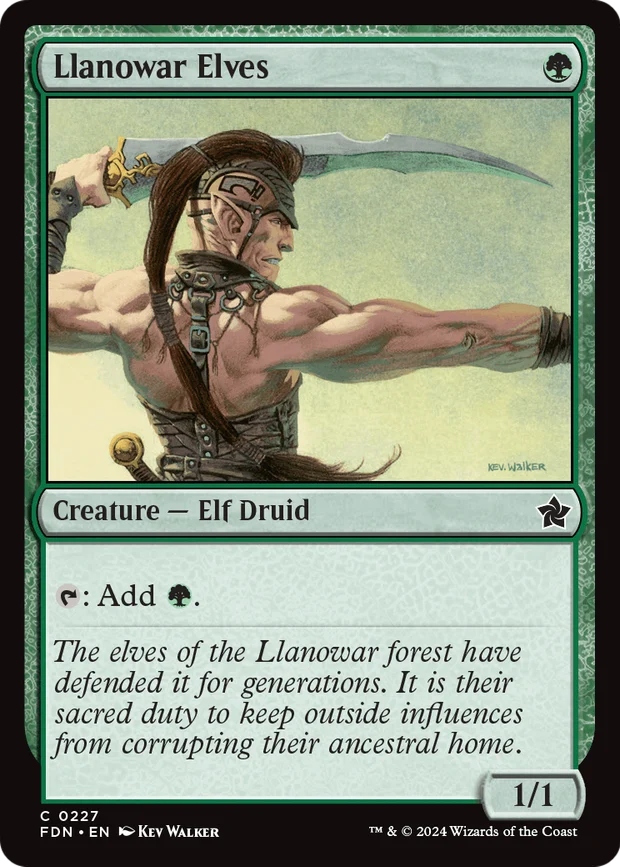
Then there is Foundations, which Wizards designed as a stable baseline set. Its reprints stay legal in Standard until at least 2029, which makes it one of the friendliest starting points for a new collector. A card like Llanowar Elves, the classic one-mana green creature, is exactly the kind of evergreen staple you will use across many decks.
Special sets like Modern Horizons and the various Masters sets sit outside Standard and are aimed at older formats and collectors. These tend to hold value better because they are printed less and include powerful cards that never rotate out of relevance. If you want a fuller breakdown of how the release cadence works and which sets tend to hold value, our guide to which Magic sets hold their value best goes deeper.
Learn the rarity ladder
Every card has a rarity, printed as the color of its set symbol: common (black), uncommon (silver), rare (gold), and mythic rare (orange-red). A typical Standard set has roughly 20 mythics, around 60 rares, and 80 or more each of uncommons and commons.
Here is the trap new collectors fall into: rarity is not the same as value. Plenty of rares are worth pennies, and a handful of commons and uncommons are format staples that cost real money. Value comes from playability, scarcity, and demand, not just the symbol on the card. We break this down fully in what makes a Magic card valuable, but the short version is that a card people actually want to play beats a card that is merely hard to pull. For the full rarity system, including the newer bonus-sheet and serialized tiers, see Magic card rarities explained.
Sealed product versus singles
This is the first real fork in the road, and it comes down to what you enjoy.
Buying sealed product means cracking booster packs and boxes. It is fun, it is random, and it is almost always a losing proposition on pure expected value. A Play Booster contains 14 cards and one token or art card, and a 30-pack box runs roughly $120 to $150 depending on the set. Collector Boosters are the premium option, packed with foils and alternate-art treatments, at around $280 to $320 for a 12-pack box. You are paying for the experience of opening, not for a guaranteed return. If you love the surprise, that is a perfectly good reason to buy packs. Just do not treat it as investing. Our comparison of booster boxes versus singles as investments lays out the math, and Magic booster types explained covers what each pack actually contains.
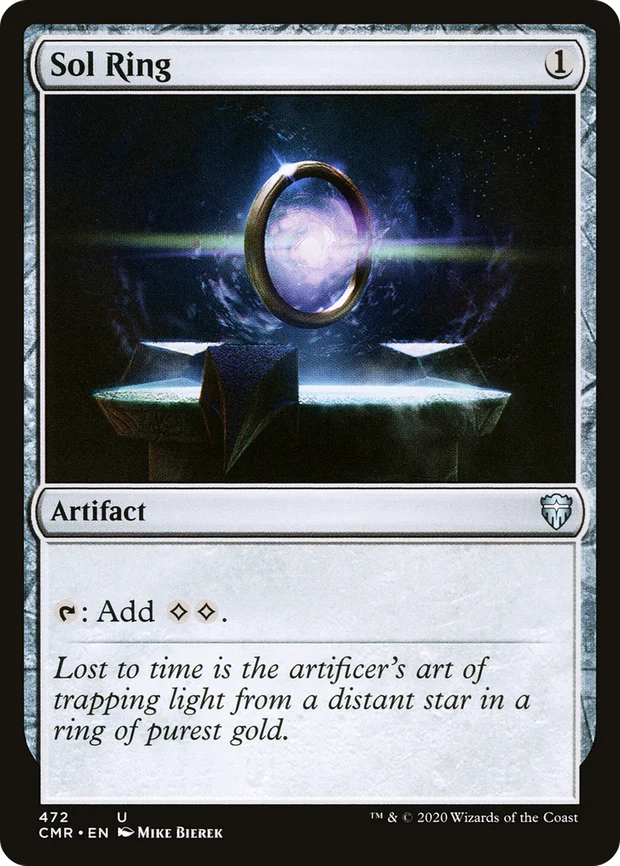
Buying singles means going to a marketplace like TCGplayer or Card Kingdom and buying the exact cards you want. For a beginner, this is usually the smarter path. You get precisely what you are after at a known price, with no gambling. Want a Sol Ring, the near-universal Commander staple? You can buy a played copy for a couple of dollars rather than opening 40 packs hoping one shows up.
A middle option worth knowing about: Commander preconstructed decks. These are complete, ready-to-play 100-card decks, typically $40 to $70, and the five Foundations Commander decks arriving in October 2026 come in at $26.99 each, the cheapest precons Wizards has ever printed. They are the single best value entry point in the game because they give you a functional deck plus a stack of reprinted staples in one box.
What the ceiling looks like
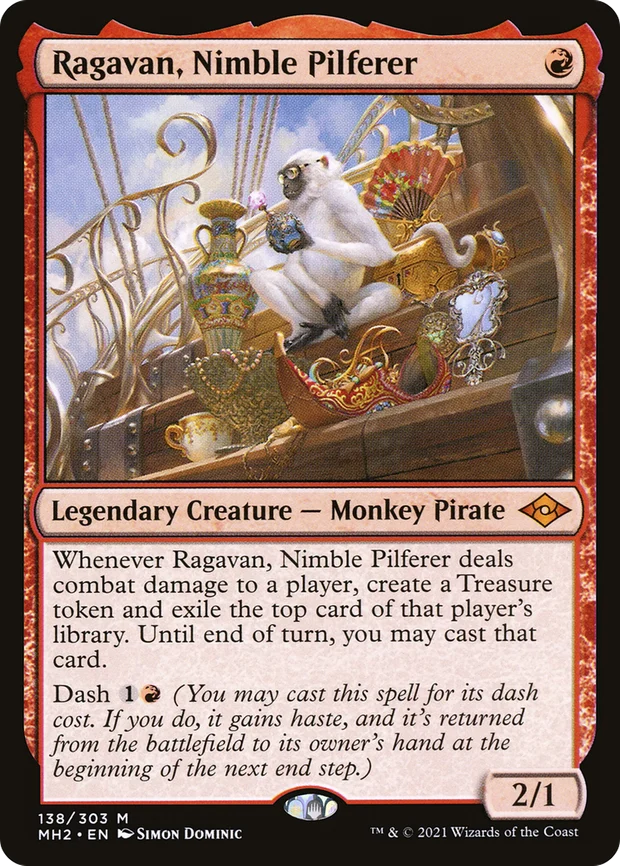
It helps to know how high the market goes, if only to appreciate the distance between a starter binder and the legends. The famous chase cards from recent special sets can run into the hundreds. Ragavan, Nimble Pilferer from Modern Horizons 2 has traded in the $40 to $110 range depending on printing and condition, and it is one of the most sought-after creatures of the modern era.
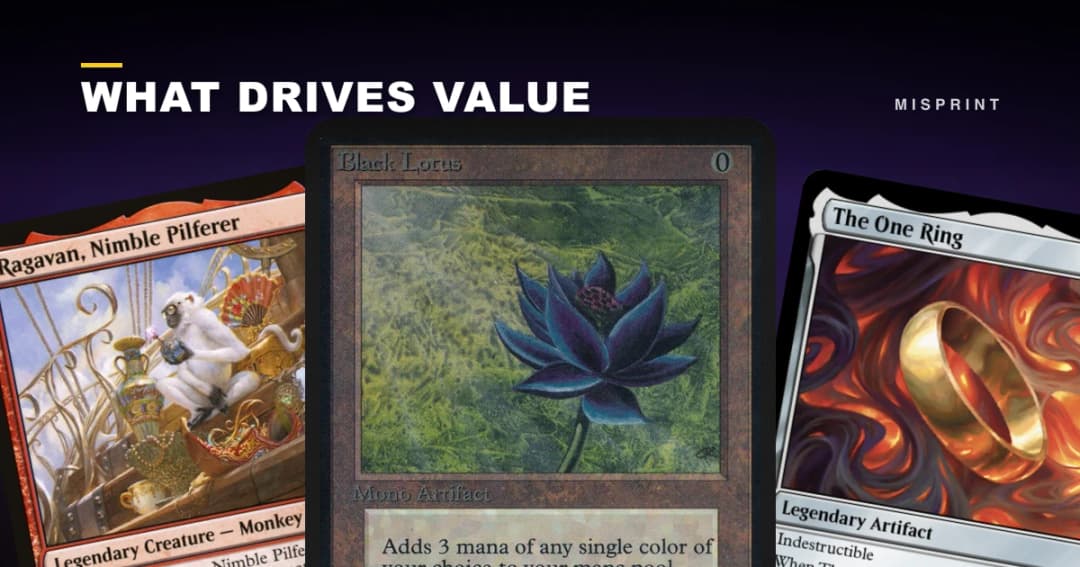
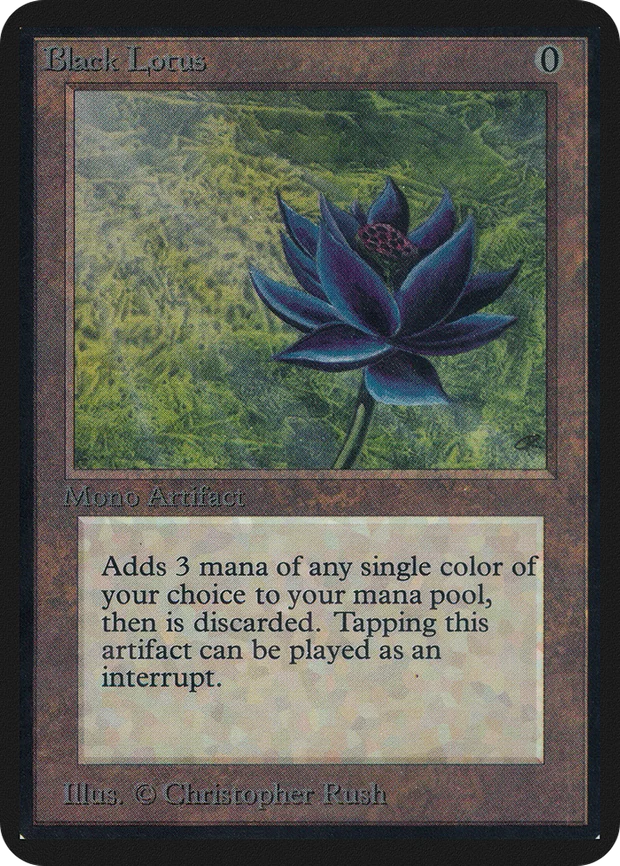
At the very top sits the original Power Nine and the Black Lotus, the most valuable card Magic has ever made. An Unlimited copy runs from about $10,000 into the low six figures, and a top-graded Alpha copy sold in a private sale for $3 million. You will never open one in a pack today, but it is the north star of the hobby. If the history interests you, read what a Black Lotus is and why it is worth so much.
A note on prices throughout this guide: aggregator listings and market averages can run ahead of what cards actually sell for, and values move constantly. Treat every figure here as a snapshot from mid-2026, not a quote.
Protect what you buy
Damaged cards lose value fast, and the fix is cheap. Build a simple layered system.
Start with penny sleeves, thin polypropylene sleeves that cost about a cent each and guard against dust and surface scratches. For anything worth keeping, add a toploader, the rigid plastic holder that prevents bending. The one rule people learn the hard way: always sleeve a card before putting it in a toploader, because a bare card shifts against the hard plastic and picks up hairline scratches over time.
For bulk and browsing, use a binder with side-loading pockets and acid-free, PVC-free pages. PVC breaks down and damages cards over years of contact, and side-loading pockets keep cards from sliding out when you flip the binder. Store everything somewhere climate-stable. Humidity warps cards and sunlight fades ink, so a damp basement or a hot, bright windowsill is the enemy. Our full storage and protection guide covers the details.
Grading, sending cards to a service like PSA or CGC for authentication and a numeric condition score, is worth understanding but almost never worth doing as a beginner. It only makes sense on high-value or sentimental cards where the grade adds more than it costs. Should you grade your Magic cards covers when it pays off. Marketplaces like Misprint track graded-card sales data, which is a useful reality check before you spend on slabbing anything.
A sensible first budget
If you have a couple hundred dollars and want the most enjoyment per dollar, a reasonable starter path looks like this:
- One Commander precon deck ($27 to $70) so you can actually play.
- A box of penny sleeves and a pack of toploaders ($15 to $25) to protect the good stuff.
- A binder with acid-free pages ($20 to $30).
- The rest spent on singles you specifically want, whether that is a favorite creature, cards for your deck, or an affordable classic.
Skip the impulse to buy a sealed booster box on day one. It feels like the "real" way to collect, but you will get more lasting value from a precon and a handful of chosen singles. If you do want a shopping list of accessible pickups, our roundup of the best Magic cards for new collectors under $50 is a good next stop.
Collect what you like, protect it properly, and buy singles when you know what you want. Do those three things and the hobby stays fun instead of expensive.