The Most Graded Magic Cards
The highest pop-report counts in Magic belong to a set from 2025, not the vintage vault.
By Misprint Editorial | Published Jun 8, 2026 | 9 min read

The highest pop-report counts in Magic belong to a set from 2025, not the vintage vault.
A population report is the closest thing the hobby has to a card census. Every time a grading company slabs a card, it logs one more example at that grade, and the running total tells you how many copies of a given printing have passed through the machine. Ask most people to guess Magic's most-graded card and they will name a Black Lotus or something off the Power Nine. They would be wildly wrong.
The truth is stranger and more modern. Graded Magic volume exploded over the last two years, and the cards piling up at PSA and CGC are not from 1993. GemRate's year-in-review pegged 2025 at 26.8 million cards graded across the major companies, up 32 percent from 2024, with TCG and non-sport cards nearly doubling year over year (up 95 percent). Magic's share of that wave is dominated almost entirely by one release: the 2025 Final Fantasy set, the best-selling Magic set ever made, followed closely by the collector treatments from The Lord of the Rings: Tales of Middle-earth. Those are the cards that actually top the pop charts.
A quick note on the numbers below. Every figure is a combined PSA and CGC population pulled from public trackers, and pop reports move every single day as new submissions clear. Prices are aggregator market values (raw near-mint and PSA 10), and aggregator prices can run ahead of what cards actually sell for. Treat the counts as a snapshot, not gospel.
What a pop report actually measures
A population number answers one question: how many of this exact printing has this company graded, broken out by grade. It does not tell you how many exist in the wild, and it does not tell you rarity in any absolute sense. A card with a print run in the millions can still show a tiny pop if nobody bothers to grade it, and a modest-print collector foil can post a huge pop if everyone rushes to slab it. That gap between how many were printed and how many get graded is the entire story here. Vintage staples were opened, played, and beaten up decades ago, so few survive in gradeable shape. Modern hype foils get pulled mint from a pack and shipped straight to PSA. For the deeper question of whether that slab is worth the fee, see Should You Grade Your Magic Cards? and PSA vs BGS vs CGC for Magic Cards.
The 10 most graded Magic cards
10. Vanille, Cheerful l'Cie (Final Fantasy)

Around 368 graded. Raw copies of the borderless surge foil trade for about $4.12, while a PSA 10 runs around $55.22. Vanille is the clearest example of grading economics gone sideways: the raw card is nearly worthless, but the certification and the surge-foil treatment carry the price, and collectors slabbed it in volume anyway. When a cheap card has a few hundred graded copies, you are watching set-completion mania, not investing.
9. Traveling Chocobo (Final Fantasy)
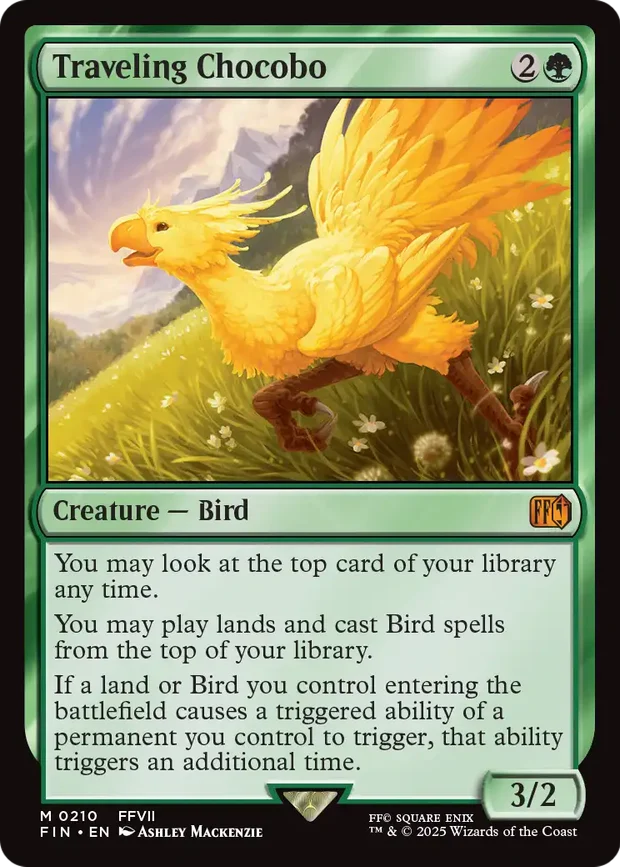
About 369 graded. The borderless treatment sits around $33.73 raw and roughly $110.65 in a PSA 10. A green card-advantage creature built around the series' most beloved mascot, Traveling Chocobo shows how the art and the character, not tournament power, drive the grading queue for this set.
8. Lightning, Army of One (Final Fantasy)
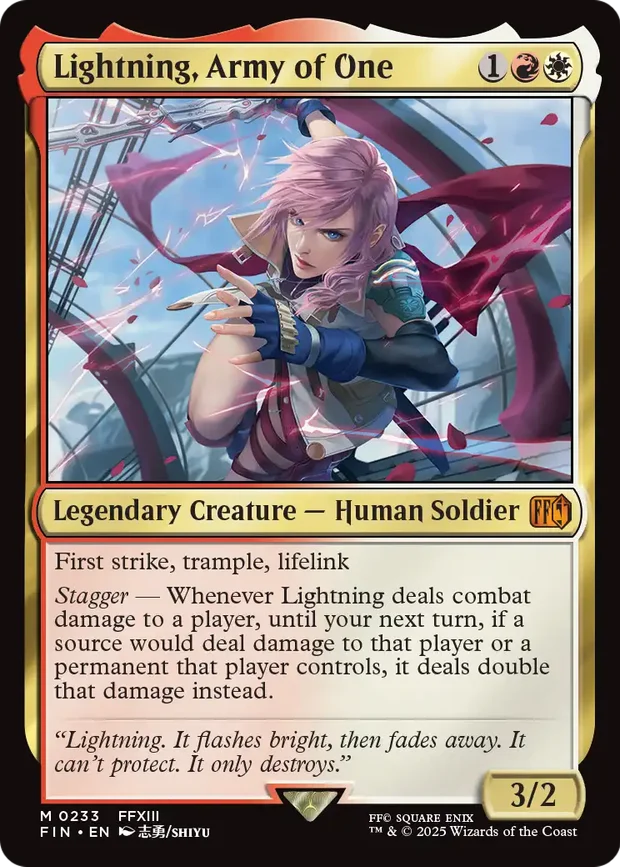
Around 443 graded. The borderless surge foil brings about $255.62 raw and roughly $272.98 graded gem mint. Lightning is one of the pricier character cards in the set even ungraded, so a PSA 10 premium of well under $50 tells you the market is paying for the card, not the plastic.
7. Buster Sword (Final Fantasy)
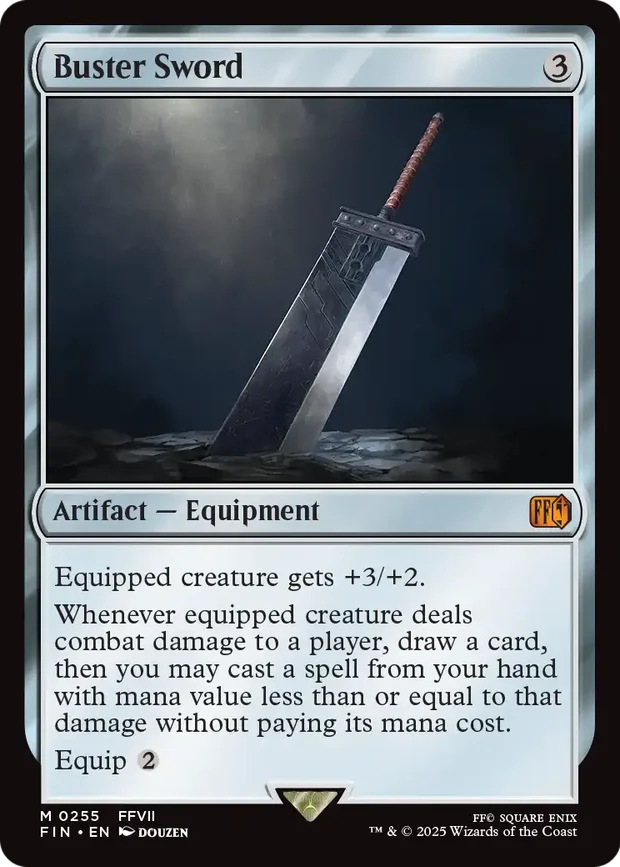
About 452 graded. Cloud's iconic weapon, printed as a borderless Equipment, sells for around $79.99 raw and roughly $118.35 in a PSA 10. It is one of the most recognizable objects in gaming, which is exactly why so many non-Magic-players bought it, cracked it, and graded it.
6. Yuna, Hope of Spira (Final Fantasy)
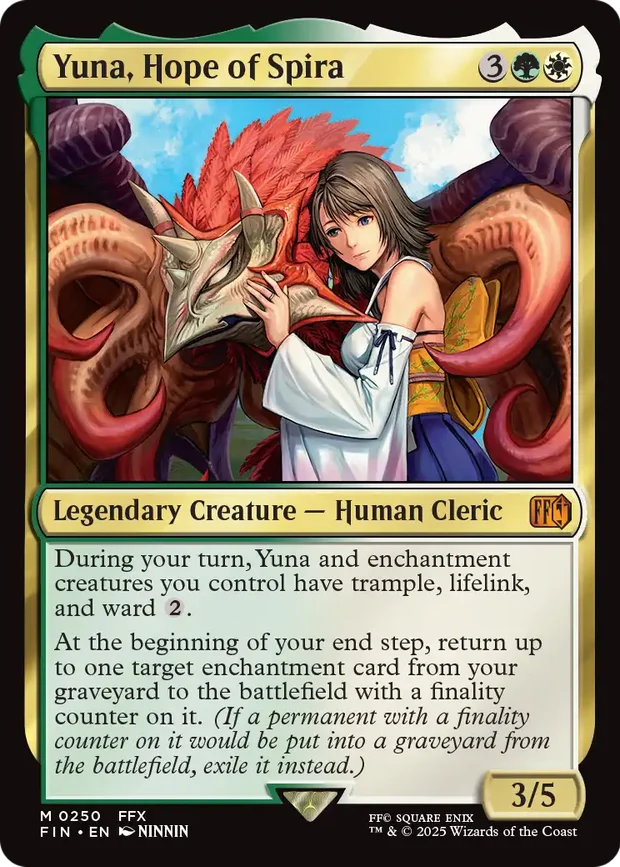
Around 519 graded. The borderless surge foil runs about $149.81 raw and roughly $224.50 in a PSA 10. Yuna is a mid-tier chase in the set by price but a heavy hitter by pop, a reminder that grading volume tracks popularity more than dollar value.
5. Cloud, Midgar Mercenary (Final Fantasy)

About 736 graded. Cloud is the face of Final Fantasy VII and one of the set's genuine money cards: around $298.12 raw and roughly $562.50 in a PSA 10. High demand, high price, and a high pop all at once, which is rare and speaks to just how much this character moved product.
4. Aerith Gainsborough (Final Fantasy)
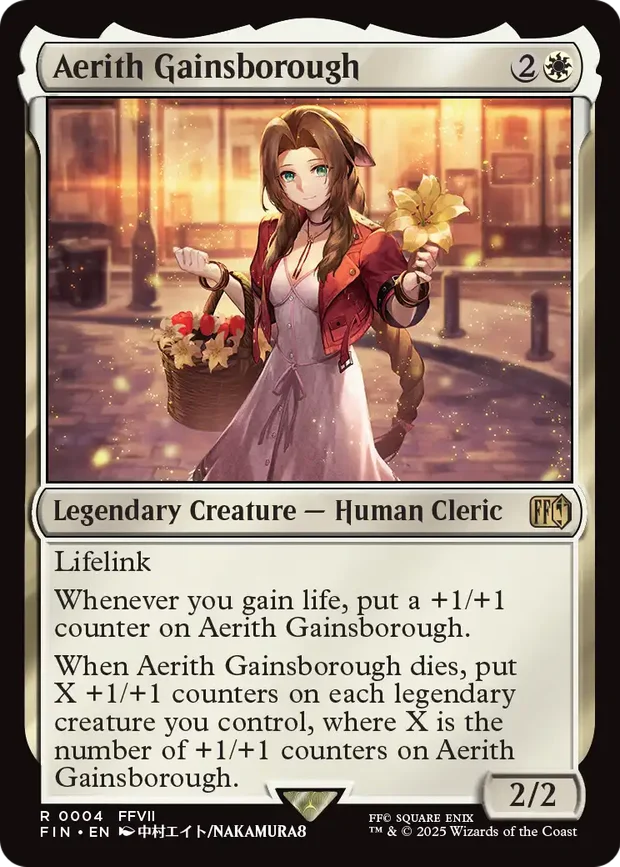
Around 857 graded. Interestingly, the raw borderless surge foil is only about $81.39, while a PSA 10 fetches roughly $186. That is a big multiplier for the slab, and it helps explain the enormous pop: when grading more than doubles a card's value, everyone grades. Whether that premium holds is its own debate, covered in Does Grading Increase a Magic Card's Value?.
3. Sephiroth, Fabled Soldier (Final Fantasy)
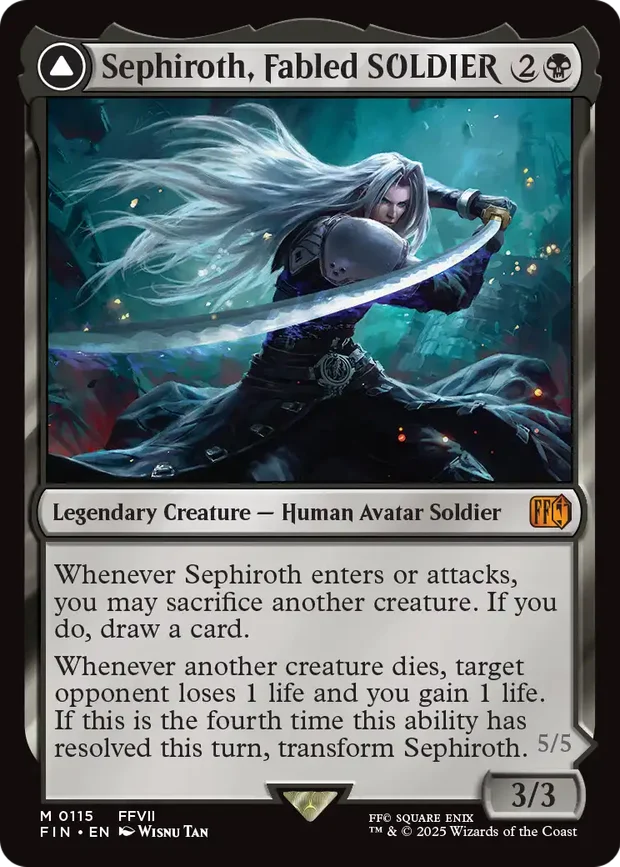
About 910 graded. The villain of Final Fantasy VII is also the most valuable card near the top of this list: the borderless surge foil sits around $864.18 raw and roughly $1,025 in a PSA 10. A four-figure graded chase card with a pop near a thousand is the definition of a modern crossover hit, driven by buyers who came for Sephiroth, not for Magic.
2. Tifa Lockhart (Final Fantasy)
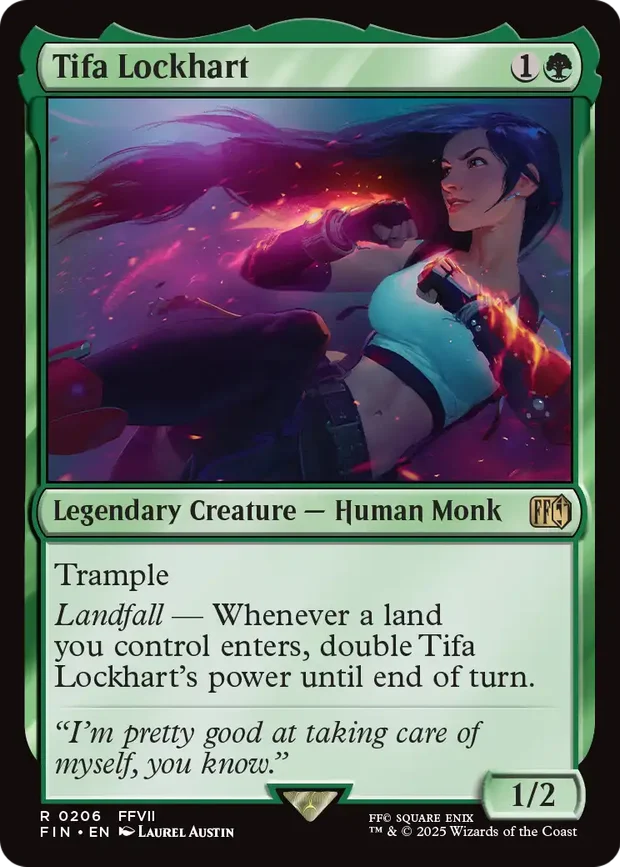
Around 1,057 graded. The borderless surge foil trades for about $125.96 raw and roughly $210 in a PSA 10. Tifa is the most-graded single character in the best-selling Magic set of all time, which is a sentence that would have made no sense before Universes Beyond rewired the collectible side of the game. For how that happened, read How Universes Beyond Changed Magic's Collectible Market.
1. The One Ring (The Lord of the Rings: Tales of Middle-earth)
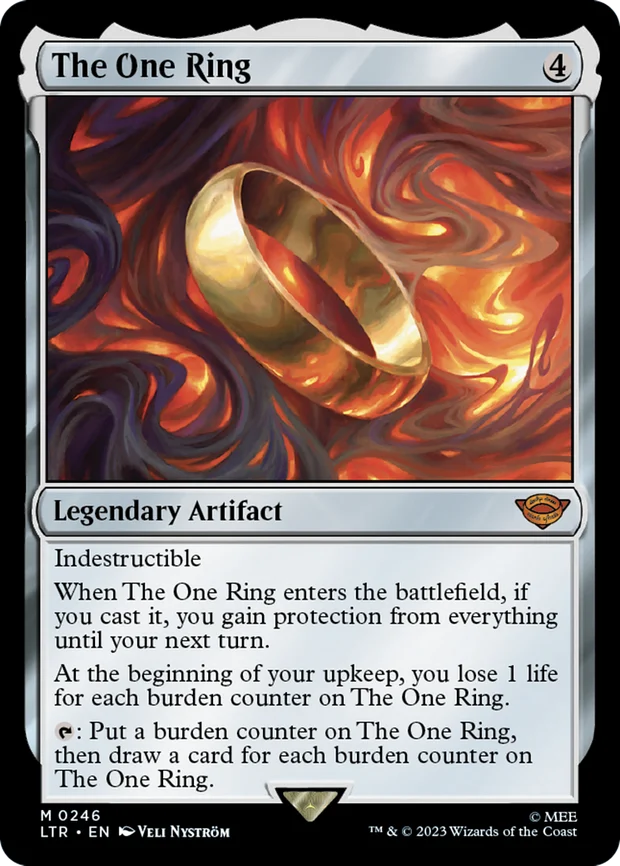
The single most-graded card in Magic is The One Ring, with about 1,251 examples of its most-slabbed foil printing alone, and the card's other treatments (the extended-art near 476 and additional foil printings around 413) push the combined total well beyond anything else in the game. Raw foils go for about $90 to $130 and a PSA 10 sits around $305. The card became a cultural event when the serialized 1/1 version sold to Post Malone for a reported $2 million, and that halo sent thousands of ordinary copies to the graders. It remains the defining collector card of Magic's crossover era. See more of the set in The Most Valuable Cards from The Lord of the Rings: Tales of Middle-earth.
The famous cards that barely register
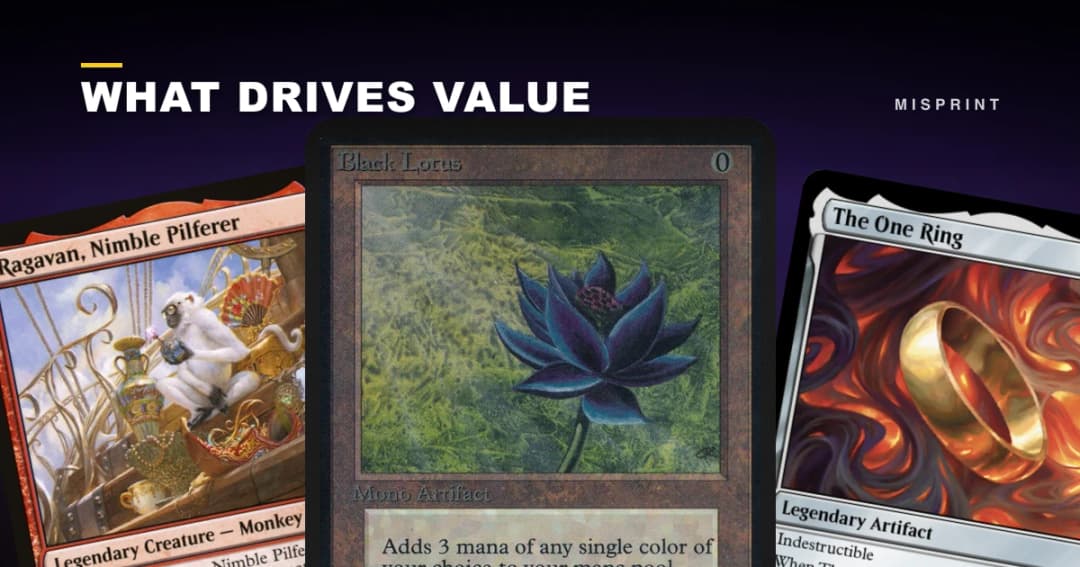
Here is the part that surprises people. The cards Magic is most famous for have tiny populations. The Alpha Black Lotus shows only about 97 combined PSA and CGC copies, and zero of them are PSA 10s. The Unlimited Black Lotus, a far more common printing, still sits around 470 graded total. Fewer of those exist to grade, and the ones that do are old enough that mint survivors are scarce, which is exactly why the Black Lotus commands the prices it does.
Modern gameplay staples are quiet too. Sheoldred, the Apocalypse, one of the most-played and most-printed cards of the decade, shows only a few dozen graded per treatment (the textured foil sits around 60, the showcase near 26). Ragavan, Nimble Pilferer's extended-art version has roughly 43 slabs. These cards get shuffled into Commander and Modern decks, not sealed in acrylic. Players sleeve them; they do not grade them. The original dual lands and the rest of the Reserved List tell the same story: beloved, expensive, and barely graded because owners actually use them.
What a high pop number means for value
A big population cuts two ways. On one hand, it confirms demand: nobody floods PSA with a card nobody wants. On the other, a four-figure pop at PSA 10 means gem-mint copies are common, so the grade adds less scarcity value than it would on a low-pop vintage card. Modern foils also grade easily because they come out of the pack clean, which keeps PSA 10 rates high and PSA 10 premiums modest. That is the opposite of a 1990s card, where a 10 might be one of a handful in existence.
The practical takeaway: pop reports are a demand thermometer, not a rarity guarantee. Before you pay a grading premium, check how many gem-mint copies already exist and where the price sits relative to the raw card. Trackers like PSA, CGC, and the graded-market data tools inside Misprint make that a five-minute check. For the bigger picture on which cards actually reward grading, see Are Magic: The Gathering Cards a Good Investment?.
Recap: the 10 most graded Magic cards
| Rank | Card | Set | Combined graded | PSA 10 price |
|---|---|---|---|---|
| 1 | The One Ring (foil) | Tales of Middle-earth | around 1,251 | around $305 |
| 2 | Tifa Lockhart | Final Fantasy | around 1,057 | around $210 |
| 3 | Sephiroth, Fabled Soldier | Final Fantasy | around 910 | around $1,025 |
| 4 | Aerith Gainsborough | Final Fantasy | around 857 | around $186 |
| 5 | Cloud, Midgar Mercenary | Final Fantasy | around 736 | around $563 |
| 6 | Yuna, Hope of Spira | Final Fantasy | around 519 | around $225 |
| 7 | Buster Sword | Final Fantasy | around 452 | around $118 |
| 8 | Lightning, Army of One | Final Fantasy | around 443 | around $273 |
| 9 | Traveling Chocobo | Final Fantasy | around 369 | around $111 |
| 10 | Vanille, Cheerful l'Cie | Final Fantasy | around 368 | around $55 |
Nine of the ten most-graded Magic cards come from a single 2025 set, and the tenth is the biggest crossover card the game has ever printed. That is the real headline of Magic's pop reports: the census is being written right now, not in the vintage vault.