How to Tell If Your Old Magic Cards Are Valuable
Set, condition, Reserved List, and real sold prices: the four checks that separate a $2 card from a $2,000 one.
By Misprint Editorial | Published May 12, 2026 | 7 min read
Set, condition, Reserved List, and real sold prices: the four checks that separate a $2 card from a $2,000 one.
Most people find their old Magic cards the same way: a shoebox in a closet, a binder in a parents' basement, a stack rubber-banded since middle school. The question is always the same. Is any of this worth money? The honest answer is that most of it is not, but a small slice of almost every old collection is worth real money, and a handful of cards can be worth thousands. The trick is knowing how to sort the two apart quickly and accurately.
Value in Magic comes down to four things you can actually check yourself: which set the card is from, what condition it is in, whether it sits on the game's no-reprint list, and what copies have actually sold for recently. Work through those in order and you will have a defensible number for anything in the box.
Step 1: Figure out which set (and printing) it is
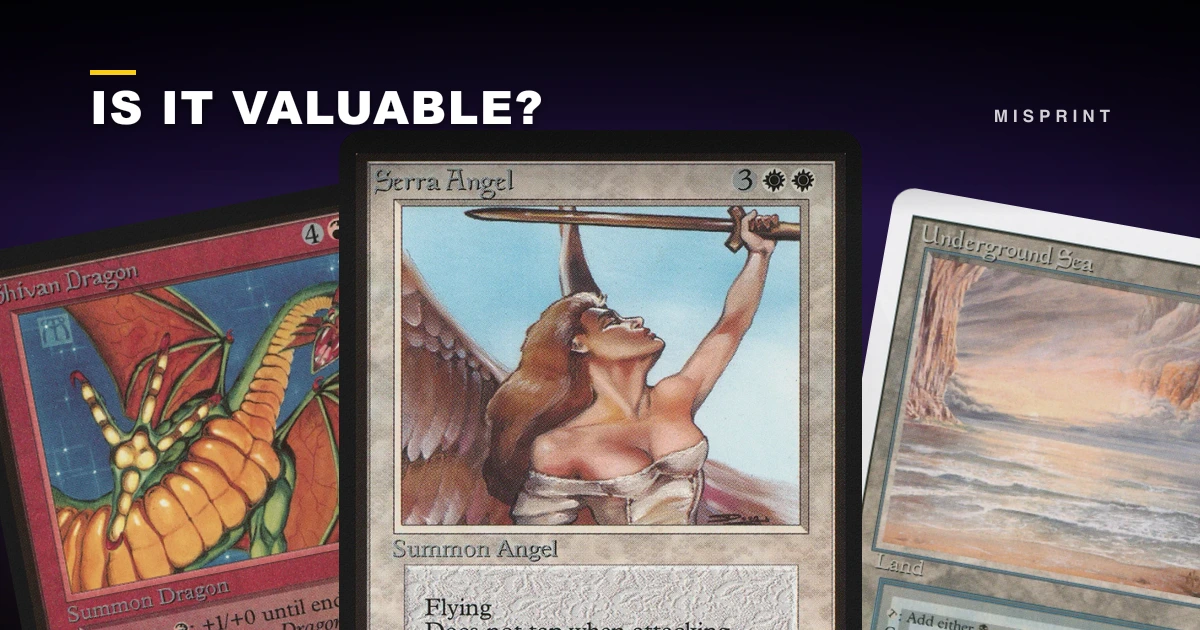
This is where the money is, because the exact same card art can be worth $2 or $2,000 depending on the printing. A Serra Angel is a Serra Angel, but a Beta copy sells for hundreds while the same card from a 2010s core set is basically free.
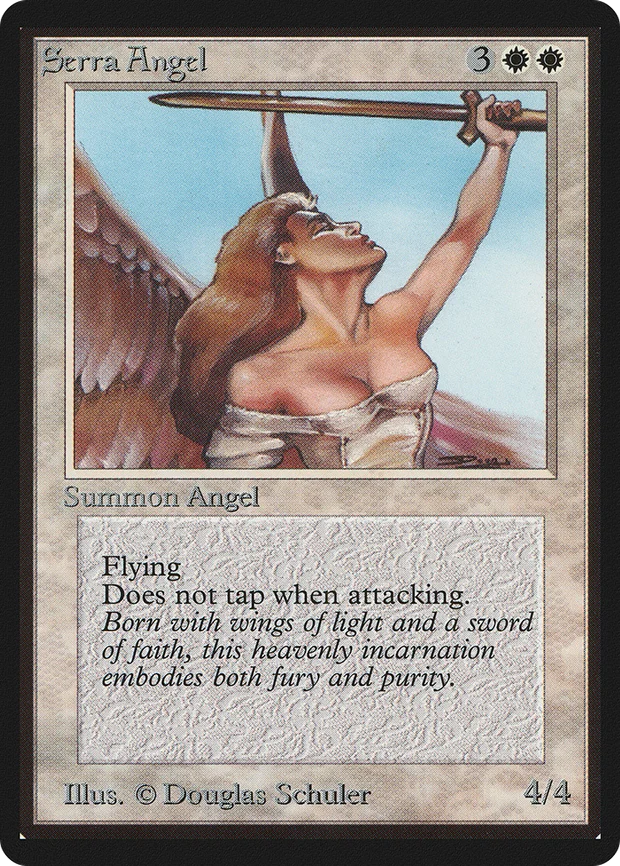
Start with the expansion symbol, the little icon on the right side of the card just below the art. On modern cards it tells you the set at a glance, and its color tells you the rarity: black or white for common, silver for uncommon, gold for rare, and orange-red for mythic rare (introduced in 2008). Rare and mythic are where value concentrates, so those are the ones to pull.
The complication is that the oldest and most valuable cards have no set symbol at all. Expansion symbols did not appear until Arabian Nights in late 1993, and the main core sets did not get them until Sixth Edition in 1999. So if a card has no symbol, you are potentially holding something from the earliest, most valuable era, and you need other clues:
- Border and corners. Alpha (1993) and Beta (1993) both have black borders. Alpha corners are noticeably rounder; Beta corners are sharper. Unlimited (1993) and Revised (1994) both have white borders. Alpha and Beta are the ones that command premiums.
- Copyright date. Look under the artist credit. Fourth Edition cards read (c)1995, and Fifth Edition reads (c)1997. This is the fastest way to separate the white-bordered core sets that otherwise look nearly identical.
- Card back. All real Magic cards share the same brown back with the deckmaster logo. If the back looks off, you may be holding a Collectors' Edition, a World Championship deck card (gold border), or a proxy, none of which are tournament-legal or worth the same as the real printing.
If you want the full breakdown of the four earliest printings, we cover it in Alpha vs Beta vs Unlimited: How to Tell Them Apart and What They're Worth. And if you are not sure a card is even real, run it against the checks in How to Spot a Fake Magic: The Gathering Card before you get excited.
Step 2: Judge the condition honestly
Condition can swing a card's value by 5x or more, and collectors are ruthless about it. The good news is you do not need a grading company to make a rough call. Look at four things under good light:
- Corners. Whitening or fraying kills value fast on black-bordered cards.
- Edges. Nicks and whitening along the black border are the most common flaw on old cards.
- Surface. Scratches, print lines, clouding, and (a big one for old cards) whether it has been played without a sleeve.
- Centering. How even the border is on all four sides. Off-center cards grade lower.
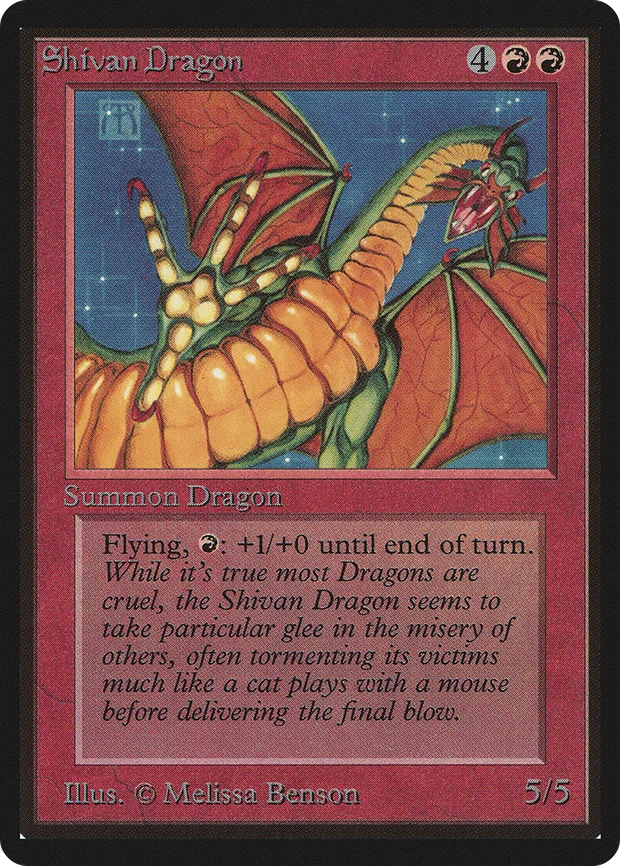
Be brutally realistic. A card you would call "pretty clean" is usually Lightly Played or Moderately Played to a grader, not Near Mint. The difference matters: a Beta Serra Angel in genuine near-mint shape trades around $350, but a worn, edge-whitened copy sells for a fraction of that. For a full-value card, near mint is the target.
Step 3: Check the Reserved List
Here is the single most useful fact for anyone digging through old cards. In 1996 Wizards of the Coast created the Reserved List, a set of cards it promised never to reprint. It was a response to player anger after the reprint-heavy Chronicles set tanked the prices of older cards. The list covers 572 cards printed between 1993 and 1999, and Wizards has repeatedly reaffirmed that it will never add cards to or remove cards from it.
Reserved List status is the reason certain old cards hold and grow their value: supply is permanently fixed, so demand has nowhere to go but into the existing copies. The list includes the entire Power Nine, all ten original dual lands, and many of the most valuable rares from Alpha and Beta.
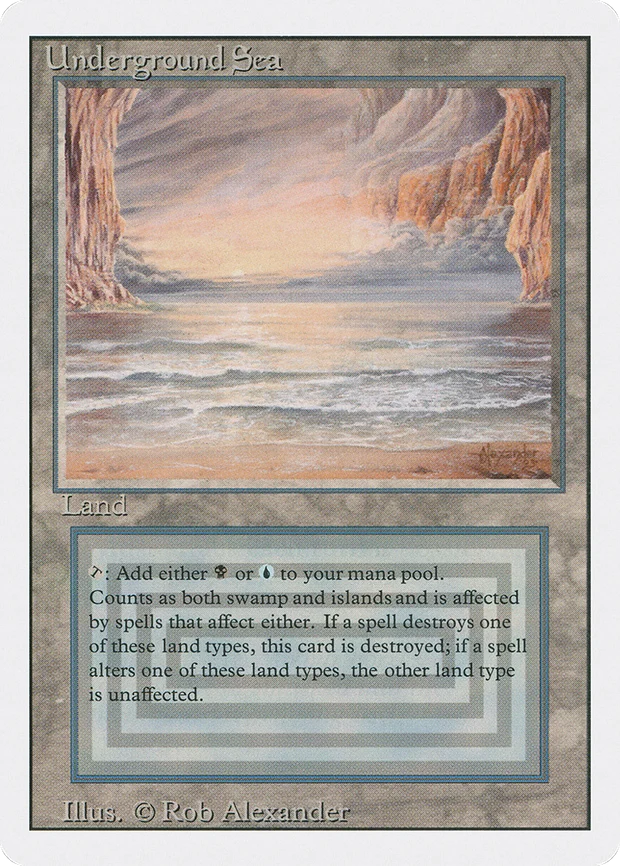
The original dual lands are the best example most people will actually find. A Revised Underground Sea in near mint condition sells for around $900 to $1,000, and it looks like an ordinary land, so it is exactly the kind of card that gets overlooked in an old collection. The other nine duals run from roughly $250 to $900 depending on which one and condition. We break the whole cycle down in The Original Dual Lands: A Collector's Value Guide and the broader policy in Magic's Reserved List, Explained.
Not on the Reserved List does not mean worthless, but it does mean a reprint can appear at any time and cut the price. Reserved List plus good condition is the combination that reliably holds value.
Step 4: Find out what it actually sold for
This is where most people go wrong. They see a listing at $500 and assume that is the value. An asking price is not a sale. Aggregator and storefront prices routinely run ahead of what cards actually change hands for.
To get a real number, look at completed and sold transactions, not active listings:
- eBay sold listings. Search the card, filter to "Sold Items," and match the printing and condition to yours. This is the closest thing to a live market for most cards.
- Price trackers. PriceCharting, MTGStocks, MTGGoldfish, and TCGplayer's price history show trend lines and, in some cases, recent sale data. Treat their headline numbers as a ceiling and confirm against actual sold prices.
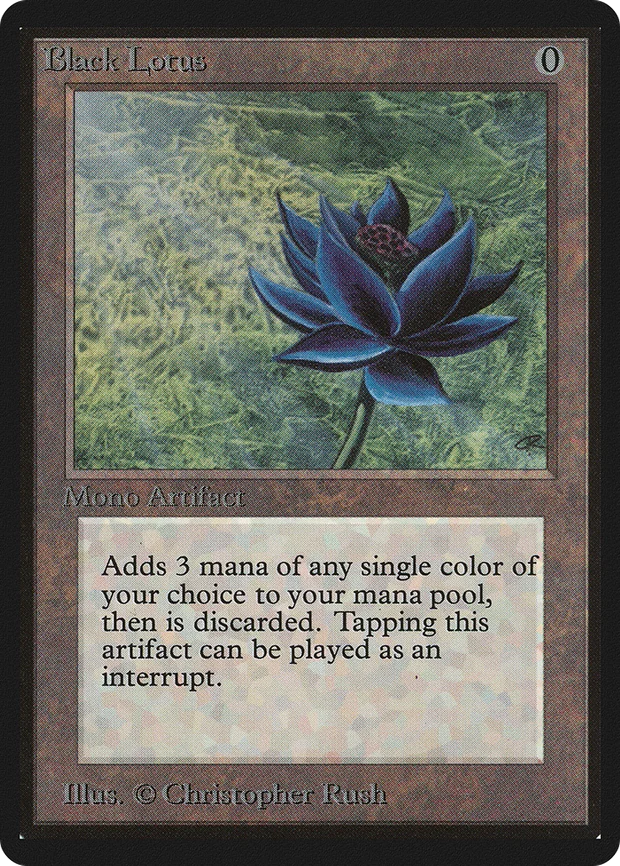
- Graded sale data. For high-end cards, graded copies sell in tight, well-documented bands. A Beta Black Lotus in a PSA 10 holder trades roughly $150,000 to $300,000, while a raw near-mint copy runs about $18,000 to $35,000. That gap is the value the grade itself adds, and it is why grading matters most on the most expensive cards.
Prices move, sometimes fast, so treat any figure as a snapshot rather than a fixed value. At Misprint we track sold prices for graded cards specifically because the spread between asking and selling can be so wide, and the graded market is where that data is cleanest.
Should you grade what you find?
Only sometimes. Grading costs money and takes weeks, and it only pays off when the card is valuable enough and clean enough that a high grade meaningfully lifts the price. A $30 card is not worth grading; a near-mint Reserved List rare might be. We walk through the math in Should You Grade Your Magic Cards? and Does Grading Increase a Magic Card's Value?. For anything you are keeping raw, sleeve it and store it properly so you do not turn a near-mint card into a played one.
The quick triage checklist
Run every unfamiliar card through this in order:
- Set and printing. Symbol color for rarity; border, corners, and copyright date for the old stuff. Pull the rares and mythics, set the commons aside.
- Condition. Corners, edges, surface, centering, judged honestly against near mint.
- Reserved List. If it is on the list and in good shape, it is worth a real look.
- Sold price. Confirm against eBay sold listings and price trackers, not asking prices.
Recap: what actually drives value
| Factor | What raises value | What kills value |
|---|---|---|
| Set / printing | Alpha, Beta, early rares; rare or mythic symbol | Late core-set reprints, commons |
| Condition | Near mint, sharp corners, clean surface | Whitening, creases, scratches, no sleeve |
| Reserved List | On the list (fixed supply) | Not listed (reprint risk) |
| Price source | eBay sold listings, graded sale data | Active asking prices taken at face value |
Most old collections are 95 percent bulk and 5 percent worth keeping. The four checks above are how you find that 5 percent fast. If you want to go deeper on what separates a valuable card from a common one in the first place, What Makes a Magic Card Valuable? is the natural next read.
Prices cited here are 2026 snapshots and move constantly, and aggregator figures can run well ahead of actual sold prices, so always confirm against recent completed sales before you buy, sell, or insure anything.